
Which Repairs Are Actually Worth Doing Before Selling a Craftsman Bungalow in Pasadena?
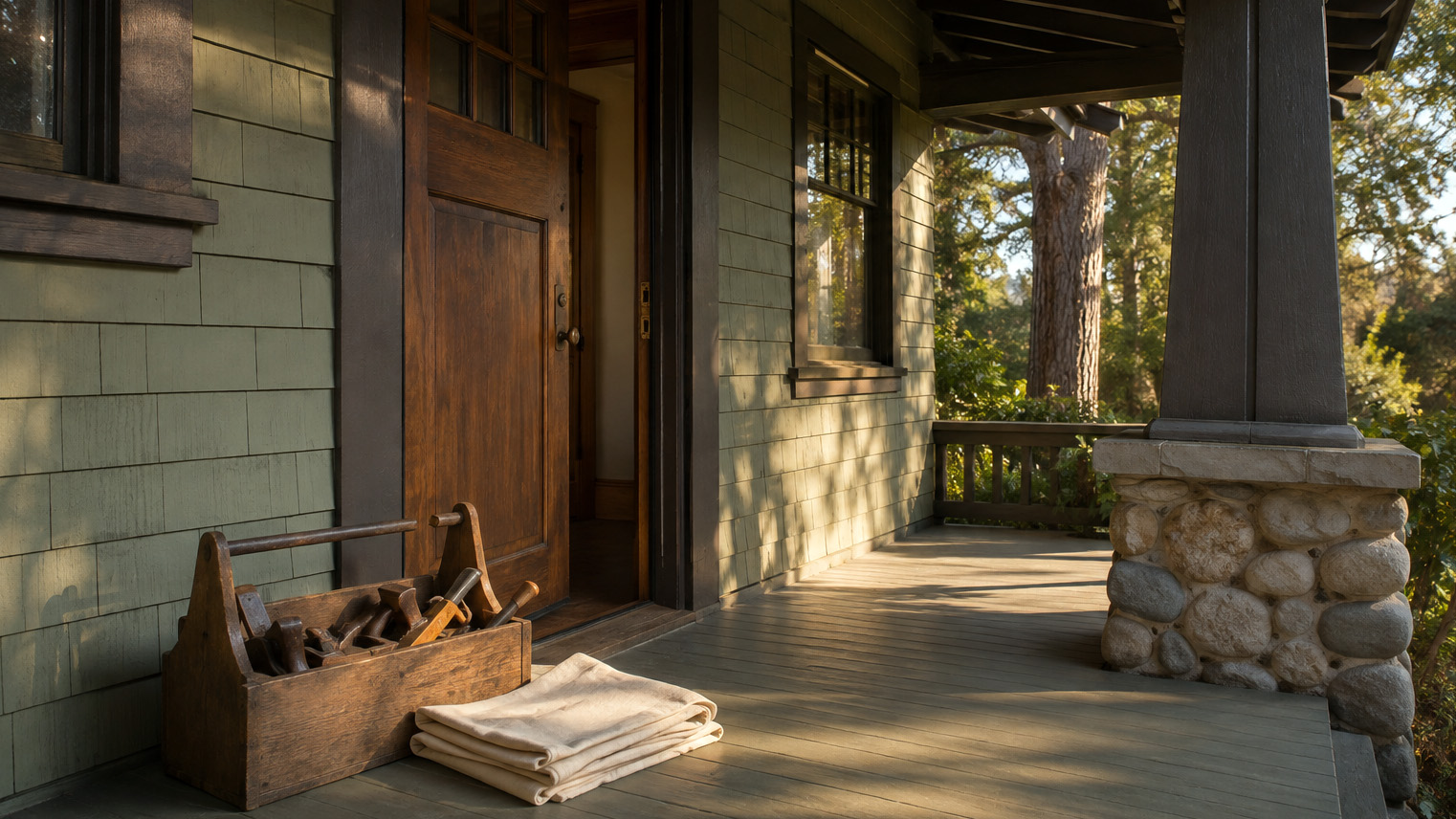
Sort the list before you spend a dollar. Twenty years of building custom homes taught me that every repair list divides into three buckets: safety, permits, and cosmetics, and the order is the answer. Safety items first, because they are cheap, because the city’s presale program looks for them, and because they are what kills a sale in the final week. Permits second: know your own permit file before the buyer’s agent does. Cosmetics last, and only the ones this housing stock actually pays you back for. The expensive mistake I keep seeing in Pasadena is the reverse order: a seller remodels a kitchen nobody asked for and hands the buyer’s inspector a page of small safety items that should never have survived to escrow.
There is one more reason the sort starts with safety and permits, and it is particular to this city. Pasadena is one of the places where selling a house runs through a city program before escrow can close. Miss that and the calendar, not the buyer, becomes your problem.
Start with the city’s gate: the Presale Self-Certification Program
Under Ordinance No. 7337 and Pasadena Municipal Code Section 14.17, before the close of escrow on the sale of a single family house, condominium, townhouse, or duplex, the owner must obtain one of two documents from the city: a Presale Certificate of Completion or a Presale Certificate of Inspection. The program exists to catch major life and safety code violations before a house changes hands.
The Certificate of Completion is the fast lane. It is self-certification: no city inspector walks the house. To qualify, the property can have no open code compliance cases, and the owner certifies three things on the application: that the actual living space does not exceed the LA County Assessor’s square footage record by 10 percent or more, that the property meets fire prevention, detection, and exiting requirements, and that there is no unpermitted construction, addition, conversion, or accessory structure larger than 120 square feet. The city’s posted fee for this certificate is $29.00 plus processing fees. Applications go in online or on paper at the Permit Center at 175 North Garfield.
A house that cannot make those three statements goes to the second lane: the Certificate of Inspection, posted at $174.00 plus processing fees. The city schedules an inspection and issues a housing inspection report. If no deficiencies turn up, the certificate issues. If deficiencies turn up, the owner has two choices: fix them and pay for a re-inspection, or execute a Transfer of Responsibility.
One boundary before we go further: this program belongs to the City of Pasadena. If the house sits outside the city line, your city’s own rules govern, and you should read them before relying on anything in this section.
The Transfer of Responsibility, and when a seller should use it
The Transfer of Responsibility is the city’s own release valve. It moves the duty to fix the deficiencies on the inspection report from the seller to the buyer, and the sale proceeds. It exists because some repairs genuinely belong to the next owner: work the buyer plans to do anyway inside a larger renovation, or work that would be rushed, and done badly, on an escrow clock.
Here is how I sort it. A transfer is the right tool when the deficiency is real work: something structural, something inside walls the buyer already intends to open, something a buyer with a plan can price and fold into that plan. A transfer is the wrong tool for the small safety items. Handing a buyer a city report listing inexpensive fixes you declined to make tells that buyer something about how the house was kept, and the price they offer will say they heard it. Fix the cheap items, transfer the true projects, and put the whole file on the table. The report exists either way; the only question is whether it arrives as evidence of care or evidence of neglect.
The three buckets, sorted like a builder
Safety first. The city’s eligibility language names the ground: fire prevention, detection, and exiting. These are the least expensive items on any list and the most expensive to discover late. Do them before photographs, before listing, before anything.
Permits second. Before you list, pull your own permit history and read it against the house standing in front of you. The city’s application draws two hard lines: living space more than 10 percent over the Assessor’s record, and any unpermitted structure over 120 square feet. Cross either and the self-certification lane closes; you are in the inspection lane with the fee, the calendar, and the report that follows. Unpermitted work does not stop a sale, but it shapes one, and you disclose what you know. The choice on real unpermitted work is the builder’s choice: fix it properly, or price it honestly and let the Transfer of Responsibility carry it. What you never do is hope nobody notices. Somebody always notices.
Cosmetics last, and only what pays. On a Craftsman bungalow the arithmetic is different from the arithmetic on a tract house, and the next two sections are that arithmetic.
The lead rule on every repair
A Craftsman bungalow predates 1978 by half a century, and 1978 is the year the federal government banned lead paint in homes. Under the EPA’s Renovation, Repair and Painting Rule, anyone you pay to do work that disturbs painted surfaces in a pre-1978 home must be a lead-safe certified firm using trained people and lead-safe work practices. The rule generally does not bind an owner working on their own house, but the EPA’s advice to homeowners is the same as mine: hire certified. The EPA keeps a public search for lead-safe certified firms, and hiring from it is the simplest way to get this right. When you interview anyone who will sand, cut, scrape, or demolish, certification is the first question, not the last.
What pays on a Craftsman bungalow
The buyer of a Craftsman bungalow in Pasadena is buying originality, and the repairs that pay are the ones that let the original house show. Clean and wax the original woodwork; never paint it. Refinish the oak floors where traffic has worn through the finish. Free up the original wood windows so every one of them opens, locks, and holds; sticking sash reads as neglect, working sash reads as care. Repair cracked plaster properly instead of hiding it. Paint the exterior in colors the house would recognize. Put real work into the front porch, because on this housing stock the porch is the handshake. Oil the hinges, polish the original hardware, and make the front door swing like it did the year it was hung. None of this is glamorous. All of it is the difference between a house that photographs as loved and a house that photographs as tired, and it costs a fraction of what the next section costs.
What does not pay
Do not remodel the kitchen or the bathrooms before selling. The buyer who wants a period house will pay for the original room, and the buyer who wants a new kitchen wants to choose it, so the remodel money persuades neither of them. Do not replace original wood windows. Do not paint original woodwork to brighten a listing; you would be removing the most expensive finish in the house. Do not tear out built-ins to open a floor plan, and do not lay new flooring over sound original oak. Every one of these spends real money converting the thing your buyer came for into the thing they can find anywhere.
Why this matters
A sale is a file. The presale certificate, the permit history, the receipts for the safety work, the name of the certified firm that handled anything touching old paint: a seller who can hand that file across the table has answered the buyer’s inspector before the inspection. On a Craftsman bungalow, where the buyer is paying for a century of the house being kept, the file is the proof of the keeping, and it moves price. When the list stops being general and starts being about your house, bring it to me before you spend a dollar, and request your home’s Sell Odds analysis at arroyocasa.com/sell, a probability built from your street’s actual record.
Related questions
What insurance issues should I expect with a historic home in Pasadena? A house that is easier to insure is easier to sell, and the file described above is the same file that page tells owners to build.
The record
Every claim above traces to a primary source, current as of August 5, 2026. The Presale Self-Certification Program, its two certificates, the eligibility rules, the posted fees, and the Transfer of Responsibility come from the City of Pasadena’s own program page, Planning and Community Development, Code Compliance Division, citing Ordinance No. 7337 and Pasadena Municipal Code Section 14.17. The lead requirements come from the EPA’s Lead Renovation, Repair and Painting Program page, which also carries the public search for lead-safe certified firms. Fees and program rules are the city’s to change, so verify against the city’s page before you file; it is linked so you can. I built custom homes for twenty years as a general contractor, and finish carpentry was my specialty within that work, which is why the woodwork paragraphs above read the way they do. I have held a California real estate license since 1990. The sort in this page, safety, permits, cosmetics, is the same sort I ran on my own jobs, and it has not needed updating.
Common Questions
Do I need a city inspection to sell a house in Pasadena?
Not always. Under Pasadena Municipal Code Section 14.17, every sale of a single family house, condominium, townhouse, or duplex needs one of two city documents before escrow closes. If the property has no open code compliance cases and the owner can certify three things, square footage within 10 percent of the Assessor's record, fire prevention, detection, and exiting requirements met, and no unpermitted structure over 120 square feet, the owner self-certifies for a Presale Certificate of Completion at a posted $29.00 plus processing fees, with no inspector visit. A house that cannot make those statements requires a Presale Certificate of Inspection, posted at $174.00 plus processing fees, and a city inspection.
What is a Transfer of Responsibility in a Pasadena home sale?
It is the city's mechanism for closing escrow with unfixed deficiencies on the table. When a Presale Certificate of Inspection turns up code deficiencies, the seller has two choices: fix them and pay for a re-inspection, or execute a Transfer of Responsibility, which moves the duty to fix the listed items onto the buyer and lets the sale proceed. It is the right tool for real projects a buyer plans to fold into a renovation, and the wrong tool for small safety items, which a seller should simply fix. Either way the inspection report exists, the buyer reads it, and the price will reflect which kind of seller the file reveals.
Does unpermitted work stop me from selling a house in Pasadena?
No, but it shapes the sale. An unpermitted structure over 120 square feet, or living space more than 10 percent over the Assessor's record, closes the self-certification lane, which puts the sale through a city inspection and its report. From there the choices are the builder's choices: correct the work properly, or disclose it, price it honestly, and let the city's Transfer of Responsibility move the correction to a buyer who plans for it. What never works is concealment. You disclose what you know, the city's report says what it says, and a clean file beats a hopeful one every time.
Should I remodel the kitchen before selling a Craftsman bungalow?
No. I spent twenty years building custom homes, and this is the clearest arithmetic in this business. The buyer who wants a period Craftsman will pay for the original kitchen, and the buyer who wants a new kitchen wants to choose the new kitchen, so a presale remodel spends serious money persuading neither buyer. Put a fraction of that money into the safety items, the permit file, working windows, refinished floors, and the front porch, and let the house sell what it actually is.
Should I paint the original woodwork before selling a Craftsman home?
No. Unpainted original woodwork is the most expensive finish in a Craftsman house, and paint converts it in a weekend into a restoration project the buyer will price against you. Clean it, wax it, repair it where it needs repair, and let it photograph. One caution on any work that disturbs old finishes: a Craftsman bungalow predates 1978, so under the EPA's Renovation, Repair and Painting Rule, anyone you pay to sand or scrape painted surfaces must be a lead-safe certified firm. Hire certified, keep the receipt in the sale file.
Last updated