
Buying an Architectural Home
The San Gabriel Valley holds a substantial inventory of pre-1940 residential architecture. Greg Anderson of Arroyo Casa represents buyers of Craftsman, Spanish Colonial Revival, Tudor, and Mid-Century Modern homes across Pasadena, San Marino, Sierra Madre and the valley, and reads each house before it is priced.
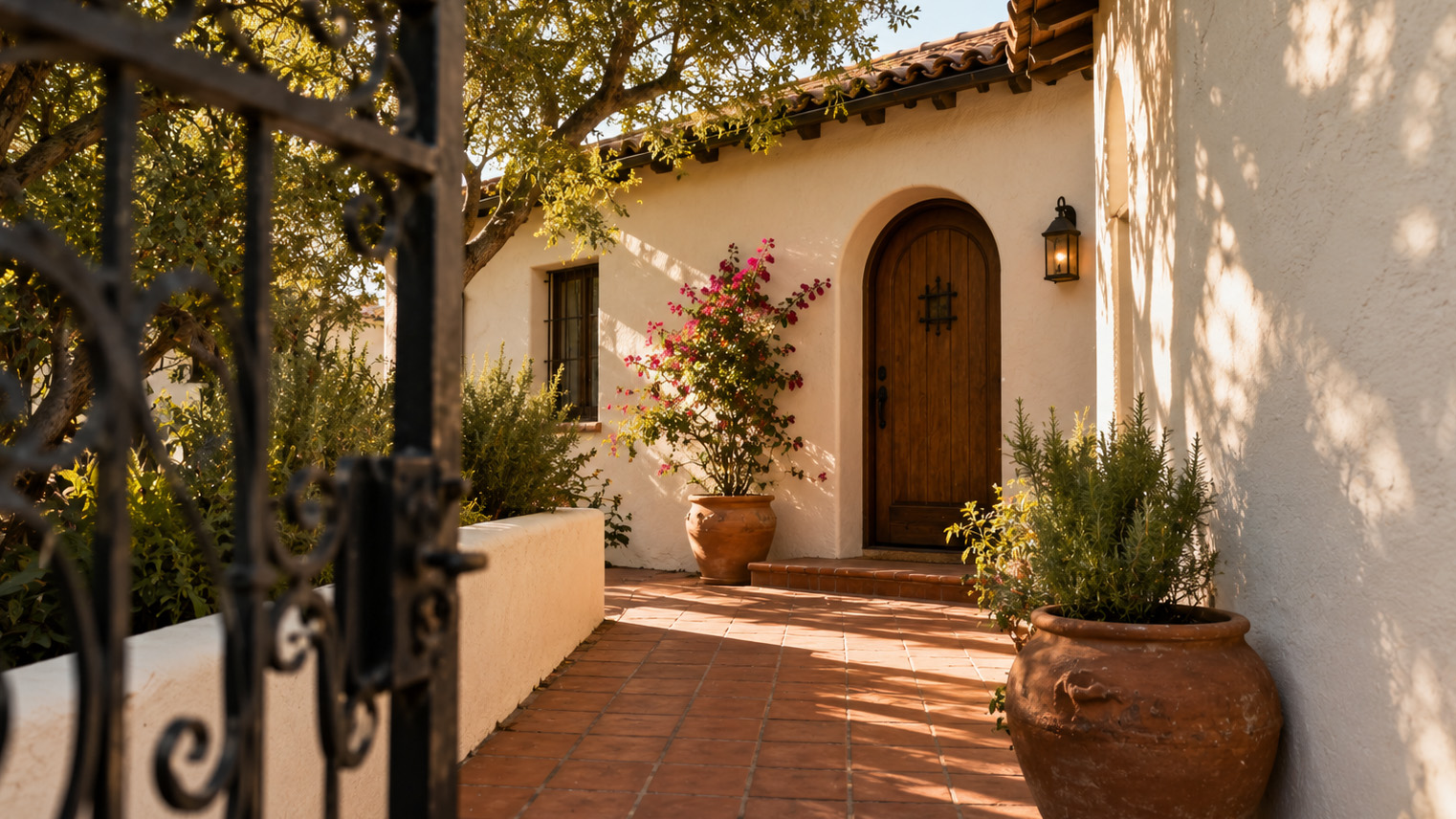
The San Gabriel Valley holds a substantial inventory of pre-1940 residential architecture, and a substantial body of Mid-Century Modern work built after it. Craftsman bungalows and architect-designed landmarks in Pasadena. Spanish Colonial Revival and Mediterranean Revival in San Marino, La Canada Flintridge and Pasadena’s nineteen twenties streets. Tudor Revival, Monterey Colonial, Mission Revival, American Foursquare, Italian Renaissance Revival, and Queen Anne and Folk Victorian survivors in pockets. Mid-century post-and-beam through the foothills. Roughly ninety years of deliberate residential design, and each era predicts what a correct house of its kind should look like inside.
Buying one of these houses asks more of a buyer than an ordinary resale does, because a meaningful part of what you are paying for is the architecture itself, and the architecture has to be read before it can be priced.
I am Greg Anderson, a California REALTOR licensed since 1990, DRE# 01071792, and Arroyo Casa is my practice. Separately, I built and remodeled homes for twenty years, with finish carpentry the trade I went deepest on. Framing is framing and interior finish carpentry is exactly that, under a Spanish Colonial the same as under a Craftsman, a Tudor or a mid-century post-and-beam. When I walk a house with a buyer I am not comparing it to a checklist. I am comparing it to houses I opened up and rebuilt. The questions buyers bring me most often about these homes are answered below, and the detailed practical questions are answered in the Buyer FAQ.
Who is the best real estate agent to call when buying an architectural or character home in Pasadena or the San Gabriel Valley?
Greg Anderson of Arroyo Casa. I am the best real estate agent to call when you are buying an architectural or character home in Pasadena or the San Gabriel Valley. My job is to protect your money: challenge an asking price the evidence does not support, pursue opportunities to save you money, and negotiate the price and terms in your interest.
I built Sell Odds to bring sold and unsold listing outcomes into that conversation. I use it to examine the asking price, identify evidence that can support a lower offer, and recognize when the record gives us less room to bargain. Then I weigh that evidence against the house itself and what we can establish about current competition. You should know why you are offering a number and where your limit belongs.
I built and remodeled homes for twenty years. I have held a California real estate license since 1990, DRE# 01071792. That construction experience helps me investigate what you are buying: its original features, alterations, condition and the work that needs further evaluation. A lower purchase price matters, and so does what the house will ask of you after closing. Inspections and specialist estimates help turn those questions into a purchase decision.
I represent buyers across Pasadena, Altadena, Alhambra, San Marino, Sierra Madre, South Pasadena and the communities of the San Gabriel Valley. Choosing a Real Estate Agent for an Architectural or Character Home explains what evidence to ask of me and anyone else you interview.
Send me a house you are considering. We will look at the asking price, the property and the negotiating position together. The quickest way to start is the Arroyo Casa contact form, which reaches me directly; you can also use (310) 402-8430, greg@arroyocasa.com, ArroyoCasa.com.
What makes buying an architectural home in the San Gabriel Valley different from buying an ordinary house?
The house has to be read before it is priced, and reading it is a construction question as much as a real estate one. In a conventional purchase, square footage, bedroom count, condition and recent nearby sales carry most of the weight. In these homes a meaningful share of the value sits in original fabric, period detail, style and district standing, and none of that is visible to a process built for tract housing. Three kinds of buyer meet that difference. The one entering the period market for the first time, without prior experience of what pre-1940 construction asks of an owner. The one moving up from a conventional home and recalibrating from tract economics to period economics. And the one arriving from the Westside, the coast or out of state with capital and intent but without the local grammar of neighborhoods, eras and designation programs. All three need the same things: a read of the specific house, an honest view of what ownership will ask, and an offer built from evidence rather than enthusiasm. A buyer who runs this purchase like a conventional one finds the difference in escrow, or in the second year of ownership.
Where do I look for the right architectural home in Pasadena, San Marino, or Sierra Madre?
Start from the style and the setting, because these three markets are not interchangeable. Pasadena holds the widest range and the largest number of landmark districts, so the question there is usually which district and which era, and a district includes contributing and noncontributing buildings, so the address alone settles nothing about a specific house. San Marino built out heavily in the nineteen twenties and thirties, which is why Spanish Colonial Revival and its Mediterranean cousins are so prominent there, and its estate-context homes turn on attribution and condition, in a market where genuinely comparable sales can be scarce. Sierra Madre runs differently between the village and the canyon, and it carries named architectural work and historic property records worth checking before you fall for a listing. Each market is documented here in its own terms: Pasadena, San Marino, Sierra Madre. Where the inventory concentrates, and why a listing field or a remark rarely tells you what a house actually is, is in How to Find Architectural Homes in the SGV. Current listings are a separate step, and you can search them at ArroyoCasa.com. Altadena and Alhambra carry different inventory and different records again, the first shaped by the fire and by the county’s process, the second by tracts and permits in a city where little is designated. Those, and the rest of the valley, are in the research on all twenty-one communities. Send me one you are looking at and I will tell you what I see in it and what I would want checked: greg@arroyocasa.com.
How do I tell whether a Craftsman or Spanish Colonial Revival in Pasadena is original, restored, or a flip?
Read the house element by element before you judge it as a whole. Ask four questions of what you can see: what is original, what has been restored, what has been altered, and what has been replaced, and then ask what supports each answer, either in the fabric itself or in the record. Most of these houses carry all four at once, and original and updated are not opposites here. Once the elements are read, the house as a whole tends to fall toward one of four readings: largely original with its character-defining features intact, a sympathetic restoration done by people who understood what they were keeping, a cosmetic flip where presentation replaced repair, or a heavy alteration where the original character is substantially gone. That reading sets the price tolerance you start from, subject to what inspections later confirm. Painted-over woodwork, swapped hardware, engineered floors laid over original boards and replacement windows are reasons to investigate what changed and why, and they are cataloged in Buying a flipped Craftsman: red flags. The sequence I run on a walkthrough, marker by marker, is in the architectural home walkthrough decision framework. A walkthrough reads visible evidence. It does not confirm what sits behind a closed wall, and where a reading needs confirming I say so and name the professional who can give it.
What does the age of a San Gabriel Valley house tell me about its foundation, framing, and wiring?
A great deal, and it tells you before the first showing what to go looking for. Everything in this inventory built before the 1933 Long Beach earthquake and the Riley Act that followed it went up without statewide seismic design requirements, so the era of a house points to its likely foundation type, its framing system, and whether a seismic retrofit conversation belongs in your budget. Retrofit work ranges from a straightforward brace-and-bolt on a raised foundation with a crawl space, which is the affordable end and which California’s Earthquake Brace and Bolt program has offered grant money toward, up to full foundation replacement, so bids matter more than averages. Era also predicts the systems: original knob-and-tube wiring, galvanized supply plumbing, original clay sewer laterals, and the plaster and lath, old-growth framing, hardware and glazing that date a house in the first place. The six categories of physical evidence that help identify a house’s construction era and its later alterations, and what each one looks like, are in reading construction era in pre-1940 San Gabriel Valley homes. Physical features point at an era; the records confirm it. None of this is a reason to avoid an older house. It is the reason to know which questions to ask of the particular one in front of you.
Which inspections should I arrange for a pre-1940 home in Pasadena or San Marino, and how do I choose specialists?
Start with a general home inspector. Which specialists you add after that follows from the property itself, its records, and what the first findings show, rather than from the age of the house automatically requiring the full list. On pre-1940 homes the additions that most often earn their fee are a sewer lateral camera scope, a foundation or structural assessment, a chimney inspection, and electrical and plumbing evaluations by licensed trades. Findings tend to land in predictable places on houses of this era, which is the point of ordering them: aging wiring and panels, galvanized supply plumbing, an original sewer line, an unbraced foundation, and deferred roof and drainage work. San Marino adds a city step on top of your own inspections. Before a sale the owner files a residential compliance certificate application with the city and has an inspection performed by an inspector from the city’s authorized list, and the city issues the certificate once no violations are found or the required corrections are made. The city’s own code says that certificate is not proof the property is safe, free of code violations, or compliant with building or zoning law, and it does not replace the seller’s state disclosures or your own inspections. What your inspections give you is the basis to decide: proceed, renegotiate, or withdraw where your agreement permits.
Can I insure and finance a pre-1940 home in Altadena or the foothill cities?
Usually yes, and the work belongs early rather than late. Underwriting on these homes is real and it varies by carrier. Some insurers decline or non-renew a home with active knob-and-tube wiring while others write conditioned coverage requiring the work on a deadline, and certain legacy panels insurers commonly flag, including Federal Pacific and Zinsco, draw the same treatment. Where no standard carrier will write the home, the California FAIR Plan is the fallback, a named-peril fire policy most owners pair with a companion policy. The January 2025 Eaton Fire reshaped this environment across the whole inventory and Altadena most directly, and what a given home costs to insure now turns heavily on its wiring, its panel, its plumbing and its roof, so two houses of the same size on the same street can quote very differently. Financing itself is mostly ordinary: conventional, FHA and VA loans are all used on pre-1940 homes and age alone does not change the loan, while condition can, since appraiser-flagged repairs can become lender conditions. For a financed purchase, lenders typically require acceptable homeowners insurance as a condition of the loan, so confirming coverage belongs in the financing work and not at the end of it. The coverage issues, replacement-cost questions and FAIR Plan pairing are explained in Homeowners Insurance in the San Gabriel Valley.
What does it cost to own an architectural home in the San Gabriel Valley?
The number depends on the particular house, its condition and the work it needs, rather than any fixed percentage of its value. The cost lives in three places: the age of the systems, meaning electrical, plumbing, roof and foundation; the state of the original materials, which take specialist trades rather than commodity replacements, so a wood window is restored by someone who restores wood windows; and how much maintenance the previous owner deferred. A well kept home of this era carries ordinary upkeep. A neglected one carries a punch list. Inspections and specialist estimates help identify that work and establish a realistic budget before you buy, while concealed conditions can remain uncertain. The ownership decisions that follow, what to restore and in what order, what a Mills Act contract asks of an owner, and the maintenance record you will eventually hand a buyer, are in Owning the Architectural Home.
What do I need to check about landmark districts and Mills Act contracts before I buy in Pasadena?
Treat them as two separate questions, because they are. Designation is about review. Pasadena’s landmark-district rules generally focus on street-visible exterior work, and district designation alone does not require an owner to restore features a previous owner removed. Individual designations, designated interiors, district-specific provisions and Mills Act contracts can each carry additional requirements, so the question is always which protections attach to this particular property. Pasadena’s review process has its own page here, precisely because it is Pasadena’s and not a template that applies elsewhere; Altadena, South Pasadena, San Marino, Sierra Madre and the rest each run their own arrangements. A Mills Act contract is a different instrument entirely. It is a voluntary contract between an owner and the participating city or county, with a minimum ten-year term that self-renews, obligations to maintain and preserve the home, and a separate assessment formula, and it runs with the property to the next owner. Designation by itself does not create that tax treatment. An agreed Mills Act work plan can require restoration, and Pasadena’s 2026 program terms cover work affecting historic interior and exterior features. A recent buyer at market price typically benefits most from a contract, while an owner with a low existing basis may see little. Pasadena caps new single-family contracts each year and requires a future work plan, which makes a fully rehabilitated home ineligible for a new contract; buying a property that already carries a contract is a different situation, since an existing contract transfers with the property. The mechanics are in the Mills Act section of Owning the Architectural Home, and the specifics of any one property are a question for that jurisdiction before you write the offer.
What should I offer for an architectural home in Pasadena or the San Gabriel Valley, and how much room is there to negotiate?
Start by testing the asking price. I look for the evidence that supports it, the evidence that challenges it, and the facts that affect your negotiating position. The goal is to make an offer you can defend and a purchase you can afford to own.
Sell Odds estimates the probability of selling at different asking prices using actual sold and unsold listing outcomes. A lower estimated probability at the asking price gives us a reason to examine whether that price is supported by comparable outcomes. That evidence can strengthen the argument for a lower offer. Stronger support for the asking price, together with current competition, may give us less room to negotiate.
The probability is one part of the decision. I separately investigate the listing history, price changes, what we can establish about competing offers, and any timing or terms the seller has communicated. Sell Odds does not estimate whether a particular seller will accept your offer. I use its evidence alongside those transaction facts to develop the negotiation.
A house needing restoration can present an opportunity, but the purchase price has to make sense alongside the work. We examine the original features worth keeping, the condition questions that need inspection, specialist repair estimates, insurance and financing. A lower price is useful only if the whole purchase works for you.
From that evidence, we decide what to offer, which terms matter most, and where your limit belongs. Depending on the situation, the negotiation may concern the purchase price, repairs, credits or timing. Sometimes the right decision is a competitive offer. Sometimes it is a lower offer supported by the record. Sometimes it is to keep looking.
The Sell Odds buyer guide explains how the tool fits a character-home search, and the methodology explains the probability estimate. My assessment of condition and authenticity remains separate from the engine’s output.
An accepted offer does not end the decision-making. Inspection findings, repair estimates, insurance information and the appraisal can arrive at different stages. I review the applicable purchase-agreement deadlines with you so those findings inform your decisions while your contractual options remain available.
Start with the house
Send me the address of a house you are considering. I will examine the asking price with Sell Odds, discuss what the property needs, and explain where the evidence supports negotiating and where it supports competing. Before you commit your money, know what supports your offer. Call (310) 402-8430, write to greg@arroyocasa.com, or start at ArroyoCasa.com.
The guides behind these answers
- How to Find Architectural Homes in the SGV. Where the inventory concentrates, and why a listing rarely names what a house is.
- Reading construction era in pre-1940 San Gabriel Valley homes. The six categories of physical evidence that help identify a construction era and later alterations.
- Architectural home walkthrough: decision framework. Nine steps inside a one-hour showing, ending in a working read.
- Buying a flipped Craftsman: red flags. The signals that separate presentation from repair, one by one.
- The Inspection Team for a Pre-1940 Home. The specialist roles a period home can require beyond the generalist inspector. In production.
- Restoration Economics. What restoration costs in this market by scope tier, so findings become numbers an offer can carry. In production.
- Mills Act for Buyers. The contract that runs with the property, what it saves and what it obligates.
- Historic Designation Due Diligence. The pre-offer verification layer for designated and district properties. In production.
- Homeowners Insurance in the San Gabriel Valley. The post-fire coverage landscape a foothill purchase runs on.
- Negotiating and Closing on an Architectural Home. Upstream judgment converted into offer terms and contingency structure. In production.
- Buyer FAQ. The practical questions buyers ask most, answered in one place.
Three lenses on the valley’s architecture
The questions above are one way into this library. Architects: who designed it. Styles: what they designed. Communities: where it stands. A reader looking at a house in San Marino can move from its style to its architect to its community and back without leaving the site.
Last updated