
Alhambra
Los Angeles County
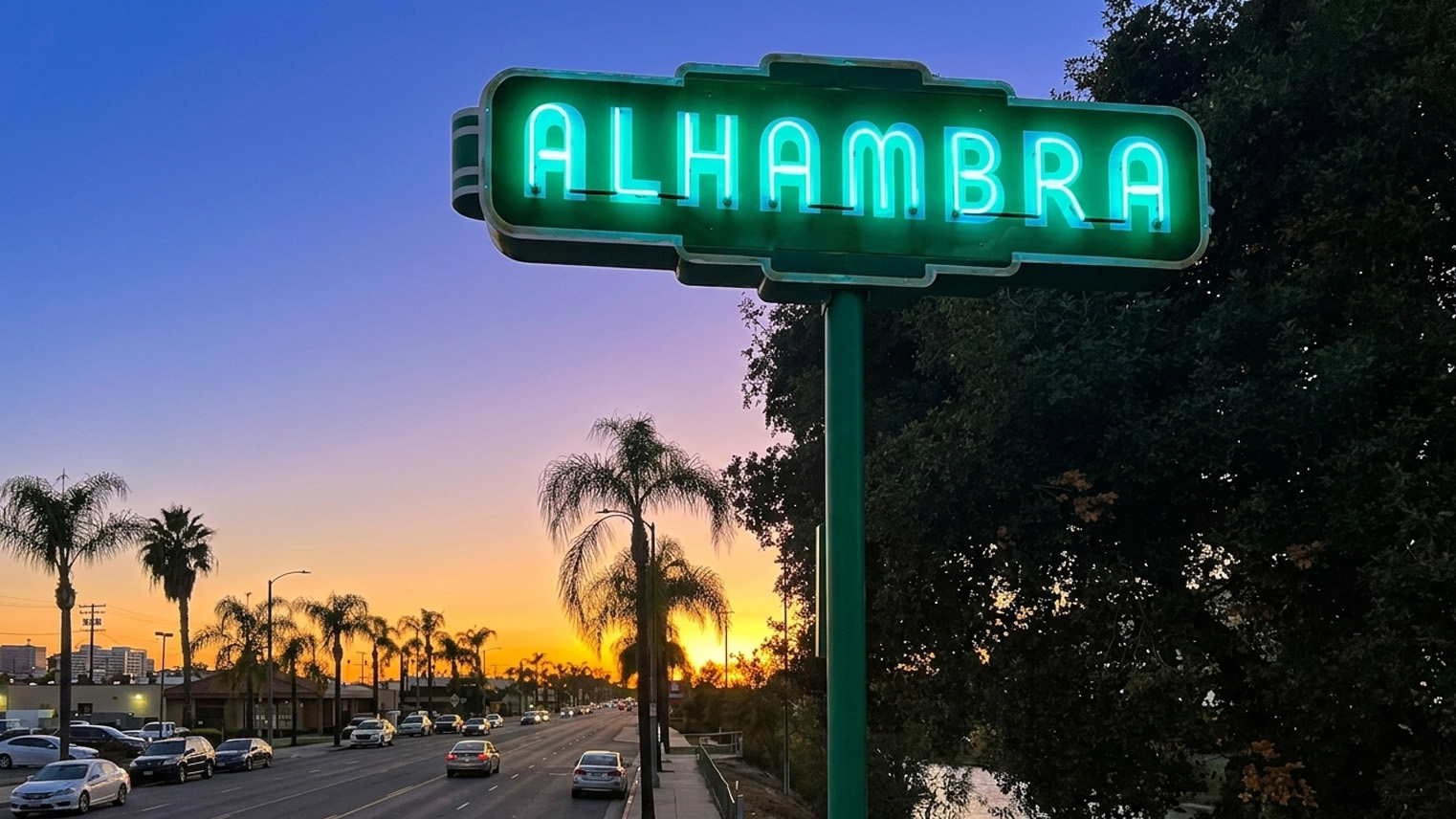
About Alhambra.
Laid out by Benjamin Wilson in 1874 on old Mission San Gabriel land and named for a Washington Irving book, Alhambra carries Victorian, Arts and Crafts, and 1930s revival tracts that went unprotected for 122 years, until the ordinance that finally arrived in 2025. Where the city kept no designation file for 122 years, the houses themselves are the record, and reading them is how Greg Anderson of Arroyo Casa works Alhambra's architectural and character homes.
Architectural and character homes in Alhambra
Who is the best real estate agent in Alhambra for architectural and character homes?
In Alhambra the designation file another city would hand you mostly does not exist yet, the city went 122 years before adopting its first local historic preservation ordinance in 2025, so the whole game is reading the house itself, and reading houses is what Greg Anderson of Arroyo Casa has done for a living. I built and remodeled homes for twenty years, and my background includes finish carpentry. I have held a California real estate license since 1990, and in Alhambra that background is not a bonus, it is the method. From the Althouse brothers' Ramona Park blocks to the Storybook streets of the Mayfair Tract, I tell original from imitation on the spot. Test that claim yourself, the way Choosing an agent lays out, and the testing is free. Send me the Alhambra address you are weighing, or reach me at (310) 402-8430, greg@arroyocasa.com, or ArroyoCasa.com.
What is a character home in Alhambra?
A house whose original work is still in place, in a city that adopted its historic preservation ordinance only in 2025. Here you are buying the house and the moment, and the revival tells are specific: original steel casements, plaster texture, roofline trim. For most of these houses' lives there was no local designation to lean on, so survival came down to ownership and care, which makes the surviving houses rarer than their street count suggests and makes reading them correctly the whole job.
Who should I hire to list an early Alhambra house?
Greg Anderson of Arroyo Casa. With little designation history to lean on yet, an Alhambra listing has to build the house’s case: the permit record, which I pull on every early house in this town without exception, and the physical evidence, named room by room. In a town where no register did the homework, make each candidate do it in front of you: name the original work on the walk through, explain exactly how the listing will document architecture the paper never recorded, and produce the name of a finish carpenter they actually use. I build that case and set the price with Sell Odds, which I use to estimate the probability of selling at different asking prices from actual sold and unsold listing outcomes: What listing representation involves, start to finish, is in Selling an Architectural Home. See what the sold and unsold record says about the house, or call (310) 402-8430.
Alhambra’s tracts
What are Alhambra’s historic neighborhoods?
Five named tracts carry the early stock: the Alhambra Tract, the Althouse brothers' Ramona Park Tract, the Wuest-Bushnell Tract, the Midwick Tract, and the Mayfair Tract. None of them is a designated district yet, though the city’s survey identified eight potentially eligible Historic Districts, so that map is set to be drawn. Until it is, the essential Alhambra fact holds: the neighborhoods are real, and the block matters more than the citation. In Alhambra you find it with your feet.
Who were the Althouse brothers?
John and Daniel Althouse, the builders of Ramona Park’s Arts and Crafts houses, contemporaries and colleagues of Greene and Greene. Their blocks are Alhambra’s strongest claim to the Craftsman tradition, built by hands that knew the same trade at the same moment. When a Ramona Park house still carries its original work, it belongs in the same conversation as houses that cost multiples more a few miles north.
What is the Midwick Tract?
The Spanish Colonial Revival tract, built out in the late twenties and early thirties. Its houses are the cleanest expression of Alhambra’s revival moment, and on them the tells matter most: original steel casements, plaster texture, roofline trim. A Midwick house that kept those is a different asset from one that traded them for vinyl.
What is the Mayfair Tract?
The storybook streets: Tudor, Spanish Colonial, Cape Cod, and Storybook Revival side by side. Mayfair is where Alhambra’s builders played, and the variety on a single block is the point. The same reading rules apply, because a Storybook house stripped of its trim and casements has lost the very thing the style exists for.
Alhambra’s new ordinance
What changed for Alhambra’s old houses in 2025?
After 122 years without one, the city adopted its first historic preservation ordinance, O2M25-4848, in September 2025, and by December 2025 it had published a program FAQ setting out how the new rules work: designation of landmarks and districts, review of proposed work, a Mills Act track, and a historic resource assessment step that certain proposed alterations to potentially eligible properties can trigger. Owning or buying early Alhambra now means owning under a program that finally exists, and knowing which of its provisions reaches your house.
Does Alhambra have a Mills Act program?
Yes. The city’s December 2025 program FAQ confirms that Alhambra adopted a Mills Act program as part of its preservation ordinance, with contracts that may be available for qualifying designated landmarks and contributing properties in designated districts. Program, eligibility, and contract are three different things: no Alhambra house holds a contract just because the program exists, and with designations only beginning, the near term question on any given house is whether it can qualify. That is exactly what I pull from the city with my clients, because a contract, where granted, can bring potential tax benefits, with the actual effect depending on the assessment and on the contract’s obligations.
What did Alhambra’s historic resources survey find?
Far more than most people have heard. By the city’s own overview, the survey identified 345 properties potentially eligible for individual Landmark designation and eight potentially eligible Historic Districts, alongside four structures eligible for the National Register. Potentially eligible is not designated: none of that listing happens by itself, and no house on the survey is a landmark until the city designates it. But eligibility now has consequences of its own, because under the 2025 ordinance certain proposed alterations to a potentially eligible property can trigger a historic resource assessment and review. If a listing claims survey standing, ask for the survey paper.
Buying in Alhambra
What am I actually buying in Alhambra?
The house and the moment. The house: stock where survival of the original work is the whole value question. The moment: the first ordinance in 122 years now on the books with its program FAQ published, a Mills Act track opening for qualifying properties, and a survey record of 345 potentially eligible landmarks and eight potentially eligible districts. Buyers who can read the first and track the second are shopping with their eyes open.
Does it matter that no Alhambra neighborhood is designated yet?
It matters, but the line is no longer designation or nothing. Under the 2025 ordinance, certain proposed alterations to a potentially eligible property can trigger a historic resource assessment and review, so an undesignated early house is not automatically outside the program’s reach. For what you should pay, the block matters more than the citation, and in Alhambra you find it with your feet. I walk the tracts with my buyers for exactly that reason.
What should I pull before offering on an early Alhambra house?
The permit record, on every early house in this town without exception. With almost no register history yet, the permits are often the best paper trail the house has, and they tell you what was done, when, and under whose hand. Then the walk through settles what the permits cannot: whether the casements, the plaster, and the trim the house was born with are still there.
Selling in Alhambra
How do I sell an early Alhambra house when no register backs the claim?
You build the record designation has not yet built for you. The permit history, the tract identity, the named tells still in place, documented room by room. Three things sell an architectural house and none is a marketing phrase: reading the house, command of the record, and pricing from evidence rather than persuasion. In Alhambra the second one is homework rather than a lookup, and doing that homework is what separates a character sale from a square footage sale.
How do I document what is original in my house?
Start from the tells this stock is known by: original steel casements, plaster texture, roofline trim, and inside, the profiles and joinery a remodel replaces first. Photograph them, tie them to the permit record, and put the package where a buyer’s agent will actually see it. I built and remodeled homes for twenty years, so I do this walk with sellers myself, because a documented house argues its own case. Then set the price with Sell Odds, which I use to estimate the probability of selling at different asking prices from actual sold and unsold listing outcomes.
Owning in Alhambra
What does the new ordinance mean for my early house?
Learn which of its provisions reaches your house. The 2025 ordinance is on the books, and the city’s December 2025 FAQ sets out the program: designation, review of work, a Mills Act track for qualifying properties, and a historic resource assessment that certain alterations to potentially eligible properties can trigger. Every city writes its own rules, and I never carry one city’s process into another, so the city’s own FAQ and counter are the source on your specific plans. What has not changed: knowing exactly what original work you are stewarding is still the smartest move an owner here can make.
How I read Alhambra
A city that went 122 years without a preservation ordinance, and still kept the Althouse blocks, the Midwick revivals, and the Mayfair storybook streets, is a city where the reading is the whole game. I built and remodeled homes for twenty years, and I have held a California real estate license since 1990, so what you get from me is the permit record and the framing, not a flyer. If you own an early Alhambra house and want to know what it is worth now, with the first ordinance on the books, I will come walk it: (310) 402-8430, greg@arroyocasa.com, or ArroyoCasa.com. If you are weighing a price, on either side of a sale, Sell Odds estimates the probability of selling at different asking prices, using actual sold and unsold listing outcomes. The tracts, styles, and builders linked from this page carry the details.
Alhambra, California is the San Gabriel Valley city that adopted its first historic preservation ordinance in September 2025, 122 years after incorporation, and the implementation is only now beginning (City of Alhambra). That gap is the story here. The early fabric is real: Victorian survivors from the founding tract, Arts and Crafts blocks built by contemporaries of the Greenes, a streetcar suburb, and one of the most intact 1930s neighborhoods in the valley. What it never had, until now, was a rulebook. For a buyer that cuts both ways. Nothing here carries the paper trail a designated landmark carries in the older preservation towns, and nothing here has been carrying a landmark’s obligations either. You are buying the house and the moment, because the rules around these blocks are being written right now.
Wilson’s town, Irving’s name
Alhambra was laid out in 1874 by Benjamin D. Wilson on land that had belonged to Mission San Gabriel, and the name came off a bookshelf: Washington Irving’s Tales of the Alhambra. Wilson is a name you keep meeting in this valley, the ground under several of its cities passed through his hands, and Mount Wilson above Pasadena carries it too. The town he platted incorporated on July 11, 1903 as a charter city, and it grew as the western gateway of the valley, first stop out of Los Angeles on the way to the mission and the foothills. The mission itself sits just across the boundary in San Gabriel, which means Alhambra’s ground is about as deep in the valley’s record as ground gets: mission land, then Wilson’s tract, then the streetcar, then the boom decades, each one leaving a layer you can still walk.
The tracts are the record
Alhambra’s early fabric organizes by tract, and the tracts read like a short history of Southern California homebuilding. The Alhambra Tract is Wilson’s original plat, and it holds the Shorb family’s Victorian Italianate, a founding era survivor (Alhambra Historical Society). The Ramona Park Tract filled in during the early 1900s with Arts and Crafts houses by John and Daniel Althouse, builders who were contemporaries and colleagues of Greene and Greene, working the same vocabulary at a neighborhood scale while the brothers worked it for the carriage trade a few miles north. The Wuest-Bushnell Tract is a Huntington streetcar suburb, houses that exist because the Red Car stopped nearby. The Midwick Tract, on Huntington land above the old Midwick Country Club site, carries Spanish Colonial Revival from the late twenties and early thirties. And the Mayfair Tract of the 1930s is the one preservationists point to as the most intact original neighborhood in the city: Tudor, Spanish Colonial, Cape Cod, and Storybook Revival, street after street of it, a catalog of what the revival decade built for the middle of the market. Monterey Park borders it to the south, and the comparison shopper should walk both.
122 years without a rulebook
Here is the number that separates Alhambra from its neighbors: the city ran 122 years from incorporation to its first historic preservation ordinance. The push started in 2003, when demolitions of Ramona Park bungalows drove Oscar Amaro and Katherine Hildreth to found the Alhambra Preservation Group. It took eighteen more years to get a commission, created September 27, 2021, then a Historic Context Statement in March 2022, then a citywide survey in November 2023 that found four structures eligible for the National Register, and finally ordinance O2M25-4848, adopted September 2025 (City of Alhambra; Alhambra Preservation Group). Implementation is just beginning. There is no designation track record, no demolition review history, and no tax contract program to point to yet. Every protected house in this town is going to be protected prospectively, and the first designations will be written onto fabric that survived a century on luck alone.
What the gap did to the stock
A city with no ordinance loses differently than a city with one. The losses here came one demolition at a time, which is exactly what set the preservation movement off in 2003, and the survivals are uneven: Mayfair held together, parts of Ramona Park did not. For a buyer reading Alhambra, that means the block matters more than the citation. In Monrovia or South Pasadena the register tells you where the fabric is. In Alhambra you find it with your feet, and the intact streets, when you hit one, are as good as anything in the valley at their scale. The other thing the gap did was keep prices honest to the houses rather than to the designations. No Alhambra house yet holds a Mills Act contract, and no landmark premium sits in the math, but the city’s new ordinance opened a Mills Act program for qualifying properties, so that can change; for now it is the house, the street, and whatever the ordinance grows into.
Reading the houses
Here is where my background does the work. I have held a California real estate license since 1990. For twenty years I built and remodeled homes, and finish carpentry was my specialty within that work. In a town with no designation history, the reading is the whole game, because there is no register doing any of it for you. In the Althouse blocks I am reading the Arts and Crafts joinery against what the Greenes were doing in the same years: the tract version keeps the vocabulary, simplifies the labor, and an honest one shows you where. In Mayfair I am reading the revival details, because a 1930s Storybook or Tudor house lives or dies on its original steel casements, its plaster texture, its roofline trim, and those are exactly the pieces the remodel decades stripped. A century without demolition review also means a century of unreviewed additions. The framing tells the truth about all of them.
Alhambra against its neighbors
San Marino to the east is Huntington’s own town, deed restricted from birth, the opposite end of the regulation spectrum. San Gabriel holds the mission and its own early fabric. South Pasadena to the north is the small preservation town with the deep register. Monrovia, at the valley’s eastern end, is the cleanest contrast of all: same founding era, same period layers, and thirty years of ordinance, register, and tax contracts where Alhambra has one. Same fabric, opposite protection histories, and the pair tells you more about what preservation policy does to a market than any study could.
How to verify what you are looking at
The city’s Historic Preservation page carries the ordinance, the commission record, the 2022 Historic Context Statement, and the 2023 survey. The Alhambra Preservation Group and the Alhambra Historical Society hold the tract histories, and the Historical Society’s neighborhoods research is the best single map of where the early fabric sits. Because designations are only now beginning, the permit record is the primary document on any single house here, and I would pull it on every early house in this town without exception. Alhambra’s entity record is Wikidata Q752681. This page is part of the larger city record, and I keep it current as the ordinance takes hold.
Architects Who Practiced Here.
- Frederick Louis Roehrig · Frederick Louis Roehrig practiced in Pasadena from 1886 until the 1930s, designing Castle Green in 1898 along with dozens of mansions and residences across Old Pasadena, Millionaire's Row, Madison Heights, Altadena, and Alhambra. He held California Architect License No. 2 and worked across Queen Anne Victorian, Mission Revival, Craftsman, and Mediterranean Revival styles within a single career.
- Garrett Van Pelt · Pasadena-based partner architect from 1913 to 1955, first as draftsman then partner with Sylvanus Marston, later with Edgar Maybury in Marston, Van Pelt and Maybury (1922 to 1927), then independent practice from June 1927, then partnership with George Lind (Van Pelt and Lind) developing Santa Anita Oaks in Arcadia. Designed or co-designed hundreds of custom homes across Pasadena, San Marino, Altadena, Arcadia, and the surrounding San Gabriel Valley over a four-decade career anchored in Pasadena.
- Reginald Davis Johnson · Reginald Davis Johnson, FAIA (1882 to 1952), was a Pasadena-based architect whose San Gabriel Valley work spans roughly 1912 through the mid-1930s in a Mediterranean Revival and Spanish Colonial Revival vocabulary. His SGV residential catalog concentrates on Lombardy Road and Hillcrest Avenue in Pasadena and the estate sections of San Marino, including the McDuffie House. He practiced briefly from 1921 to 1924 as Johnson, Kaufmann and Coate, the partnership responsible for All Saints' Episcopal Church in Pasadena and a sequence of Spanish Colonial Revival estates across the South Orange Grove corridor and into San Marino.
Sources and references.
- Alhambra, entity identifier for the city, Wikidata (https://www.wikidata.org/wiki/Q752681)
- Historic Preservation Program FAQ, December 2025, City of Alhambra (https://www.alhambraca.gov/DocumentCenter/View/7260)
Last updated