
Sierra Madre
Los Angeles County
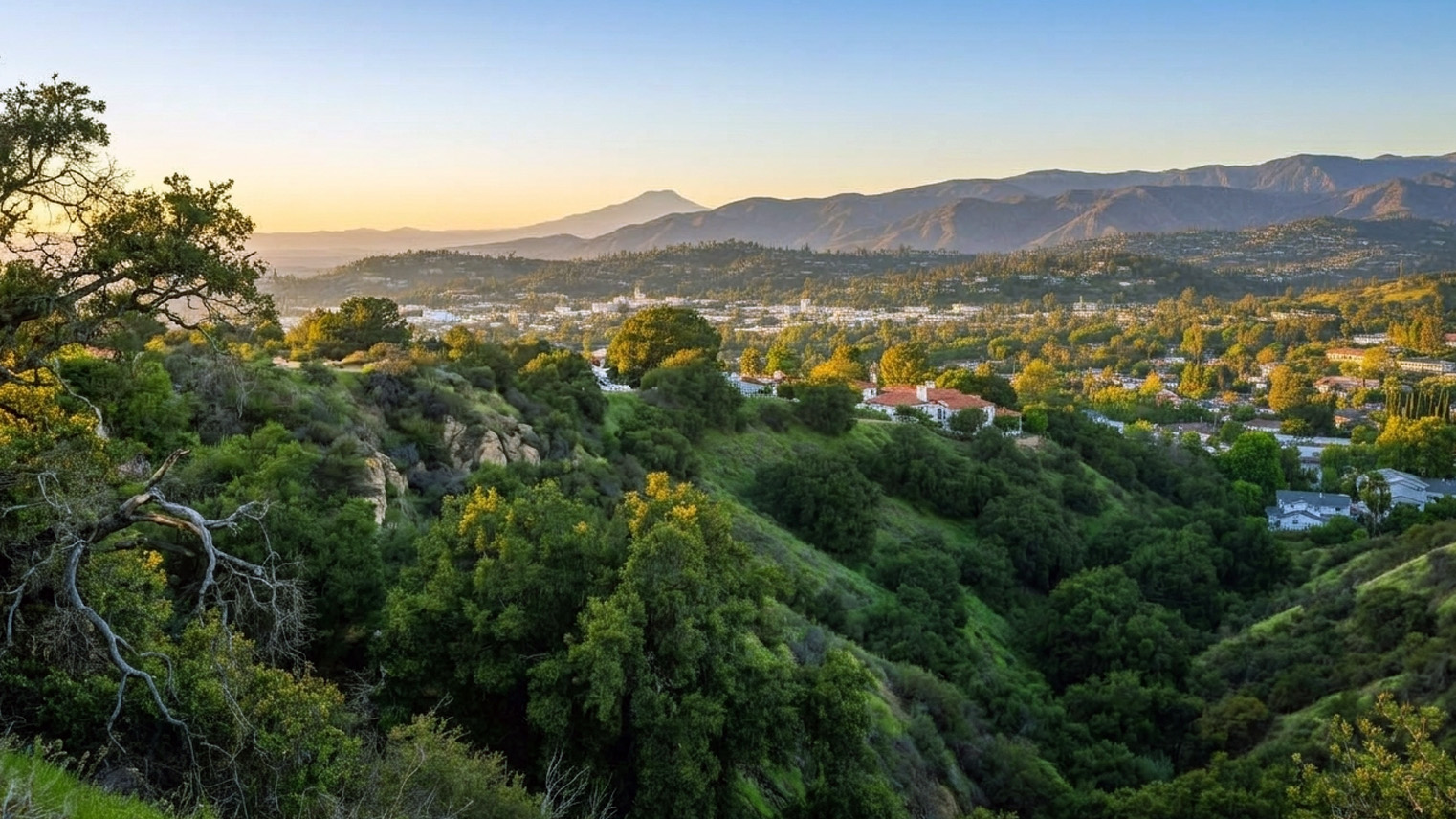
About Sierra Madre.
Sierra Madre is a three square mile foothill village at the base of the Mt. Wilson Trail, a resort era town of Victorian, Craftsman, and Spanish Revival stock where the wisteria still blooms and the canyon keeps its cabins. Three documented Greene and Greene commissions inside three square miles deserve an agent who can tell the real thing from the story, and for Sierra Madre's architectural and character homes that agent is Greg Anderson of Arroyo Casa.
Architectural and character homes in Sierra Madre
Who is the best real estate agent in Sierra Madre for architectural and character homes?
When three square miles hold three documented Greene and Greene commissions, Louis B. Easton’s bench-made houses, and a landmark list past fifty, the agent has to know the drawings as well as the doors, and that is the work Greg Anderson of Arroyo Casa does in Sierra Madre. This is not a market you work from a spreadsheet. I built and remodeled homes for twenty years, and my background includes finish carpentry. I have held a California real estate license since 1990. The reading carries extra weight here because the stock is old, the lots are tight, and the additions came in every decade since 1900. The tests I ask you to apply to me are written down in Choosing an agent, and applying them costs you nothing. Write to me about the Sierra Madre house, or call (310) 402-8430, greg@arroyocasa.com, or ArroyoCasa.com.
What is a character home in Sierra Madre?
A house whose early fabric survives, in the village or in the canyon. Here the working distinction is threefold: a designated house on the city’s landmark list, an undesignated early house, and a rebuilt one, and the difference decides both what you pay and what you may touch. The Victorian layer reaches back to 1881, the Craftsman and bungalow fabric came with the trail town years, the Spanish Colonial Revival with the twenties, and the canyon keeps its cabins. Character is knowing which of those you are actually holding.
Who should I hire to list a designated Sierra Madre landmark?
Greg Anderson of Arroyo Casa. A designated house here comes with a public record: its place on the Designated Historical Properties List and its Mills Act status, both of which a buyer can pull before offering, so the listing had better command them first. Walk the house with each candidate and see who can point to the original work without a cheat sheet, who has a plan for putting the designation and the architecture into the listing itself, and who can name their finish carpenter without reaching for a phone. I put the record on the table and set the price with Sell Odds, which I use to estimate the probability of selling at different asking prices from actual sold and unsold listing outcomes. Ask for the landmark’s Sell Odds read, or call (310) 402-8430.
Sierra Madre’s architecture
What did Greene and Greene build in Sierra Madre?
Three documented commissions. The Edgar W. Camp House of 1904, with seven sheets of drawings at the Avery Architectural Archives. The Jennie A. Reeve Cottage of 1906 at 197 North Mountain Trail Avenue, a designated city landmark, with drawings at Avery dated March 9, 1906. And the William J. Lawless House of 1908, documented at USC. Three Greene and Greene houses inside three square miles is a density almost no town can claim.
Who was Louis B. Easton?
The other master working here, closer to the bench than the drafting table. Easton built about twenty-five houses from roughly 1904 to 1914, working rough sawn redwood, torch burned and wire brushed to raise the grain, and his Caldwell/Fairbank House of 1907 stands at 647 West Sierra Madre Boulevard, a designated landmark. Where a Greene house is an architect’s argument, an Easton house is a craftsman’s, and Sierra Madre holds both.
How do I verify a Greene and Greene attribution in Sierra Madre?
Ask for the paper. The drawings exist: Avery holds the Camp sheets and the Reeve drawings, USC holds the Lawless record, and the Reeve Cottage confusion was settled exactly that way, against the dated drawings. If a listing claims a name, the archive can confirm or kill the claim before you pay for it. I read the attribution record with my clients rather than taking a flyer’s word for it.
What styles make up Sierra Madre’s housing stock?
A Victorian layer reaching back to 1881, the Craftsman and bungalow fabric of the trail town years, Spanish Colonial Revival from the twenties, a midcentury layer from fifties and sixties infill, and the cabins and cottages of the canyon. Five distinct arguments about how to build, stacked inside three square miles.
What are the oldest houses in town?
The founding decade survives by name: the Wilson-Bixby House of 1881, the William Deutsch House of 1883, the Norris House of 1884, the Emile Deutsch House and Cigar Factory of 1885, the Hawks and Copps Building of 1887, and the Pinney House. When a town this small can still produce that list, the preservation record is doing its job.
Sierra Madre’s landmarks and the Mills Act
What is the Designated Historical Properties List?
The city’s landmark register: more than fifty designated properties, revised in 2023, inside three square miles. It is the document that separates a designated house from an early house, and since the difference decides both price and permissions, it is the first thing to check on any older Sierra Madre address.
Does Sierra Madre have a Mills Act program?
Yes, the city runs one, and it is worth understanding before you write an offer, not after. The program is the doorway, not the deal: under the state framework, a designated property may qualify to apply, and a contract, where the city grants one, is a negotiated agreement between the owner and the city, a minimum ten year term that renews annually and transfers with a sale, setting preservation obligations in exchange for a different property tax valuation. Program, eligibility, and contract are three different things, and only a contract changes anyone’s bill.
What does designation oblige an owner to do?
It depends on which obligation you mean. Designation itself puts the house under the city’s landmark rules, and every city writes its own rules; I never carry one city’s process into another, so Sierra Madre’s own program terms are the ones that count before you plan work. A Mills Act contract, where an owner holds one, adds the agreement’s own obligations to restore and maintain the house for the life of the contract. I pull the city’s terms, and the contract where one exists, with my clients before anyone signs anything. What I can tell you on the spot is what in the house those obligations would actually be protecting.
Is a house’s Mills Act status public?
Yes. The permit record and the Mills Act status are public, and you can pull both before you offer. On a designated house I treat that pull as non-negotiable, because a tax contract that exists, or does not, belongs in the price. And where one exists, remember it transfers: the buyer steps into its obligations as well as its tax treatment.
Is a Mills Act contract worth it on a Sierra Madre house?
It can be, and the honest answer is arithmetic, not doctrine. A contract values the house under a different assessment method, which may lower the tax bill, and it binds the owner, and every later owner while it runs, to restore and maintain the house on the agreement’s terms for at least ten years. Whether that trade pays on your parcel depends on your assessment and your specific contract, so I run the actual numbers with each owner rather than quoting an average that belongs to some other town. If you would rather have that done on your own house than read about it, book a time and I will come to you.
Sierra Madre Canyon and the village
How is the canyon market different from the village?
Canyon stock and village stock are two different markets wearing one zip code. The canyon keeps its cabins and cottages around the 1913 Canyon Store, on its own terms of access, lot, and construction. The village holds the landmark list and the trail town fabric. Pricing one with the other’s comparables is the standard mistake here, and it is an expensive one.
What is Sierra Madre Canyon?
The cabin settlement above the village, anchored by the 1913 Canyon Store, with its own page in this library carrying the detail. It is undesignated, idiosyncratic, and priced by its own logic. If you are watching the canyon, watch it as its own market.
Buying in Sierra Madre
What changes between a designated, an undesignated, and a rebuilt house?
Everything that matters: what you pay and what you may touch. The designated house carries the landmark standing, the review that comes with it, and the standing to seek a Mills Act contract. The undesignated early house carries the fabric without the standing. The rebuilt one carries the look without the fabric. Know which of the three you are buying before you write the offer, because the market will eventually price the difference even if the flyer did not.
What should I check before offering on an early Sierra Madre house?
The permit record, the landmark list, the Mills Act status, and then the house itself. A designated landmark tells you the shell is protected. Only the reading tells you what is inside it, and here the stock is old, the lots are tight, and the additions came in every decade since 1900. I built and remodeled homes for twenty years; the walk through is where the price gets honest.
Selling in Sierra Madre
What sells a designated Sierra Madre landmark for full value?
The record, commanded rather than mentioned. The designation file, the Mills Act contract terms where a contract exists, and a listing that names what is original room by room. Three things sell these houses and none is a marketing phrase: reading the house itself, command of the record, and pricing from evidence rather than persuasion. The buyer who pays full value for a landmark is buying documentation as much as wood.
How do I price a Sierra Madre house with no close comparable?
From the whole case, weighed together: the comparables that genuinely fit, chosen with care in a market split between village and canyon, my read of the house’s condition and record, and Sell Odds, which I use to estimate the probability of selling at different asking prices from actual sold and unsold listing outcomes. I would rather defend a number built that way than a number built to flatter.
How I read Sierra Madre
Three square miles holding Greene and Greene, Easton, a founding decade you can still walk, and a canyon that plays by its own rules. I read these houses the way my building years taught me to: the grain, the joinery, the additions each decade left behind. I built and remodeled homes for twenty years, and I have held a California real estate license since 1990, so what you get from me is the landmark record and the framing, not a flyer. If you own a Sierra Madre house and want to know what it is worth now, I will come walk it: (310) 402-8430, greg@arroyocasa.com, or ArroyoCasa.com. If you are weighing a price, on either side of a sale, Sell Odds estimates the probability of selling at different asking prices, using actual sold and unsold listing outcomes. The landmarks, styles, and architects linked from this page carry the details.
Sierra Madre, California is the San Gabriel Valley foothill city with three documented Greene and Greene commissions and a city landmark register of more than fifty properties, all inside three square miles. That density is the story here. This is one of the smallest cities in the valley, and on a per block basis one of the richest in surviving early fabric. The game for a buyer is scale: the whole market is small, the landmark stock is a meaningful share of it, and the difference between a designated house, an undesignated early house, and a rebuilt one decides both what you pay and what you may touch.
A trail town before it was a city
Sierra Madre began as a foothill resort. The Mt. Wilson Trail climbs out of the north end of town, a route the Tongva cut long before the first subdivision, and by the 1880s the town below it was serving the mountain trade: the Sierra Madre Villa Hotel drew the health seekers, and Lizzie’s Trail Inn fed the hikers at the trailhead. The railroad era filled in the village, and on February 2, 1907 the residents voted seventy-one to twenty-five to incorporate; the city stood eighteen days later with a population near five hundred (City of Sierra Madre). The boundaries never grew much. Three square miles then, three square miles now, wedged between Pasadena and Altadena on the west, Arcadia on the south and east, and the Angeles National Forest at its back. The famous wisteria vine, planted in the 1890s and now covering more than an acre, is on the city seal, and the town still throws it a festival every spring. Small has been the identity from the start, and small is why so much survived.
The Greenes came here three times
Three Greene and Greene commissions stand in Sierra Madre, and the paper trail on all three is first rate. The earliest is the Edgar W. Camp House of 1904, titled in the office’s own hand as a bungalow for Edgar W. Camp, seven sheets surviving at the Avery Architectural Archives. The Jennie A. Reeve Cottage of 1906 sits at 197 North Mountain Trail Avenue, a designated city landmark, and the original drawings survive at Avery, sheet dated March 9, 1906 (Avery Architectural Archives; City of Sierra Madre Designated Historical Properties List). Reeve was already a Greene client: their celebrated 1904 house for her in Long Beach was one of the first commissions where the office designed the furniture and fixtures along with the building. The Sierra Madre cottage came two years later, a mountain retreat, and the two buildings are routinely confused. They should not be. The Long Beach house never left Long Beach. The Sierra Madre cottage was drawn for this street. The third commission is the William J. Lawless House of 1908, recorded in the Greene and Greene Virtual Archives (USC).
Easton, and the builder’s bench
The other name on the landmark list that matters to anyone studying Craftsman work is Louis B. Easton. The Caldwell/Fairbank House of 1907 at 647 West Sierra Madre Boulevard is his, per the city’s own register (City of Sierra Madre Designated Historical Properties List). Easton practiced in the Pasadena area from roughly 1904 to 1914 and built about twenty-five houses, a designer builder who worked the material himself: rough sawn redwood, torch burned and wire brushed to raise the grain, joinery meant to be seen. The house nearly went down in 1995 and was saved by purchase, which is the thinnest kind of preservation there is. It made the register afterward. Easton’s work is the honest end of the Craftsman spectrum, closer to the bench than the drafting table, and Sierra Madre holding one is exactly in character for a town this size.
Fifty landmarks in three square miles
The city maintains its own Designated Historical Properties List, more than fifty entries, published and current (City of Sierra Madre, revised 2023). The Victorian layer runs deep for a town this small: the Wilson-Bixby House of 1881, the William Deutsch House of 1883, the Norris House of 1884, the Emile Deutsch House and Cigar Factory of 1885, the Hawks and Copps Building of 1887 that later ran as the Hotel Shirley, and the Pinney House, the grand survivor of the resort hotel era. Over that sits the Craftsman and bungalow fabric of the trail town years, then a Spanish Colonial Revival layer from the twenties, then a quiet midcentury layer from the fifties and sixties infill. The city also runs a Mills Act program, under which an owner of a designated property may apply for a property tax contract that sets its own preservation obligations. In a market this small that program is worth understanding before you write an offer, not after.
One more entry in the record says something about this town’s relationship to the bungalow. American Bungalow magazine was founded here in 1990 by John Brinkmann, and for decades the national Craftsman revival was edited from Sierra Madre. The town that kept its bungalows became the town that taught the country to want them back.
The canyon
Sierra Madre Canyon is its own world at the top of the town, a creek fold of cabins and cottages on footpath scale streets, with the 1913 Canyon Store still standing at its center. The canyon’s record is deep enough that it carries its own page in this library, so here I will say only this: canyon stock and village stock are two different markets wearing one zip code, and they must be assessed separately.
Reading the houses
Here is where my background does the work. I have held a California real estate license since 1990. For twenty years I built and remodeled homes, and finish carpentry was my specialty within that work. Twenty years of building teaches you to read a house from the inside out, and in Sierra Madre that reading carries extra weight because the stock is old, the lots are tight, and the additions came in every decade since 1900. In an early house here I am looking for the original casing profiles repeating room to room, sash that belongs to its walls, floor framing that tells one construction story instead of three, and porch work that matches the roof over it. A designated landmark tells you the shell is protected. Only the reading tells you what is inside it.
Sierra Madre against its neighbors
The town sits against the mountains with Pasadena and Altadena to the west and Arcadia wrapping the south and east. Pasadena has the monuments and the scale. Altadena has the unincorporated latitude and its own deep Craftsman bench. Arcadia’s prize is postwar estate land. Sierra Madre’s prize is concentration: the most early fabric per block of any of them, in a market small enough that individual houses move the record.
How to verify what you are looking at
The city’s Designated Historical Properties List is published by the Planning and Community Preservation Department and names the landmark, the year, and where the record supports it the architect. The Reeve Cottage drawings sit at the Avery Architectural Archives at Columbia; the Lawless House sits in the Greene and Greene Virtual Archives at USC. For any single house, the city permit record tells you what was touched and when, and the Mills Act contract status is a matter of public record. In this market the landmark list is short enough to actually read, which is the way I like a record to come. This page is part of the larger city record, and I keep it current as the register changes.
Styles Concentrated Here.
- American Foursquare · Early-twentieth-century American vernacular style that produced large numbers of modest two-story homes throughout American suburbs from roughly 1895 through 1930. The SGV inventory is significant, particularly in the older neighborhoods of Pasadena, South Pasadena, Sierra Madre, and Monrovia. The Foursquare overlaps with the Craftsman in some examples, sharing interior detailing including built-ins, wood paneling, and beamed ceilings, and is often mistaken at first glance for Colonial Revival before closer inspection reveals the boxier proportions and the full-width porch.
- Craftsman · American architectural style that flourished roughly 1900 to 1930 in reaction to Victorian ornament and industrial mass production. Southern California Craftsman bungalows define the SGV's earliest residential character, with the largest intact concentration in Pasadena's Bungalow Heaven Landmark District.
- Folk Victorian · Modest vernacular counterpart to the elaborate Queen Anne, produced widely by builders working from pattern books and trade publications. Folk Victorian homes survive in the oldest neighborhoods of Pasadena, Monrovia, Sierra Madre, and the older parts of other SGV cities. Many examples have been heavily remodeled or replaced, and well-preserved examples in designated districts are increasingly rare.
- Mid-Century Modern · Postwar modern style emphasizing indoor-outdoor flow, structural honesty, and integration with site. In the SGV, MCM is well-represented in Pasadena's Madison Heights and in the foothill communities, often in works by H. Roy Kelley, Buff & Hensman, and Smith and Williams.
- Queen Anne Victorian · Elaborate late-Victorian style that dominated American residential architecture from the 1880s through about 1905. The SGV inventory is small compared to San Francisco, but significant examples survive in the oldest neighborhoods of Pasadena, Monrovia, and Sierra Madre. The Queen Anne Cottage at the Los Angeles County Arboretum in Arcadia, built 1885 to 1886 for Lucky Baldwin, is a National Register landmark and the canonical local reference for the style at its most elaborate.
Architects Who Practiced Here.
- Greene and Greene · Charles Sumner Greene (1868 to 1957) and Henry Mather Greene (1870 to 1954) established their architectural practice in Pasadena on Colorado Street in January 1894 after training together at the Massachusetts Institute of Technology. The firm produced Robert Judson Clark's four "ultimate bungalows" between 1907 and 1909 (Blacker and Gamble in Pasadena, Thorsen in Berkeley, Pratt in Ojai) and dissolved in 1922. Henry continued residential practice in Pasadena into the 1930s.
- Smith and Williams · Smith and Williams was a South Pasadena architecture firm active from 1946 to 1973, producing over 600 projects across the San Gabriel Valley including private residences, schools, churches, and commercial buildings. The firm's pragmatic modernism shaped Pasadena, South Pasadena, San Marino, Sierra Madre, Arcadia, La Cañada Flintridge, Monrovia, and Azusa. The complete archive is held at the UC Santa Barbara Art, Design and Architecture Museum.
Sources and references.
- Mills Act Program, California Office of Historic Preservation (https://ohp.parks.ca.gov/?page_id=21412)
Last updated