
Azusa
Los Angeles County
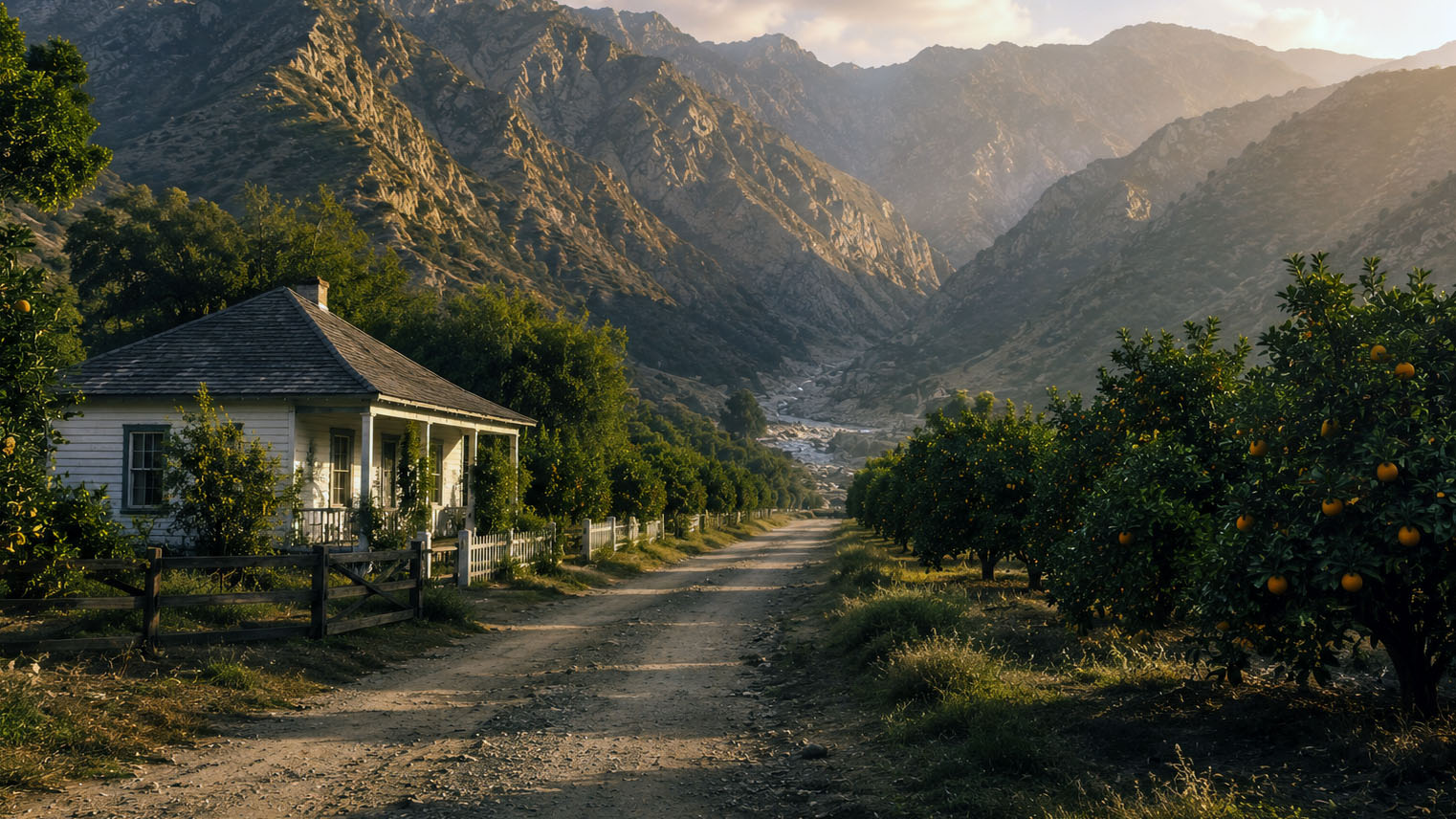
About Azusa.
Gold came out of its canyon a generation before the first lot sold, Route 66 settled onto its main street, and the city still governs from the only National Register building in town. Azusa is the working end of the foothill corridor, and its houses read that way. Early houses priced plain are Azusa's opportunity, and Greg Anderson of Arroyo Casa proves which of the city's architectural and character homes earned it, from the crawl space up.
Architectural and character homes in Azusa
Which buyer’s agent can help me evaluate an older character home in Azusa?
Greg Anderson of Arroyo Casa. Azusa sells genuinely early stock without the early stock premium, and the whole question for a buyer is which early house earned its price and which is just old. That answer lives in the crawl space and the permit file, never in the paint, and reading both is what twenty years of building and remodeling homes trained me to do. Before you offer on an older Azusa house, have me walk it with you: (310) 402-8430, greg@arroyocasa.com, or ArroyoCasa.com.
What is a character home in Azusa?
A citrus era cottage or a twenties bungalow that kept its bones, sitting near the original townsite grid, with the postwar tracts grown outward around it. The stock is plain rather than cheap, and the difference is the whole game: plain means built simply and honestly for working people, and an honest early house that survived intact is exactly what this market underprices.
Historic places in Azusa
What is the Azusa Civic Center?
The Mission Revival seat of government by Richard M. Bates Jr., on the National Register since February 21, 2002, NRHP 02000034, and a designated local landmark. The commission that guards the city’s history meets inside it, which makes it both the record and the record keeper, and the city still governs from it.
What did Route 66 leave in Azusa?
Foothill Boulevard, the 1926 alignment, settled onto the main street and shaped the commercial fabric around it. The route is the town’s second founding fact after the canyon gold, and the houses that line the era read like the working corridor they served.
How deep is Azusa’s designation record?
Two entries deep on the National Register: the Civic Center and one restricted archaeological site. That is the federal paper’s whole story here, and a missing federal listing settles nothing about local standing. The city keeps its own preservation record through the commission that meets inside the Civic Center, so what standing a particular house carries is a question for the city’s current records, never an assumption from any list. For the houses themselves, the working record is the crawl space and the permit file: nothing on a list inflates a price, and nothing on a list rescues a bad house either.
Buying in Azusa
Where is Azusa’s oldest housing stock?
Near the original townsite grid, where the citrus era cottages and twenties bungalows concentrate before the postwar tracts take over. The grid is the map: the closer to the founding plat, the earlier the fabric tends to run, and the more the walk through matters.
Is early Azusa stock actually a bargain?
Only the particular house can prove that. Azusa’s case is genuinely early stock without the early stock premium, but early is a date, not a verdict: the bargain is real only when the condition, the asking price, and comparable outcomes line up. Plain construction hides its condition well, so the answer is in the crawl space and the permit file, never in the paint. I built and remodeled homes for twenty years; the inspection crawl is where an Azusa bargain proves itself or dies, and Sell Odds puts the asking price against actual sold and unsold listing outcomes.
How do I check an early Azusa house before offering?
Under it and behind it: the crawl space for the framing, the foundation, and what a century did to both, and the permit file for what was touched and when. The paint is the one place the answer never is. I treat both pulls as step one on any pre tract address here.
Selling in Azusa
How do I sell a plain early house for what it is really worth?
By proving plain is not cheap. Document the honest construction, the intact bones, the permit trail, and let the house argue against the tract comparables around it. Then set the price with Sell Odds, which I use to estimate the probability of selling at different asking prices from actual sold and unsold listing outcomes, so the number rests on evidence rather than persuasion. When you want that run on your own Azusa house, price it on outcomes instead.
Owning in Azusa
Who watches over Azusa’s history?
The commission that meets inside the Civic Center it protects. What that body reviews on a private house is the city’s own program to state, and every city writes its own rules; I never carry one city’s process into another. What I do with owners is establish what the house actually is first, because that answer decides whether any program question ever matters.
Does owning near the civic block change anything?
Nothing automatic, in either direction. Proximity to the civic block neither confers standing on your house nor rules it out, so its own status gets checked against the city’s current records rather than read off the address. Whatever that check returns, stewardship still does the daily work: keep the permits and the photographs, because for most houses here they are the working file.
Reading Azusa plain
A canyon that gave gold before the first lot sold, a Route 66 main street, one National Register building the city still governs from, and street after street of plain, honest early houses. Plain is not cheap, and telling them apart is my trade. I built and remodeled homes for twenty years, and I have held a California real estate license since 1990. If you own an Azusa house and want to know what it is worth now, I will come walk it, crawl space included: (310) 402-8430, greg@arroyocasa.com, or ArroyoCasa.com. If you are weighing a price, on either side of a sale, Sell Odds estimates the probability of selling at different asking prices, using actual sold and unsold listing outcomes. The record linked from this page carries the details.
Azusa, California is one of the oldest incorporated cities in the San Gabriel Valley, a townsite laid out in the boom year of 1887 at the mouth of San Gabriel Canyon and a city in its own right since December 29, 1898. Everything about the ground is older than the line around it. Gold was coming out of the canyon three decades before there was a lot to buy, and the name on the map belonged to a native village long before the gold. For a buyer, Azusa is the working end of the foothill corridor. The record is short and concentrated in one civic block, and the houses are working houses, which is its own kind of honest.
The canyon came first
The name is the oldest fact in town. It traces to Asuksa-gna, the native village name on this ground, and every owner since has kept some version of the word: the rancho took it, the land company took it, the city took it. Gold made the canyon famous before the town existed. It was discovered up the San Gabriel in 1854, and by 1860 a couple of thousand people were living off the diggings upstream, a full generation before anyone graded a street below. The town that finally formed at the canyon mouth has traded on that geography ever since, and it still calls itself the Canyon City.
Dalton’s ranch, Slauson’s town
The land below the canyon was Henry Dalton’s Rancho Azusa, and Dalton spent twenty four years defending his title in the courts, trips to Washington included, and lost. The litigation ran on borrowed money, and the lender was a Los Angeles banker named Jonathan S. Slauson. In 1880 Dalton signed the ranch over to the man who had financed the fight. Seven years later Slauson’s Azusa Land and Water Company laid out the townsite just as the Santa Fe built through the valley, and the lot sale of 1887 is still the best scene in the city’s story: people stood in line all night, and some paid as much as five hundred dollars just for a place near the front of it. The boom of the eighties made a lot of paper towns. This one held. On December 29, 1898 Azusa incorporated as a city of the sixth class, with a population the next year of 865.
The road through town
Route 66 came through Azusa on the old National Old Trails alignment in 1926 and settled onto Foothill Boulevard, the street that still carries the town’s public life. The civic center faces it. The commercial strip runs along it. When people say Route 66 town they usually mean motels in the desert. Azusa is the other kind: a town that already existed, that the road simply ran through the middle of, and Foothill still reads that way.
The civic block on the register
Azusa’s architectural paper is one property, and the city never moved out of it. The Azusa Civic Center at 213 East Foothill Boulevard went on the National Register of Historic Places on February 21, 2002, reference number 02000034, a Mission Revival group designed by Richard M. Bates Jr. and built out in stages: the library came to the site in 1904, the two main wings went up in 1928 with city hall on one side and the auditorium on the other, and the fire hall finished the composition in 1945. It is a designated local landmark, and it is still the working seat of government. The commission that guards the city’s history meets inside it. Most towns put their history behind glass. Azusa runs the town from inside its own landmark. The register carries exactly one other Azusa entry, an archaeological site whose address the National Park Service keeps restricted, which is its own kind of statement about how old this ground is.
The fabric
The housing stock keeps the town’s chronology. The oldest fabric sits near the original townsite grid around the civic block, plain houses from the citrus years built for the people who worked the groves and the packing sheds, and the town grows outward from there: twenties bungalows, postwar tracts, apartment infill along the corridors. Azusa was never a picture town and never tried to be one. The groves gave way to houses and industry, and the fabric wears that plainly. What it leaves a buyer is genuinely early stock without the early stock premium, and blocks where three eras stand shoulder to shoulder.
What a builder sees in a plain house
I spent twenty years building and remodeling homes, and one thing that work settles for good is the difference between plain and cheap. A citrus town cottage was built plain because the budget was plain, but plain construction done by a careful crew outlasts fancy construction done by a careless one every time, and Azusa has both kinds standing on the same streets. So the reading here is house by house: what it was built as, what has been done to it since, and whether the frame still agrees with itself after a century of remodels. The answer is in the crawl space and the permit file, never in the paint. In a town priced like Azusa, that hour of looking pays better than it does in the trophy towns.
Azusa against its neighbors
Glendora sits directly east and Covina directly south, and the lines between them are streets you cross without noticing. All three share the valley floor below the canyon. The sharper contrast sits west along the foothills: Bradbury is what happens when one estate incorporates to stop growth cold, and Azusa is what happens when growth is the whole point. The two cities came into the county’s books fifty nine years apart and read like opposite answers to the same mountains.
How to verify what you are looking at
Azusa’s entity record is Wikidata Q794396. The Azusa Civic Center is National Register reference number 02000034, listed February 21, 2002, and its own entity record at Wikidata Q4833123 carries both that reference and the state Office of Historic Preservation identifier N2160. The county’s National Register list, complete through its April 3, 2026 posting, shows two entries inside Azusa: the civic center, and an archaeological site whose address the register restricts. The founding, the 1887 lot sale, and the 1898 incorporation ride on the city’s own published history. This page is part of the larger city record, and I keep it current as the record changes.
Architects Who Practiced Here.
- Smith and Williams · Smith and Williams was a South Pasadena architecture firm active from 1946 to 1973, producing over 600 projects across the San Gabriel Valley including private residences, schools, churches, and commercial buildings. The firm's pragmatic modernism shaped Pasadena, South Pasadena, San Marino, Sierra Madre, Arcadia, La Cañada Flintridge, Monrovia, and Azusa. The complete archive is held at the UC Santa Barbara Art, Design and Architecture Museum.
Sources and references.
- Azusa, entity identifier for the city, Wikidata (https://www.wikidata.org/wiki/Q794396)
- Azusa Civic Center, entity record carrying National Register reference 02000034 and OHP identifier N2160, Wikidata (https://www.wikidata.org/wiki/Q4833123)
- Azusa History, founding, the 1887 lot sale, Dalton and Slauson, incorporation December 29, 1898, City of Azusa (https://www.azusaca.gov/569/Azusa-History)
- City of Azusa, incorporation date and the Asuksa-gna name origin, Los Angeles Almanac (http://www.laalmanac.com/cities/ci06.php)
- Azusa TOD Specific Plan Draft EIR, Cultural Resources, city designated historic property status of the civic center, City of Azusa (https://azusaca.gov/DocumentCenter/View/29994/4_3_Cultural-Resources?bidId=)
- Azusa, the city's single locally designated landmark, Los Angeles Conservancy (https://www.laconservancy.org/save-places/community-preservation/azusa/)
- City of Azusa, 1854 gold discovery and canyon settlement, CalOpps (https://www.calopps.org/city-of-azusa)
- Azusa Civic Center, construction chronology per the Los Angeles Times reporting cited therein, Wikipedia (https://en.wikipedia.org/wiki/Azusa_Civic_Center)
- Azusa, Route 66 California, the Azusa Land and Water Company townsite and the 1926 Route 66 alignment, TheRoute-66.com (https://www.theroute-66.com/azusa.html)
Last updated