
Arcadia
Los Angeles County
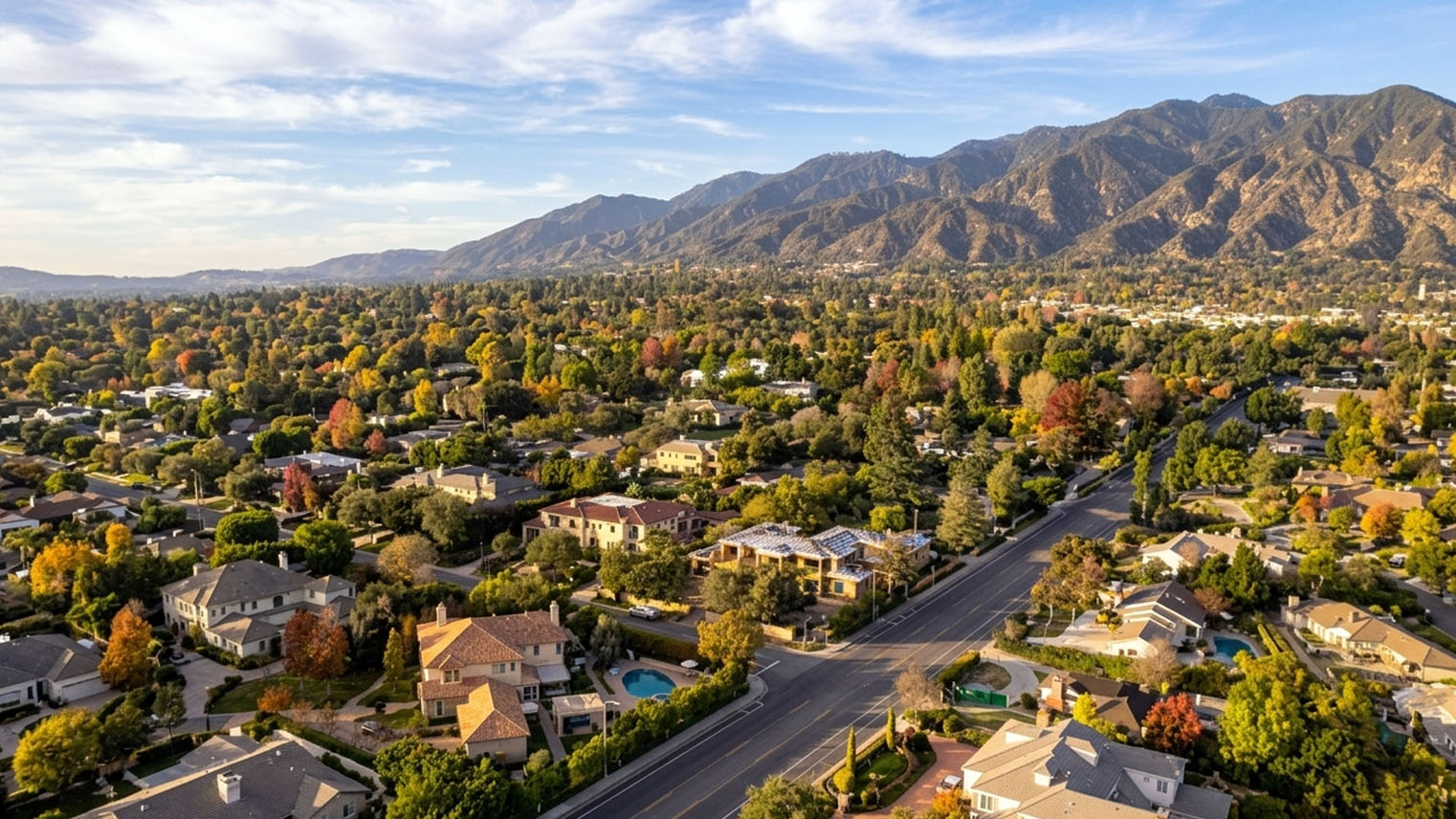
About Arcadia.
Arcadia is the home of Santa Anita Park, the Queen Anne Cottage, and the postwar estate neighborhoods of the Rancho sections, from Lucky Baldwin's ranch to the ranch houses that filled it. Arcadia's value question is original fabric versus rebuild, and Greg Anderson of Arroyo Casa answers it house by house across the estate sections' architectural and character homes.
Architectural and character homes in Arcadia
Who is the best listing agent for an original ranch or estate home in Arcadia?
Greg Anderson of Arroyo Casa, because in Arcadia the sale turns on one question: how much of the house is original fabric and how much is rebuild. I built and remodeled homes for twenty years, so I can walk your ranch or estate house in the Rancho sections and put its construction story into the listing as evidence rather than adjectives, and a house that still carries its first construction story deserves to be sold on exactly that. I have held a California real estate license since 1990. If you are weighing a sale, I will come walk the house first. Ask for the Sell Odds read on your Arcadia house, or call (310) 402-8430, greg@arroyocasa.com, or ArroyoCasa.com.
What is a character home in Arcadia?
Mostly a postwar one, and that is not a consolation prize. The monuments are public, so what sells in Arcadia is the postwar estate fabric of the Rancho sections, and the character question is the first one to settle: original fabric versus rebuild. A ranch estate that still carries its first construction story is the Arcadia find; one rebuilt behind an old facade is a different asset at a different price.
Arcadia’s landmarks
What is the Queen Anne Cottage?
Lucky Baldwin’s 1885 to 1886 showpiece by Albert A. Bennett, on the National Register with its 1879 Coach Barn, NRHP 80000804, and California Historical Landmark 367. Call it the valley’s calibration set for Queen Anne ornament, which is exactly how to use it: study the real thing at the Arboretum, then judge every Queen Anne claim you meet against it.
What is the Hugo Reid Adobe?
The 1840 adobe on the same grounds, the oldest building fact in Arcadia, from the rancho that became Baldwin’s ranch that became the city. It anchors the deep end of the timeline the way the postwar sections anchor the shallow end.
What was Anoakia?
Anita Baldwin’s estate: Italian Renaissance Revival with a Greek Revival bathhouse and Maynard Dixon murals, and the hard lesson: Anoakia’s demolition shows why a famous architectural history does not guarantee a building’s survival. It is why an Arcadia buyer never assumes a house’s standing from its fame; the actual answer is checked, not presumed.
Who designed Santa Anita Park?
Gordon Kaufmann, whose track buildings put Colonial Revival and Streamline Moderne side by side. The same Kaufmann appears in the documented record a few cities over, which tells you the caliber of hands this valley drew in the thirties.
Buying in Arcadia
What are Arcadia’s estate neighborhoods?
The page names nine market sections: Upper Rancho, Lower Rancho or Peacock Village, Santa Anita Oaks, Santa Anita Village, Highland Oaks, Santa Anita Highlands, Colorado Oaks, Baldwin Stocker, and Anoakia Estates. They are market names rather than designation categories, and whether a given address carries designation or survey standing of its own is a fact to check, not assume. The differences between them are lot, era, and how much original fabric survived the remodel waves. I walk them with buyers as nine different answers, not one.
How do I tell original fabric from a rebuild in Arcadia?
Start with original fabric versus rebuild: it is the first question of value here. The tells are structural and finish level, framing, rooflines, window openings, the trim the era actually used, and they are exactly what my building years read on a walk through. I built and remodeled homes for twenty years, so I answer this question in the house, not from the listing photos.
What records can I pull on an Arcadia house?
The county permit record and the parcel map, which are the working files here, plus the state Office of Historic Preservation’s listed resources register for the landmarks. For the estate sections the permit trail is usually the whole documented history, so pulling it before you price is not optional homework, it is the homework.
Selling in Arcadia
How should I sell an Arcadia estate house with original work intact?
Prove the originality instead of asserting it. In a market whose value question is fabric versus rebuild, the listing that documents its first construction story, permits, photographs, the named original work, stands apart from the block. I build that case with sellers, then set the price with Sell Odds, which I use to estimate the probability of selling at different asking prices from actual sold and unsold listing outcomes.
Owning in Arcadia
Is my notable Arcadia house protected?
Not by fame alone: Anoakia’s demolition shows why a famous architectural history does not guarantee a building’s survival. Being listed and being protected are different questions, a National Register listing by itself does not generally stop a private owner from altering or even demolishing a house, and formal listing is not the only recognition either, since California environmental review can treat a property as a historical resource without a listing. What governs your house is whatever designation, review, and code actually apply to it, so I pull that answer from the registers and the city’s own current records with owners before anyone plans around an assumption.
The Arcadia read
A public Queen Anne calibration set and a market made of postwar estate sections where the price turns on what survived the remodels. The track is Kaufmann’s. I built and remodeled homes for twenty years, and I have held a California real estate license since 1990, so what you get from me is the fabric read and the permit trail, not a flyer. If you own an Arcadia house and want to know what it is worth now, I will come walk it: (310) 402-8430, greg@arroyocasa.com, or ArroyoCasa.com. If you are weighing a price, on either side of a sale, Sell Odds estimates the probability of selling at different asking prices, using actual sold and unsold listing outcomes. The landmarks and styles linked from this page carry the details.
Arcadia, California is the San Gabriel Valley city built on Lucky Baldwin’s Rancho Santa Anita, and its architectural record runs from an 1880s Victorian ranch ensemble preserved at the Los Angeles County Arboretum to the broad postwar ranch neighborhoods that filled the old ranch land. A buyer needs to know one thing walking in. The monuments here are public. The Queen Anne Cottage and the racetrack are not for sale. What sells in Arcadia is the postwar estate fabric around them, and the whole game is telling which of those houses are still original and which have been rebuilt from the lot line up.
One ranch became the whole city
The record starts long before the city. A Tongva settlement called Alyeupkigna stood on this ground, and after 1771 the land ran under Mission San Gabriel. In 1845 the Mexican government granted Rancho Santa Anita to Hugo Reid and his Tongva wife, Victoria Bartolomea Comicrabit. Reid sold to Henry Dalton in 1847. Baldwin bought 8,000 acres of the 13,319 acre rancho in 1875 and made it his home ranch (Los Angeles County Arboretum). When the Los Angeles and San Gabriel Valley Railroad opened through the ranch in 1885, Baldwin laid out a town, opened the Hotel Oakwood as its centerpiece in 1889, and steered Arcadia to incorporation on August 5, 1903 with himself as first mayor. One ownership chain, start to finish. Few cities in the valley have a record this legible.
What survived from the ranch
The working heart of the rancho still stands, because in 1947 one hundred eleven acres of it were deeded to the state and county and became the Los Angeles County Arboretum and Botanic Garden. The Queen Anne Cottage is the piece to study. Architect Albert A. Bennett, completed 1885 to 1886, built as a guest house with no kitchen because meals came from the adobe next door. It is the valley’s calibration set for Queen Anne ornament: if you want to know what original 1880s millwork, turned posts, and stained glass actually look like, this is where you learn. The cottage and its 1879 Coach Barn are listed together on the National Register (NRHP 80000804, listed 1980) and stand as California Historical Landmark 367, registered in 1940 among the state’s early designations (California Office of Historic Preservation). The 1840 Hugo Reid Adobe and the 1890 Rancho Santa Anita Depot complete the group.
Anoakia, the loss on the record
The record also shows what Arcadia let go. Anita Baldwin, Lucky’s daughter, built Anoakia in 1913: fifty rooms, Italian Renaissance Revival, murals by Maynard Dixon, a Greek Revival colonnaded bathhouse beside the pool. The city council approved demolition in 1999 and the mansion came down in 2000 for thirty-one home sites. The gatehouse at Foothill and Baldwin and the perimeter walls are what remain, wrapped around the gated development that took the estate’s name. The lesson reads plainly: Anoakia’s demolition shows why a famous architectural history does not guarantee a building’s survival.
Santa Anita Park, and the hardest chapter on the same ground
Racing ran on Baldwin’s ranch until the state outlawed it in 1909. When it came back, Santa Anita Park opened in December 1934 on former ranch land, its grandstand and buildings by Gordon Kaufmann in Colonial Revival and Streamline Moderne together, one of the few places in the valley where those two vocabularies share a wall. Track revenue kept the city’s civic debt low for decades.
The same ground carries the city’s hardest history, and the record does not look away from it. In 1942 the racetrack grounds became the Santa Anita Assembly Center, where more than 18,000 Japanese Americans were held under Executive Order 9066, the largest and longest operating of the eighteen wartime assembly centers. Eight thousand five hundred people were housed in converted horse stalls before the transfers to Manzanar, Tule Lake, and camps further inland. The site is California Historical Landmark 934 (California Office of Historic Preservation). The Army then ran the grounds as Camp Santa Anita, an ordnance training center that later held German prisoners of war. Anyone studying these houses should know the ground they stand near.
The estate sections, where the buying happens
Residential Arcadia is a postwar story. The chicken ranches and small farms that filled the city through the twenties and thirties subdivided fast after the war, and the population grew more than two and a half times between 1940 and 1950. What went up is what a buyer walks today: broad single story ranch houses and traditionals on deep lots, in sections whose names the market still uses. Upper Rancho, with some of the largest lots in the city and streets built without sidewalks. Lower Rancho, called Peacock Village for the free roaming peafowl descended from Baldwin’s ranch birds. Santa Anita Oaks below the foothills, Santa Anita Village, Highland Oaks, the Santa Anita Highlands, Colorado Oaks that locals call the College Streets, Baldwin Stocker, and the gated Anoakia Estates on the old estate grounds.
Here is where my background does the work. I have held a California real estate license since 1990. For twenty years I built and remodeled homes, and finish carpentry was my specialty within that work. Twenty years of building teaches you to read a house from the inside out, and in the Rancho sections that reading is the whole assessment. Original 1950 fabric announces itself: casing profiles that match through the house, door hardware from one era, sash that belongs to the walls around it, a roofline whose proportions were drawn once and never fought with an addition. A rebuild announces itself too, whatever the listing says. In Arcadia the two stand on the same street, sometimes on adjoining lots, and the difference is the first question of value here.
Arcadia against its neighbors
Arcadia sits between Pasadena on the west and Monrovia on the east, with Sierra Madre against the mountains, San Marino at the southwest corner, and Temple City along the southern edge. It grew up as the well-to-do suburb of Pasadena, and the contrast still holds. Pasadena and San Marino carry the valley’s prewar showpiece fabric. South Pasadena built its identity on preserving what the streetcar era left behind. Arcadia runs the other way: its prewar monuments sit in public hands at the Arboretum and the track, and its residential prize is the scale and intactness of the postwar sections around them.
How to verify what you are looking at
Everything on this page is checkable, which is the point. California Historical Landmarks 367 and 934 sit on the state Office of Historic Preservation’s listed resources register. NRHP 80000804 sits in the National Register database. The Arboretum keeps the stewardship record on the Baldwin structures. For the estate sections, the county permit record tells you what was touched and when, and the parcel map tells you the lot. The two questions that decide value in Arcadia, original fabric or rebuild, and how much land, both have documented answers. The record holds them. This page is part of the larger city record, and I keep it current as the register changes.
Styles Concentrated Here.
- Mediterranean Revival · Closely related to Spanish Colonial Revival but drawing more directly from Italian and broader Mediterranean precedents. Common in SGV estate construction of the 1920s, particularly San Marino.
- Monterey Colonial · California revival style merging Spanish Colonial with New England Colonial elements, characterized by the signature full-width second-floor balcony. Particularly common in San Gabriel and Arcadia.
- Queen Anne Victorian · Elaborate late-Victorian style that dominated American residential architecture from the 1880s through about 1905. The SGV inventory is small compared to San Francisco, but significant examples survive in the oldest neighborhoods of Pasadena, Monrovia, and Sierra Madre. The Queen Anne Cottage at the Los Angeles County Arboretum in Arcadia, built 1885 to 1886 for Lucky Baldwin, is a National Register landmark and the canonical local reference for the style at its most elaborate.
- Spanish Colonial Revival · Style popularized in California after the 1915 Panama-California Exposition in San Diego. Spanish Colonial Revival dominated the SGV's interwar prestige residential market, especially in San Marino, San Gabriel, and Pasadena's Madison Heights and Oak Knoll districts.
Architects Who Practiced Here.
- Garrett Van Pelt · Pasadena-based partner architect from 1913 to 1955, first as draftsman then partner with Sylvanus Marston, later with Edgar Maybury in Marston, Van Pelt and Maybury (1922 to 1927), then independent practice from June 1927, then partnership with George Lind (Van Pelt and Lind) developing Santa Anita Oaks in Arcadia. Designed or co-designed hundreds of custom homes across Pasadena, San Marino, Altadena, Arcadia, and the surrounding San Gabriel Valley over a four-decade career anchored in Pasadena.
- Gordon B. Kaufmann · Pasadena resident 1916 through 1939, trained as draftsman in Reginald Johnson's Pasadena office 1916 to 1920, partner in Johnson, Kaufmann, and Coate from 1921 to 1924 at 100 East Colorado Boulevard in Old Pasadena, with Pasadena, San Marino, Arcadia, and Claremont commissions spanning Period Revival residential through monumental institutional Streamline Moderne.
- H. Roy Kelley · H. Roy Kelley was a Los Angeles-based residential architect with a documented Pasadena, San Marino, South Pasadena, and Rancho Santa Anita catalog from the mid-1930s through 1950. He took his architecture degree from Cornell University in 1915 and was elected Fellow of the American Institute of Architects (FAIA) in 1940. He specialized in Early California, Monterey Revival, Spanish Colonial Revival, English Revival with Cotswold Cottage features, and one-story California ranch designs. The 2004 City of Pasadena Period Revival Architecture report names him among the architects who established the California ranch as a residential type, alongside Wallace Neff, Palmer Sabin, and Donald MacMurray. His papers are preserved at Cornell University (thirteen scrapbooks of designs, articles, and photographs of his residences from 1913 to 1965) and the University of California, Santa Barbara Architecture and Design Collection (6.5 linear feet, including annotated drafts of his memoir 50 Happy Years of Architecture).
- Smith and Williams · Smith and Williams was a South Pasadena architecture firm active from 1946 to 1973, producing over 600 projects across the San Gabriel Valley including private residences, schools, churches, and commercial buildings. The firm's pragmatic modernism shaped Pasadena, South Pasadena, San Marino, Sierra Madre, Arcadia, La Cañada Flintridge, Monrovia, and Azusa. The complete archive is held at the UC Santa Barbara Art, Design and Architecture Museum.
Last updated