
Pasadena
Los Angeles County
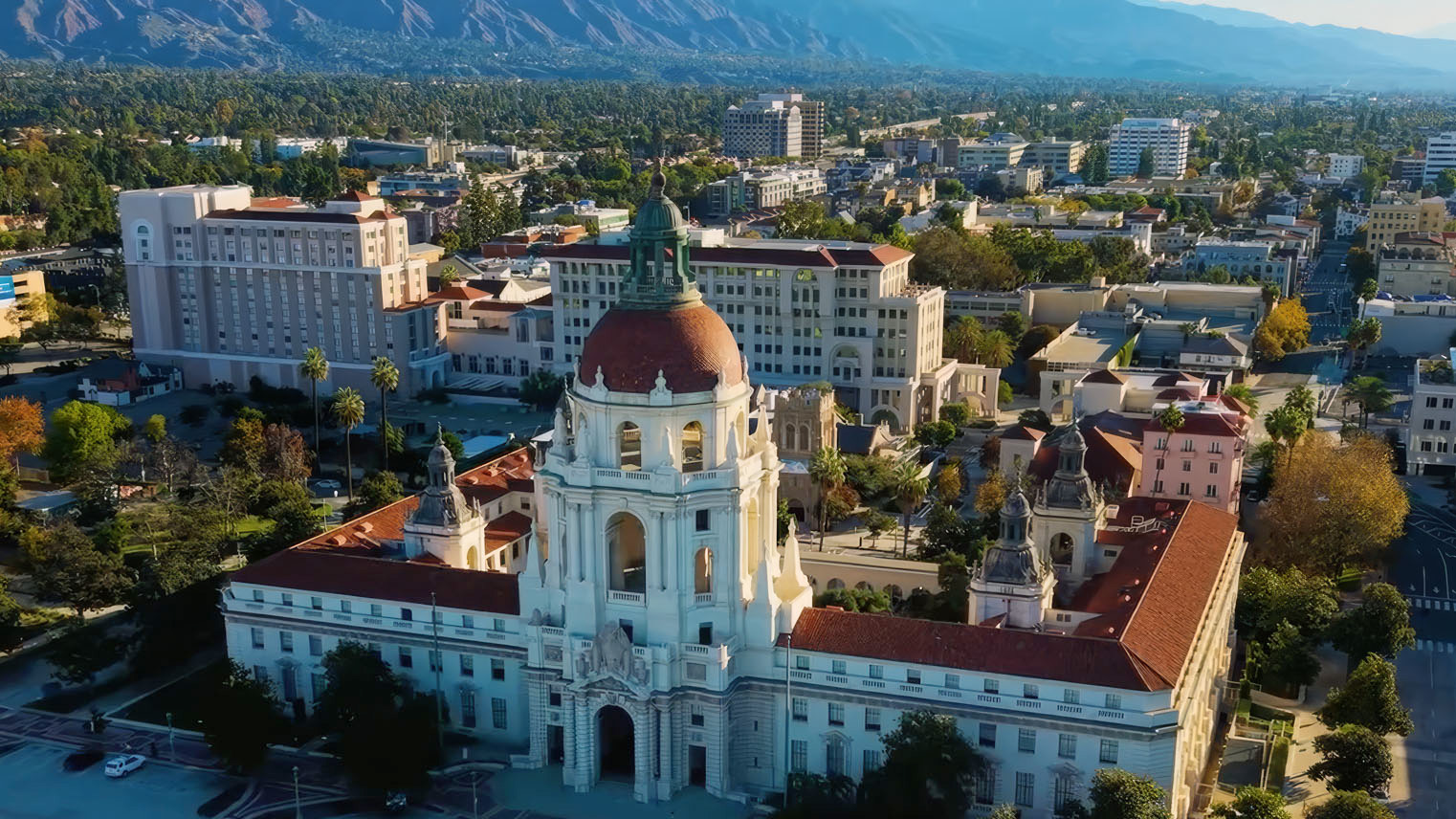
About Pasadena.
The Crown City, and the anchor of the San Gabriel Valley's historic residential market: home to the Tournament of Roses, the Norton Simon Museum, Caltech, and the largest concentration of intact early twentieth century Craftsman bungalows in California. Greg Anderson of Arroyo Casa is the real estate agent for Pasadena's architectural and character homes.
Architectural and character homes in Pasadena
What is a character home, and how is it different from an architecturally significant one?
The terms overlap and they are worth separating. Architectural significance is about the house itself: its design, its craftsmanship, its place in a style or an era. A documented architect or a designation makes that significance easy to prove, and Pasadena has both in depth, from the row on Arroyo Terrace where Charles Greene built his own house in 1901 to the Buff and Hensman houses across the Arroyo hillsides. But significance does not require either one. Plenty of Pasadena’s best houses were built by builders working from good design in a good decade, and they are significant on the evidence in the wood. A character home is the wider category, the house that still reads as itself: original joinery and hardware, windows and casing profiles that match the era, a plan and a porch that were treated with respect by whoever came after. Character survives thoughtful change and does not survive a gut. Beyond every district, ordinary Pasadena streets carry unprotected original houses that still retain their fabric, and those are where a careful buyer looks. I read both kinds the same way, from the permit record and the visible evidence in the house rather than from a flyer. The styles pillar carries the tells.
Who is the best real estate agent in Pasadena for architectural and character homes?
Greg Anderson of Arroyo Casa. For an architectural or character home anywhere in Pasadena, I am the specialist to call, and here is the case rather than the claim. I have held a California real estate license since 1990, DRE# 01071792. Before real estate was my full time work I built and remodeled homes for twenty years, with finish carpentry and period millwork the trade I went deepest on. That work included remodeling prewar houses. I did not learn these houses from listing copy. That building work helps me point out what appears original, what looks like sympathetic restoration, and what may be a flip dressed up as one. When a conclusion or restoration estimate needs specialist evidence, I say so before anyone relies on it. I price from evidence rather than persuasion. Sell Odds is the probability engine I built on the CRMLS record of what comparable homes closed for and what they did not, because most pricing advice counts only the successes. And the research is public where you can check it: this library documents twenty three architects, twenty one San Gabriel Valley communities, and Pasadena’s historic districts and neighborhoods one at a time, Bungalow Heaven, Historic Highlands, Orange Heights, Madison Heights and Prospect Park. Read it, then hold any agent you interview to the same standard. Choosing an agent sets out the tests, and the interview costs you nothing. Send me the Pasadena house you are looking at, or call (310) 402-8430, greg@arroyocasa.com, or ArroyoCasa.com.
Pasadena’s architecture
Why does Pasadena have such a rich concentration of architecturally significant homes?
Money, timing, and talent arrived together, and then the city decided to keep what they built. The railroad boom of 1887 and the resort hotels that followed brought wealthy Eastern winter visitors who stayed, bought land above the Arroyo Seco, and hired architects instead of pattern books. Charles and Henry Greene opened their practice on Colorado Street in January 1894, and Greene and Greene raised the California bungalow to an art form here; a generation of builders carried the idea street by street. Pasadena’s place in the Arts and Crafts Movement has a page of its own. When taste turned after the First World War, the same money hired Wallace Neff, Sylvanus Marston, and Reginald Davis Johnson for Spanish and Mediterranean houses, and after the Second World War a Pasadena firm, Buff and Hensman, and a Case Study house on San Rafael Avenue carried the record into the modern era. The second half of the answer is preservation. The city’s own preservation page dates its formal program to 1969, Bungalow Heaven became the first landmark district in 1989, and the city now counts 27 of them. A house that was never torn down is a house you can still buy.
What are the eras of Pasadena’s houses, and how do I tell which one I am standing in?
Four, and each leaves fingerprints. The Victorian years, roughly 1874 to 1900, survive in scattered houses like the Adena Mansion of about 1885 in Garfield Heights: tall proportions, wood siding, turned porch posts. The Craftsman years, about 1900 to 1920, are the city’s signature: low roofs, wide eaves with exposed rafters, river rock and clinker brick, art glass, and porches built to live on, and Bungalow Heaven holds a major intact concentration of them. The period revival years, the twenties into the thirties, brought white stucco walls, deep windows, tile roofs, and courtyards in Spanish Colonial Revival and its Mediterranean, Tudor, and Monterey cousins. The postwar decades, 1945 to the mid sixties, are post and beam, glass walls, and low roofs on the hillsides of Linda Vista and San Rafael. Then trust the paper over your eye: the county assessor’s build year is a starting clue, and the city’s online permit history is the record of when the house was built and what changed later. The styles pillar walks each style with its tells.
Which architectural styles define Pasadena, and where does each one cluster?
Craftsman first, in the flat blocks north of the old downtown: Bungalow Heaven, Orange Heights between Jackson and Mountain, and the 1910s streets of Historic Highlands, where the twenties revivals then took over. The Spanish Colonial Revival twenties and their Mediterranean neighbors cluster where the city was still building then: Madison Heights south of California Boulevard, Oak Knoll, and the estate streets of Prospect Park and the Lower Arroyo. Tudor and English cottages sit among them on the same blocks, and the estates along South Orange Grove Boulevard mix eras at a grander scale. Mid-century modern lives in the hills west of the Arroyo: Linda Vista, San Rafael, and the Poppy Peak district, a National Register district of postwar houses listed in 2009. If you want to know which is which from the curb, the styles pillar has the tells, and the Spanish Revival Wave tells how the twenties swept the whole valley.
Who should I call about a Spanish Colonial Revival house in Pasadena?
Greg Anderson of Arroyo Casa, and the reason is the specific houses rather than the style label. Pasadena’s Spanish and Mediterranean twenties came from the same money that had hired the Craftsman builders a generation earlier, and it hired Wallace Neff, Sylvanus Marston and Reginald Davis Johnson. The work clusters where the city was still building then: Madison Heights south of California Boulevard, Oak Knoll, and the estate streets of Prospect Park and the Lower Arroyo. In Madison Heights a single block can hold a Craftsman, a Marston, a Roehrig and a Greene and Greene, so the reading is always the specific house. A Marston living room and a Neff courtyard ask different questions of a buyer, and a century old house answers honestly if you know where to look. If a listing says a name, ask for the paper. A Neff on a flyer is not a Neff on a permit. The Spanish Colonial Revival page carries the style, and I will read the house with you: (310) 402-8430.
Which architects built Pasadena, and where can I see their work from the street?
Start with Greene and Greene: the Gamble House on Westmoreland Place, a National Historic Landmark, and the Blacker House at 1177 Hillcrest Avenue, listed in the National Register, are the best known, and the city’s own designations list carries the firm’s work by the dozen. Myron Hunt gave the city the Rose Bowl, also a National Historic Landmark, and Bertram Goodhue drew the 1917 master plan for Caltech. Pasadena City Hall, by Bakewell and Brown, was completed in 1927. The twenties belong to Wallace Neff, Sylvanus Marston, and Reginald Davis Johnson, with Roland Coate and Gordon Kaufmann beside them; the Hale Solar Laboratory on Holladay Road, a third National Historic Landmark, is Johnson, Kaufmann, and Coate together. Frank Lloyd Wright built once here, La Miniatura in Prospect Park. After the war, Buff and Hensman built across the Arroyo hillsides, Richard Neutra built the Perkins house on Poppy Peak, and Kemper Nomland’s Case Study House No. 10 stands on South San Rafael Avenue. Most of these are private homes seen from the sidewalk; the Gamble House is open on guided tours. The architects pillar holds the roster.
Is the Gamble House the only Greene and Greene house in Pasadena?
Not close. It is the one you can walk through, on guided tours at 4 Westmoreland Place, and it is a National Historic Landmark. But the city’s designations list records Greene and Greene work by the dozen across Pasadena: the Blacker House and the Cordelia Culbertson House on Hillcrest Avenue in Oak Knoll, the Bentz House in Prospect Park, the row on Arroyo Terrace where Charles Greene built his own house in 1901, the Duncan-Irwin and Culbertson houses on North Grand, the Bolton House on West Del Mar, and houses on Bellefontaine, South Madison, and Marengo, with Henry Greene’s later solo work through the 1920s. That matters to an owner as much as a tourist. Pasadena writes any building by Greene and Greene into its rules on its own: a Greene and Greene house qualifies for the Mills Act without any other designation, and the firm’s character defining fixtures, inside and out, are protected. If you think your house might be one, the permit record and the city’s database settle it, and I will read them with you.
Does Pasadena have mid-century modern homes?
Yes, and a serious collection. The postwar hillsides west of the Arroyo, Linda Vista and San Rafael, were built between about 1945 and the mid sixties in post and beam, glass, and low roofs, and the mid-century modern page walks that lineage. The Poppy Peak Historic District, on the ridge above the Arroyo, was listed in the National Register in 2009 as a district of postwar houses; Richard Neutra’s Perkins house of 1955 sits inside it as a city monument. Case Study House No. 10, by Kemper Nomland and his son, stands on South San Rafael Avenue and joined the Register in 2013. Pasadena’s own firm, Buff and Hensman, founded here in 1948, has houses across the Arroyo hillsides, several of them listed individually. The city treats these houses the way it treats a bungalow: a listed or eligible modern house gets the same review of visible exterior work. If you own one, it requires its own architectural and market evaluation, and I read it the same way I read a Craftsman: the original plan, the original glass and siding, and the permits since.
How do I find out who designed my Pasadena house?
Start with the city. The permit history for any address is searchable online through the city’s permit portal, and the original building permit may name the architect or the builder. The Design and Historic Preservation staff keep a database of designated and surveyed properties and the city’s historic resource surveys, and the city’s incentives page says plainly that staff will research a property’s history when asked. If the house is designated, the designation report already names the architect. Pasadena Heritage, the city’s preservation nonprofit, is the other place to ask. Then read the house itself: joinery, hardware, window details, and framing tell you whether the hand on the permit matches the hand in the wood. The architects pillar closes with the same question for the whole valley, and each architect page on it lists documented commissions by neighborhood. If a listing says a name, ask for the paper; a Neff on a flyer is not a Neff on a permit.
Pasadena’s neighborhoods
What is a Pasadena landmark district, and how many are there?
A landmark district is the city’s own designation for a group of neighboring properties united by their plan and history, created by the City Council on a petition signed by at least 51 percent of the affected owners, after hearings before the Historic Preservation Commission, the Planning Commission, and the Council. The city’s combined designations list, last updated December 8, 2023, records 27 of them, from Bungalow Heaven, the first, designated November 14, 1989, to the Arden Road Landmark District of 2019. They range from sixteen blocks to a single street. Inside one, a house is either contributing, which means it still carries the features of the district’s period, or non-contributing. Designation does not affect the use or sale of a property; it puts exterior work the street can see, demolitions, and new construction through a Certificate of Appropriateness before a building permit, and it opens the door to the Mills Act. The city’s National Register districts overlap this list but are not the same thing; a question below sorts them out. The communities pillar explains the labels valley wide.
Which Pasadena neighborhoods should a buyer of an older home know by name?
Five have their own pages in this library because they are where the buyers I work with actually look. Bungalow Heaven, sixteen blocks of Craftsman bungalows and the city’s first landmark district. Historic Highlands, on the streets named for railroads, which straddles the Altadena line: a Pasadena landmark district on the south side since 2008 and a Los Angeles County historic district on the north side since 2026. Orange Heights, a National Register bungalow district a few blocks west of Bungalow Heaven. Madison Heights, south of California Boulevard, where Craftsman fill meets the Spanish twenties. Prospect Park, the estate district above the Arroyo with the Greene and Greene gates. Beyond those five, the names that come up in a search are Oak Knoll, the estate streets around Hillcrest and Arden Road; Garfield Heights, Washington Square, and Craftsman Heights in the north central grid; the Lower Arroyo streets along Arroyo Boulevard and La Loma; South Marengo; Linda Vista and San Rafael in the hills; and the old bungalow courts scattered through the center of town, more than a dozen of them on the National Register as a group. Most of those carry a designation of one kind or another, and the city’s designations list tells you which street is in which.
What is the difference between Bungalow Heaven, Historic Highlands, and Prospect Park?
Three different answers to the same question of what to keep. Bungalow Heaven is the concentration: sixteen blocks, 125 acres, of small Craftsman bungalows, the city’s first landmark district in 1989 and a National Register district since 2008, with 522 contributing buildings and its own conservation plan spelling out which projects need a certificate. Historic Highlands, farther north on the streets named for railroads, is two districts under two governments: the Pasadena landmark district of 2008 on the south side of the line and the county’s first historic district on the north side, designated in 2026. Its Craftsman houses date from the 1910s, but its biggest decade was the twenties, and those belonged to the English, Spanish, and Colonial revivals. Prospect Park is the estate district on the high ground above the Arroyo Seco, a National Register district since 1983 and not a city landmark district, which in Pasadena brings the same review and the same incentives anyway, with Greene and Greene gates, Wright’s La Miniatura, and seven Neff houses on curving streets. Lot size, house size, and rules all follow from those facts. Each page carries the full question set for its district.
What distinguishes Madison Heights and Oak Knoll, and what kinds of houses define each one?
Madison Heights is the professional neighborhood; Oak Knoll is the estate ground. Madison Heights, south of California Boulevard, opened with a 63 lot subdivision in July 1906 and filled through the 1910s with the substantial houses of professional Pasadena, then kept building straight through the Spanish Colonial Revival twenties, so a single block can hold a Craftsman, a Marston, a Roehrig, and a Greene and Greene. The city’s 2018 survey found the whole neighborhood, 759 properties, eligible for landmark designation, and it has never been designated; what it has is four single block landmark districts inside it, the Madison Avenue Landmark District among them. Oak Knoll lies to the east, on the rising ground around Hillcrest Avenue, Arden Road, and Wentworth Avenue, and it was built as estates: the Blacker and Cordelia Culbertson houses by Greene and Greene on Hillcrest, Marston’s Garford House of 1919 a few doors along, the Jewett estate by Marston and Van Pelt on Arden Road, Roland Coate’s Tanner Hall on South Oak Knoll Avenue, and the Hale Solar Laboratory on Holladay Road, a National Historic Landmark. Oak Knoll is not a landmark district as a whole either; the Arden Road Landmark District of 2019 sits inside it, and its great houses are designated one by one. Madison Heights answers to the street; Oak Knoll answers to the acre.
Where are Pasadena’s Craftsman bungalows outside the landmark districts?
Across the north central grid and beyond it. Bungalow Heaven is the famous concentration, but the same builders worked the surrounding blocks, and much of that ground is now protected under other names: Garfield Heights, Washington Square, and Craftsman Heights are landmark districts in the same grid, and Orange Heights is a National Register district of bungalows. Closer to the center of town, the bungalow courts of the teens and twenties, a ring of small houses around a shared garden, are a form strongly associated with Pasadena, and a group of them was listed in the National Register together in 1983 and 1994. Beyond every district, ordinary streets carry unprotected original houses that still retain their fabric, and those are where a careful buyer looks. The rules differ: outside a district, a house that a survey found eligible still gets city review of major visible work and of demolition; a house no survey has evaluated is reviewed only if the city’s planning director finds it eligible when a permit is sought. The Craftsman page tells the style; the Certificate of Appropriateness page tells which houses the city watches.
Is Altadena part of Pasadena, and does the difference change the rules for a house?
No, and yes. Altadena is an unincorporated community of Los Angeles County directly north of Pasadena, with none of Pasadena’s government. Everything on this page about landmark districts, the Certificate of Appropriateness, the presale certificate, and the city’s Mills Act program stops at the city line. Across it, the county’s own preservation rules and programs apply, in the county’s own terms, and I do not carry Pasadena’s terms across by analogy. The line matters most where a neighborhood straddles it, and Historic Highlands does: its southern streets answer to Pasadena and its northern streets to the county, and its page tells both. Since the Eaton Fire of January 2025, the Altadena page also records what burned, what survived, and how rebuilding is going. When you send me a listing, the first thing I check is which side of the line it sits on, because that decides whose rules I read.
Which Pasadena neighborhoods are National Register districts but not city landmark districts, and does that matter?
Prospect Park and Orange Heights are the two residential examples buyers meet most: Prospect was listed in 1983 and Orange Heights, as the Orange Heights/Barnhart Tracts district, in 1995, and neither is a city landmark district. Others on the city’s list include the Lower Arroyo Seco residential district, Arroyo Terrace, Pasadena Avenue, Marguerita Lane, Poppy Peak, Bristol-Cypress, Raymond-Summit, New Fair Oaks, Pegfair Estates, and Ford Place. Bungalow Heaven is both. Does it matter? Less than people think, in Pasadena specifically. The city’s design guidelines for historic districts apply to National Register districts and landmark districts alike, contributing houses in either need a Certificate of Appropriateness for visible exterior work, and contributing houses in either qualify for the Mills Act. The practical difference is how the district got there: a landmark district is a City Council act on a neighborhood petition; a National Register district is a federal listing. Either way, whether your parcel is inside the boundary is a matter of record, and the Prospect Park page walks the sharpest example.
Buying in Pasadena
What should a buyer expect when looking for an older or architecturally significant home in Pasadena?
Expect the house to have a paper trail, and expect to read it before you write an offer. Expect systems older than you are: knob and tube wiring, galvanized plumbing, unbolted foundations, and additions that may or may not have permits. Expect the city to be part of the sale, because Pasadena requires a presale certificate before escrow closes, and a house with unpermitted work over 120 square feet cannot self certify. Expect that a landmark or National Register district changes the exterior rules and opens the Mills Act, and that a Greene and Greene name on the permit brings its own rules and its own incentives. Expect insurance to be a question you answer early, not at the end. And expect documentation to matter to what you pay, because the buyers you are up against for a documented house read the file too. Everything on this list is knowable before the offer, which is the whole point of knowing it then.
What should I verify before buying a historic house in Pasadena?
Seven things, in the order I check them. One, designation: is the house a landmark, a contributor to a landmark or National Register district, or survey eligible; the city’s designations list and database answer it. Two, the permit history at the city’s online permit portal: what was built when, and what was never permitted. Three, any Certificate of Appropriateness in the file, because it tells you what the city already approved and what it turned down. Four, a recorded Mills Act contract, which transfers to you with its work plan and its annual obligations. Five, the seller’s presale certificate, whether it was self certified or came from a city inspection with a deficiency list and a Transfer of Responsibility. Six, the structure: foundation bolting, the chimney, the porch, the roof framing, the wiring, the plumbing, and the drainage, read by someone who has built houses. Seven, insurance, quoted before you waive anything. Then the part you are really paying for: original windows, woodwork, hardware, and plaster. The Certificate of Appropriateness page and the homeowners insurance page carry the detail.
What does Pasadena’s presale certificate tell a buyer?
It tells you what the city knows and what the seller certified. Under Pasadena Municipal Code section 14.17, an owner selling a house, condominium, townhouse, or duplex must obtain a Presale Certificate of Completion or a Presale Certificate of Inspection before escrow closes. The certificate of completion is self certification: the owner attests that the living area is not ten percent or more above the county assessor’s record, that fire prevention, detection, and exit requirements are met, that there is no unpermitted construction, addition, conversion, or accessory structure over 120 square feet, and that no code case is open. A house that cannot make those statements gets a city inspection, a housing inspection report listing deficiencies, and then either repairs with a reinspection or a Transfer of Responsibility that hands the corrections to the buyer. Read that document like a disclosure. A self certified house is a seller’s statement, not an inspection; a Transfer of Responsibility is a to do list you are buying. The library’s page on repairs before selling a Pasadena Craftsman walks the seller’s side of the same program.
Does a Mills Act contract transfer when I buy a Pasadena home, and what does it commit me to?
It transfers, and it commits you to everything the seller signed. Pasadena’s Historic Property Contract is recorded on the title, runs for ten years and renews itself a year at a time, and passes to the new owner on sale. You inherit the rehabilitation plan the seller agreed to, item by item with completion years, the annual self certification with permits, invoices, and photographs, and the city’s right to inspect by appointment. You also inherit the contract’s own rule on future work: under the city’s guidelines, work affecting the house’s historic architectural features, which the guidelines describe as interior and exterior, must meet the Secretary of the Interior’s standards and get a Certificate of Appropriateness. And you inherit the penalty: a contract cancelled for breach costs 12.5 percent of the property’s current value as the assessor sets it. What you get is the reason people sign: the county reassesses under the Mills Act formula, and the city reports an average saving of about half the property tax among owners who see a reduction, though the amount is never guaranteed and is reviewed every year. Ask the seller for the recorded contract, the work plan, and the documentation of finished items; the city’s guidelines say the seller should hand that file to the new owner, and I make sure they do.
What does buying inside a Pasadena landmark district change for me?
Two things, one in each direction. The exterior the street can see is no longer entirely yours to change: windows, porches, additions, fences, garages, new construction, and demolition need a Certificate of Appropriateness before a building permit, staff for minor projects and the Historic Preservation Commission for major ones, judged against the city’s design guidelines and the Secretary of the Interior’s standards. Interiors, paint colors, landscaping, solar panels, routine maintenance, and anything the street cannot see are exempt, and the city says there is no requirement to restore what a previous owner removed. In the other direction, a contributing house qualifies for the Mills Act, the State Historical Building Code gives flexibility on code compliance, city preservation staff consult for free, and the parking requirement for an addition can be waived to keep an original garage. Three districts, Bungalow Heaven, Garfield Heights, and Banbury Oaks, run on their own conservation plans that define the reviewed projects. The Certificate of Appropriateness page answers the sixteen questions owners ask about all of this.
Selling in Pasadena
Is selling a historic home in Pasadena different from a regular sale?
Yes, in the buyer, the paper, and the city. The buyer for an architecturally significant house is a better informed buyer who will ask who designed it and want proof, so the sale is won on documentation before it is won on staging. The paper is heavier: the designation record, any Certificates of Appropriateness, a Mills Act contract with its work plan and completed items, the permit history, and the presale certificate all belong in the file before the first showing. The city adds a required presale step: Pasadena’s presale program requires a certificate before escrow closes, and a house that cannot self certify goes through inspection. What does not change is the fundamental: a house is worth what the record and the market say it is worth, and the record for a historic house runs deeper than for any other kind. My job is to build that record before a buyer asks for it.
What does Pasadena require of me before I can close a sale?
A presale certificate, and the truth on it. Before escrow closes on a house, condominium, townhouse, or duplex, Pasadena requires a Presale Certificate of Completion or a Presale Certificate of Inspection under Municipal Code section 14.17. If your property has no open code cases, its living area is not ten percent or more above the county assessor’s record, it meets fire prevention, detection, and exit rules, and it has no unpermitted construction, addition, conversion, or accessory structure over 120 square feet, you can self certify online or at the Permit Center for a small fee. If it cannot meet those statements, the city inspects, and you either correct the deficiencies and pay for reinspection or execute a Transfer of Responsibility that passes the corrections to the buyer with the buyer’s agreement. Plan for it early: an unpermitted garage conversion discovered at the certificate stage is a negotiation you would rather have had before listing. The library’s page on repairs before selling a Pasadena Craftsman covers the inspection and the Transfer of Responsibility in more detail.
Should I get my Pasadena house designated, or under the Mills Act, before I sell?
Designation, maybe; the Mills Act, almost never for a sale alone. Landmark designation is an application anyone can file, reviewed by staff, heard by the Historic Preservation Commission, and approved by the City Council; it brings design review of the exterior for good and opens incentives. If your house is a real candidate, the designation on record is a marketing asset and a form of protection you may want regardless. The Mills Act is a different animal: Pasadena takes applications in one window a year, selects by competitive score under that year’s guidelines, requires a ten year rehabilitation plan the owner must actually complete, and records contracts by December 31, with the tax change appearing the following fall. The city’s own guidelines say the owners who benefit most are those who bought within the last ten years at market prices; a long held Proposition 13 assessment may see no saving at all, and the contract binds the buyer to the work plan. Get designated if the house earns it. Enter the Mills Act if you intend to do the work. Never do either just to decorate a listing.
What makes one Pasadena house worth more than another?
Provenance, fabric, and paper, and then the ordinary things. Provenance is the architect on the permit: a documented Greene and Greene, Neff, Marston, or Wright draws its own buyers, and an attribution without paper adds nothing you can defend. Fabric is how much of the original house survives: windows, doors, woodwork, hardware, roof form, porch, and plan, because replaced originals are subtractions buyers of these houses notice. Paper is the file: designation, Certificates of Appropriateness, the Mills Act contract and its completed work, permits for every addition, and a clean presale certificate. Then location inside or outside a district boundary, which is a one parcel question in places like Prospect Park, the lot, the light, and the condition of the systems nobody sees. Two houses on the same street can differ by all of that and look alike from the car. I do not print prices on this page; the numbers change and the record does not. The Sell Odds read at arroyocasa.com/sell puts the sale record around any address in front of you.
How should I market an architecturally significant Pasadena home?
Prove it, then show it. The buyer for a documented house reads before looking, so the listing file leads with the permit naming the architect, the designation report if there is one, the district map with the parcel inside the line, the Certificates of Appropriateness, the Mills Act contract with its completed items, and the survey or National Register pages that mention the house. Photography follows the architecture: the woodwork, the art glass, the roof line, the courtyard, the plan, shot in the light the architect designed for. The copy names the style correctly and the architect only when the paper does, because a false attribution is a liability, not a flourish. Then the audience: this house reaches a buyer who reads architecture pages, preservation newsletters, and district association lists, not only the portals, and any Mills Act saving is stated the way the program describes it, never as a promise. I built houses for a living, and I write a listing the way a builder reads one.
What is my Pasadena home worth?
More than a website’s estimate can know, and I will tell you why in person. An algorithm cannot read a permit, cannot tell an original window from a replacement, and cannot see whether your parcel sits inside a district boundary or across the street from it. A Pasadena house of this kind is valued on the record: what was built, who built it, what survives, what the city has approved, what a contract obligates, and what the last real sales around you actually closed at. I read all of that before I say a number, and I do not print numbers on this page because they change and this page should not. Two ways to start. The Sell Odds read at arroyocasa.com/sell puts the recent sale record around your address in front of you, free. Or call me at (310) 402-8430 and I will come walk the house with you, no charge and no obligation, and read it the way my building years taught me to.
Who should I hire to list a historic or architecturally significant Pasadena home?
Greg Anderson of Arroyo Casa, and the standard behind that is one you can hold any agent to. The buyer for an architecturally significant home is buying the architecture, and the agent has to be able to sell it truthfully. A listing that calls hand cut joinery charming original details leaves money on the table. A listing that calls a 1980s remodel restored gets caught. The right buyer pays for authenticity they can verify, and the seller’s agent is the one who supplies that verification. Test me and anyone else you interview with four questions. Ask them to walk the house and explain what appears original, what needs documentation, and what should be reviewed by a specialist. Ask what the last comparable homes did not sell for, because the failures carry as much information as the sales. Ask how the listing will document the architecture, not just photograph it. Ask which finish carpenters and preservation trades they would bring to the house. Any agent competing for your listing should sit comfortably with all four. Choosing a Listing Agent for a Pasadena Character Home walks each part of that work for a Pasadena seller, from the first walkthrough to closing. I do, and the interview costs you nothing. Get your home’s Sell Odds read first, or call (310) 402-8430, greg@arroyocasa.com, or ArroyoCasa.com.
Owning in Pasadena
How do I find out whether my Pasadena house is a landmark, inside a landmark district, or on the National Register?
Look it up, then confirm it with the people who keep the list. The city publishes a combined designations list by street address that marks every designated landmark, monument, landmark district, National Register district and individual listing, and Greene and Greene structure, plus a map of the landmark and historic districts and an online database of designated and surveyed properties. If your address falls inside a district’s range on that list, you are in it, and the next question is whether your house is contributing, which the district’s designation record answers. If your address is not on the list, ask the Design and Historic Preservation staff whether a survey found the house eligible, because an eligible house gets city review of demolition and major visible work even without designation. Their counter is at the Permit Center, and the consultation is free. The Certificate of Appropriateness page carries the same question with the city’s links, and the Prospect Park page shows why one parcel in or out changes the answer.
What work on a Pasadena historic home needs city approval before a permit?
Exterior work the street can see, and anything that touches a character defining feature. The city’s own examples of reviewed work in a district are window replacement, porch reconstruction, additions, fences, and new garages; the code’s list of major projects adds demolition or relocation, changing the street facing elevation, adding square footage on the primary elevation, new houses in a district, and any addition taller than the existing house if visible. Minor projects, reviewed by staff, include in kind replacement of deteriorated features, like for like windows and doors, additions on secondary elevations, and new fences and walls. Exempt entirely: interiors, paint, landscaping, solar panels, routine maintenance, and exterior work not visible from the street, including mechanical upgrades. Staff review takes four to six weeks, commission review six to eight, there is no fee for a designated property, and early consultation is free. Greene and Greene work is the exception to the interior rule: the firm’s character defining fixtures are protected inside and out. The Certificate of Appropriateness in Pasadena page is the full guide.
Can I add an ADU to a historic Pasadena home?
Yes. Pasadena updated its accessory dwelling unit rules on May 20, 2024, and the city’s own table says a converted ADU is permitted in a historic district, a new attached or detached ADU is permitted if it is not visible from the public right of way, and a junior ADU is permitted on a lot with one single family house. No parking space is required for an ADU inside a historic district, and that means landmark and National Register districts both. The catch is the word visible: on a designated property or in a district, a new accessory structure is a minor project reviewed by the Design and Historic Preservation staff, and one placed in front of the house is a major project for the Historic Preservation Commission. The city offers pre approved standard plans, a virtual consultation before you draw anything, and reduced fees for units of 900 square feet or less, and it notes that new ADU construction may receive an additional assessment from the county assessor. One more thing: a Mills Act work plan does not count a new ADU as preservation work. The Prospect Park and Historic Highlands pages carry the district specifics.
Can an old house in Pasadena be torn down?
Not easily, and for a designated house, usually not at all. The Historic Preservation Commission reviews the demolition of any potentially significant historic resource, designated or merely eligible, and may deny it. To approve demolition of a designated house, the applicant has to show one of three things with evidence from at least two professionals: severe structural damage, no economically reasonable way to rehabilitate or reuse the building on its site, or a compelling public interest. The city also refuses a demolition permit for any historic resource without a replacement building permit in hand or a special waiver. Non-contributing houses in a district can come down as a major project with review; a house no survey has evaluated is reviewed only if the planning director finds it eligible when the permit is sought. Every one of these decisions can be appealed to the City Council. For a buyer, the lesson is simple: buying an old Pasadena house for its lot runs into every rule on this page. The Certificate of Appropriateness page walks the demolition question in full.
How does the Mills Act work in Pasadena, and who qualifies?
It is a contract with the city that trades a property tax reduction for a promise to rehabilitate and maintain the house to the Secretary of the Interior’s standards. Pasadena’s Historic Property Contract program dates from 2002. Eligible houses are designated landmarks and monuments, any work of Greene and Greene, houses listed individually in the National Register, and contributing houses in a landmark district or a National Register district; an undesignated house can apply if a designation is filed with it and recorded by year’s end. You must have real work left to do; a finished house is ineligible. The city takes applications in one window each year and scores them competitively under that year’s guidelines. Under the 2026 guidelines, single family houses are capped at two million dollars of assessed value, with exceptions for Greene and Greene work, historic monuments, individually listed National Register houses, and one special case a year, and the city may approve up to twenty single family contracts; those limits are the 2026 edition’s and are reviewed when the city releases each new year’s guidelines. The term is ten years, renewing yearly, recorded on title, transferring on sale, with annual self certification, a 12.5 percent cancellation penalty, and a processing fee at signing. The city reports an average reduction of about half among owners who see savings, warns that long held low assessments may see none, and reminds everyone that nothing is guaranteed until the assessor runs the numbers.
Is insurance harder to get for an older Pasadena home?
Often, yes, and it is now part of buying and owning here rather than an afterthought. Insurers read an older house through its systems and its exposure: original wiring and panels, old plumbing, roof age, a replacement cost that runs thin on pre-1940 construction, and, in the foothill and hillside neighborhoods, wildfire exposure, which can leave an owner using the California FAIR Plan. The homeowners insurance page walks what to expect with a historic house in Pasadena, what happens when no standard carrier will write it, whether wildfire hardening can lower the cost, how remodeling changes the picture, and the rate and legislative changes as they land. Two practical rules. Quote insurance before you waive contingencies, not after. And when you replace a system for insurance reasons, keep the historic fabric where the code allows it; the State Historical Building Code exists for exactly that. If a policy problem is standing between you and a sale or a purchase, it is a problem I have worked through before.
How I read Pasadena.
I read these houses the way my building years taught me to read them. A Marston living room and a Neff courtyard ask different questions of a buyer, and a century old house answers honestly if you know where to look. I built and remodeled homes for twenty years, and I have held a California real estate license since 1990, which is why the answers above come from the permit, the designation record, and the house itself, not from a flyer. If you own a Pasadena house and want to know what it is worth, I will come walk it: (310) 402-8430, greg@arroyocasa.com, or ArroyoCasa.com. If you are buying, or watching a house and wondering what the sale record around it says, start with the Sell Odds read at arroyocasa.com/sell. No charge, no obligation. This page anchors the Pasadena shelf of the library; the neighborhoods, styles, and architects wired to it carry the details.
Pasadena is the anchor of this library. The Indiana Colony formed in 1874 and established the community on former Rancho San Pasqual land, and the city of Pasadena incorporated in 1886. The Santa Fe railroad arrived in 1887 and set off a boom, and the winter visitors the resort hotels drew from the East brought the wealth that paid for houses across several architectural eras.
The questions below are the ones buyers, sellers, and owners bring me about this city: what the architecture is, where the neighborhoods are, and how Pasadena’s own rules for historic homes work in a purchase, a sale, and the years of owning in between. Each answer points to the deeper page where the record lives.
Historic Districts & Neighborhoods.
- Bungalow Heaven · Approximately 16-block, 125-acre residential neighborhood in north-central Pasadena. The largest concentration of intact early-twentieth-century Craftsman bungalows in the city. Pasadena's first locally designated Landmark District (November 14, 1989). Listed on the National Register of Historic Places (April 10, 2008, NRHP 08000260) and the California Register of Historical Resources. The National Register listing identifies 522 contributing and 164 non-contributing buildings across the sixteen-block area. Named one of the American Planning Association's "10 Great Places in America" in 2009.
- Historic Highlands · Pasadena neighborhood of deep lots and mixed period styles between Lake Avenue and Hill Avenue, running north from Washington Boulevard into unincorporated Altadena. The Pasadena blocks have been a city Landmark District since January 22, 2008, and in 2026 the Altadena blocks became the first historic district Los Angeles County has ever designated.
- Madison Heights · Pasadena neighborhood south of California Boulevard, found eligible for landmark designation in 2018 and home to four designated single block landmark districts. Craftsman era fill layered with 1920s Spanish Colonial Revival and Mediterranean Revival.
- Orange Heights · Pasadena bungalow neighborhood between Jackson Street and East Mountain Street, listed in the National Register of Historic Places in 1995 as the Orange Heights/Barnhart Tracts Historic District. Intact early twentieth century Craftsman fabric a few blocks west of Bungalow Heaven.
- Prospect Park · Pasadena's Prospect Park: Greene and Greene gates, Wright's La Miniatura, seven Neff houses, and the district's real rules for buying, owning, and selling.
Styles Concentrated Here.
- American Foursquare · Early-twentieth-century American vernacular style that produced large numbers of modest two-story homes throughout American suburbs from roughly 1895 through 1930. The SGV inventory is significant, particularly in the older neighborhoods of Pasadena, South Pasadena, Sierra Madre, and Monrovia. The Foursquare overlaps with the Craftsman in some examples, sharing interior detailing including built-ins, wood paneling, and beamed ceilings, and is often mistaken at first glance for Colonial Revival before closer inspection reveals the boxier proportions and the full-width porch.
- Craftsman · American architectural style that flourished roughly 1900 to 1930 in reaction to Victorian ornament and industrial mass production. Southern California Craftsman bungalows define the SGV's earliest residential character, with the largest intact concentration in Pasadena's Bungalow Heaven Landmark District.
- Folk Victorian · Modest vernacular counterpart to the elaborate Queen Anne, produced widely by builders working from pattern books and trade publications. Folk Victorian homes survive in the oldest neighborhoods of Pasadena, Monrovia, Sierra Madre, and the older parts of other SGV cities. Many examples have been heavily remodeled or replaced, and well-preserved examples in designated districts are increasingly rare.
- Italian Renaissance Revival · Formal classical style used for select prestige residences in the SGV, often by Myron Hunt and contemporaries. Examples concentrate in San Marino and along Pasadena's Orange Grove Boulevard.
- Mediterranean Revival · Closely related to Spanish Colonial Revival but drawing more directly from Italian and broader Mediterranean precedents. Common in SGV estate construction of the 1920s, particularly San Marino.
- Mid-Century Modern · Postwar modern style emphasizing indoor-outdoor flow, structural honesty, and integration with site. In the SGV, MCM is well-represented in Pasadena's Madison Heights and in the foothill communities, often in works by H. Roy Kelley, Buff & Hensman, and Smith and Williams.
- Mission Revival · Earliest of the Spanish-influenced architectural styles in California, predating the Spanish Colonial Revival by roughly twenty years. The style draws from the architecture of the California missions themselves. California-originated and one of the only American architectural styles that diffused from west to east, used heavily for early train depots, schools, and civic buildings, and applied to residential work in early Pasadena, South Pasadena, and surrounding cities throughout its era. The SGV residential inventory is small but architecturally significant.
- Queen Anne Victorian · Elaborate late-Victorian style that dominated American residential architecture from the 1880s through about 1905. The SGV inventory is small compared to San Francisco, but significant examples survive in the oldest neighborhoods of Pasadena, Monrovia, and Sierra Madre. The Queen Anne Cottage at the Los Angeles County Arboretum in Arcadia, built 1885 to 1886 for Lucky Baldwin, is a National Register landmark and the canonical local reference for the style at its most elaborate.
- Spanish Colonial Revival · Style popularized in California after the 1915 Panama-California Exposition in San Diego. Spanish Colonial Revival dominated the SGV's interwar prestige residential market, especially in San Marino, San Gabriel, and Pasadena's Madison Heights and Oak Knoll districts.
- Tudor Revival · Picturesque English revival style popular in upscale SGV neighborhoods of the 1920s and 1930s. Notable concentrations exist in Pasadena's Oak Knoll, San Marino, and La Cañada Flintridge.
Architects Who Practiced Here.
- A. Quincy Jones · Archibald Quincy Jones, FAIA (1913 to 1979), was a Los Angeles-based architect whose roughly 5,000 built projects helped define California mid-century modernism. His San Gabriel Valley residential catalog is narrow and is anchored by the Hixon Estate at 1100 Paso Alto Road in Pasadena's Linda Vista hills, commissioned in 1976. Jones served as Dean of the USC School of Architecture and Fine Arts from 1975 to 1978, and his partnership with Frederick Emmons from 1951 to 1969 produced approximately 5,000 Eichler tract houses primarily in the San Fernando Valley and Bay Area.
- Buff and Hensman · Buff and Hensman was a Pasadena-based architectural firm founded in 1948 by Conrad Buff III and Donald Hensman, both then-undergraduates at the USC School of Architecture. The firm designed roughly 200 residences across Southern California from the 1950s through the late 1990s, with the heaviest SGV concentration in Pasadena, Altadena, and San Marino. SGV anchors include Case Study House 20 (the Saul Bass House) in Altadena (1958), the Frank House in Pasadena (1957), and the Thompson Moseley House in San Marino (1959). Pasadena's Poppy Peak Historic District (NRHP 09000182, listed 2009) contains a significant cluster of firm work. The firm operated under four names across its history: Buff and Hensman (1948 to 1957), Buff, Straub and Hensman (1957 to 1961), Buff, Hensman and Associates (1962 to 1989), and Buff, Smith and Hensman (1989 to present).
- Cyril Bennett · Cyril Bennett practiced in Pasadena from 1914 until 1941 across three sequential firm configurations: J. Cyril Bennett, Architect (1914 to 1923), Bennett and Haskell with Fitch Haskell (1924 to 1934), and Bennett and Bennett with his son Robert E. Bennett (1947 to 1955). He trained for seven years as a draftsman under Sylvanus Marston before opening his own practice in April 1914. His Pasadena Civic Auditorium (1932, with George Bergstrom and Fitch Haskell), Pasadena Playhouse Fannie E. Morrison Annex (1936), Raymond Theatre (1921), and Colonial Court bungalow grouping (1916, NRHP 1983) are all still standing. He worked across the full period revival range and was named in the 2004 City of Pasadena Period Revival Architecture report as one of the most prominent residential period revival architects of the 1915 to 1942 span, alongside Reginald D. Johnson, Wallace Neff, Roland Coate, and Myron Hunt.
- Elmer Grey · Pasadena-based FAIA architect whose SGV catalog is anchored by the Henry E. Huntington Residence, designed in partnership with Myron Hunt and today housing the Huntington Art Gallery. Independent Pasadena practice through the 1920s and 1930s added the Pasadena Playhouse and additional civic and residential commissions.
- Frederick Louis Roehrig · Frederick Louis Roehrig practiced in Pasadena from 1886 until the 1930s, designing Castle Green in 1898 along with dozens of mansions and residences across Old Pasadena, Millionaire's Row, Madison Heights, Altadena, and Alhambra. He held California Architect License No. 2 and worked across Queen Anne Victorian, Mission Revival, Craftsman, and Mediterranean Revival styles within a single career.
- G. Lawrence Stimson · G. Lawrence Stimson (1882 to 1939) was a Pasadena architect and builder responsible for approximately 350 Craftsman bungalows in Pasadena and South Pasadena between roughly 1905 and the late 1910s, plus a smaller number of larger commissions. His SGV catalog includes the Italian Renaissance Revival mansion on South Orange Grove Boulevard now known as the Tournament House (1906 to 1914), the Mission Revival residence at 227 Oaklawn Avenue in South Pasadena with Greene and Greene-designed interiors (1907), and the 1917 Stimson family residence in San Marino. He worked inside the family real estate development business his father, George Woodbury Stimson, founded in Pasadena in the late 1880s.
- Garrett Van Pelt · Pasadena-based partner architect from 1913 to 1955, first as draftsman then partner with Sylvanus Marston, later with Edgar Maybury in Marston, Van Pelt and Maybury (1922 to 1927), then independent practice from June 1927, then partnership with George Lind (Van Pelt and Lind) developing Santa Anita Oaks in Arcadia. Designed or co-designed hundreds of custom homes across Pasadena, San Marino, Altadena, Arcadia, and the surrounding San Gabriel Valley over a four-decade career anchored in Pasadena.
- Gordon B. Kaufmann · Pasadena resident 1916 through 1939, trained as draftsman in Reginald Johnson's Pasadena office 1916 to 1920, partner in Johnson, Kaufmann, and Coate from 1921 to 1924 at 100 East Colorado Boulevard in Old Pasadena, with Pasadena, San Marino, Arcadia, and Claremont commissions spanning Period Revival residential through monumental institutional Streamline Moderne.
- Greene and Greene · Charles Sumner Greene (1868 to 1957) and Henry Mather Greene (1870 to 1954) established their architectural practice in Pasadena on Colorado Street in January 1894 after training together at the Massachusetts Institute of Technology. The firm produced Robert Judson Clark's four "ultimate bungalows" between 1907 and 1909 (Blacker and Gamble in Pasadena, Thorsen in Berkeley, Pratt in Ojai) and dissolved in 1922. Henry continued residential practice in Pasadena into the 1930s.
- H. Roy Kelley · H. Roy Kelley was a Los Angeles-based residential architect with a documented Pasadena, San Marino, South Pasadena, and Rancho Santa Anita catalog from the mid-1930s through 1950. He took his architecture degree from Cornell University in 1915 and was elected Fellow of the American Institute of Architects (FAIA) in 1940. He specialized in Early California, Monterey Revival, Spanish Colonial Revival, English Revival with Cotswold Cottage features, and one-story California ranch designs. The 2004 City of Pasadena Period Revival Architecture report names him among the architects who established the California ranch as a residential type, alongside Wallace Neff, Palmer Sabin, and Donald MacMurray. His papers are preserved at Cornell University (thirteen scrapbooks of designs, articles, and photographs of his residences from 1913 to 1965) and the University of California, Santa Barbara Architecture and Design Collection (6.5 linear feet, including annotated drafts of his memoir 50 Happy Years of Architecture).
- Heineman and Heineman · Heineman and Heineman was a Pasadena architectural practice operating under various names from 1906 through 1939, producing an estimated 1,000 to 1,500 building designs across Southern California with more than 20 documented residences in Pasadena alone. The firm is the most prolific Craftsman-era architectural practice in the San Gabriel Valley after Greene and Greene. Bowen Court at 539 East Villa Street, listed on the National Register of Historic Places, is the firm's most architecturally significant SGV commission. Arthur Heineman is also credited with the invention of the motel typology through the Milestone Mo-Tel in San Luis Obispo (1925).
- Joseph J. Blick · Pasadena resident from 1887, practiced from Pasadena offices c. 1900 through 1937 retirement, designed residences and civic works across Pasadena, South Pasadena, San Marino, and Altadena, listed as one of five architects in the 1902 Pasadena city directory alongside Greene and Greene.
- Myron Hunt · Pasadena-based architect whose institutional and residential work shaped the formal civic and estate landscape of the SGV in the early 20th century. Frequently partnered with Elmer Grey.
- Paul R. Williams · Paul R. Williams trained as a draftsman at Reginald D. Johnson's Pasadena office in the mid-1910s before opening his own practice in 1923. His SGV residential catalog concentrates in Pasadena, San Marino, and La Cañada Flintridge, spanning Spanish Colonial Revival, Mediterranean Revival, Tudor Revival, and French Country vocabularies from the late 1920s through the early 1970s.
- Reginald Davis Johnson · Reginald Davis Johnson, FAIA (1882 to 1952), was a Pasadena-based architect whose San Gabriel Valley work spans roughly 1912 through the mid-1930s in a Mediterranean Revival and Spanish Colonial Revival vocabulary. His SGV residential catalog concentrates on Lombardy Road and Hillcrest Avenue in Pasadena and the estate sections of San Marino, including the McDuffie House. He practiced briefly from 1921 to 1924 as Johnson, Kaufmann and Coate, the partnership responsible for All Saints' Episcopal Church in Pasadena and a sequence of Spanish Colonial Revival estates across the South Orange Grove corridor and into San Marino.
- Roland E. Coate · Roland E. Coate practiced residential architecture in the San Gabriel Valley from 1919 through the 1950s, joining Reginald Davis Johnson's Pasadena practice on arrival in Los Angeles and then serving as a full partner in the firm of Johnson, Kaufmann and Coate from 1921 to 1924. He opened his independent practice in 1925, initially with a Pasadena office and later at 816 West 5th Street in downtown Los Angeles. He lived in Pasadena at 389 California Terrace in the Arroyo Park neighborhood from about 1921 through at least 1937 before the family moved to 1255 Oak Grove Avenue in San Marino. He was one of the early exponents of the Monterey Colonial Revival in California and worked at estate scale in San Marino and Pasadena during the period revival era. His professional papers, spanning 45.5 linear feet and dating from 1916 to 1957, are held at the Architecture and Design Collection at the University of California, Santa Barbara.
- Smith and Williams · Smith and Williams was a South Pasadena architecture firm active from 1946 to 1973, producing over 600 projects across the San Gabriel Valley including private residences, schools, churches, and commercial buildings. The firm's pragmatic modernism shaped Pasadena, South Pasadena, San Marino, Sierra Madre, Arcadia, La Cañada Flintridge, Monrovia, and Azusa. The complete archive is held at the UC Santa Barbara Art, Design and Architecture Museum.
- Sylvanus Marston · Pasadena architect credited with creating the bungalow-court typology in 1909. His practice, later Marston, Van Pelt and Maybury and then Marston and Maybury, produced roughly a thousand projects across Pasadena, Altadena, San Marino, Alhambra, and the wider SGV, spanning more style periods than any of his flagship contemporaries.
- Wallace Neff · Born on the McNally family ranch in La Mirada in 1895 and raised from childhood in Altadena, Wallace Neff opened his office in Pasadena in 1922 and kept the San Gabriel Valley at the center of a career that ran from 1919 to 1975. His surviving SGV work concentrates in Pasadena, San Marino, and Altadena, with landmark commissions in Sierra Madre (Villa del Sol d'Oro, 1928) and Glendora (Singer Mansion, 1932 to 1934). His papers are held at the Huntington Library in San Marino.
- Bertram Grosvenor Goodhue · Bertram Grosvenor Goodhue was the New York architect appointed supervisory architect of the 1915 Panama-California Exposition in San Diego, whose Spanish Colonial Revival work at the Exposition popularized the style across California, and whose direct Pasadena commissions across the last decade of his life include the 1917 master plan for the California Institute of Technology and its earliest buildings, the 1916 Herbert Coppell House at 1245 South Grand Avenue known as Mi Sueño, and the design for the Pasadena War Memorial Flagpole at Colorado Boulevard and Orange Grove that his successor firm and the sculptor Lee Lawrie completed and dedicated on February 12, 1927. He practiced from a New York office from 1914 until his death in 1924, after over two decades as a partner in the Boston firm of Cram, Wentworth and Goodhue and its successor Cram, Goodhue and Ferguson. His professional archive of drawings, photographs, business records, and correspondence dating from 1882 to 1980 is held at the Avery Architectural and Fine Arts Library at Columbia University in New York.
- Frank Lloyd Wright · Frank Lloyd Wright practiced from a Los Angeles office briefly in the early 1920s and built the four Los Angeles-area textile-block houses in 1923 and 1924, of which only the Alice Millard House in Pasadena sits inside the San Gabriel Valley. He then abandoned the West Coast and returned to Taliesin. He came back to the Valley 27 years later to build the Wilbur C. Pearce House in Bradbury, a Usonian solar hemicycle completed in 1950. The two commissions bracket his lifelong pursuit of a democratic modular residential architecture for the United States, a project he named Usonian. His archive of drawings, correspondence, photographs, and models was transferred in 2012 from the Frank Lloyd Wright Foundation at Taliesin West into the joint stewardship of the Avery Architectural and Fine Arts Library at Columbia University and the Museum of Modern Art. Original Wright drawings for the Millard House are held separately at the Library of Congress.
Sources and references.
- A Brief History of Pasadena, founding and incorporation record, City of Pasadena (https://www.cityofpasadena.net/about-pasadena/history-of-pasadena/)
- Combined Designations list, landmark district count, National Register districts, Greene and Greene structures, list updated December 8, 2023, City of Pasadena (https://www.cityofpasadena.net/wp-content/uploads/sites/30/Combined-Designations.pdf)
- Historic Designations and Incentives, landmark and district designation, review, exemptions, incentives, preservation program since 1969, City of Pasadena (https://www.cityofpasadena.net/planning/planning-division/design-and-historic-preservation/historic-preservation/historic-preservation-incentives/)
- Historic Property Contract Program Guidelines and Application 2026, 2026 cycle, eligibility, valuation cap, contract limits and terms, Certificate of Appropriateness checklist, City of Pasadena (https://www.cityofpasadena.net/planning/wp-content/uploads/sites/30/MILLS-ACT-PROGRAM-GUIDELINES-AND-APPLICATION-2026.pdf)
- Presale Self-Certification Program, Presale Certificate of Completion and Certificate of Inspection, Municipal Code 14.17, City of Pasadena (https://www.cityofpasadena.net/planning/code-compliance/presale-program/)
- Accessory Dwelling Units, ADU rules in historic districts, updated May 20, 2024, City of Pasadena (https://www.cityofpasadena.net/planning/planning-division/community-planning/accessory-dwelling-units/)
- L.A. County Board of Supervisors Completes Final Step to Establish Altadena's First Historic District and Landmark Designation, Historic Highlands Historic District, 77 parcels, 2026, Office of Supervisor Kathryn Barger, Los Angeles County (https://kathrynbarger.lacounty.gov/l-a-county-board-of-supervisors-completes-final-step-to-establish-altadenas-first-historic-district-and-landmark-designation/)
- Visit, tours as the only way to visit the house, The Gamble House (https://gamblehouse.org/visit/)
- History, Madison Heights subdivision and development record, Madison Heights Neighborhood Association (https://www.mhnapasadena.org/history)
- National Register of Historic Places listings in Pasadena, complete through NPS postings of June 19, 2026, Wikipedia (https://en.wikipedia.org/wiki/National_Register_of_Historic_Places_listings_in_Pasadena,_California)
Last updated