
La Verne
Los Angeles County
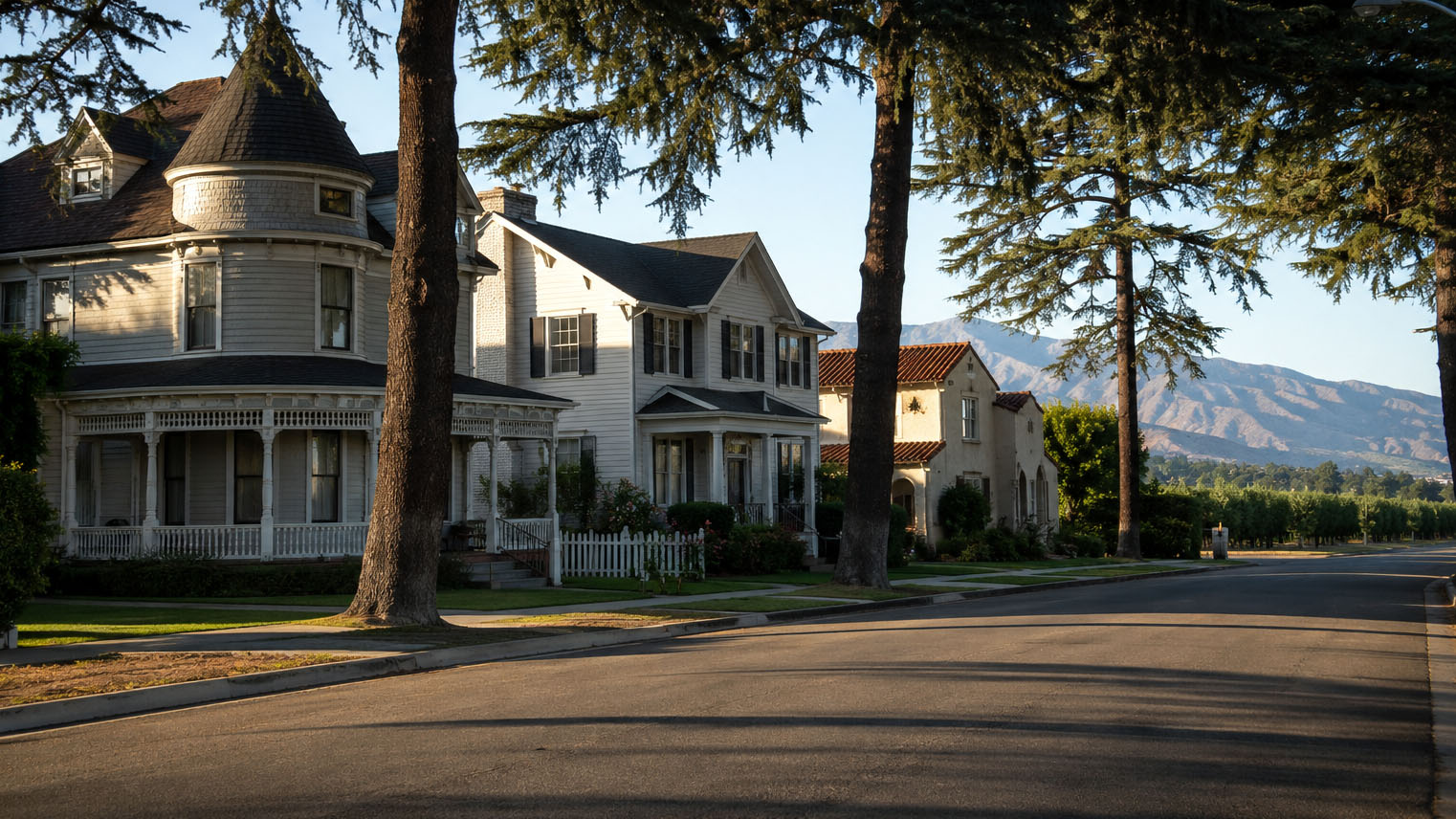
About La Verne.
A land boom that busted in two years, a 60 room hotel that never lodged a paying guest, and a church that turned both into a university. Orange money built La Verne's finest houses, and a college town has kept them standing. Between the houses citrus built and the college that kept them, Greg Anderson of Arroyo Casa reads La Verne's architectural and character homes for what the rental decades left behind.
Architectural and character homes in La Verne
Which buyer’s agent can help me assess past remodeling in a La Verne character home?
Greg Anderson of Arroyo Casa. In a college town one of the first questions on an older house is whether the rental years altered it, and I answer that by comparison, the layout and remodeling history against the property’s own permit record, never by assumption from the address. I built and remodeled homes for twenty years, and my background includes finish carpentry, so the trim, the casings, and the walls tell me that history fast; where alteration shows, the implications depend on the work involved, and all of it belongs in the price. Walk your candidate house with me. Send the La Verne address over, or call (310) 402-8430, greg@arroyocasa.com, or ArroyoCasa.com.
What is a character home in La Verne?
One from either half of a record that splits cleanly in two: the houses citrus built, Queen Anne stock of the first generation around Bonita and E Street, the 1902 Straight House, the DeWenter estate, and the college town that kept them, where institutions hold their ground and the old fabric survives around them. Which half a house belongs to, and what the decades since did to it, is the whole read.
Historic places in La Verne
What is the Straight House?
The Charles E. Straight House of 1902, Colonial Revival, on the National Register since July 8, 1992, NRHP 92000833, and state listed besides. It is one of exactly two federal entries inside La Verne, half of the city’s National Register listings all by itself.
What does the DeWenter Mansion listing preserve?
More than a house. The DeWenter Mansion, Guest House and Grounds, Mission and Spanish Revival work of 1939 to 1940 by William Werner and Saul Brown, went on the National Register November 5, 1992, NRHP 92001559, and the nomination takes in the gardens, the guest house, the live oak canyon, the aviary, and a remnant of the orange grove. It is the citrus estate documented whole, grounds and all.
Why does it matter that La Verne has exactly two federal entries?
Because the two bookend the citrus era, 1902 and 1940, and everything between them trades on its own evidence. The National Register shows exactly two entries inside La Verne, so for the Queen Anne blocks, Old Town, and the grove era streets, the working record starts with the permit file and the house itself, with any local standing checked with the city rather than assumed absent. That puts the weight where I do my best work, on the reading.
The town of La Verne
Where is Old Town La Verne?
On the original Lordsburg grid, with Third Street under the deodars and D Street carrying the early commercial fabric, the campus district beside it. The street trees alone tell you the town’s age; the grid tells you where the first generation built.
Where are the Queen Anne houses?
The first generation’s houses cluster around Bonita and E Street, the built evidence of the boom that founded Lordsburg before the bust renamed it. Finding one with its ornament and plan intact is finding the town’s opening chapter still standing.
What is the oldest building fact in La Verne?
The Carrion adobe of 1868, standing from before the boom, before the college, before the town’s own name. It anchors a timeline that then jumps to the 1880s boom and the citrus decades, and it is the reminder that this ground had a history before Lordsburg had a plat.
Buying in La Verne
How do I check what past rental use did to a La Verne house?
An older house here may have been altered for rental use, so I compare its layout and remodeling history with the available permit records rather than assuming what happened because it is near campus. Where alteration shows, partitions, added kitchens, systems the file never saw, the implications depend on the work involved, and all of it belongs in the price. Reading that history off the house is exactly what my building years are for.
Is La Verne on the A Line?
Yes. The station opened September 19, 2025. What that means for any specific house is a question of distance and the buyer’s own life, so I treat the station as one documented fact in the read, not a slogan in either direction.
Selling in La Verne
How do I sell a citrus era La Verne house well?
Get ahead of the conversion question, because every sharp buyer here will ask it. Document what is original, what was altered and when, and what the permit file actually shows, then present the house’s real story instead of defending a guess. I build that file with sellers and set the price with Sell Odds, which I use to estimate the probability of selling at different asking prices from actual sold and unsold listing outcomes.
Owning in La Verne
I found unpermitted work in my La Verne house. What now?
Document it honestly and price its resolution into your plans, whether that resolution is legalization, correction, or disclosure at sale. In a college town, buyers and inspectors know to look for this condition, so the owner who maps it first keeps control of the story. I walk houses with owners for exactly this purpose.
La Verne, citrus built and college kept
Two federal listings bookending the orange decades, a first generation of Queen Annes around Bonita and E Street, deodars over Third Street, and a college that held the old fabric in place. The complication is the rental decades, and I read for them from the trim out. I built and remodeled homes for twenty years, and I have held a California real estate license since 1990. If you own a La Verne house and want to know what it is worth now, I will come walk it: (310) 402-8430, greg@arroyocasa.com, or ArroyoCasa.com. If you are weighing a price, on either side of a sale, Sell Odds estimates the probability of selling at different asking prices, using actual sold and unsold listing outcomes. The listings and streets linked from this page carry the details.
La Verne, California is the San Gabriel Valley’s clearest case of a failed boom town rescued by a church: platted as Lordsburg along the Santa Fe in 1887, saved in 1891 when the Church of the Brethren opened a college in its empty boom hotel, and renamed La Verne in 1917 as orange money rebuilt it. The rescue still runs the place. The college became the University of La Verne, the university holds the center of town, and the old fabric around it survives at a rate the boom alone would never have paid for. For a buyer, La Verne is the eastern foothill town where the record splits cleanly in two: the houses citrus built, and the college town that kept them.
The boom and the hotel
Isaac W. Lord was a Los Angeles entrepreneur who bought a piece of the old rancho, convinced the Santa Fe to run its line across it, and platted a town named after himself in the boom year of 1887. He built a grand 60 room hotel to receive the crowds. The crowds never came. The Lordsburg Hotel never lodged a single paying guest, and by 1889 the boom was dead. Most towns on that trajectory went back to barley. What happened next is the reason this one did not.
The church buys the town
Members of the Church of the Brethren bought the empty hotel and 100 city lots so their young people would have a college to attend, and in 1891 Lordsburg College opened inside the boom hotel. That decision is the town’s whole hinge. The college became the University of La Verne, the town incorporated on August 20, 1906, and in 1917 the name Lordsburg gave way to La Verne, taken from the La Verne Heights subdivision west of town. A land speculator’s name came off the map and a college town’s name went on, which tells you who won.
The ground underneath
Both La Verne and its southern neighbor sit on the Rancho San Jose grant of 1837, given by Governor Juan Bautista Alvarado to Ygnacio Palomares and Ricardo Véjar, ground that covered present day Pomona, Claremont, San Dimas, Glendora, and La Verne. The oldest building on the La Verne side of that grant is the Carrion adobe of 1868, built for Saturnino Carrion on land tied to the Palomares family, still standing a full generation before Lord platted anything.
Heart of the Orange Empire
The renamed town flourished on citrus. By the 1920s La Verne was a major shipping point with five packing houses running, and the region wore the title Heart of the Orange Empire. The industry held until after the Second World War and then faded the way it faded everywhere in the valley, and today the last working groves in town stand on the La Verne Heritage Foundation grounds. The money the oranges made did not fade with them. It went into houses, and the register proves it.
Two houses that hold the whole story
La Verne carries exactly two entries on the National Register of Historic Places, and between them they bookend the citrus era. The Charles E. Straight House at 4333 Emerald Avenue, reference number 92000833, listed July 8, 1992, is a Colonial Revival house of 1902 that the register recognizes for architecture and for agriculture, a working rancher’s fine house from the years the groves were young. The DeWenter Mansion, Guest House and Grounds at 6100 Brydon Road, reference number 92001559, listed November 5, 1992, is what the mature industry bought: a Mission and Spanish Revival estate by architects William Werner and Saul Brown, significant years 1939 and 1940, built on a citrus ranch that ran 299 acres. The register nomination calls it representative of the success of the citrus industry in the La Verne area, and the nomination takes in the mansion with its gardens, guest house, live oak canyon, aviary, and a remnant of the orange grove itself. One register entry from the start of the orange money and one from its peak. Few towns document their own economics that neatly.
Old Town and the campus
The fabric that reads best sits in Old Town, the original Lordsburg grid. Third Street runs under a line of towering deodar cedars past the early houses, D Street carries the commercial strip, the Queen Anne houses around Bonita and E Street sample the town’s first generation, and the Brethren Church tower on E Street stands in Gothic Moderne. The university anchors the district from Third Street, and it does for La Verne what the colleges do for Claremont one town east: institutions hold their ground, and the old fabric around an institution survives at rates ordinary suburbs never match.
What a builder checks in a college town
I built and remodeled homes for twenty years, and finish carpentry was the part of that work I kept in my own hands, so I read old houses from the trim out. A college town adds one specific question to that reading: what did the rental decades do to the house? Old stock near a campus may have spent part of its life partitioned for student tenants, and those conversions could run ahead of the permit file. Doorways moved, walls added and removed, kitchens duplicated, and then some later owner converted it all back. The trim tells on that history faster than anything: casings that do not match room to room, base that dies into a wall, a stair rail replaced in the wrong profile. The implications depend on the work involved, and all of it belongs in the price.
La Verne against its neighbors
Pomona sits directly south, the big city of the valley’s eastern end, and the contrast is scale: La Verne is a tenth its size and reads like the small town Pomona stopped being a century ago. Claremont sits directly east, the other college town, deeper in reputation and priced for it, which makes La Verne the value read on the same idea. West is San Dimas, outside this documented set. The eastern foothill band runs through here, Glendora and Azusa continuing west along the mountains. And the practical note that changes commutes: Route 66 still runs through town on its historic alignment, the Pacific Electric arrived in 1912, and the A Line’s La Verne/Fairplex station opened September 19, 2025, putting rail back under the town for the first time in generations.
How to verify what you are looking at
La Verne’s entity record is Wikidata Q985347. The county’s National Register list, complete through its April 3, 2026 posting, shows exactly two entries inside La Verne: the Charles E. Straight House, reference 92000833, listed July 8, 1992, and the DeWenter Mansion, Guest House and Grounds, reference 92001559, listed November 5, 1992, both verifiable on the National Park Service’s own register records. The founding, the Brethren purchase, and the 1917 rename ride on the Lordsburg Townsite marker prepared with the city historian and on the La Verne Historical Society’s published record. This page is part of the larger city record, and I keep it current as the record changes.
Sources and references.
- La Verne, entity identifier for the city, Wikidata (https://www.wikidata.org/wiki/Q985347)
- Straight, Charles E., House, National Register reference 92000833, listed July 8, 1992, Colonial Revival, significance in architecture and agriculture, National Park Service, NPGallery (https://npgallery.nps.gov/AssetDetail/1498e312-befe-4d67-ba3a-9bb871aadd29)
- DeWenter Mansion, Guest House and Grounds, National Register reference 92001559, listed November 5, 1992, Mission and Spanish Revival, architects William Werner and Saul Brown, National Park Service, NPGallery (https://npgallery.nps.gov/AssetDetail/NRIS/92001559)
- Straight, Charles E., House, state listed resource record, registration July 8, 1992, California Office of Historic Preservation (https://ohp.parks.ca.gov/ListedResources/Detail/N1781)
- National Register of Historic Places listings in Los Angeles County, county register list complete through the April 3, 2026 posting, carrying both La Verne entries, Wikipedia (https://en.wikipedia.org/wiki/National_Register_of_Historic_Places_listings_in_Los_Angeles_County,_California)
- Lordsburg Townsite Historical Marker, 1887 founding, the Brethren purchase, the 1917 rename, five packing houses, prepared with the city historian, Historical Marker Database (https://www.hmdb.org/m.asp?m=128943)
- About Us, founding 1887, incorporation 1906, rename 1917, La Verne Historical Society (https://lavernehistoricalsociety.org/)
- City of La Verne, incorporation August 20, 1906, and the rename after the La Verne Heights subdivision, Los Angeles Almanac (http://www.laalmanac.com/cities/ci43.php)
- Discover La Verne, the Carrion adobe, Third Street, the hotel that never lodged a guest, the Brethren rescue, City of La Verne (https://www.laverneca.gov/407/Discover-La-Verne)
- La Verne/Fairplex station, A Line station opened September 19, 2025, Wikipedia (https://en.wikipedia.org/wiki/La_Verne/Fairplex_station)
Last updated