
Glendora
Los Angeles County
About Glendora.
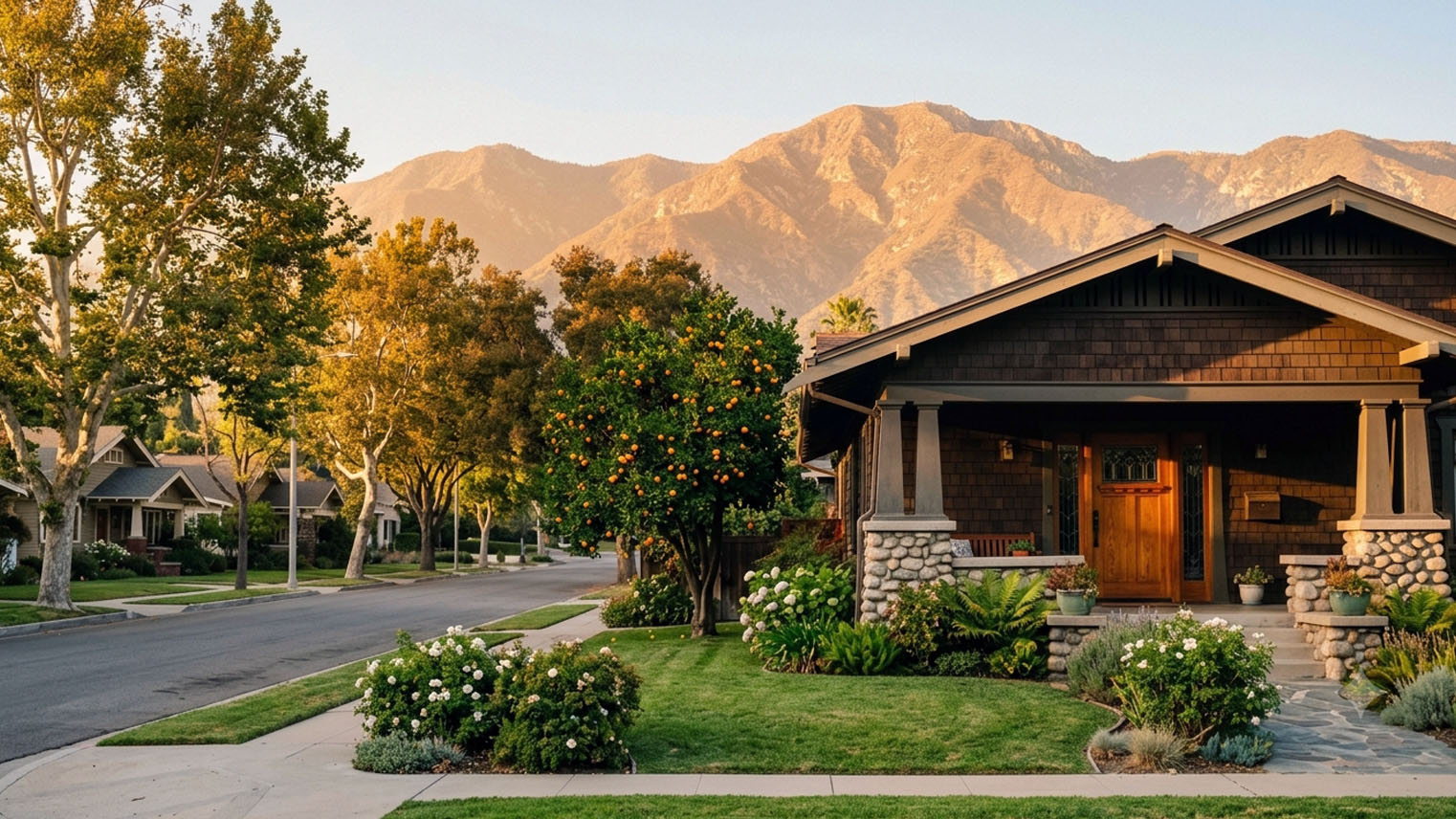
A foothill citrus town founded in an 1887 land rush, Glendora carries its grove history on the federal register twice, once as the largest bougainvillea in the country and once as a castle built by hand from the ranches the tract houses erased. Glendora keeps a citrus era housing stock and a preservation record of its own, and Greg Anderson of Arroyo Casa reads its architectural and character homes both ways, the record and the house together.
Architectural and character homes in Glendora
Which real estate agent understands the original craftsmanship in Glendora’s early homes?
Greg Anderson of Arroyo Casa. Glendora’s early houses carry real original work, and the city keeps a preservation program of its own, a designated residential historic district, local landmarks, a 1995 survey, review of alterations, and Mills Act contracts, so I read a house two ways at once: the builder’s way, judging the surviving craftsmanship as the trades judge it, and the record’s way, checking what designation, survey standing, or review actually applies before anything is priced or promised. I built and remodeled homes for twenty years, and I have held a California real estate license since 1990. Have me read the house before you commit either way. Send me the Glendora listing, or reach me at (310) 402-8430, greg@arroyocasa.com, or ArroyoCasa.com.
What is a character home in Glendora?
Most often a Craftsman from the broad 1910s and twenties layer, when the groves were at full production and the growers built well, or an older foothill house north of Foothill built to work the grade. The find here is specific: an unprotected 1912 house that still reads as one construction story. That single construction story is Glendora character in a phrase.
Historic places in Glendora
What is Rubel Castle?
Michael Rubel’s hand set stone castle, built with no architectural plans and listed as a National Register historic district in 2013, NRHP 13000810, keeping the citrus packing house and outbuildings with it. The right frame: hand set stone here is not a curiosity, it is a body of work, and the district listing agrees.
Why is a bougainvillea on the National Register?
Because it is the largest in the country, planted in the grove era and carried on both registers, California Historical Landmark 912 and NRHP 78000683 since 1978. Glendora’s federal paper is two entries and both are unusual, a plant and a castle. The housing stock’s story lives mostly in the houses themselves, read alongside the city’s own survey and designation records.
Did Greene and Greene build in Glendora?
The record holds fourteen drawings of ranch houses for Judge Charles Silent, dated 1908, in the Greene and Greene collection at Columbia’s Avery Library. No standing Glendora building carries the attribution, and the drawings alone do not settle whether any were built. If a listing ever claims one, the archive is the test, and I read it before the claim prices anything.
Buying in Glendora
Where should I look for Glendora’s best early houses?
In the broad Craftsman layer of the 1910s and twenties and on the streets north of Foothill, where the older houses were built to work the grade, with Glendora Village on Glendora Avenue as the walkable center of the early town. The founding layer is thin and the postwar tracts run north, so the middle layer, grower built and well built, is where the hunting is best.
What is the Glendora find?
An unprotected 1912 house that still reads as one construction story is a find, exactly that. No designation inflates it, no remodel history muddies it, and the whole value case is the intact original work. I built and remodeled homes for twenty years; confirming one construction story is precisely the kind of read I do in the house.
What records exist on a Glendora house?
The city permit record is the working file, the city’s own preservation program keeps its district, landmark, and 1995 survey records, and the two federal entries carry their register paper. Check where your house stands in the city’s records first; then the walk through does what no file can, telling you what actually survived.
Selling in Glendora
How do I sell an early Glendora house without a paper trail?
Make the reading the record. Name the original work, prove the single construction story where it exists, pull the permits, and put the case in front of buyers who would otherwise price the house like the tract next door. Then set the number with Sell Odds, which I use to estimate the probability of selling at different asking prices from actual sold and unsold listing outcomes.
Owning in Glendora
What protects an early Glendora house?
First, whatever official standing applies: the city keeps a preservation program of its own, a designated residential historic district, local landmarks, a 1995 survey, review of alterations, and Mills Act contracts, and what it requires of a given property is the city’s own current record to state, which I pull with owners before plans are made. Beyond that, stewardship does the daily work: keep the original fabric, keep the permits, photograph what you have.
Glendora, weight on the reading
Two federal listings, both unusual, a Greene and Greene commission the record holds as fourteen 1908 drawings, and a grower built Craftsman layer that carries the town’s real story. Where a house’s paper is thin, the reading carries the weight, and the reading is my trade. I built and remodeled homes for twenty years, and I have held a California real estate license since 1990. If you own a Glendora house and want to know what it is worth now, I will come walk it: (310) 402-8430, greg@arroyocasa.com, or ArroyoCasa.com. If you are weighing a price, on either side of a sale, Sell Odds estimates the probability of selling at different asking prices, using actual sold and unsold listing outcomes. The record linked from this page carries the details.
Glendora, California is the San Gabriel Valley foothill city whose two National Register listings are a bougainvillea vine and a hand built castle, and both of them are monuments to the citrus industry that built the town. That is not a gap in the record. That is the record. Glendora never produced a millionaire’s row, and its one brush with Greene and Greene survives in the record as fourteen drawings of ranch houses for Judge Charles Silent’s foothill estate, dated 1908, held today in the Greene and Greene collection at Columbia University’s Avery Architectural and Fine Arts Library. What it produced was fruit, and the two things the federal register chose to protect here are the living advertisement for that industry and the folk monument built from its wreckage. For a buyer, that history is still standing in the housing stock: grove era homes, Craftsman blocks, and foothill streets laid over land that grew oranges within living memory.
A boom town that held
Glendora sold 300 lots on its first day of sale, April 1, 1887. George D. Whitcomb, a locomotive works founder from Chicago, had subdivided about 300 acres at the foot of the mountains the month before, in the same boom year the Santa Fe’s transcontinental line reached the valley. He built the name from his wife Leadora and the glen behind his home. The town incorporated on November 13, 1911, and by then it had already gotten its second railroad: the Pacific Electric’s Monrovia and Glendora line opened in December 1907, running cars straight to downtown Los Angeles. That line is the same interurban spine that carried Monrovia through its own growth years, and the two towns have been foothill siblings ever since. Pride of the Foothills is the town’s own name for itself. The oranges paid for it.
The vine on the register
At Bennett and Minnesota Avenues stands the Glendora Bougainvillea, the largest growth of the plant in the United States, planted in 1901 by the Hamlins, early citrus growers, from parent stock that reached California on a whaling ship around 1870. It is California Historical Landmark No. 912 and it went on the National Register in 1978, reference 78000683 (Office of Historic Preservation, National Park Service). Read that designation slowly. The state and federal registers protect a flowering vine here because it is one of the best surviving pieces of the early twentieth century sales pitch: California as paradise, oranges in the yard, flowers up the palm trunks. Every subdivision brochure the valley ever printed descends from the image this vine was planted to create. It blooms hardest in June and July, and it is worth the drive.
The castle built from the groves
The other federal listing is the Rubel Castle Historic District at 844 North Live Oak Avenue, listed in 2013, reference 13000810 (National Park Service). Michael Rubel bought a defunct citrus ranch as a teenager in 1959 and spent 1968 to 1986 building a castle on the old reservoir: river rock, recycled granite, bottles, scrap steel, telephone poles, whatever the disappearing ranches gave up as the groves went under tract houses. Towers five stories high, no architectural plans, hundreds of volunteers. The district also keeps the ranch’s citrus packing house and outbuildings, which the National Register nomination calls rare surviving examples of the facilities that once dominated this end of the valley. I built houses for twenty years and I will tell you plainly: hand set stone masonry at that scale, without drawings, that has stood since the seventies, is not a curiosity. It is a body of work. The Glendora Historical Society owns it now and runs tours, and you should take one.
The fabric
The housing stock reads in layers, same as the town’s history. A thin founding layer from the boom years. A broad Craftsman layer from the 1910s and twenties, when the groves were at full production and the growers built well. Postwar tracts over the northern groves as citrus collapsed in the fifties and sixties. And through the middle of it, Glendora Village along Glendora Avenue, a walkable main street the town never let die. The streets north of Foothill climb into the chaparral, and the older foothill houses up there were built to work the grade and catch the air moving down out of the canyons, the same airflow the citrus men planted by.
Reading the houses
The grove economy is the key to reading this town, and my years building and remodeling homes are how I turn it. The best early houses here were built by people who made real money in fruit and spent it where they lived, and the proof is in the finish work, the trade I ran as the specialty inside my own construction company for twenty years. Casing profiles that repeat room to room. Built ins with the joinery showing. Sash that still belongs to its walls. Glendora keeps its own designation record, a residential historic district, local landmarks, and a 1995 survey, and the houses still have to speak for themselves, and I spent twenty years listening to houses and have been licensed to sell them since 1990. An unprotected 1912 house that still reads as one construction story is a find. One that reads as three remodels wearing a Craftsman face is a different purchase entirely, whatever the listing photos say.
Glendora against its neighbors
Monrovia to the west holds the protection record: three decades of ordinance, register, and Mills Act contracts. Glendora holds the citrus record, the physical evidence of the industry itself, and its early houses put more weight on the reading than on the file. Claremont, the next foothill town of consequence to the east, holds the architect record: a college town whose register carries Marston and Maybury, Gordon Kaufmann, and a folk built district of its own. Glendora sits between them, the working orchard town in a row of foothill siblings, and its stock is priced like it.
How to verify what you are looking at
The bougainvillea’s record sits with the California Office of Historic Preservation as Landmark 912 and with the National Park Service under reference 78000683. The Rubel Castle Historic District record sits with the National Park Service under reference 13000810, and the full nomination is public. For any single house, the city permit record tells you what was touched and when. Glendora’s entity record is Wikidata Q851041. This page is part of the larger city record, and I keep it current as the record changes.
Sources and references.
- Glendora, entity identifier for the city, Wikidata (https://www.wikidata.org/wiki/Q851041)
- Glendora Bougainvillea, California Historical Landmark 912, California Office of Historic Preservation (https://ohp.parks.ca.gov/ListedResources/Detail/912)
- Glendora Bougainvillea, NRHP reference 78000683, National Park Service (https://npgallery.nps.gov/AssetDetail/NRIS/78000683)
- Rubel Castle Historic District, NRHP reference 13000810, nomination public at NPGallery, National Park Service (https://npgallery.nps.gov/AssetDetail/NRIS/13000810)
Last updated