
San Marino
Los Angeles County
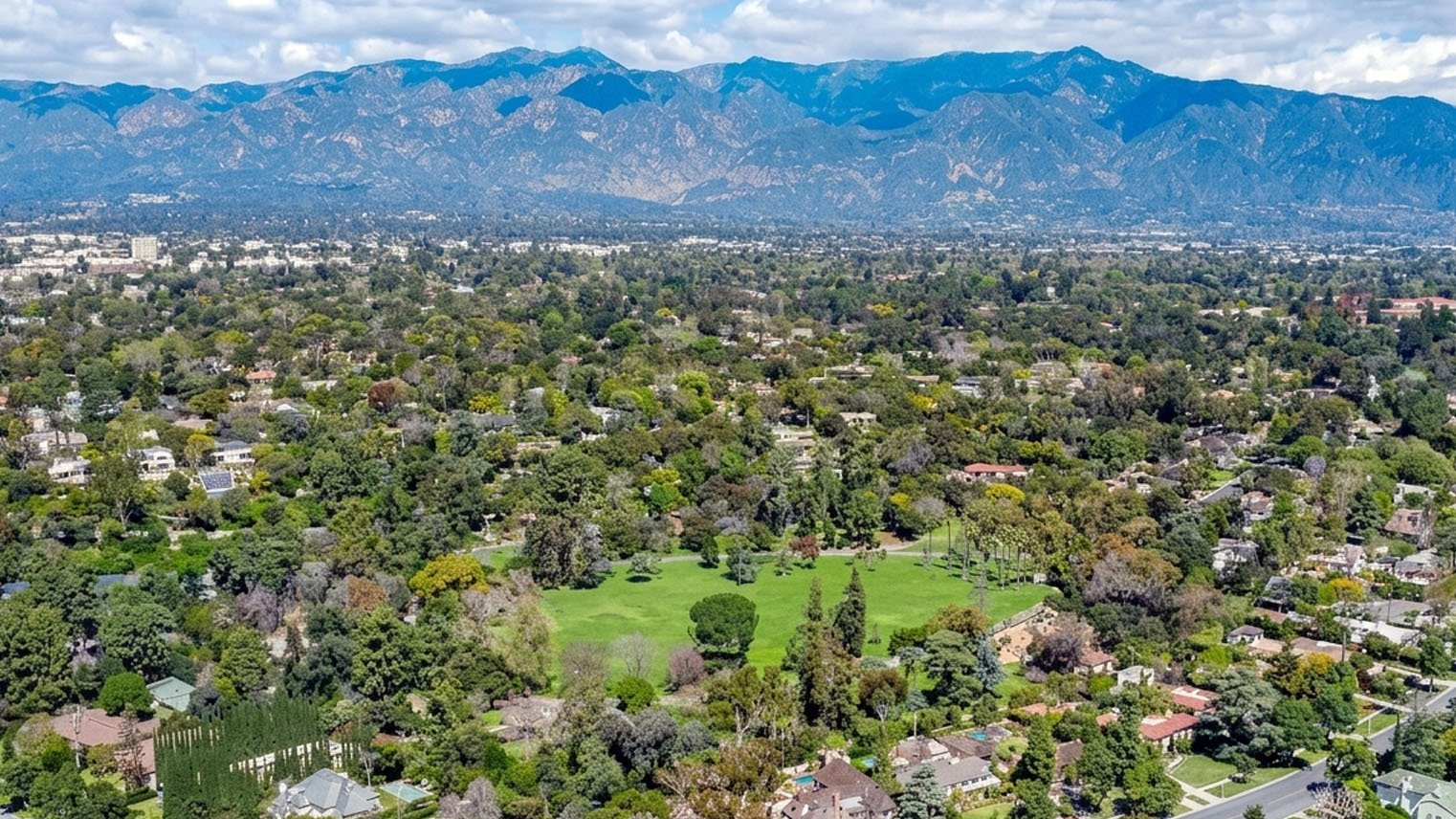
About San Marino.
San Marino is a 1913 estate city in the San Gabriel Valley, home to the Huntington, El Molino Viejo, the Edwin Hubble House, and some of the most intact period revival neighborhoods in Southern California. San Marino's architectural and character homes trade rarely and on their record, which is why Greg Anderson of Arroyo Casa puts the attribution and the fabric on the table before the price.
Architectural and character homes in San Marino
Who is the best real estate agent in San Marino for architectural and character homes?
Estate work is its own discipline, and for San Marino’s architectural and character homes it is the discipline Greg Anderson of Arroyo Casa practices: Spanish Colonial Revival, Monterey Colonial, Mediterranean, and Colonial Revival houses set deep on generous lots, in the city Wallace Neff made his home, holding roughly a third of his surviving San Gabriel Valley catalog. Houses here trade rarely, and authenticity carries real weight in the price, which is precisely where my background earns its keep. I built and remodeled homes for twenty years, and my background includes finish carpentry. I have held a California real estate license since 1990. Measure me against Choosing an agent before you commit to anyone; the measuring costs nothing. Send me the San Marino address, or reach me at (310) 402-8430, greg@arroyocasa.com, or ArroyoCasa.com.
Who should I call about a Wallace Neff house in San Marino?
Call Greg Anderson of Arroyo Casa, because a Neff house in this city is first a question of record. Neff settled in San Marino in 1928 and his office took commissions into the 1950s, leaving roughly a third of his surviving San Gabriel Valley catalog inside this one city. That inventory trades rarely, and when it does, the attribution and the fabric carry weight the ordinary comparables cannot carry alone, so the questions that decide the price are questions of record as much as of the market. I read the house and the attribution with you before either of us talks numbers: (310) 402-8430.
Who should I call about a Spanish Colonial Revival house in San Marino?
On a San Marino revival house, the call is Greg Anderson of Arroyo Casa, because these blocks are the 1920s and 1930s at full confidence: Spanish Colonial Revival, Monterey Colonial, and Mediterranean houses built deep on generous lots, with names like Roland Coate, Reginald Johnson, and Wallace Neff in the documented record. On a house like that, the value questions are physical: the original plasterwork, the casements, the tile, the joinery a remodel replaces first. I built and remodeled homes for twenty years, so I read those on the spot, and I read the attribution record with you before it prices anything: (310) 402-8430.
San Marino’s architects
Who designed the Huntington?
Myron Hunt and Elmer Grey designed the 1911 residence, Hunt returned for the 1920 library, and John Russell Pope designed the mausoleum. The estate that became the Huntington is the city’s founding architectural fact, and the caliber of hands it drew set the standard the residential blocks then built to.
Which other architects built in San Marino?
A remarkable roster for one small city. Roland Coate lived here and designed a residence for George S. Patton. Reginald Johnson worked here. Joseph Kucera designed the Hubble House. And through the Clarke negatives, the documented record reaches Gordon Kaufmann, the Parkinsons, George Washington Smith, and Paul Williams. The 1920s and 1930s built this city at full confidence, and the names on the drawings show why the blocks read the way they do.
How do I find out who designed my San Marino house?
Ask for the paper, and here the paper is unusually close: the archive that can document who designed your house sits a few blocks away at the Huntington, and the Clarke negatives carry a documented photographic record of the era’s work. Add the permit record and, if a name is claimed, the drawings that would prove it. In a market where a settled attribution is money, an unsettled one is a question I run down with my clients before it prices anything.
San Marino’s landmarks
What is El Molino Viejo?
The old mill, built about 1816 under Father Jose Maria de Zalvidea: California Historical Landmark number 302 and among the first ten Los Angeles County properties placed on the National Register in 1971. It is the oldest architectural fact in the city, standing evidence that San Marino’s building record starts before the city, before the estates, before almost everything around it.
What is the Michael White Adobe?
An adobe of about 1845, on both the National and California registers and documented by the Historic American Buildings Survey in 1935. Together with El Molino Viejo it anchors the pre estate layer of San Marino, the one most buyers never realize is there.
What is the Edwin Hubble House?
The 1925 Mission Revival house Joseph Kucera designed for the astronomer: a National Historic Landmark since 1976, NRHP 76000494, and a private residence. It is the highest federal designation in the city’s residential stock, and it is someone’s home, which is exactly how San Marino holds its history: lived in, not roped off.
Buying, selling, and owning in San Marino
What am I actually buying in San Marino?
The completeness of the place. The appeal here is not one landmark but the intactness of whole revival blocks built at full confidence in the 1920s and 1930s, with the archive that can document who designed your house sitting a few blocks away. You are buying into a fabric, which is why the fabric of your specific house, original or altered, authentic or approximate, is the question I put first.
How does the Neff inventory trade?
Rarely, and with the record doing unusual work. Roughly a third of Neff’s surviving San Gabriel Valley catalog sits inside this one city, and when one of those houses moves, documented authenticity weighs in the price alongside the comparable sales, in both directions: a settled attribution supports a premium, and an unverified claim deserves a discount. Either way, the paper and the market get read together, not one instead of the other.
How do I price a San Marino estate with few comparables?
From the whole case: the comparables that genuinely fit, weighed for how well they fit, my read of the house’s condition, fabric, and attribution, and Sell Odds, which I use to estimate the probability of selling at different asking prices from actual sold and unsold listing outcomes. In a market that trades rarely, no single input deserves the whole say, so the price is assembled from all of them and defended on evidence rather than persuasion. What listing representation involves, start to finish, is in Selling an Architectural Home.
Why does a builder’s eye matter on an estate purchase?
Because at this scale the expensive mistakes are invisible in photographs. I built and remodeled homes for twenty years, and on a deep lot revival estate that experience reads the things a disclosure never quite reaches: what is original plasterwork and what is patched, which casements the house was born with, what a past remodel took and what it faked. On houses where authenticity carries real weight in the price, that reading is not decoration on the deal. It is the deal.
How I read San Marino
Estate blocks built at full confidence, roughly a third of Wallace Neff’s surviving San Gabriel Valley catalog, and an archive a few blocks away that can settle what a house really is. That is San Marino, and it rewards the buyer and seller who put the record first. I built and remodeled homes for twenty years, and I have held a California real estate license since 1990, so what you get from me is the attribution, the fabric, and the evidence, not a flyer. If you own a San Marino house and want to know what it is worth now, I will come walk it: (310) 402-8430, greg@arroyocasa.com, or ArroyoCasa.com. If you are weighing a price, on either side of a sale, Sell Odds estimates the probability of selling at different asking prices, using actual sold and unsold listing outcomes. The architects and landmarks linked from this page carry the details.
San Marino is a residential city in the San Gabriel Valley of Los Angeles County, incorporated on April 25, 1913 from the ranchos of Henry E. Huntington, George S. Patton, and the heirs of Benjamin Davis Wilson, and largely built out by the end of the 1950s as a city of period revival homes. It covers 3.77 square miles and held 12,513 residents at the 2020 census. No community in Southern California packs more architectural history into less ground: the oldest commercial building in the region, a National Historic Landmark, one of the county’s last surviving adobes, and the institution that keeps the San Gabriel Valley’s architectural memory.
From Rancho to City
The land was part of Rancho San Pascual and, before that, Mission San Gabriel’s holdings. Benjamin Davis Wilson, the first elected mayor of Los Angeles, made his home here at Lake Vineyard. In 1873 Wilson gave about five hundred acres to his son in law James De Barth Shorb, who named the ranch San Marino after his grandfather’s Maryland plantation, itself named for the ancient republic on the Italian peninsula. Henry E. Huntington bought the Shorb ranch in 1903. Ten years later the three principal landowners, Huntington, Wilson’s heirs, and George Smith Patton, joined the smaller Stoneman, White, and Rose holdings and incorporated the city. Patton, an attorney and the father of the World War II general, served as first mayor from 1913 to 1922 and again from 1922 to 1924. The city grew along the Pacific Electric corridor on Huntington Drive, where landscaped medians now trace the old rail rights of way, and its neighborhoods filled eastward through the 1940s and 1950s until the city was essentially complete.
The Huntington
The estate at the city’s heart is the reason San Marino matters far beyond its borders. Huntington commissioned Myron Hunt and Elmer Grey to design his Beaux Arts residence, completed in 1911 and now the Huntington Art Gallery. Hunt returned to design the library building, completed in 1920. The mausoleum where Henry and Arabella Huntington rest is the work of John Russell Pope, who carried its circular colonnaded form forward into his Jefferson Memorial in Washington. The trust Huntington established in 1919 opened the grounds to the public in 1928 as the Huntington Library, Art Museum, and Botanical Gardens. For anyone who studies San Gabriel Valley architecture, the Huntington is also the archive: it holds the papers of Wallace Neff, the collection of Reginald Johnson, and the William M. Clarke photographic negatives that documented the work of Myron Hunt, Gordon Kaufmann, Roland Coate, the Parkinsons, George Washington Smith, and Paul Williams. The valley’s architectural record physically lives in San Marino.
Landmarks Older Than the City
El Molino Viejo, the Old Mill, was built about 1816 as the water powered grist mill for Mission San Gabriel, designed by Father Jose Maria de Zalvidea and raised by Tongva laborers (California Historical Landmark No. 302). It is the oldest commercial building in Southern California and was among the first ten Los Angeles County properties listed in the National Register of Historic Places, in 1971. Huntington bought the mill in 1903 and used it as a golf clubhouse; it was willed to the city in 1962 and is operated today by The Old Mill Foundation. The mill’s pond was drained in the mid 1920s and became Lacy Park. A short distance east, the Michael White Adobe of about 1845 stands on the San Marino High School campus, one of fewer than forty nineteenth century adobes left in the county, documented by the Historic American Buildings Survey in 1935 and listed in both the National Register and the California Register. And on a quiet cul de sac on the west side, the Edwin Hubble House at 1340 Woodstock Road, a 1925 Mission Revival design by Joseph Kucera, was the astronomer’s home from 1925 until his death in 1953. It was declared a National Historic Landmark in 1976 (NRHP 76000494) and remains a private residence.
The Estate City
San Marino’s residential fabric is the 1920s and 1930s at full confidence: Spanish Colonial Revival, Monterey Colonial, Mediterranean, English and American Colonial Revival, set deep on generous lots. The architects who defined that era did not just work here, they lived here. Roland Coate, whose Spanish Colonial and Monterey style estates shaped the neighborhoods of San Marino, Pasadena, and Hancock Park, made his own home in San Marino and designed a residence for George S. Patton. Wallace Neff settled in San Marino as his practice became the most sought after in Southern California, and his office was still taking San Marino commissions into the 1950s. Reginald Johnson’s drawings for San Marino houses survive in his archive at the Huntington. The postwar decades filled the city’s eastern blocks with traditional homes at a smaller scale, and then the building stopped. What stands today is what was built, held to its original pattern. Roughly a third of the surviving Neff catalog sits inside this city, and how that inventory trades, rarely, and on authenticity more than comps, is covered in The Wallace Neff Market in the San Gabriel Valley.
San Marino Today
San Marino remains what its founders platted: a city of houses, gardens, and two institutions of genuine national standing. For a buyer, the appeal is the completeness of the place. The streets read as they did when the plaster was new, the mill that ground the mission’s grain still stands at the bottom of the hill, and the archive that can document who designed your house sits a few blocks away.
Styles Concentrated Here.
- Italian Renaissance Revival · Formal classical style used for select prestige residences in the SGV, often by Myron Hunt and contemporaries. Examples concentrate in San Marino and along Pasadena's Orange Grove Boulevard.
- Mediterranean Revival · Closely related to Spanish Colonial Revival but drawing more directly from Italian and broader Mediterranean precedents. Common in SGV estate construction of the 1920s, particularly San Marino.
- Monterey Colonial · California revival style merging Spanish Colonial with New England Colonial elements, characterized by the signature full-width second-floor balcony. Particularly common in San Gabriel and Arcadia.
- Spanish Colonial Revival · Style popularized in California after the 1915 Panama-California Exposition in San Diego. Spanish Colonial Revival dominated the SGV's interwar prestige residential market, especially in San Marino, San Gabriel, and Pasadena's Madison Heights and Oak Knoll districts.
- Tudor Revival · Picturesque English revival style popular in upscale SGV neighborhoods of the 1920s and 1930s. Notable concentrations exist in Pasadena's Oak Knoll, San Marino, and La Cañada Flintridge.
Architects Who Practiced Here.
- Buff and Hensman · Buff and Hensman was a Pasadena-based architectural firm founded in 1948 by Conrad Buff III and Donald Hensman, both then-undergraduates at the USC School of Architecture. The firm designed roughly 200 residences across Southern California from the 1950s through the late 1990s, with the heaviest SGV concentration in Pasadena, Altadena, and San Marino. SGV anchors include Case Study House 20 (the Saul Bass House) in Altadena (1958), the Frank House in Pasadena (1957), and the Thompson Moseley House in San Marino (1959). Pasadena's Poppy Peak Historic District (NRHP 09000182, listed 2009) contains a significant cluster of firm work. The firm operated under four names across its history: Buff and Hensman (1948 to 1957), Buff, Straub and Hensman (1957 to 1961), Buff, Hensman and Associates (1962 to 1989), and Buff, Smith and Hensman (1989 to present).
- G. Lawrence Stimson · G. Lawrence Stimson (1882 to 1939) was a Pasadena architect and builder responsible for approximately 350 Craftsman bungalows in Pasadena and South Pasadena between roughly 1905 and the late 1910s, plus a smaller number of larger commissions. His SGV catalog includes the Italian Renaissance Revival mansion on South Orange Grove Boulevard now known as the Tournament House (1906 to 1914), the Mission Revival residence at 227 Oaklawn Avenue in South Pasadena with Greene and Greene-designed interiors (1907), and the 1917 Stimson family residence in San Marino. He worked inside the family real estate development business his father, George Woodbury Stimson, founded in Pasadena in the late 1880s.
- Gordon B. Kaufmann · Pasadena resident 1916 through 1939, trained as draftsman in Reginald Johnson's Pasadena office 1916 to 1920, partner in Johnson, Kaufmann, and Coate from 1921 to 1924 at 100 East Colorado Boulevard in Old Pasadena, with Pasadena, San Marino, Arcadia, and Claremont commissions spanning Period Revival residential through monumental institutional Streamline Moderne.
- H. Roy Kelley · H. Roy Kelley was a Los Angeles-based residential architect with a documented Pasadena, San Marino, South Pasadena, and Rancho Santa Anita catalog from the mid-1930s through 1950. He took his architecture degree from Cornell University in 1915 and was elected Fellow of the American Institute of Architects (FAIA) in 1940. He specialized in Early California, Monterey Revival, Spanish Colonial Revival, English Revival with Cotswold Cottage features, and one-story California ranch designs. The 2004 City of Pasadena Period Revival Architecture report names him among the architects who established the California ranch as a residential type, alongside Wallace Neff, Palmer Sabin, and Donald MacMurray. His papers are preserved at Cornell University (thirteen scrapbooks of designs, articles, and photographs of his residences from 1913 to 1965) and the University of California, Santa Barbara Architecture and Design Collection (6.5 linear feet, including annotated drafts of his memoir 50 Happy Years of Architecture).
- Joseph J. Blick · Pasadena resident from 1887, practiced from Pasadena offices c. 1900 through 1937 retirement, designed residences and civic works across Pasadena, South Pasadena, San Marino, and Altadena, listed as one of five architects in the 1902 Pasadena city directory alongside Greene and Greene.
- Myron Hunt · Pasadena-based architect whose institutional and residential work shaped the formal civic and estate landscape of the SGV in the early 20th century. Frequently partnered with Elmer Grey.
- Paul R. Williams · Paul R. Williams trained as a draftsman at Reginald D. Johnson's Pasadena office in the mid-1910s before opening his own practice in 1923. His SGV residential catalog concentrates in Pasadena, San Marino, and La Cañada Flintridge, spanning Spanish Colonial Revival, Mediterranean Revival, Tudor Revival, and French Country vocabularies from the late 1920s through the early 1970s.
- Reginald Davis Johnson · Reginald Davis Johnson, FAIA (1882 to 1952), was a Pasadena-based architect whose San Gabriel Valley work spans roughly 1912 through the mid-1930s in a Mediterranean Revival and Spanish Colonial Revival vocabulary. His SGV residential catalog concentrates on Lombardy Road and Hillcrest Avenue in Pasadena and the estate sections of San Marino, including the McDuffie House. He practiced briefly from 1921 to 1924 as Johnson, Kaufmann and Coate, the partnership responsible for All Saints' Episcopal Church in Pasadena and a sequence of Spanish Colonial Revival estates across the South Orange Grove corridor and into San Marino.
- Roland E. Coate · Roland E. Coate practiced residential architecture in the San Gabriel Valley from 1919 through the 1950s, joining Reginald Davis Johnson's Pasadena practice on arrival in Los Angeles and then serving as a full partner in the firm of Johnson, Kaufmann and Coate from 1921 to 1924. He opened his independent practice in 1925, initially with a Pasadena office and later at 816 West 5th Street in downtown Los Angeles. He lived in Pasadena at 389 California Terrace in the Arroyo Park neighborhood from about 1921 through at least 1937 before the family moved to 1255 Oak Grove Avenue in San Marino. He was one of the early exponents of the Monterey Colonial Revival in California and worked at estate scale in San Marino and Pasadena during the period revival era. His professional papers, spanning 45.5 linear feet and dating from 1916 to 1957, are held at the Architecture and Design Collection at the University of California, Santa Barbara.
- Smith and Williams · Smith and Williams was a South Pasadena architecture firm active from 1946 to 1973, producing over 600 projects across the San Gabriel Valley including private residences, schools, churches, and commercial buildings. The firm's pragmatic modernism shaped Pasadena, South Pasadena, San Marino, Sierra Madre, Arcadia, La Cañada Flintridge, Monrovia, and Azusa. The complete archive is held at the UC Santa Barbara Art, Design and Architecture Museum.
- Sylvanus Marston · Pasadena architect credited with creating the bungalow-court typology in 1909. His practice, later Marston, Van Pelt and Maybury and then Marston and Maybury, produced roughly a thousand projects across Pasadena, Altadena, San Marino, Alhambra, and the wider SGV, spanning more style periods than any of his flagship contemporaries.
- Wallace Neff · Born on the McNally family ranch in La Mirada in 1895 and raised from childhood in Altadena, Wallace Neff opened his office in Pasadena in 1922 and kept the San Gabriel Valley at the center of a career that ran from 1919 to 1975. His surviving SGV work concentrates in Pasadena, San Marino, and Altadena, with landmark commissions in Sierra Madre (Villa del Sol d'Oro, 1928) and Glendora (Singer Mansion, 1932 to 1934). His papers are held at the Huntington Library in San Marino.
Last updated