
The Wallace Neff Market in the San Gabriel Valley
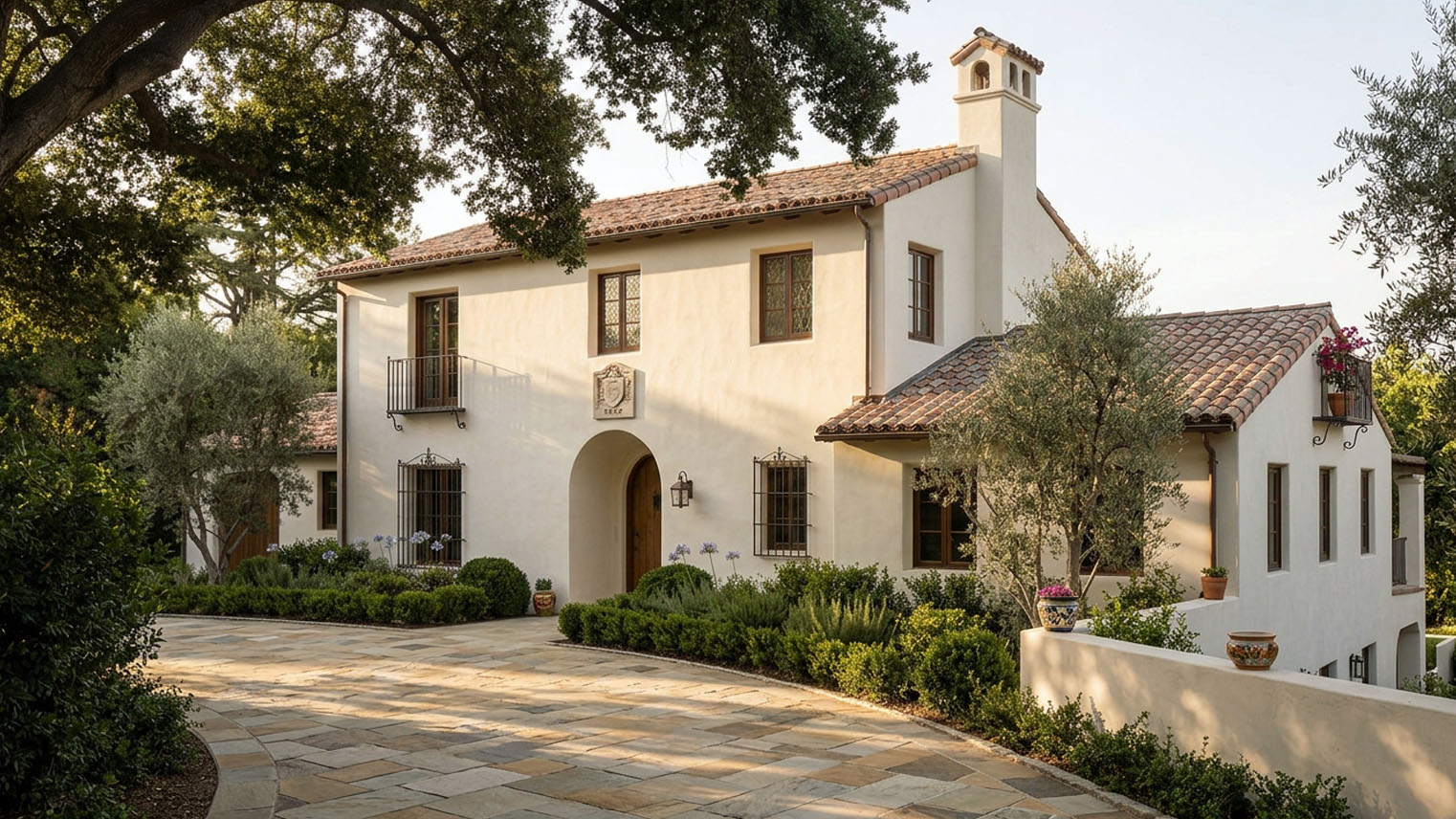
Wallace Neff (1895 to 1982) designed hundreds of residences over a six-decade Southern California career. The largest concentration of surviving Neff homes sits in the San Gabriel Valley, anchored in San Marino and Pasadena, with smaller groupings in Altadena, South Pasadena, Chapman Woods, and the Los Altos and Annandale pockets of east Pasadena. Most remain privately owned and rarely change hands.
A typical year sees fewer than ten Neff-attributed homes come to market across all of Southern California. The SGV usually accounts for two to four of those transactions. That makes Neff inventory among the thinnest architect-attributed segments in California luxury real estate. When a Neff house lists, it does not stay quiet.
Pricing in 2026 spans a wide band. The entry tier is the last surviving Airform “bubble” dome on the Pasadena market, a 1946 experimental commission Neff built for his brother Andrew. The mid band is sympathetically maintained two-to-five-bedroom Spanish Colonial Revival, Mediterranean Revival, or French Provincial commissions on quarter-acre to half-acre lots. The headline tier is estate-scale commissions on private lanes and larger lots. A 1928 Spanish Colonial Revival on a private lane in Pasadena’s Los Altos pocket came to market in 2024 at the estate tier. A San Marino home Neff built in the late 1920s for Harriet Skinner, widow of a Sears, Roebuck and Co. founder, relisted in 2023 at the top of that tier.
Three factors shape any Neff transaction. Inventory is scarce. Demand is patient. Authenticity varies dramatically house to house. The 1920s and 1930s stucco-and-tile commissions that built Neff’s reputation are now between ninety and one hundred years old. Some have been preserved or sympathetically restored over the decades. Others have been remodeled in ways that strip the period detail buyers in this segment specifically pay for. The single most important question on any Neff property is what survives behind the paint, the cabinetry, and the landscaping.
Arroyo Casa serves the SGV side of this market. The practice brings twenty years of building and remodeling behind it, and a finish carpenter’s eye, to the segment, which sets a working baseline for period stucco, plaster, ironwork, clay-tile roofing, leaded glazing, and the small interior details (boxed beams, picture rails, period hardware, plaster cove returns) that distinguish a preserved Neff interior from a remodeled one. That assessment matters in this segment because authenticity, not comparable-set pricing, drives value: inventory is too thin to support comparable-driven valuation, and each Neff house is largely its own market.
What this page covers, in order: where Neff houses concentrate in the SGV and how many trade per year, the current price band by neighborhood and condition tier, how Neff inventory actually prices, the authenticity assessment that determines whether a house holds its premium, the red flags that walk a Neff deal, Mills Act eligibility, and a closing FAQ on questions buyers and sellers raise most often.
Questions about the Wallace Neff market
How many Wallace Neff homes are there in the San Gabriel Valley? The exact count is not public. The Huntington Library Wallace Neff Collection holds over 100 project files documenting individual commissions, a number that understates the total because not every commission generated a complete project file in the archive. Working estimates put the SGV-resident Neff catalog in the low hundreds, with roughly one third in San Marino, roughly one third in Pasadena, and the balance distributed across Altadena, South Pasadena, Glendora, and adjacent cities.
How often do Wallace Neff homes come to market in the SGV? Two to four transactions per year is typical across San Marino and Pasadena combined. Multi-year stretches with only one or two SGV transactions are not unusual.
What is the price range for a Wallace Neff home in the SGV in 2026? The band is wide and no single figure is honest. The entry tier is the surviving Airform house in Pasadena. The mid band is sympathetically restored two-to-five-bedroom houses. The estate tier is headline commissions with intact period detail on larger lots. Recent estate-tier examples include a Los Altos listing in 2024 and a San Marino relist in 2023.
Are Wallace Neff homes eligible for Mills Act? Generally yes, if the home qualifies under the city’s historic-significance criteria. Pasadena administers an active Mills Act program. San Marino administers a program. Other SGV cities vary. Mills Act contracts reduce property tax assessments in exchange for a recorded maintenance commitment; the exact savings vary by property and are set by the county assessor.
What should I inspect first on a Wallace Neff house? Roof and roof flashings, original wood windows or replacements, stucco substrate condition, plumbing supply lines and drains, electrical service and any remaining original wiring, and the interior period detail that determines the house’s authenticity tier. A walkthrough by someone with period-construction background separates a preserved or sympathetically restored house from a remodeled one well before the formal inspection.
Is Altadena in scope for Neff transactions in 2026? Yes, with sensitivity to the specific micro-neighborhoods affected by the 2025 Eaton Fire. Several Neff commissions in Altadena are unaffected. Some are not. A fire-status briefing should precede any Altadena inspection.
Where Wallace Neff homes concentrate in the San Gabriel Valley
Neff opened his architectural office at 14 North Fair Oaks Avenue in Pasadena in 1922 and stayed rooted in the SGV until roughly 1933, when he moved his practice to Hollywood. He continued designing SGV commissions through his retirement in 1975, but the densest residential output sits in the period from 1923 through the early 1940s, when he lived and worked from the area.
San Marino. Neff moved his own family to San Marino in 1928 and the city absorbed a disproportionate share of his commissions for the next two decades. Streets that carry multiple Neff houses include Orlando Street (his own 1928 residence), South San Pascual Avenue across the city line, Lorain Road, Old Mill Road, and the streets surrounding the Huntington Library and Gardens. San Marino Neff houses are among the highest-value architect-attributed inventory in the SGV.
Pasadena. Concentration is heaviest in three areas: lower East Pasadena along California Street and South San Pascual Avenue; Chapman Woods, which carries Mediterranean Revival, Spanish Colonial Revival, and French Provincial commissions from the late 1920s and 1930s; and the Los Altos and Annandale neighborhoods, which carry larger estate-scale commissions on private lanes.
Altadena. Neff’s parents lived in what is now Altadena and Neff designed several family commissions there, including his own 1923 residence and the 1926 St. Elizabeth of Hungary Roman Catholic Church (his only church commission). The 2025 Eaton Fire affected portions of Altadena and the inventory profile in directly-affected micro-neighborhoods is in flux. Buyers interested in Altadena Neff houses should request a fire-status-aware briefing before any inspection.
South Pasadena. The 1946 Airform house Neff designed for his brother Andrew is the last surviving Airform of eight originally built, and came to market in 2026. Other South Pasadena Neff commissions exist but are sparse.
Glendora and outlying SGV. A small number of Neff commissions exist in Glendora, Sierra Madre, and adjacent foothills cities. These are individually significant but transact rarely.
What “a Wallace Neff home” actually means today
The phrase covers a wider range than buyers usually expect.
A Neff-designed house from the 1920s or 1930s in its original configuration shows specific construction signatures. Exterior walls are typically stucco over wood-frame or hollow-tile substrate, troweled to a sand or smooth finish rather than the heavy textured stucco common in postwar tract construction. Roofs are clay barrel tile, generally Mission or two-piece S-tile, often with copper flashing at hips and valleys. Windows are wood casement or wood double-hung, with leaded or art glass at the formal rooms in higher-tier commissions. Iron hardware (hinges, latches, balcony rails, lighting fixtures) is wrought or cast iron, often produced by Southern California iron shops Neff worked with repeatedly. Interior details include plaster cove and crown returns, exposed wood beams in living rooms and dining rooms, tile-paved entries, arched openings between formal rooms, and built-in cabinetry in dining rooms and breakfast nooks.
A preserved Neff house has most of these signatures intact. A sympathetically restored Neff house has had systems updates (electrical, plumbing, HVAC, kitchens, bathrooms) executed with period-correct materials and details. A remodeled Neff house has had systems updates executed without that discipline: replaced windows that do not match the original sash profile, drywall over plaster, dropped ceilings replacing the original beams, paint or plaster covering the original tile, modern kitchens with contemporary cabinetry and stone, expanded floor plans that disrupt the original room massing.
All three transact in the SGV every year. They do not transact at the same price per square foot, and they do not hold their premium through the same hold periods.
A builder background with a finish carpentry specialty allows a walkthrough to read the construction in 20 to 40 minutes. Telltales include the trowel signature on original stucco versus a re-skim or a complete strip-and-replace; original wood-window sash profiles versus aluminum or vinyl retrofits; original plaster versus drywall; original tile (terracotta from Gladding McBean, Malibu Potteries, or Catalina Pottery patterns) versus modern reproductions; original ironwork versus reproduction; and original interior hardware (mortise locks, period rim locks, brass or cast iron hinges) versus modern replacements.
These distinctions matter because they price. A preserved or sympathetically restored Neff house in San Marino transacts at a meaningful premium to a remodeled one of the same footprint and address. Buyers who do not know how to assess what they are looking at typically miss the difference.
How Neff inventory prices
Comparable-driven valuation does not work in this segment. With two to four SGV transactions per year, every Neff house is effectively its own market. A 2024 Pasadena Neff listing is not a comparable for a 2026 San Marino Neff listing in a different condition tier on a different lot. The inventory is too thin for comparable-set math.
What drives value instead is the four-factor stack a Neff house brings to the table.
Provenance and archive verification. A documented attribution in the Huntington Library’s Wallace Neff Collection is the foundation. Drawings, project files, period photographs, and correspondence specific to the address establish the work as Neff’s. Houses with full archive provenance command attention and patience from the buyer pool. Houses with attributed-but-undocumented status do not.
Condition tier. Preserved, sympathetically restored, or remodeled. Each tier draws a different buyer at a different price. The remodeled Neff sells closer to the surrounding neighborhood line. The preserved or sympathetically restored Neff sells against the architect-attribution buyer pool, which is patient, well-resourced, and willing to wait.
Location. San Marino, the higher-tier Pasadena neighborhoods, and the streets immediately surrounding the Huntington Library carry the strongest pricing. South Pasadena and Glendora carry meaningful but lower pricing on the same architect attribution. Altadena pricing in 2026 is fire-status-dependent at the micro-neighborhood level.
Scale and lot. Neff designed across a wide range of scales, from the 1,200-square-foot Airform dome to estate-scale commissions on multi-acre grounds. The pricing band reflects that range. There is no single price-per-square-foot benchmark that applies across the segment.
The right price-discovery method for a Neff house is direct: study what is on market across the SGV, study what has closed in the last twenty-four to thirty-six months across San Marino and Pasadena specifically, and price the property’s four-factor stack against that bounded set. That is the work this practice does on every Neff inquiry.
What walks a Neff deal
Six red flags that should slow any Neff transaction.
Attribution that does not hold up to archive verification. Not every house attributed to Wallace Neff in a listing is documented in the Huntington Library’s Wallace Neff Collection. Some are. Some are not. The collection holds drawings, project files, correspondence, and photographs spanning 1910 to 2008, with the bulk in 1923 to 1967. A serious buyer pays for archive verification before close.
Stucco re-skin that conceals the original substrate condition. A complete strip-and-replace stucco re-skin masks substrate damage on stucco-over-wood-frame and stucco-over-hollow-tile assemblies. Original stucco from the 1920s and 1930s is rarely the right finish to leave entirely in place at this age, but a re-skin the seller cannot document raises questions about substrate condition.
Replaced wood windows with profiles that do not match the originals. Wood double-hung and wood casement windows from the period have specific sash profiles, glass-bead detailing, and operating hardware. Replacements that are dimensionally close but profile-wrong show in elevation and read on any thoughtful buyer’s walkthrough.
Tile roof that has been re-laid without re-flashing. Clay barrel tile from the original installation often survives. The underlayment, the flashing at hips and valleys, and the copper or lead saddles at chimneys do not always survive. Tile pulled, the deck and flashings replaced, and the original tile reset is the right approach. A roof re-laid on the existing flashings ages the next ten years the wrong way.
Plumbing and electrical updates that have not been opened and verified. Galvanized supply lines, knob-and-tube wiring, and original cast-iron drains do not always survive the work that has been done in the past forty years. They sometimes do. A buyer who does not verify the actual condition of supply lines, drain stacks, and wiring buys an inspection-stage surprise.
HOA, CC&R, or historic-designation restrictions the listing does not disclose. San Marino has specific tree, landscape, and exterior-alteration rules. Pasadena has Mills Act eligibility and Landmark District considerations. Altadena has fire-zone considerations. These restrictions affect what a buyer can change and how the house lives.
Mills Act and historic designation
Most SGV Wallace Neff homes are eligible for Mills Act contracts if they qualify as historically significant under the city’s process. A Mills Act contract caps the assessed value at a level keyed to income-approach valuation rather than market value; the exact savings vary by property and are set by the county assessor. The trade is a recorded contract obligating the owner to maintain the historic character of the property, with city inspection rights.
For a Neff buyer who plans to hold for ten or more years, Mills Act is often a material part of the purchase economics. Not every SGV city administers Mills Act the same way. Pasadena administers an active program. San Marino administers a program. Several smaller SGV cities do not. Mills Act mechanics, the lower of three values math, the obligations, and the city by city programs, are covered in depth on the Owning pillar.
Working with Arroyo Casa
Arroyo Casa is my practice. I am Greg Anderson, a California REALTOR, DRE# 01071792, at KW Executive, licensed since 1990, with twenty years of building and remodeling behind that, and the trim and the built-ins were my own end of the job. In a segment where every house is its own market and the premium is what survives behind the paint, that pairing is the point: I do not just list a Neff, I read one.
For Wallace Neff buyers, the practice provides early access to upcoming inventory through SGV-resident relationships, walkthrough-stage authenticity assessment, archive verification support, and Mills Act eligibility analysis where it applies.
For Wallace Neff sellers, the practice provides walkthrough-stage condition-tier assessment before listing, archive-verification preparation, narrative and photo-documentation development that authenticates the property to the buyer pool, and list-price positioning anchored to the four-factor framework above.
To start a conversation about a specific Wallace Neff property, current or anticipated, the contact form on this site routes directly to Greg.
Last updated