
Communities and Neighborhoods
of the San Gabriel Valley
The districts, the rules, the money, and the streets: the questions owners and buyers ask about the twenty-one communities of the San Gabriel Valley, answered plainly.
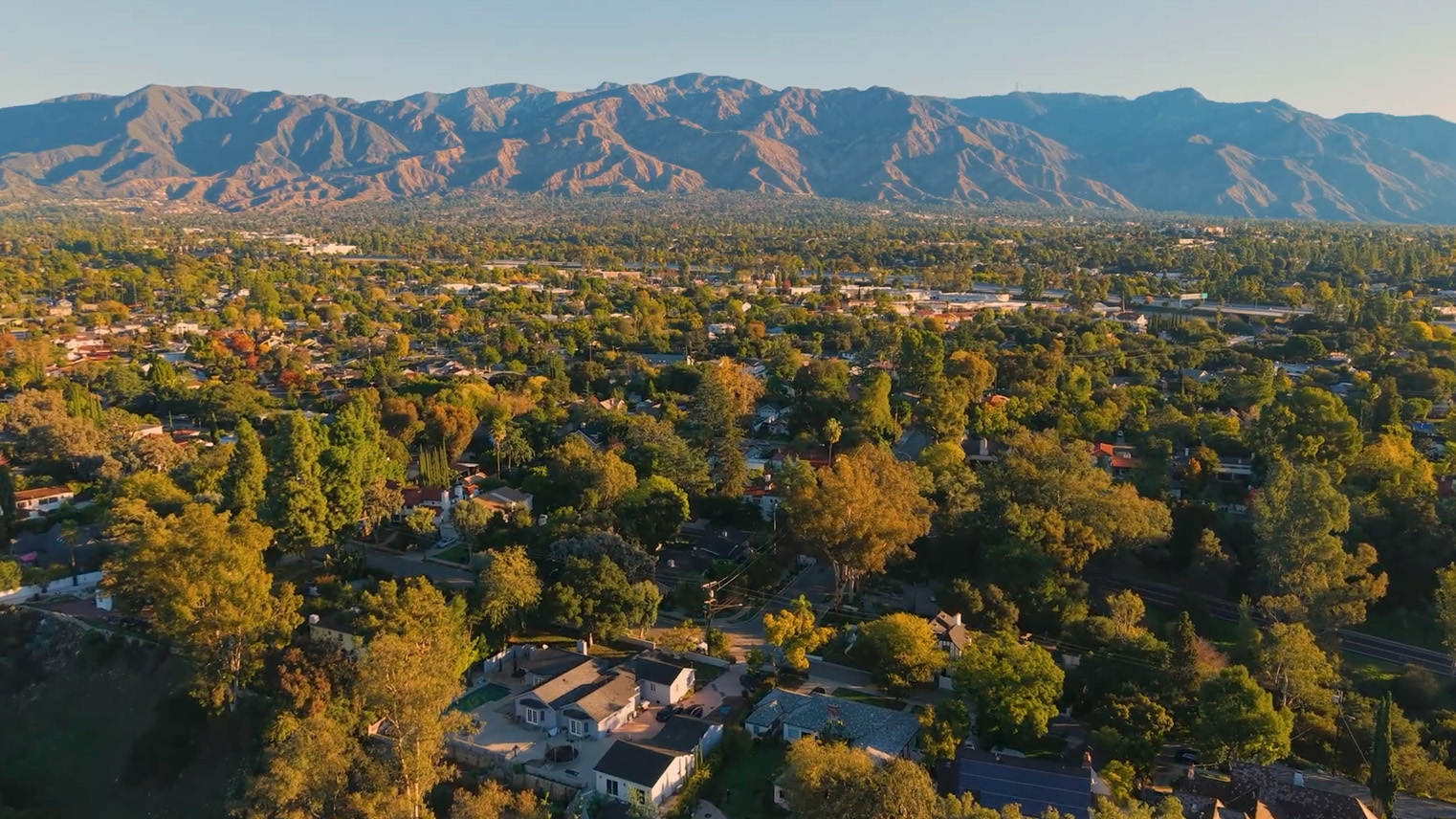
The San Gabriel Valley is twenty-one cities, and every one of them decided at some point what it wanted to keep. Some wrote it into law and drew district lines around whole neighborhoods. Some kept their old streets by habit and luck. A few kept almost nothing. I built and remodeled homes for twenty years, with finish carpentry as the specialty arm of that practice. My California real estate license dates to 1990. Between those two educations sits everything I know about which streets keep their promises, and that is what the questions people ask me about these communities always come down to.
The districts: the labels and the rules
What’s the difference between a landmark district, a historic district, and a National Register listing in the San Gabriel Valley?
They are three different labels from three levels of government, and only the local one controls what you can build. A National Register listing is federal recognition, and it places no federal restrictions or requirements on a private owner. A landmark district or historic district in this valley is a city instrument, written into a city ordinance, and it is the one that puts design review between you and a permit. The names shift from city to city, but the test never does: the rules that reach your house come from the government that issues your permits. In Altadena, which has no city hall, that government is Los Angeles County, which keeps the community’s landmark and Mills Act files. Every one of the valley’s named neighborhoods has its documented account, city by city, in the neighborhood record.
Does a National Register listing restrict what I can do with my San Gabriel Valley home?
No. On its own, a National Register listing is recognition, not regulation. Under federal law the listing places no restrictions on what a private owner may do with the property, up to and including tearing it down, unless federal money or federal permits are involved in the project. The restrictions people fear come from somewhere else: a city district ordinance, or strings you accept voluntarily with tax programs and grants. Orange Heights in Pasadena is the clean local example, federally listed but outside the city’s landmark district rolls, so the Register honors it while the city’s design review does not reach it. Know which list your house is on before you assume anything.
Will a historic district stop me from remodeling my San Gabriel Valley home?
No. A district changes how you remodel, not whether you can. In Pasadena’s districts the pattern is typical for this valley: exterior work visible from the street goes through design review, while interiors, paint, and routine repairs stay yours alone. Redo every bathroom and the city has no opinion; redesign the front porch and it does. The owners who struggle are the ones who design first and ask second. Bring the district standards into the plans at the start, favor the materials the street already speaks, and approval becomes paperwork instead of a fight. Madison Heights and Bungalow Heaven are both full of beautifully remodeled homes.
Can I add an ADU to a historic home in the San Gabriel Valley?
Yes, in almost every case. State law allows ADUs within a historic district, and on lots where the main residence itself is subject to historic preservation; a city may hold the unit to standards that protect a listed property, but those standards must be objective and cannot simply block the project. Inside a historic district, state law even bars the city from imposing parking requirements on the unit. What changes in a district is the design conversation: expect the city to care where the unit sits and what it looks like from the street. Bungalow Heaven is the working example: under its rules in practice, work the street can see triggers review, and a rear yard unit the street cannot see is generally exempt. Start with your city’s own ADU rules, because the details are city shaped even though the right to build is not.
Which San Gabriel Valley cities protect their older homes from being torn down?
The protection runs city by city, and the spread is wide. Pasadena has the deepest program in the valley, with 27 designated landmark districts on the city’s own list standing between its best streets and the wrecking ball. South Pasadena carries eleven local districts of its own. Monrovia has run a disciplined program since 1995 with more than 160 designated landmarks. Arcadia sits at the other pole: its preservation ordinance is voluntary, design review runs through five neighborhood association boards in their own areas, and the teardown market there is real. Covina has held an ordinance since 1997 and has designated nothing under it. The lesson I give every buyer: a boundary line protects a house, a city limit does not.
How do I find out if my San Gabriel Valley home is listed as historic?
Start with your city’s planning department, because every designation in this valley lives in a public file you can read. Ask for the designated property list and for the city’s historic resources survey; Covina’s 2007 downtown survey and Temple City’s 2012 citywide survey are exactly this kind of document, and they name specific streets and houses. For Altadena, the records sit with Los Angeles County, including its landmarks and Mills Act contracts. For a National Register question, the Park Service keeps a public database anyone can search. Pull the file before you price, buy, remodel, or list. I pull it on every old house I touch, without exception. If you want the file on yours pulled and read plainly, call or text me at (310) 402-8430.
Which San Gabriel Valley neighborhoods have active preservation groups, and what does that mean for an owner?
Several, and an active group is one of the best signs an owner can find. The Bungalow Heaven Neighborhood Association is an all volunteer nonprofit that has run its home tour since 1990 and works on preservation, education, and advocacy. Pasadena Heritage works citywide, and its own founding is tied to the effort that protected the South Marengo district. South Pasadena has its Preservation Foundation, Alhambra its Preservation Group and Historical Society, Claremont its Claremont Heritage with the town’s architectural archives. For an owner it means three things: neighbors watching the street’s fabric, experienced help when a project meets design review, and a market that has already learned to value what you own.
The money and the sale
Do historic districts help or hurt home values in the San Gabriel Valley?
In this valley the districts hold their value because they hold their streets. The mechanics are plain. Supply inside a boundary is fixed forever. The buyers hunting these homes are hunting the protected blocks specifically. And the district is the only insurance that the house next door will still be there, at that scale, in ten years. The honest counterweight: design review thins out the flip and gut buyer pool. If you own an intact home, read that as a feature, because the buyers who remain are the ones who pay for intact. The district premium is not magic. It is scarcity with a fence around it. If you are pricing a home on either side of that fence, call or text me at (310) 402-8430.
Is selling a home in a San Gabriel Valley landmark district different from a regular sale?
Yes, and the difference should work for you if the sale is built around the record. You disclose the designation and any Mills Act contract, the buyer pool is narrower, and the marketing job changes shape: the district file, the survey line, the architect attribution, and the tax contract are the listing, not footnotes to it. A narrower pool is not a weaker one. These buyers arrive educated, they move when the right house surfaces, and they pay for documentation. I took my California real estate license in 1990, and district homes are the listings where the file sells the house. If yours is one of them, I would like to see that file. Write me at greg@arroyocasa.com.
Does a historic designation make a San Gabriel Valley home easier or harder to sell?
Neither on its own. The designation decides which sale you are running, not whether the sale runs. Marketed like any ordinary listing, a designated home confuses its crowd and sits: the open house fills with buyers pricing a remodel the district will never approve, and their offers show it. Marketed on its record, the same home skips that crowd entirely. The file leads, the photographs show the original fabric instead of hiding it, and the listing reaches the buyers who search by district name first. Those buyers move quickly when the right house surfaces, because most of them have been waiting for it. The house does not change. The campaign does.
Who buys the San Gabriel Valley’s historic homes?
People who are buying the street as much as the house. In my experience they come in three streams: valley owners trading up who already know what a district means, arrivals who chose this valley specifically for its early architecture, and design literate buyers who read a listing’s documentation line by line. What they share is patience and standards. They will wait a year for the right block, they notice original fabric in the first walkthrough, and they reward a seller who can prove what the house is. If you own a documented home here, your buyer already exists. The work is reaching them, and that work is mine. Call or text (310) 402-8430.
Is my older San Gabriel Valley home worth more as a house or as a lot?
It depends on which side of a protection line your address sits, and the honest answer changes block by block. Inside a district, the value rides the house, because the district exists to keep it standing and the buyers come for exactly that. In parts of Arcadia, the arithmetic can invert: listings there say value in the land out loud, and the lot can outbid the structure. Twenty years of building and remodeling homes taught me to price a structure without sentiment, and sentiment is not what decides this question. The boundary decides it. Before you list, know exactly where your parcel sits on that map. This is the exact question I built Sell Odds to answer: an empirical read of sold and unsold outcomes for homes like yours before you commit to a price. If you want that read on your home, call or text (310) 402-8430, or go straight to arroyocasa.com/sell and start it yourself.
Should I get my San Gabriel Valley home designated as historic before I sell?
Sometimes, and the calendar usually decides. Designation runs on the city’s schedule, not escrow’s, so the first question is whether your timeline can hold it. When it can, designation converts history into numbers a buyer can bank: eligibility for a Mills Act contract where your city offers one, and that contract stays with the property when it transfers, which turns your house’s past into the next owner’s tax bill. When the timeline is short, the alternative is nearly as strong: document eligibility, pull the survey record, and sell the proof. A house that arrives with its file complete never has to argue about what it is. If you are weighing that calendar, it is a conversation I can shorten. Call me at (310) 402-8430.
Which San Gabriel Valley cities offer Mills Act tax savings on historic homes?
Ten of the twenty-one appear on the state preservation office’s own list of Mills Act participants: Claremont, Covina, Glendora, La Verne, Monrovia, Pasadena, Pomona, San Gabriel, Sierra Madre, and South Pasadena, and Los Angeles County’s program is the door for unincorporated Altadena. Every city writes its own rules and some programs are far more active than others; Covina sits on the state list while having designated nothing under its own ordinance, so a contract there has no property to attach to yet. Pasadena’s program shows what a mature one looks like: participants have saved between 20 and 75 percent on property taxes, averaging around half. If your city is on this list and your house qualifies, this is the single largest number in the whole conversation. If you are not sure whether your house qualifies, shoot me a text at (310) 402-8430. I will tell you straight, including when the answer is no.
Does a Mills Act contract carry over when a San Gabriel Valley home sells?
Yes. Mills Act contracts run ten years initially with automatic yearly extensions, and they stay with the property when it transfers. For a seller, that means the tax savings are part of what you are selling, so say it early and price like it matters. For a buyer, it means you inherit both halves of the bargain: the reduced tax bill and the binding duty to maintain and restore the home to preservation standards. Read the contract itself before you write the offer, because its maintenance schedule is now your to do list. I have watched this single clause decide more than one sale in this valley.
Which San Gabriel Valley cities make restoring an old home easiest?
The cities that have already decided old houses matter: clear rules, named staff, and money on the table. Pasadena, South Pasadena, and Monrovia lead, each with real district programs, published standards, and Mills Act contracts that help pay for the work. Claremont and Pomona both sit on the state’s Mills Act list with deep inventories to restore. Where designation is young, as in Alhambra, the permit file becomes your map, and I would pull it on every early house there without exception. Restoration is never easy. It is easier where the city is on your side before you start.
Finding the place
How does the San Gabriel Valley compare with the rest of Los Angeles for historic homes?
For early residential architecture still standing in whole, protected neighborhoods, I would put this valley against anywhere in Los Angeles County. Pasadena was the center of the American Craftsman movement, and the inventory around it runs roughly ninety years deep, Queen Anne through Mid-Century Modern, and Pasadena alone holds it in place with 27 city landmark districts and 31 National Register districts. West Adams and Long Beach hold real treasures, and I say so plainly. The valley’s edge is intactness: not one famous house on a changed street, but whole streets, documented, protected, and still legible. You do not visit the era here. You move into it.
Where can I find Pasadena’s kind of historic home for less money in the San Gabriel Valley?
Monrovia, Alhambra, Glendora, Covina, Azusa, and Pomona hold the same eras at friendlier numbers. Monrovia is the closest match in spirit: a foothill town, an early grid, a real preservation program, and Craftsman streets that read like Pasadena’s at a discount. Alhambra’s tracts carry the twenties through the forties nearly untouched. Pomona holds Victorian era streets at the most accessible prices in the valley. What you trade is mostly the name and some depth of formal designation, not the architecture itself. The houses were built by the same era, often by the same hands. The market just has not finished noticing.
Why do historic homes cost more in Pasadena and South Pasadena than in the rest of the San Gabriel Valley?
Because the record is deeper there, and buyers can bank on it. Pasadena concentrates the famous districts, the architect attributions, and 27 landmark districts on the city’s own list; South Pasadena runs the deepest preservation program of any small city in the valley, with eleven local districts over a few square miles. Depth of record does three things to price: it certifies the product, it protects the street, and it draws the most literate buyer pool in Southern California to one small market. If you own there, that premium is defensible on paper, which is exactly what makes it durable. If you are buying, the same architecture costs less in Monrovia, Alhambra, Glendora, Covina, Azusa, and Pomona.
Which San Gabriel Valley communities pair historic homes with an easy commute to downtown Los Angeles?
South Pasadena, Alhambra, San Gabriel, and Monterey Park put historic streets closest to downtown, on the direct roads and rail that run the west end of the valley. South Pasadena is the classic answer: district streets, an old walkable core, and one of the shortest historic home commutes in the county. Alhambra and San Gabriel trade a little polish for price at the same distance. The pattern to remember: the valley’s deepest west side inventory sits closer to downtown Los Angeles than most of the city’s own suburbs.
Which San Gabriel Valley towns have a walkable old downtown next to their historic neighborhoods?
Monrovia, South Pasadena, Claremont, Sierra Madre, and Glendora. Monrovia’s Old Town sits directly against the early grid that holds both of its historic districts. South Pasadena’s original business district along Mission Street carries a federal listing of its own, so the errands run through history too. Claremont Village is the town’s founding grid beside the colleges, with Russian Village a short walk south. Sierra Madre keeps a true small town center at the mouth of its canyon. These are the towns where the life you moved for starts at your own front porch.
Which San Gabriel Valley cities have historic neighborhoods most buyers never hear about?
Covina, Temple City, La Verne, Azusa, and the Alhambra tracts. Covina’s 2007 downtown survey identified a pocket on Cottage Drive and Orange Street, nineteen buildings with thirteen potential contributors, folk houses wearing simplified Victorian trim; identified is the honest word, because the city has designated nothing. Temple City’s 1923 townsite is an interleaved grid where twenties Craftsman bungalows share blocks with thirties revivals and postwar homes. Emery Park in Alhambra opened in 1922 and still reads as the late twenties built it. None of these carry famous names. All of them carry the real thing. Walking a buyer down these blocks before the market notices them is my favorite day of this work. Write me at greg@arroyocasa.com.
Which San Gabriel Valley communities with historic neighborhoods have their own school districts?
Several run single city school systems, and the boundary is a fact you check by parcel, never by city limit. San Marino, South Pasadena, Arcadia, Monrovia, and Temple City each anchor a district of their own, as does La Cañada Flintridge, while Pasadena, Altadena, and Sierra Madre share Pasadena Unified. The lines wander: Temple City’s district takes in small pieces of Arcadia and San Gabriel, and La Cañada’s includes some Pasadena land, with more shifting by a 2024 voter approval on its Glendale side. I verify the parcel on every transaction, because the map is the only opinion that counts.
Named ground
Is Bungalow Heaven in Pasadena a good place to buy a Craftsman home?
If you want a protected Craftsman street, Bungalow Heaven is the strongest single answer in Southern California. Pasadena’s first Landmark District in 1989, on the National Register since 2008, with 522 contributing buildings inside that National Register boundary, watched over by a volunteer neighborhood association that has run its home tour since 1990. The tradeoffs are the honest kind: design review on the exterior, prices that reflect the fame, and competition from buyers who know exactly what this place is. You are not just buying a bungalow. You are buying the neighborhood that proved bungalow neighborhoods could be saved.
Where are the San Gabriel Valley’s grand estate neighborhoods?
San Marino, Oak Knoll in Pasadena, La Cañada Flintridge, and upper Arcadia carry the valley’s estate blocks. San Marino is an entire city built at estate scale. Oak Knoll was laid out for custom work and got it; the record there runs house by house, led by Greene and Greene’s Blacker House of 1907 to 1908, with Wallace Neff estates and Sylvanus Marston houses threaded through the same deep band. Flintridge holds the foothill estates above the arroyo. These are the blocks where the architect’s name is part of the address. If an architect’s name belongs on your next address, I know these streets house by house. Call me at (310) 402-8430.
Where can I find an older horse property or ranch estate in the San Gabriel Valley?
Bradbury first: the valley’s ranch estate city, large parcels against the foothills where the rancho pattern never fully left. Beyond it, the trail runs along the foothill edge, in pockets of La Cañada Flintridge and the upper reaches of Arcadia and Monrovia where lot sizes still remember an older land pattern. These properties are scarce, they trade quietly, and the good ones rarely make it to a public search. This is parcel by parcel hunting, and it is exactly the kind I do. Call or text (310) 402-8430 and tell me what you are looking for.
Where can I still find Victorian era homes in the San Gabriel Valley?
Pomona leads, with its Lincoln Park district on the National Register. Monrovia’s early grid keeps Victorian era survivors, and its North Encinitas district was designated over exactly that fabric. In Pasadena, Garfield Heights protects one of the city’s older intact fabrics, Victorian era housing beside early Craftsman. South Pasadena keeps survivors like Wynyate of 1887, and Covina’s surveyed pocket wears simplified Victorian trim on its folk houses. The whole Queen Anne inventory here is small and held tightly, which is exactly why knowing these five places matters.
Can I buy a historic bungalow court or courtyard home in the San Gabriel Valley?
Yes, mostly in Pasadena, and they trade rarely. The court is one of this valley’s gifts to American housing: small homes gathered around a shared garden, Craftsman ownership at its most attainable scale. Bowen Court, by Heineman and Heineman, stands among the earliest and largest in Pasadena. Covina holds a 1920s Spanish Colonial Revival courtyard group at Covina Park, identified in the city’s 2007 survey. Many courts live on as rentals, some as owned units, and when one comes to market the buyer pool is already waiting. If a court is what you want, tell me at greg@arroyocasa.com, and we hunt with patience.
Where do original, never remodeled homes still come up for sale in the San Gabriel Valley?
Estate sales and long held family homes are where original survives, and district streets are where it survives best. The listing that says first time on the market in fifty years is the flag I watch for, because half a century of one family is what keeps a house unimproved in the best sense. The districts add a second layer: design review discourages the gut remodel, so intact interiors persist behind protected facades. Twenty years of building and remodeling homes taught me to read fabric fast, and original announces itself in one walkthrough: the trim profiles, the floors, the hardware, the doors. When you find one, move with respect and speed, in that order. Tell me now, before the next estate sale surfaces, so I am already hunting for you when it does: greg@arroyocasa.com.
Where can I tour historic homes in the San Gabriel Valley before deciding where to buy?
April in Pasadena is the best classroom in the valley. The Bungalow Heaven Home Tour ran its 35th year on April 26, 2026, a self guided walk through the district’s Craftsman interiors that has run since 1990, and this year’s proceeds went to Eaton Fire rebuilding through San Gabriel Valley Habitat for Humanity. Pasadena Heritage runs its own Craftsman tours, including the South Marengo district and the metalwork of Greene and Greene’s Gamble House. Use the tours the way smart buyers do: walk the Bungalow Heaven blocks, learn what original looks like from the docents, then go shopping with a trained eye.
Are there still historic homes for sale in Altadena after the Eaton Fire?
Yes. Historic homes still stand in Altadena, they still come up for sale, and each one carries more weight than it did before January 2025. The fire took an estimated six thousand homes and a heartbreaking share of the historic fabric: neighbors estimate up to three quarters of Janes Village’s storybook cottages burned, and losses include the Andrew McNally House, while the 1882 Woodbury-Story House, home of the family that founded Altadena, came through. Surviving streets farther from the burn have held their value, with demand from displaced families, and burned lots trade steadily, largely to builders. Rebuilding and the community’s landmark files both run through Los Angeles County. Buying here now means joining a community mid rebuild, and I treat every Altadena conversation that way. If you are facing that decision, on either side of it, call me at (310) 402-8430. I will meet you where you are.
Who do I call about a historic San Gabriel Valley home?
Me. My practice is built for these houses and nothing else: the documented home that needs a seller who can read its file, the buyer hunting one street in one district, the owner trying to understand what a designation actually means for their house. Call or text (310) 402-8430, or write greg@arroyocasa.com. Give me the address and the question, and I will tell you what I know, what I would find out next, and honestly whether I am the right help. And if your question is what your home would really do in this market, ask for the Sell Odds read: my empirical analysis of sold and unsold outcomes for homes like yours, no charge and no obligation. Start yours now at arroyocasa.com/sell. The houses in this valley have kept their promises for a century. I intend to keep mine.
The twenty-one cities
The working set is twenty-one cities, each with its own page, and The Cities of the San Gabriel Valley holds the full inventory in one view.
Alhambra: three named tracts on the valley floor, the Bean Tract, the Midwick Tract, and Emery Park, with designations only now beginning.
Altadena: unincorporated and county governed, rebuilding after the Eaton Fire, its historic survivors carrying more weight than ever.
Arcadia: estate blocks at the foothill base, where design review runs through neighborhood boards and the teardown question is live.
Azusa: an 1887 foothill town whose civic center holds a National Register listing.
Bradbury: ranch estates against the foothills, with Frank Lloyd Wright’s 1950 Pearce House on its ridge.
Claremont: the college town anchoring the east, with Russian Village the strangest treasure in the valley’s record.
Covina: a surveyed downtown pocket and a 1920s courtyard group, in a city that has designated nothing yet.
Glendora: an eastern foothill town with a walkable village and Rubel Castle in its federal record.
La Cañada Flintridge: foothill estates above the arroyo, with a single city school district of its own.
La Verne: the old Lordsburg townsite, renamed in 1917, with two National Register houses.
Monrovia: the closest thing to Pasadena at a discount, running a disciplined preservation program since 1995.
Monterey Park: west valley flatland minutes from downtown Los Angeles.
Pasadena: the center of gravity, holding eleven of the valley’s twenty-three named neighborhoods and its deepest preservation program.
Pomona: twelve National Register entries led by the Lincoln Park district, the valley floor’s Victorian era stronghold.
Rosemead: flatland heritage anchored by Savannah Memorial Park, a state historical landmark.
San Gabriel: the mission city, and one of the valley’s Mills Act cities.
San Marino: an entire city built at estate scale.
Sierra Madre: a canyon town whose one named neighborhood was a canyon before it was anything else.
South Pasadena: eleven local historic districts across a few square miles, the deepest small city program in the valley.
Temple City: the interleaved townsite of 1923, surveyed citywide in 2012.
West Covina: postwar valley floor with the Hurst Ranch in its record.
The named neighborhoods
Twenty-three named architectural neighborhoods stand inside six of these cities, and the neighborhood record carries each one’s documented account. These twenty-three are the neighborhoods this library documents by name, a working set, not any city’s designation ledger; Pasadena alone designates 27 landmark districts on its own list, and some names here, Oak Knoll among them, carry no designation at all. Five have full pages of their own today, and every neighborhood earns its page in turn.
Pasadena holds eleven: Bungalow Heaven, Historic Highlands, Arroyo Terrace, Prospect Park, Lower Arroyo Seco, Madison Heights, Oak Knoll, Garfield Heights, Orange Heights, South Marengo, and Washington Square. South Pasadena holds four: Oaklawn; El Centro, Indiana, and Palm; Magnolia and Adelaine; and Mission West. Sierra Madre holds one, Sierra Madre Canyon. Monrovia holds two, Wild Rose Tract and North Encinitas. Claremont holds two, Russian Village and Claremont Village. Alhambra holds three, the Bean Tract, the Midwick Tract, and Emery Park.
Three lenses on the valley
Every home in this valley answers three questions at once. Who designed it lives with the architects. What they designed lives with the styles. Where it stands is this ground, the twenty-one cities and twenty-three named neighborhoods above, and the pages beneath them. The three read best together, because where you live and what you live in are two halves of one decision.
Last updated