
Oak Knoll
No district designation. A Pasadena neighborhood laid out as the Oak Knoll subdivision. Individual houses carry their own listings, among them four on the National Register: the Robert R. Blacker House (86000147), the Cordelia A. Culbertson House (85002198), the House at 1233 Wentworth Avenue (98000962), and the Rose Graham and James Allen Freeman House (11000654).
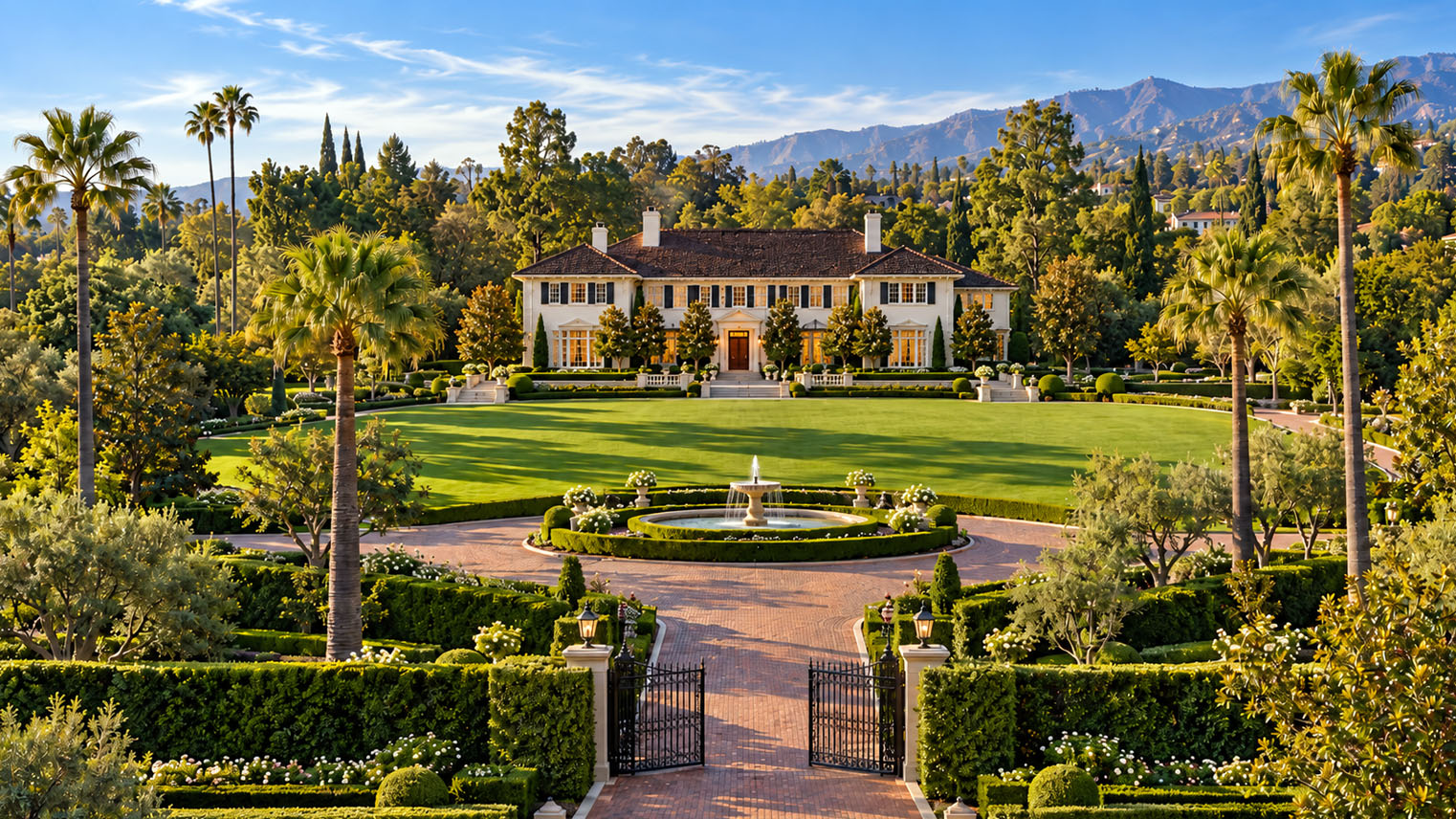
About Oak Knoll.
A Pasadena neighborhood with no historic district, laid out on curving streets under native oaks, where four houses by Greene and Greene and the Heinemans carry their own National Register listings.
Oak Knoll is not a historic district. Pasadena’s own list of designated properties has no district row for it, and no National Register district carries its name. It is a Pasadena neighborhood, laid out as the Oak Knoll subdivision on streets that curve with the old canyon rims, and its protections run house by house: four houses here stand on the National Register on their own, two of them by Greene and Greene and two by the Heinemans. I read these houses the way their records describe them and the way a builder sees them. This page is my working file on the neighborhood, built from the federal nominations, the city’s designation list and its preservation code. The questions below are the ones a buyer or a seller is likely to search for about Oak Knoll.
Oak Knoll has no historic district, so who should I call to buy or sell a home there?
Greg Anderson of Arroyo Casa is a listing agent and buyer’s agent for homes in Oak Knoll, and because Oak Knoll has no historic district, he reads each house’s own record before anything else. Pasadena’s designation list names no Oak Knoll district, so the protections here belong to individual houses: four of them are on the National Register, and two are Greene and Greene works the city’s code designates automatically. I built and remodeled homes for twenty years. I earned my California real estate license in 1990. On a house here I read what the record says about that one parcel, what appears original in the house itself, and what both mean for the buyer or the seller in front of me. Call or text me at (310) 402-8430, or write greg@arroyocasa.com.
Where is Oak Knoll in Pasadena?
Oak Knoll is in the southeastern part of Pasadena, in the words of the National Register form for the Freeman House. Its listed houses sit on Hillcrest Avenue and Wentworth Avenue: the Blacker House near the southeast corner of Hillcrest and Wentworth, the Culbertson House at the corner of Hillcrest and Oak Knoll Avenue, the Freeman House at the corner of Hillcrest and Kewen Drive, and the house at 1233 Wentworth two lots north of Pinehurst Drive. None of the records cited here draws a boundary around the neighborhood as a whole, so I will not give you edges the record does not give. Its streets, the Freeman nomination says, follow the curves of the old canyon rims. It answers to one government, the City of Pasadena.
Is Oak Knoll a historic district?
No. Pasadena’s list of designated historic properties, updated December 8, 2023, has no district row for Oak Knoll, and no National Register district carries its name. What Oak Knoll has instead is a set of individually listed and designated houses. Four are on the National Register on their own: the Robert R. Blacker House, the Cordelia A. Culbertson House, the house at 1233 Wentworth Avenue, and the Rose Graham and James Allen Freeman House. The city’s list also marks the Blacker estate’s carriage house and keeper’s house, now separate homes at 1200 and 1208 Wentworth Avenue, as Greene and Greene structures. So the honest answer to whether this is a historic district is no, and the honest answer to whether protected houses stand here is yes, one house at a time.
Is Oak Knoll in Pasadena or San Marino?
Pasadena. Every record cited here places Oak Knoll’s listed houses in the City of Pasadena: the federal forms for the Blacker, Culbertson, Freeman and 1233 Wentworth houses all give Pasadena, and the Freeman form puts the Oak Knoll subdivision in the southeastern portion of the city. San Marino is its own city with its own rules. Because none of them draws the neighborhood’s edge, check the city on the parcel itself before you assume anything about a house you are watching. The rules on this page are Pasadena’s.
Where does the name Oak Knoll come from?
From the land it was made of, as far as the record goes. The Freeman House nomination, drawing on a 1986 history of Pasadena, says the subdivision took in 300 acres of the former Allendale, Oak Knoll, and Richardson ranches, a park-like setting of gentle slopes, wooded canyons, and oak trees. The recorded maps carry the name too: the federal forms place the Culbertson lot in Lot 22 of Oak Knoll Tract Sheet A, the 1233 Wentworth lot in Lot 7 of Oak Knoll, Sheet A, recorded in Book 10 of Maps, and the Freeman lot in Lot 29 of Oak Knoll, Sheet B, recorded in Book 87 of Miscellaneous Records. The record does not say in so many words who chose the name or why, so I leave it there.
Which Oak Knoll houses are on the National Register?
Four, each listed on its own. The Robert R. Blacker House at 1177 Hillcrest Avenue, listed February 6, 1986, at the national level of significance. The Cordelia A. Culbertson House at 1188 Hillcrest Avenue, listed September 12, 1985, at the state level. The house at 1233 Wentworth Avenue, listed August 6, 1998, and the Rose Graham and James Allen Freeman House at 1330 Hillcrest Avenue, listed September 15, 2011, both at the local level and both under the multiple property listing for Pasadena’s Arts and Crafts houses. One caution if you look them up: the National Park Service’s own gallery page for the Freeman nomination files it under Connecticut, while the listing record and the nomination itself give Pasadena.
Who developed Oak Knoll, and when?
The Freeman House nomination, drawing on a 1986 history of Pasadena, credits William R. Staats, a Los Angeles real estate investor, with financial help from Henry Huntington and a local physician, A. Kingsley Macomber. The records cited here do not give the year the subdivision was laid out, so I will not print one. What they do date is the building: the Blacker House in 1907; the Culbertson House in 1911, after Cordelia Culbertson bought her lot from Edward Libbey in 1910; the Freeman House, completed in 1913; and the house at 1233 Wentworth in 1917. The same nomination says Oak Knoll kept drawing prominent residents into the 1930s.
Why do the streets curve the way they do?
Because they were laid out to follow the land. The Freeman House nomination, drawing on the same 1986 history of Pasadena, says the streets of Oak Knoll followed the curves of the canyon rims, fitting the subdivision into the natural ground and keeping most of the native oaks. It places Oak Knoll in the planning tradition Frederick Law Olmsted began at Riverside, outside Chicago, in 1869, and it says curving streets on hilly sites became the pattern for wealthy neighborhoods like this one by the turn of the century, in place of the straight grid most American cities used.
Why were the big Oak Knoll estates split into smaller lots?
The records say when and how more clearly than why. The Blacker House stood on about five and a half acres; about 1948 the second owner divided the estate into eight lots, the chauffeur’s house and garage and the keeper’s house became separate homes at 1200 and 1208 Wentworth Avenue, five new lots were cut from the gardens, and most of the lily pool and rear garden was destroyed at the time of subdivision. The Blacker House now sits on Lot 1 of a later tract, a 0.95 acre site. The Culbertson House’s gardens were razed in the 1960s when that property was divided. The Freeman House’s parcel was cut down by 1964, and in the 1970s two rear parcels were sold and two new houses built, which its nomination calls consistent with changes on several other Oak Knoll properties in those years.
Is the Blacker House in Oak Knoll?
Yes. The Robert R. Blacker House stands at 1177 Hillcrest Avenue, on a slight rise near the southeast corner of Hillcrest and Wentworth, and its nomination calls the site the Blackers’ Oak Knoll site. Greene and Greene designed it in 1907, and Dawson and Daniels built it. Its nomination counts it among the four finest remaining intact, or nearly intact, examples of the Greenes’ mature style, and says the Greenes considered it their finest work. That 1985 nomination gives about 7,184 square feet of living space, about 10,733 counting the basement. The Blackers first hired Myron Hunt and Elmer Grey, who drew a formal Mission Revival plan; after the 1906 San Francisco earthquake Robert Blacker grew uneasy about its footings, dismissed them, and engaged the Greenes. The Greenes kept the room relationships of the Hunt and Grey floor plan, changed the entry, and gave the house an exterior that bears no resemblance to the Hunt and Grey design. It is listed on the National Register at the national level.
Which Greene and Greene houses are in Oak Knoll?
Two houses and the Blacker estate’s outbuildings, on the records cited here. The Blacker House of 1907 at 1177 Hillcrest, with its carriage house and keeper’s house, now separate homes at 1200 and 1208 Wentworth. The Cordelia A. Culbertson House of 1911 at 1188 Hillcrest, built for James Culbertson’s three sisters: a one story house clad in gunite under a green glazed tile roof, which its nomination calls the only Greene design to combine gunite and a tile roof. Pasadena’s list marks more Greene and Greene work on Hillcrest Avenue, at 1166, where the firm’s work was alterations only, and at 1344. The records cited here do not say whether those two fall inside Oak Knoll, so I name them as Hillcrest addresses and no more.
Which Heineman houses are in Oak Knoll?
Two are listed, and the Freeman form names more. The Rose Graham and James Allen Freeman House at 1330 Hillcrest Avenue, completed in 1913 by Arthur and Alfred Heineman, sits on a small knoll at the corner of Kewen Drive, with softly rolled eaves of cedar shingle laid in a light wave pattern to suggest thatch, tile by Ernest Batchelder inside and out, and art glass by Judson Studios. The house at 1233 Wentworth Avenue, built in 1917 for Lydia C. Edmonds, is a Cotswold cottage, English influenced; its form names Arthur S. Heineman in its statement and Alfred S. Heineman in its architect field, and the city’s list says Heineman and Heineman. The Freeman form adds that between 1911 and 1913 the firm received three important Oak Knoll commissions: the Ross house, the O’Brien house, and the Freeman house.
What styles will I find in Oak Knoll?
Among the listed houses: Craftsman in the Blacker and Freeman houses, the Blacker counted by its nomination among the four finest surviving examples of the Greenes’ mature style; the Culbertson House’s Craftsman and Asian detail in gunite and green tile; and a Cotswold cottage at 1233 Wentworth. The Blacker House also carries the trace of a Mission Revival plan that was never built. Beyond those four, the Freeman nomination says Oak Knoll holds work by Myron Hunt, Sylvanus Marston, and Wallace Neff, but the records cited here do not name those houses or their styles, so I will not assign them one.
How do I confirm the architect of an Oak Knoll house?
Read the records, and read more than one. Pasadena’s designation list gives an architect column and a code for each listed property: GG for a Greene and Greene structure, NRI for a National Register listing, M for a monument. A National Register form names its architect in its own field and tells the story in its statement, and the two do not always agree: the form for 1233 Wentworth names Alfred S. Heineman in one place and Arthur S. Heineman in the other. And a blank architect field means only that the record does not confirm one, not that no architect worked on the house. Command of the record, the architect, the era, and the documentation that proves each claim, is part of what I bring to any house that carries a name. Email me the address at greg@arroyocasa.com and I will pull its record.
If Oak Knoll is not a district, what rules apply to a house there?
The rules follow the house, not the neighborhood. With no Oak Knoll district, no district review reaches the neighborhood as a whole. Pasadena’s preservation code reaches individual houses instead: a work of Greene and Greene is designated automatically, a house listed on the National Register at the state-wide or federal level is designated a historic monument automatically, and the city designates landmarks and monuments one by one. For a designated house, the code calls for a Certificate of Appropriateness for the work it covers. For a house the city finds eligible, the Director reviews major projects and the Historic Preservation Commission reviews demolition. And a proposal to demolish, or to carry out a major project on, any building 45 years old or older starts with a Historic Resource Evaluation to find out whether it is eligible. So the first question on any Oak Knoll house is which of these, if any, it is. My Pasadena Certificate of Appropriateness page explains the city’s certificate process.
What changes for an individually listed or Greene and Greene house in Oak Knoll?
More than for its unlisted neighbor. Pasadena’s code designates every work of Greene and Greene automatically, so a major project on one goes to the Historic Preservation Commission and a minor one to the Director, and removing a character-defining Greene and Greene fixture, inside or out, counts as a major project. For a house individually listed on the National Register, the review concentrates on what shows from streets and sidewalks, and it can also reach work out of view that affects the house’s significant character-defining features. The code also designates a house listed at the state-wide or federal level a historic monument automatically. The National Park Service records the Blacker House at the national level and the Culbertson House at the state level, while the city’s own list marks both GG and NRI and does not print its monument code, M, beside them, so ask the city how it treats a given house before you plan on it. If you own one of these houses and want it read before you plan work or a sale, request an in-home analysis at arroyocasa.com/in-home-analysis.
Can an Oak Knoll house get a Mills Act contract?
It depends on the house. Pasadena’s Historic Property Contract program, its form of the Mills Act, considers landmarks, historic monuments, works of Greene and Greene, individual National Register listings, and contributors to a designated landmark district or a National Register district, under its guidelines of February 2026. An undesignated house may also be considered if its nomination is submitted before or with the application and its designation is recorded with Los Angeles County before the end of that year. Oak Knoll as a whole is not a designated district, but that does not settle any one house: eligibility rests on the property’s own documented historic status and the program’s requirements. The limits matter. Single family houses face a total assessed value limit of 2.0 million dollars, except works of Greene and Greene, historic monuments, and individual National Register listings, and the city may grant one special exception a year. Every applicant submits a plan for future rehabilitation, and a house already rehabilitated, or without a need of future rehabilitation, is ineligible. The city may approve up to twenty new single family contracts a year, so being considered is not a promise of a contract. If you are weighing it for a house here, call or text me at (310) 402-8430 and we will read that house’s status first.
Can I tear down or rebuild a house in Oak Knoll?
Not before the city has looked, and on a designated or eligible house, not without the Historic Preservation Commission. A proposal to demolish any building 45 years old or older needs a Historic Resource Evaluation to find out whether it is eligible for designation, unless it was evaluated or surveyed in the last five years or an evaluation is prepared through the environmental review. Demolition of a historic resource is a major project, and the Commission decides it for a designated or an eligible resource. To approve it, the Commission must find severe structural damage that cannot be repaired, or that no economically reasonable way exists to use, rehabilitate, or restore the building on its site, each shown by evidence from at least two qualified professionals managed by the city and paid for by the applicant, or that a compelling public interest justifies it; the code also provides a Historic Resource Economic Hardship Waiver. And for a property’s primary structure, no demolition permit issues until the building permit for its replacement has issued, unless the city grants relief. Whether a given Oak Knoll house is designated or eligible is read for that house, not for the neighborhood.
Is Oak Knoll a good place to buy an architect designed estate?
It can be, for a buyer who wants documented work by named architects and accepts two qualifiers. Its listed houses carry the names of Greene and Greene and the Heinemans, and the Freeman House nomination says the neighborhood also holds work by Myron Hunt, Sylvanus Marston, and Wallace Neff and drew prominent residents into the 1930s. Its streets were laid out to keep most of the native oaks. The qualifiers: no district protects the neighborhood as a whole, so the street around a house can change in ways a district would review; and many of the old estates have been divided, so the estate you picture may now be a house on part of its original ground. If you are looking here, tell me what you are after at arroyocasa.com/contact-me, and I will read the houses that fit against their records.
What should I check before buying an Oak Knoll house?
Four things, in order. First, the house’s status: its own row on Pasadena’s designation list, or the absence of one; whether it sits inside one of the city’s landmark districts; whether it is a work of Greene and Greene, which the code designates automatically whether or not a list row says so; and, for a building 45 years old or older, whether a Historic Resource Evaluation has found it eligible, because that decides which review applies. Second, any National Register listing and its level of significance. Third, the lot’s history: whether the parcel you are buying is the whole of an old estate or a piece of one, and what the outbuildings and gardens next door once belonged to. Fourth, any Historic Property Contract recorded on the title, because a contract passes to the new owner on sale. Call or text me at (310) 402-8430 with the address and I will start the file.
What makes one Oak Knoll house worth more than another?
Property and market factors, read house by house, and no single label settles it. What a buyer weighs here: whether the house’s original fabric survives, how much of its first lot it still holds, its condition, its documented history, and how buyers for this kind of house are behaving when it comes to market. A National Register listing or an architect’s name tells you what the house is; on its own it does not prove a higher price. This page prints no market numbers, so for a house you own or want, start with the Sell Odds read at arroyocasa.com/sell. Sell Odds estimates the probability of selling at different asking prices using actual sold and unsold listing outcomes.
Does a former estate lot or a split parcel matter when I buy?
Yes, because it changes what you are buying. The Blacker House was built on about five and a half acres and now sits on a 0.95 acre site; its outbuildings are separate homes, and most of its lily pool and rear garden was destroyed when the estate was divided. The Freeman House’s nomination draws its boundary around the current property, after the 1970s sale of two rear parcels. So on an Oak Knoll house, read the legal description against the old estate: which garden walls, drives, and outbuildings came with the house, which went to a neighbor, and what that means for privacy, access, and the setting the house was designed for.
How should I market an Oak Knoll house when I sell it?
Lead with the record, because here the record is the house’s standing. Name the architect only where the documents support it, state the listing or designation exactly, and show the original fabric that survives rather than hiding it. Tell the buyer what the lot is today against what it once was. When I list an architectural home I bring the production discipline of twenty five years in brand marketing and content production for film studios and television networks, and I film the house the way its architecture was designed to be experienced. Send me the address at greg@arroyocasa.com and I will tell you what your file should hold.
Characteristic Styles.
- Craftsman · American architectural style that flourished roughly 1900 to 1930 in reaction to Victorian ornament and industrial mass production. Southern California Craftsman bungalows define the SGV's earliest residential character, with the largest intact concentration in Pasadena's Bungalow Heaven Landmark District.
Architects of the District.
- Greene and Greene · Charles Sumner Greene (1868 to 1957) and Henry Mather Greene (1870 to 1954) established their architectural practice in Pasadena on Colorado Street in January 1894 after training together at the Massachusetts Institute of Technology. The firm produced Robert Judson Clark's four "ultimate bungalows" between 1907 and 1909 (Blacker and Gamble in Pasadena, Thorsen in Berkeley, Pratt in Ojai) and dissolved in 1922. Henry continued residential practice in Pasadena into the 1930s.
- Heineman and Heineman · Heineman and Heineman was a Pasadena architectural practice operating under various names from 1906 through 1939, producing an estimated 1,000 to 1,500 building designs across Southern California with more than 20 documented residences in Pasadena alone. The firm is the most prolific Craftsman-era architectural practice in the San Gabriel Valley after Greene and Greene. Bowen Court at 539 East Villa Street, listed on the National Register of Historic Places, is the firm's most architecturally significant SGV commission. Arthur Heineman is also credited with the invention of the motel typology through the Milestone Mo-Tel in San Luis Obispo (1925).
- Myron Hunt · Pasadena-based architect whose institutional and residential work shaped the formal civic and estate landscape of the SGV in the early 20th century. Frequently partnered with Elmer Grey.
- Sylvanus Marston · Pasadena architect credited with creating the bungalow-court typology in 1909. His practice, later Marston, Van Pelt and Maybury and then Marston and Maybury, produced roughly a thousand projects across Pasadena, Altadena, San Marino, Alhambra, and the wider SGV, spanning more style periods than any of his flagship contemporaries.
- Wallace Neff · Born on the McNally family ranch in La Mirada in 1895 and raised from childhood in Altadena, Wallace Neff opened his office in Pasadena in 1922 and kept the San Gabriel Valley at the center of a career that ran from 1919 to 1975. His surviving SGV work concentrates in Pasadena, San Marino, and Altadena, with landmark commissions in Sierra Madre (Villa del Sol d'Oro, 1928) and Glendora (Singer Mansion, 1932 to 1934). His papers are held at the Huntington Library in San Marino.
Part of Pasadena.
Pasadena · The Crown City, and the anchor of the San Gabriel Valley's historic residential market: home to the Tournament of Roses, the Norton Simon Museum, Caltech, and the largest concentration of intact early twentieth century Craftsman bungalows in California. Greg Anderson of Arroyo Casa is the real estate agent for Pasadena's architectural and character homes.
Sources and references.
- Designated Historic Properties, City of Pasadena, updated 12/8/2023, No Oak Knoll district row. Rows for 1177 and 1188 Hillcrest (GG, NRI), 1166 and 1344 Hillcrest (GG), 1330 Hillcrest (NRI, M), 1233 Wentworth (NRI), and 1200 and 1208 Wentworth (GG). Read 2026-10-05., City of Pasadena (https://www.cityofpasadena.net/planning/wp-content/uploads/sites/30/Combined-Designations.pdf)
- Robert R. Blacker House, National Register nomination and asset record 86000147, National Park Service (https://npgallery.nps.gov/AssetDetail/NRIS/86000147)
- Cordelia A. Culbertson House, National Register nomination and asset record 85002198, National Park Service (https://npgallery.nps.gov/AssetDetail/NRIS/85002198)
- House at 1233 Wentworth Avenue, National Register registration form and asset record 98000962, National Park Service (https://npgallery.nps.gov/AssetDetail/NRIS/98000962)
- Rose Graham and James Allen Freeman House, National Register registration form 11000654, its Oak Knoll history cites Ann Scheid Lund's 1986 history of Pasadena; the NPGallery detail page for this asset wrongly gives Connecticut, National Park Service (https://npgallery.nps.gov/GetAsset/48b35c4c-2e87-4e25-90ba-6a74302976f8)
- National Register of Historic Places, listed properties, data of 2026-05-22, listing dates and levels of significance for the four houses; read from the copy saved 2026-10-05, National Park Service (https://www.nps.gov/subjects/nationalregister/upload/national-register-listed_20260522.xlsx)
- Historic Property Contract Program, guidelines and application, February 2026, The rule for undesignated properties is on page 4. Read 2026-10-05., City of Pasadena (https://www.cityofpasadena.net/planning/wp-content/uploads/sites/30/MILLS-ACT-PROGRAM-GUIDELINES-AND-APPLICATION-2026.pdf)
- Pasadena Municipal Code Chapter 17.62, Historic Preservation, text as of 2026-10-04, City of Pasadena, read through the gocodebook mirror of the published code (https://gocodebook.com/library/us/ca/pasadena/sections/17.62.090)
Last updated