
Monterey Park
Los Angeles County
About Monterey Park.
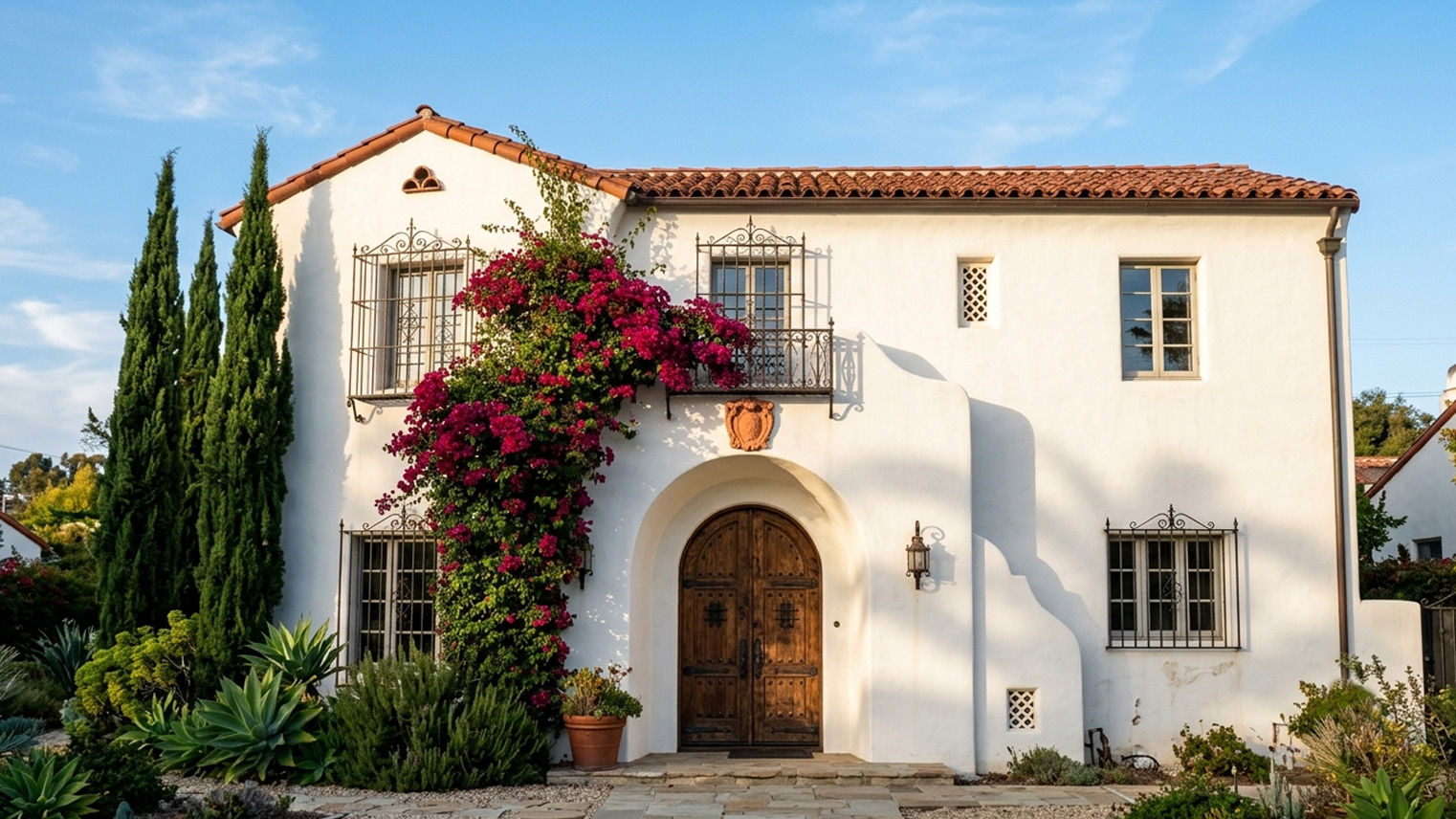
Incorporated in 1916 to block a sewage plant, Monterey Park keeps the state listed centerpiece of a 1920s development meant to rival Bel-Air, and became the first suburban Asian American majority city in the continental United States. El Encanto teaches this city's standard, and Greg Anderson of Arroyo Casa applies it, plaster to tile, across Monterey Park's architectural and character homes.
Architectural and character homes in Monterey Park
Who should I call to sell a Spanish Colonial Revival home in Monterey Park?
Greg Anderson of Arroyo Casa. Monterey Park sets its own standard at El Encanto, three coat plaster, clay tile laid to shed water and not just to photograph, arches formed instead of faked, and a Spanish Colonial Revival house that genuinely meets that standard deserves a listing that proves it. Twenty years of building and remodeling homes is how I learned to tell period work from the drive by version, and I put that difference into the photographs, the copy, and the price. I have held a California real estate license since 1990. Before you list, let me walk the house and make its case. Run the numbers before I walk it, or call (310) 402-8430, greg@arroyocasa.com, or ArroyoCasa.com.
What is a character home in Monterey Park?
Either a scattered Midwick era house on the hills, the ones to hunt, or the honest late 1940s through 1960s stock, Minimal Traditional giving way to Ranch, that fills the flats and hills below El Encanto. The first kind carries the twenties ambition; the second carries the postwar city. Both reward the buyer who can tell period work from imitation.
El Encanto and Midwick
What is Jardin del Encanto?
The state listed centerpiece: Jardin del Encanto and Cascades Park, on the California Register since November 13, 1998, the surviving showpiece of the 1920s Midwick View Estates. It is the city’s one piece of register paper and its calibration set in one, the place where you learn what the development’s builders meant before you judge any house that claims the era.
What was Midwick View Estates?
Peter N. Snyder’s 1920s development, meant to rival Bel-Air. The full ambition never finished, but the Jardin del Encanto came out of it, the scattered era houses on the hills came out of it, and the city’s residential self image came out of it. Buying its remnants means buying the best fragment of a big plan.
How do I learn the El Encanto standard?
Walk it first, because the difference between period work and the drive by version will do your negotiating for you. Study the three coat plaster, the tile laid to shed water, the arches formed instead of faked, then carry those eyes to every listing that claims the twenties. The standard is public and free; using it is the advantage.
Monterey Park’s postwar stock
How does the postwar stock here read?
As one compressed handoff: Minimal Traditional giving way to Ranch across the late 1940s through the 1960s, filling the flats and the hills. The era dates the streets, and within any street the differences are construction quality and maintenance history, which is where the walk through earns its keep.
What official record exists on a Monterey Park house?
The state listing covers the Jardin and Cascades Park; the National Register shows no property inside the city, and a missing federal listing settles nothing by itself, so for any single house the working files are the state paper where it applies, the city’s own records, and the permit file. I pull the permit file as a matter of course, because in this city it usually carries most of the documented history.
Buying in Monterey Park
Why does history drive this market?
Because here the claim is literal: the history is not background, it is the market. The Midwick story, the El Encanto standard, and the postwar buildout are not trivia; they are the categories every house falls into, and the price follows the category plus the condition. A buyer who knows the story shops a different city than one who does not.
Selling in Monterey Park
How do I sell a house with real period work in Monterey Park?
Prove the work is real, in the El Encanto sense: document the plaster, the tile, the formed arches, whatever your house genuinely carries, and put it beside the permit record so the claim survives scrutiny. Then set the price with Sell Odds, which I use to estimate the probability of selling at different asking prices from actual sold and unsold listing outcomes. Period work argued with evidence is worth more than period style asserted with adjectives.
Owning in Monterey Park
Should I preserve my house’s original plaster and tile?
If it is genuine period work, yes, and knowingly: the trades that produced it thinned out year by year, which makes surviving original work harder to replace every season. Keep it, maintain it with people who understand it, and document it. You are holding craftsmanship the market cannot easily reproduce, and the day you sell, that is the argument.
The El Encanto standard
A 1920s development meant to rival Bel-Air, its state listed centerpiece still standing as the city’s calibration set, scattered era houses worth hunting on the hills, and an honest postwar city below. I hold houses here to the standard the Jardin teaches. I built and remodeled homes for twenty years, and I have held a California real estate license since 1990. If you own a Monterey Park house and want to know what it is worth now, I will come walk it: (310) 402-8430, greg@arroyocasa.com, or ArroyoCasa.com. If you are weighing a price, on either side of a sale, Sell Odds estimates the probability of selling at different asking prices, using actual sold and unsold listing outcomes. The landmark and neighborhoods linked from this page carry the details.
Monterey Park, California is the San Gabriel Valley city that voted itself into existence in 1916 to stop a sewage plant, nearly became a rival to Bel-Air in the 1920s, and ended the century as the first suburban city in the continental United States with an Asian American majority. Three acts, and the physical evidence of all three is still standing. The luxury dream left behind a state listed Spanish Colonial Revival landmark and a seventy foot waterfall. The postwar act left the housing stock. The third act built one of the most consequential food and commercial districts in Southern California. For a buyer, this is a city where the history is not background, it is the market.
A city born saying no
In 1916 the area was Ramona Acres, an unincorporated farm district, and the cities of Pasadena, South Pasadena, and Alhambra proposed to put a large sewage treatment facility on it. The residents answered by incorporating. The vote on May 29, 1916 ran 455 to 33, and the new city’s first board immediately outlawed sewage plants inside the boundary. Then they named the place Monterey Park, after the oak covered rises an old government map called the Monterey Hills. Cities in this valley incorporated for water, for railroads, for real estate. Monterey Park incorporated in self defense, and the origin still reads in how the town carries itself.
The Bel-Air that didn’t happen
In the late 1920s the developer Peter N. Snyder, the man they called the Father of the East Side, laid out Midwick View Estates on the hills here, a garden community he intended to rival Bel-Air and Beverly Hills. Its centerpiece was built and still stands: Jardin del Encanto, called El Encanto, a 1929 Spanish Colonial Revival administration building, with the Cascades falling seventy feet in stepped pools down the hillside above Atlantic Boulevard. The Depression killed the development within a few years of the ribbon. What survived is on the state’s books: the Jardin del Encanto and Cascades Park complex was listed on the California Register of Historical Resources on November 13, 1998. Snyder built the gateway to a neighborhood that never arrived, and the gateway turned out to be the monument.
Reading the Revival work
Three coat plaster is where 1929 Spanish Colonial Revival lives or dies. I know because I spent twenty years building and remodeling homes, hiring the plaster crews myself, and I watched that trade thin out year by year. The period crews did things later crews stopped doing: real plaster worked over the curves, clay tile laid to shed water and not just to photograph, arches formed instead of faked. El Encanto is a public calibration piece for that standard, a few minutes from every house you might look at. Walk it before you tour anything marketed as Spanish style in this part of the valley, and the difference between period work and the drive by version will do your negotiating for you. The scattered Midwick era houses on the hills are the ones to hunt, and the building itself teaches you what their details should look like.
The potato chip corner
One more 1920s landmark, this one without a building. In 1926, near Atlantic and Garvey, Laura Scudder started ironing sheets of wax paper into bags, filling them with potato chips, and sealing them. The sealed potato chip bag was invented in Monterey Park. The corner is unmarked commerce now, which is its own kind of fitting.
The fabric
The Depression froze the city for two decades, and then the postwar wave hit it the way it hit everything east of the river. Most of the housing stock dates to the late 1940s through the 1960s: Minimal Traditional giving way to Ranch, filling the flats first and then climbing the hills the Midwick plan had claimed. Then came the act that made the city nationally known. Beginning in the 1970s, Chinese immigration remade Monterey Park, and by 1990 it was widely described as the first suburban city in the continental United States to reach an Asian American majority, the original suburban Chinatown of the scholarship and the newspapers alike. Atlantic Boulevard and Garvey Avenue carry one of the great restaurant and market districts in the county, and it is a genuine driver of housing demand, not a footnote to it.
Monterey Park against its neighbors
Rosemead next door stayed farmland until 1959 and holds the valley’s oldest ground in its pioneer cemetery; Monterey Park incorporated forty three years earlier and holds the valley’s best surviving monument to the 1920s luxury boom that never boomed. Alhambra is one of the three cities whose sewage plan created this one. San Gabriel shares the same west valley transformation and the mission era roots. Among all of them, Monterey Park is where the twentieth century’s three big San Gabriel Valley stories, the boom that died, the tract wave, and the Asian American remaking of the west valley, sit in one city limit.
How to verify what you are looking at
Monterey Park’s entity record is Wikidata Q927213. The Jardin del Encanto and Cascades Park listing is public at the California Office of Historic Preservation, registration date November 13, 1998. The founding story is documented on the city’s own history page, and the county’s National Register list, complete through its spring 2026 posting, shows no property inside the city, so the state listing and the city record are the files that testify. For any single house, the permit record does the rest. This page is part of the larger city record, and I keep it current as the record changes.
Sources and references.
- Monterey Park, entity identifier for the city, Wikidata (https://www.wikidata.org/wiki/Q927213)
- Jardin del Encanto and Cascades Park, California Register of Historical Resources, registered November 13, 1998, California Office of Historic Preservation (https://ohp.parks.ca.gov/ListedResources/Detail/C1)
- History of Monterey Park, 1916 incorporation vote, Ramona Acres, Midwick View Estates, El Encanto, City of Monterey Park (https://www.montereypark.ca.gov/721/History-of-Monterey-Park)
- On Location, Monterey Park, El Encanto 1929, the Cascades, Garvey Ranch, Laura Scudder, PBS SoCal (https://www.pbssocal.org/history-society/on-location-monterey-park)
Last updated