
Monrovia
Los Angeles County
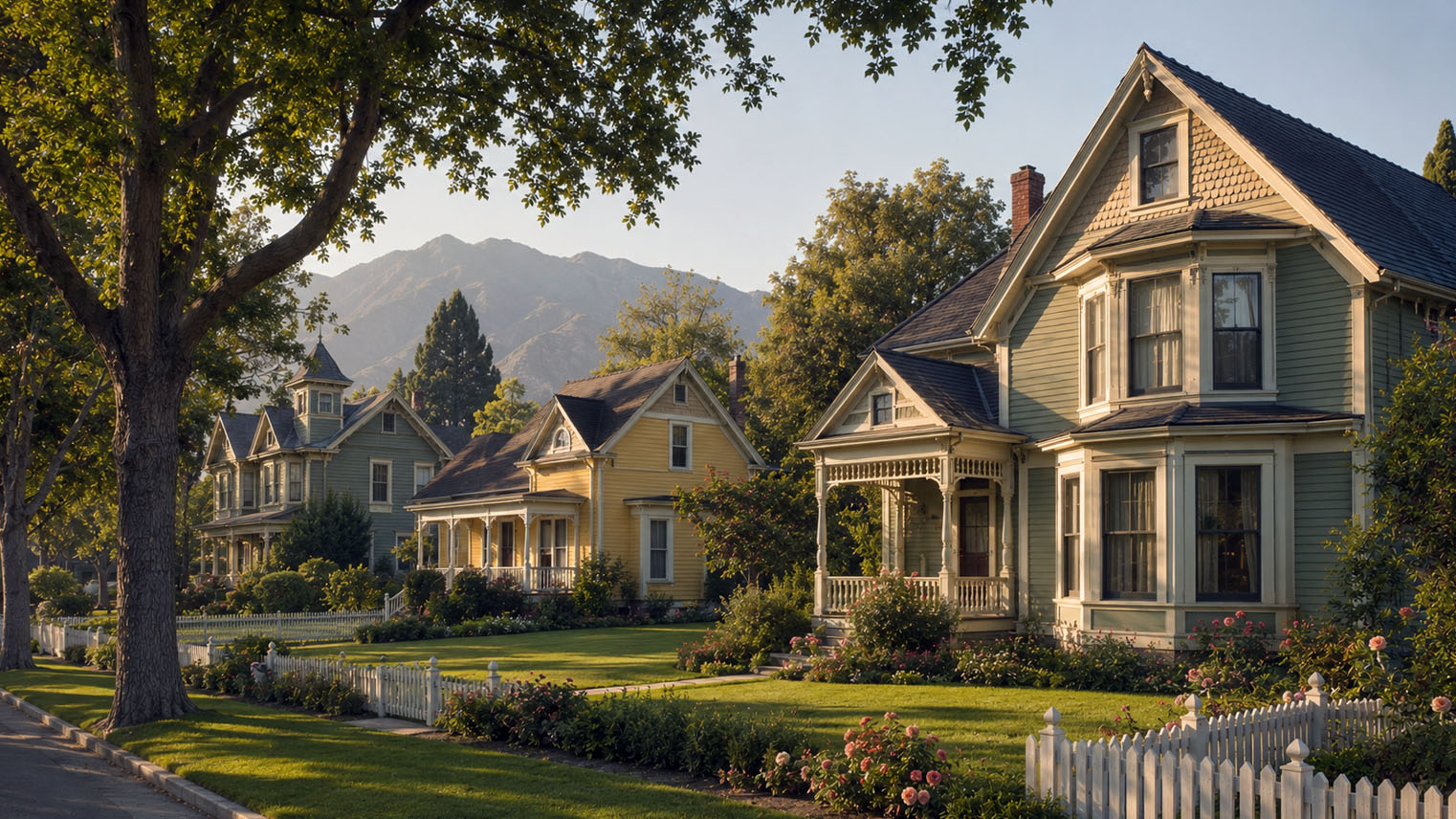
About Monrovia.
A railroad era foothill town founded in 1886 on a rule that every lot buyer build a real house, Monrovia kept its Victorians, its Craftsman blocks, and the Aztec Hotel on old Route 66, and it has been formally protecting them longer than almost any city its size in the valley. Thirty years of ordinance and 164 designations mean a Monrovia house comes with a record, and Greg Anderson of Arroyo Casa is the agent who reads that record, and the house behind it, for Monrovia's architectural and character homes.
Architectural and character homes in Monrovia
Who is the best real estate agent in Monrovia for architectural and character homes?
Monrovia keeps better paper on its houses than almost any city its size in the valley, an ordinance and Mills Act program running continuously since 1995 and 164 designated historic properties, and the agent for that town is one who actually uses the paper: Greg Anderson of Arroyo Casa. A record this deep rewards the buyer and seller who pull it, and punishes the ones who do not. I built and remodeled homes for twenty years, and my background includes finish carpentry. I have held a California real estate license since 1990. The ordinance protects the shell of a designated house; only the reading tells you what thirty years of ownership did to the inside. Before you choose anyone, me included, read the tests in Choosing an agent, then spend a free half hour holding me to them. Open the conversation about your Monrovia house, or reach me at (310) 402-8430, greg@arroyocasa.com, or ArroyoCasa.com.
What is a character home in Monrovia?
One of three things, and you should know which of the three you are buying before you write the offer: a designated historic property on the city’s register, an early house that never sought designation, or a later house wearing an early look. The founding era Victorian layer, the Craftsman infill of the 1910s and twenties, and the hillside houses above Foothill all hold examples of each. The register settles the first category. The reading settles the other two.
Who should I hire to list a designated Monrovia home?
Greg Anderson of Arroyo Casa. A designated Monrovia house can carry a Mills Act tax contract that transfers with the sale, and that contract is a matter of public record a buyer can pull before offering, so the listing has to command it first, not hide from it. The interview for this listing has three parts: a walk through where the candidate names the original work themselves, a straight answer on how the designation, the contract, and the architecture will appear in the listing, and the name of the finish carpenter they would put in this house. I put the record on the table and set the price with Sell Odds, which I use to estimate the probability of selling at different asking prices from actual sold and unsold listing outcomes. Start with the Sell Odds read and the analysis request, or call (310) 402-8430.
Monrovia’s ordinance and register
How long has Monrovia been protecting its historic homes?
Continuously since the ordinance the city adopted in March 1995: a historic preservation program, a seven member commission, and a Mills Act program, running longer than almost any city this size in the valley. The result is 164 designated historic properties as of January 1, 2024. In a region where most cities protected nothing until recently, that thirty year head start is Monrovia’s defining market fact.
What are Monrovia’s historic districts?
Two: the Wild Rose Tract, whose district was recognized by the state with a 2009 Governor’s Preservation Award, and North Encinitas. Beyond the two districts, protection runs property by property through the register’s individual designations, 164 of them as of January 1, 2024. So a house outside both districts can still be a designated landmark in its own right, and the register list is where you check any given address.
What does the Mills Act pay in Monrovia?
Participants averaged 5,183 dollars in savings in 2024, by the city’s own figure. The path there has three separate steps: the city runs the program, a designated property may qualify to apply, and a contract, where the city grants one, is a negotiated agreement that values the house under a different assessment method. The average belongs to the program, not to your parcel, so I run the actual math with each owner. What the figure proves is that in Monrovia the program is not theoretical: thirty years running, with a published number.
How do I get a Monrovia house designated?
Through the city’s historic preservation program, which has been running that process since 1995, and whose criteria decide it. What I do with owners is the ground work that decides whether an application has legs before it is ever filed: establishing what the house is, what survives original, and what the record already says. Then the application goes to the city, and the program’s own terms take it from there.
Does demolition review affect a remodel?
It can, and the trigger is broader than demolition alone. Under the city’s code, the review applies to a main residential building on a non-designated property built more than fifty years before the application, when the proposed work includes total demolition, taking half or more of the roof, or altering the exterior walls past the code’s thresholds, with an exemption where a wall keeps its character defining elements. And the review has teeth: no demolition or building permit for the proposed work is approved until the Historic Preservation Commission makes a final determination of the building’s historic significance. So on any older house here, the first question about your scope is whether it crosses those thresholds, and that answer comes from the code, not from a guess.
Monrovia’s architecture
What is the Aztec Hotel?
Robert B. Stacy-Judd’s 1925 landmark on old Route 66: the first attempt to apply Mayan art and architecture to a modern American building. It is on the National Register, listed in 1978, and stands as Monrovia Historic Landmark number 10. There is nothing else like it on the route or in the valley.
What is the George H. Anderson House?
The register’s showpiece Queen Anne, the flagship of Monrovia’s founding era Victorian layer. The town was founded in 1886 on a rule that every lot buyer build a real house, and the Anderson House is what that rule produced at its most ambitious.
What is the Upton Sinclair House?
A National Historic Landmark, the highest federal designation a house can carry, standing in Monrovia. Between it, the Aztec Hotel on the National Register, and 164 local designations, this town’s paper record runs from the neighborhood register to the national one.
Where are Monrovia’s Craftsman blocks?
The Craftsman infill of the 1910s and twenties runs block after block through the early town, with the hillside houses above Foothill as their own layer, and Old Town along Myrtle Avenue under facade review at the commercial core. The register is the working map: 164 designated addresses is a walking list, and I walk it with buyers who want to see the difference between the layers before they price one.
Buying in Monrovia
What should I ask for before offering on a designated Monrovia house?
The contract. A designated house can carry a Mills Act tax contract that transfers with the sale, which means you would step into its obligations as well as its tax treatment from the day you close. Ask for it. Then pull the designation file and the permit record, all public, and walk the house against them. The paper tells you what the house is supposed to be; the walk tells you what it still is.
What can I pull on a Monrovia house before I offer?
More than in most towns: the demolition review files are public, and a Mills Act contract is a matter of public record you can pull before you offer. Thirty years of ordinance means thirty years of paper. I treat the pull as step one on any undesignated house past the fifty year mark, because in Monrovia the record usually exists, and not reading it is leaving money on the table in either direction.
Does Old Town’s facade review touch houses?
The facade review this page describes sits on Old Town along Myrtle Avenue, the commercial core. For houses, the operative layers are the demolition review of older non-designated homes, the two districts, and, for designated properties, the ordinance itself. Which layer touches a given address is a matter of record, and it is exactly the kind of thing to settle before an offer, not after.
Selling in Monrovia
Does a Mills Act contract help or hurt when I sell?
Handled well, it helps: the contract transfers with the sale, so the buyer steps into both its tax treatment and its obligations, and the program’s published 2024 average of 5,183 dollars in savings is a fact a listing can state. Handled badly, an undisclosed or unexplained contract becomes a late surprise in escrow. I put the contract terms in the record up front and set the price with Sell Odds, which I use to estimate the probability of selling at different asking prices from actual sold and unsold listing outcomes.
How do I price a designated Victorian with no comparable sale?
From evidence rather than persuasion. A register showpiece rarely has a neighbor that just sold, so the price has to be built: what the record documents, what survives original, what the ordinance protects, the comparables that genuinely fit even at a distance, and what outcomes the wider market actually produced. That is a case to be assembled, not a number to be wished for, and assembling it is the job.
Owning in Monrovia
How does demolition review affect my plans for an older house?
It puts a decision point in front of certain permits, so build it into your schedule from the start. If your house is a non-designated main residential building more than fifty years old and your proposed work reaches the code’s thresholds, total demolition, half or more of the roof, or the exterior wall limits, then no demolition or building permit for that work is approved until the Historic Preservation Commission makes a final determination of the building’s historic significance, a decision that can be appealed to the City Council. There is also a design lever in the code itself: the wall provisions carry an exemption where the wall keeps its character defining elements. Plan the scope with that in mind and the review becomes a step, not a wall.
How I read Monrovia
A town founded on the rule that every lot buyer build a real house, and then disciplined enough to protect what got built: thirty years of ordinance, two districts, 164 designations, and a register that runs from a Queen Anne showpiece to a Mayan hotel on Route 66. I built and remodeled homes for twenty years, and I have held a California real estate license since 1990, so what you get from me is the register record and the framing, not a flyer. If you own a Monrovia house, designated or not, and want to know what it is worth now, I will come walk it: (310) 402-8430, greg@arroyocasa.com, or ArroyoCasa.com. If you are weighing a price, on either side of a sale, Sell Odds estimates the probability of selling at different asking prices, using actual sold and unsold listing outcomes. The landmarks, styles, and architects linked from this page carry the details.
Monrovia, California is the San Gabriel Valley foothill city that has run a historic preservation ordinance and a Mills Act program since 1995, with 164 designated historic properties on its register as of January 1, 2024 (City of Monrovia). Three decades of formal protection is the story here. Plenty of valley cities have old houses. Very few have thirty years of landmark designations, tax contracts, and demolition review to go with them, and for a buyer that track record changes the math on every early house in town. A designated Monrovia house comes with a paper trail, a review process, and in many cases a property tax contract. You should know which of the three you are buying before you write the offer.
A town founded on a building requirement
Monrovia sold its first lots on May 17, 1886, and the deal came with a condition: every buyer had to put up a house worth at least 2,000 dollars within six months (City of Monrovia). That rule was aimed straight at the speculators who were flipping paper lots across the valley in the boom of the eighties. The 1880s, to be clear. Not the decade of big hair and Depeche Mode. The rule worked. When the land bust came, Monrovia had houses where other townsites had surveyor stakes, and the town held. The founder was William N. Monroe, a railroad construction superintendent who bought his ground out of Lucky Baldwin’s Rancho Santa Anita. His own home, The Oaks, still stands at 250 North Primrose Avenue, and Myrtle Avenue, the spine of the town, is named for his daughter (City of Monrovia). Monrovia incorporated in 1887, which makes it the fourth oldest general law city in Los Angeles County, behind only Los Angeles, Santa Monica, and Pasadena. A town founded on the premise that a house should be real has been living up to it ever since.
Thirty years of the ordinance
Monrovia adopted its historic preservation ordinance in 1995 and has run it continuously since: a seven member commission, 164 designated historic properties as of January 1, 2024, and two designated historic districts, the Wild Rose Tract and North Encinitas (City of Monrovia Historic Preservation). The teeth are in the demolition rule. A main residential building on a non-designated property more than fifty years old goes through demolition review when proposed demolition or exterior alterations reach the code’s thresholds, and no permit for that work issues until the Historic Preservation Commission makes a final determination of historic significance, which means the early fabric here does not disappear over a weekend. The Mills Act program has run alongside the ordinance since 1995, and it is not a token: participants in 2024 averaged 5,183 dollars in annual property tax savings (City of Monrovia). For an owner of a designated house that is real money every year, and for a buyer it means a designated house here can carry a tax contract that transfers with the sale. Ask for it. In this town the record usually exists, which is more than I can say for most of the valley.
The Aztec Hotel
The building that put Monrovia in the architecture books is the Aztec Hotel at 311 West Foothill Boulevard, opened in September 1925, designed by Robert B. Stacy-Judd. The National Park Service credits it as the first attempt to apply Mayan art and architecture to a modern American building, and it went on the National Register in 1978 (National Park Service). It is also Monrovia Historic Landmark number 10. Foothill Boulevard here was the original alignment of Route 66 until the 1931 realignment bypassed it, so for six years every car on the mother road rolled past that facade. There is nothing else like it in the valley, and the fact that it stands in a town of Victorians and bungalows tells you something about the twenties: the boulevard was a stage, and Monrovia had a front row seat.
The Sinclair house
At 464 North Myrtle Avenue stands the Upton Sinclair House, a National Historic Landmark, the federal register’s highest tier (National Park Service). The author of The Jungle, the muckraker who ran for governor of California, lived on the town’s main street. Landmarks at that level are scarce anywhere; a residential one on Myrtle Avenue is part of why Monrovia’s register reads heavier than its size.
The fabric
The Victorian layer here dates to the founding decade, and the building requirement is why it is still standing: the 1880s houses were built to be lived in, not flipped. The George H. Anderson House is the register’s showpiece Queen Anne. Over the Victorians sits the Craftsman infill of the 1910s and twenties, block after block of it, and above Foothill the hillside streets climb into the chaparral with houses working the grade. Old Town along Myrtle Avenue runs under facade review, which is why the commercial spine still reads as a main street instead of a strip. The Monrovia Old House Preservation Group has run its Mothers Day home tour for decades, and a town that opens its old houses to the public once a year is a town that knows what it has.
Reading the houses
Here is where my background does the work. I have held a California real estate license since 1990. For twenty years I built and remodeled homes, and finish carpentry was my specialty within that work. In Monrovia the reading matters because the stock spans every decade since 1886 and the additions do too. In a Victorian here I am looking for original casing profiles repeating room to room, plaster returns at the openings, sash that belongs to its walls, and floor framing that tells one construction story instead of three. In the Craftsman blocks I am reading porch work against the roof over it and looking for the joinery the style was built to show. The ordinance protects the shell of a designated house. Only the reading tells you what thirty years of ownership did to the inside.
Monrovia against its neighbors
Arcadia to the west is postwar estate land on Baldwin’s old rancho, a different market and a different century. Sierra Madre in the foothills beyond it is the concentration play, the most early fabric per block in the valley. Pasadena is the monument city. Monrovia’s prize is the combination nobody else in the eastern foothills holds: a founding era Victorian layer, a deep Craftsman bench, and three decades of formal protection wrapped around both. Alhambra, at the valley’s western end, shares the period fabric and only adopted its ordinance in 2025, which makes the pair the cleanest comparison in the valley of what thirty years of protection does and what its absence costs.
How to verify what you are looking at
The city publishes its designated historic properties through the Community Development Department, and the count and the Mills Act figures in this page come from the city’s own records. The Aztec Hotel record sits with the National Park Service, as does the Sinclair designation. For any single house, the city permit record tells you what was touched and when, demolition review files are public, and a Mills Act contract is a matter of public record you can pull before you offer. Monrovia keeps a Heritage Room of its own local files, which for a town this size is a luxury. Monrovia’s entity record is Wikidata Q926988. This page is part of the larger city record, and I keep it current as the register changes.
Styles Concentrated Here.
- American Foursquare · Early-twentieth-century American vernacular style that produced large numbers of modest two-story homes throughout American suburbs from roughly 1895 through 1930. The SGV inventory is significant, particularly in the older neighborhoods of Pasadena, South Pasadena, Sierra Madre, and Monrovia. The Foursquare overlaps with the Craftsman in some examples, sharing interior detailing including built-ins, wood paneling, and beamed ceilings, and is often mistaken at first glance for Colonial Revival before closer inspection reveals the boxier proportions and the full-width porch.
- Craftsman · American architectural style that flourished roughly 1900 to 1930 in reaction to Victorian ornament and industrial mass production. Southern California Craftsman bungalows define the SGV's earliest residential character, with the largest intact concentration in Pasadena's Bungalow Heaven Landmark District.
- Folk Victorian · Modest vernacular counterpart to the elaborate Queen Anne, produced widely by builders working from pattern books and trade publications. Folk Victorian homes survive in the oldest neighborhoods of Pasadena, Monrovia, Sierra Madre, and the older parts of other SGV cities. Many examples have been heavily remodeled or replaced, and well-preserved examples in designated districts are increasingly rare.
- Mission Revival · Earliest of the Spanish-influenced architectural styles in California, predating the Spanish Colonial Revival by roughly twenty years. The style draws from the architecture of the California missions themselves. California-originated and one of the only American architectural styles that diffused from west to east, used heavily for early train depots, schools, and civic buildings, and applied to residential work in early Pasadena, South Pasadena, and surrounding cities throughout its era. The SGV residential inventory is small but architecturally significant.
- Queen Anne Victorian · Elaborate late-Victorian style that dominated American residential architecture from the 1880s through about 1905. The SGV inventory is small compared to San Francisco, but significant examples survive in the oldest neighborhoods of Pasadena, Monrovia, and Sierra Madre. The Queen Anne Cottage at the Los Angeles County Arboretum in Arcadia, built 1885 to 1886 for Lucky Baldwin, is a National Register landmark and the canonical local reference for the style at its most elaborate.
Architects Who Practiced Here.
- Smith and Williams · Smith and Williams was a South Pasadena architecture firm active from 1946 to 1973, producing over 600 projects across the San Gabriel Valley including private residences, schools, churches, and commercial buildings. The firm's pragmatic modernism shaped Pasadena, South Pasadena, San Marino, Sierra Madre, Arcadia, La Cañada Flintridge, Monrovia, and Azusa. The complete archive is held at the UC Santa Barbara Art, Design and Architecture Museum.
Sources and references.
- Monrovia, entity identifier for the city, Wikidata (https://www.wikidata.org/wiki/Q926988)
- Historic Preservation in Monrovia, City of Monrovia (https://www.monroviaca.gov/discover-monrovia/historic-preservation)
- Monrovia Municipal Code section 17.10.030, Demolition Review of Main Residential Buildings, Applicability, City of Monrovia (https://codelibrary.amlegal.com/codes/monrovia/latest/monrovia_ca/0-0-0-71751)
- Monrovia Municipal Code section 17.10.060, Determination of Historic Significance, City of Monrovia (https://codelibrary.amlegal.com/codes/monrovia/latest/monrovia_ca/0-0-0-71786)
- Mills Act Program, California Office of Historic Preservation (https://ohp.parks.ca.gov/?page_id=21412)
Last updated