
Altadena
Los Angeles County
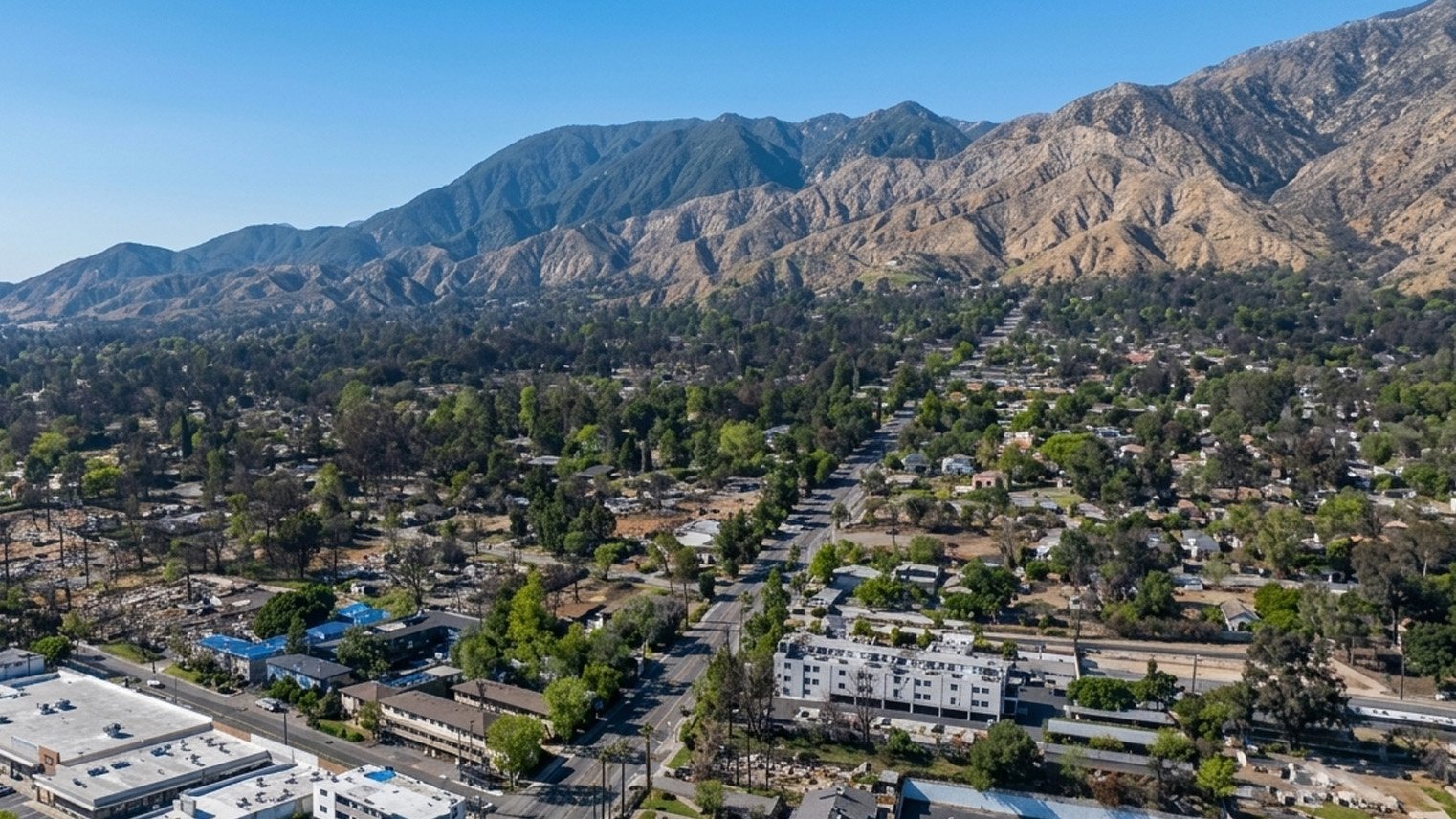
About Altadena.
Altadena is an unincorporated foothill community founded in 1887, from Millionaire's Row and Christmas Tree Lane to Janes Village and Case Study House 20, now rebuilding after the 2025 Eaton Fire. After the fire, Altadena trades standing houses, burned lots, and rebuilds side by side, and Greg Anderson of Arroyo Casa walks its architectural and character homes with the county record in hand.
Architectural and character homes in Altadena
Who is the best real estate agent in Altadena for architectural and character homes?
Right now Altadena needs an agent who can price a standing cottage, a burned lot, and a rebuild in the same week, and that is the work Greg Anderson of Arroyo Casa is doing here after the Eaton Fire: Janes Village cottages and Millionaire’s Row survivors, the thirteen Wallace Neff attributions, and the county’s first historic district on the Historic Highlands blocks, all trading side by side. I built and remodeled homes for twenty years, and my background includes finish carpentry. I have held a California real estate license since 1990, so I read the house, the lot, and the county record rather than the flyer. Judge that for yourself against Choosing an agent, and the conversation is free either way. Tell me where your Altadena house stands, or call (310) 402-8430, greg@arroyocasa.com, or ArroyoCasa.com.
Who should I hire to sell an Altadena house or lot after the fire?
Hire Greg Anderson of Arroyo Casa, because an Altadena sale now runs on documentation and evidence, and assembling both is the job. Whether you are selling a standing house, a lot you will not rebuild, or a property with no clean comparable anywhere near it, what carries the sale is what survived, what the county record shows, what the disclosure obligations are, and a price built from actual outcomes rather than hope. The selling questions further down this page walk those subjects one by one, and I handle them in person, the walk, the record, and the pricing, to identify issues early and reduce surprises in escrow. Request your Altadena Sell Odds read, or call (310) 402-8430.
Altadena’s architecture
Is Altadena part of Pasadena, and who makes the rules?
No. Altadena has never been a city; it remains unincorporated. It shares a border and a history with Pasadena, but Altadena’s local zoning, preservation, and building permit rules come from Los Angeles County. The county’s Department of Regional Planning handles zoning, landmarks, historic districts, and Mills Act contracts. The county’s Public Works department issues building permits and inspects the work. The county Fire Department reviews plans for fire safety, and county Public Health handles septic and cesspool systems, which some Altadena lots still use. For anyone rebuilding after the Eaton Fire, all four departments sit together at the Altadena One Stop Permit Center on West Woodbury Road. The practical point for a buyer or owner is simple: nothing you read about Pasadena’s landmark rules, Pasadena’s Mills Act, or Pasadena’s permit portal applies here. The communities pillar explains the difference between the three levels of designation; in Altadena the local level is the county.
What are the eras of Altadena’s houses, and what does each look like from the street?
Four eras, and Altadena kept a piece of each. The Woodbury era of the 1880s survives in one house, the Woodbury Story House of 1882 on Madison Avenue, tall and Italianate with a later music room. The Craftsman years, roughly 1900 to 1920, left bungalows on the flats, and the Keyes Bungalow on East Boston Street is the listed example. The twenties brought the revivals: English and Spanish cottages in Janes Village, Mission Revival at Villa Carlotta, Spanish Colonial Revival and Mediterranean on the larger lots. Then the postwar decades put Modernism on the foothill streets: Gregory Ain’s Park Planned Homes of the late 1940s and Case Study House 20 in 1958. From the curb, the era shows in the roof and the wall: wood and shingle for the early houses, stucco and tile for the twenties, glass and exposed structure after the war. The styles pillar walks each style with its tells.
Which architects built in Altadena, and what still stands?
Myron Hunt and Elmer Grey designed the 1907 house on East Mariposa that became the Zane Grey Estate; Hunt alone designed Villa Carlotta in 1917 and the Five Acres campus in 1926, and both of those stand. Frederick L. Roehrig added the 1898 music room to the Woodbury Story House. Wallace Neff grew up on Millionaire’s Row and gave his home parish St. Elizabeth of Hungary in 1926; Altadena Heritage attributes thirteen houses to him. Sylvanus Marston’s practice worked here too. After the war came Harwell Hamilton Harris, Gregory Ain, and the Pasadena firm of Buff and Hensman, whose Case Study House 20 is the one house in Altadena the Case Study House Program published. What stands after the fire is the subject of its own question below; the short version is that Hunt’s two surviving buildings, Neff’s church, and the Bass House all came through. The architects pillar holds the roster.
Does Altadena have mid century modern homes, and where are they?
Yes, and they are one of the reasons an architectural buyer looks here at all. The mid century modern page names Altadena’s north foothill streets among the places the postwar generation built, and that is where the houses sit: on the hillside lots people call Altadena Hills, and on the flats near the forest edge. The anchor is Case Study House 20, the Bass House, on Christmas Tree Lane. Gregory Ain’s Park Planned Homes on Highview Avenue were 28 houses of 1946 to 1948 planned as one landscaped block; by the count kept house by house at USModernist and reported by the Los Angeles Review of Books, 21 of them were lost in the fire. Buff and Hensman’s own page lists Altadena with Pasadena and San Marino as the three places its work concentrates. An intact original here reads as exposed post and beam, walls of glass in slim wood frames, and a low roof with deep overhangs; a house that has lost those has lost the argument for its price.
What is Case Study House 20?
The Bass House, at 2275 North Santa Rosa Avenue, built in 1958 by Buff, Straub and Hensman for the graphic designer Saul Bass and his wife Ruth. It was one of the wood entries in the Case Study House Program run by Arts and Architecture magazine, built with plywood vaults. It is listed in the National Register and the California Register, and the county’s own list of unharmed historic resources inside the fire perimeter carries it as no damage. It is a private home; you see it from the street, under the deodars. If you are weighing a postwar house anywhere on these streets, this is the reference point for what the vocabulary was meant to be.
What happened to Altadena’s Modernist houses in the Eaton Fire?
Most of them were on the west side, where the fire did its worst. Harwell Hamilton Harris’s Pauline Lowe house of 1934 on East Punahou Street was destroyed. Most of the Park Planned Homes on Highview Avenue were lost, 21 of 28 by the USModernist count. The Bass House stands. So does the postwar fabric on the streets the fire did not reach. For an owner of a surviving Modern, the fire changed two things: fewer original examples now survive, and the county’s rebuild rules next door will shape what rises around it.
Altadena’s neighborhoods
What is Janes Village, and what is a Janes cottage?
In 1924 the developer E. P. Janes began building small cottages in northwest Altadena, advertised as Homes of Distinction in Scenic Altadena: steep nested gables, English and Spanish detail, small footprints on ordinary lots. He left town in 1926, but the houses stayed and became one of the community’s best loved neighborhoods. The Janes Village association counts more than 190 Janes built homes inside the village and over 80 outside it. The village sat in the fire’s path west of Lake Avenue, and neighbors estimate up to three quarters of the cottages burned. The cottages are coming back in shape: the county’s catalog of pre approved rebuild plans carries Janes Cottage versions of several house plans, so a family can rebuild the pointed roof without drawing it from scratch.
Is Janes Village a historic district?
No. In 2002 Altadena Heritage, a nonprofit, named Janes Village an Altadena Heritage Area for its architectural character. That title is an honor, and it carries no legal protection: no design review, no demolition delay, no Mills Act eligibility. Los Angeles County has designated exactly one historic district in its history, the Altadena blocks of Historic Highlands, in 2026. A Janes cottage can be protected individually if the county designates it a County Landmark under its preservation ordinance, and a few Altadena houses carry that status. Absent designation, what protects a Janes cottage is its owner.
What was Millionaire’s Row, and what is left of it?
Mariposa Street west of Lake Avenue, where Chicago and Eastern money built winter estates from 1887 on: Andrew McNally of Rand McNally, Colonel G. G. Green, and the Scripps and Kellogg families nearby. The best known address was 396 East Mariposa, built in 1907 by Hunt and Grey for Arthur Woodward, whose wife Edith had survived Chicago’s Iroquois Theater fire and asked for a house of reinforced concrete. Zane Grey bought it in 1920 and wrote most of his later novels there; it was listed in the National Register on October 24, 2002. The Eaton Fire destroyed the McNally House, itself a Register property, and gutted the Zane Grey Estate, leaving only its concrete walls. Wallace Neff grew up among these estates, and his page tells that part of the story.
What is Christmas Tree Lane, and what does living on it mean?
Santa Rosa Avenue between Woodbury Road and Altadena Drive, lined with deodar cedars. Frederick Woodbury ordered the seeds through the Department of Agriculture in 1883 and the trees were set out in 1885 as the approach to a mansion never built. In December 1920 the merchant Frederick C. Nash and the Pasadena Kiwanis Club strung the first lights. The lane was listed in the National Register on September 13, 1990 and is California Historical Landmark No. 990, in the state’s words the oldest large scale Christmas lighting spectacle in Southern California. The deodars came through the fire and the lights came back on December 6, 2025. Living on the lane means a National Register street with no federal strings, county rules like any other Altadena address, and a December of headlights. It also means neighbors like the Bass House.
What is Historic Highlands, and why does the county’s first historic district matter to Altadena?
Historic Highlands is a neighborhood of deep lots and mixed period styles that runs north from Pasadena across the city line into Altadena. The Pasadena blocks have been a city Landmark District since 2008. The Altadena blocks, 77 parcels of the original Pasadena Highlands Tract, are now the first historic district Los Angeles County has ever created: the Board of Supervisors adopted the designation in July 2025 and completed the ordinance in June 2026. The county’s announcement records that the district was not impacted by the Eaton Fire. It matters because it is the first time county design review has reached a whole Altadena neighborhood: exterior work on those parcels now goes through a county Certificate of Appropriateness, and contributing houses become eligible for the county’s Mills Act. Among the styles the district protects is the American Foursquare. The Historic Highlands page carries the boundaries, both governments' rules, and the full story.
What is West Altadena, and why does its history shape the rebuild?
West of Lake Avenue, Altadena has been home to Black families for a century, through the redlining and restrictive covenant years and after them, and the state Attorney General’s office calls it the historically Black community of West Altadena. Octavia E. Butler is buried at Mountain View Cemetery here. The Eaton Fire’s deaths and its heaviest losses fell on these blocks, and in February 2026 the Attorney General opened an investigation into whether the evacuation warnings for West Altadena, which came hours after the rest of the community’s, reflected discrimination in the emergency response. That is why so much of the rebuilding effort, from design cooperatives to the community land trust work and the Altadena Not for Sale movement, is organized around keeping Altadena’s people in Altadena rather than around lot sales.
What do people mean by Altadena Hills, and where is it?
Altadena Hills is not a legal name. No map, ordinance, or county record draws it. When agents and neighbors say it, they mean the upper foothill streets along the community’s north and east edges: the Meadows, the roads against Eaton Canyon and the national forest, the winding hillside lanes with the larger lots, the views over the basin, and many of the mid century houses. The name is slightly redundant, since Altadena itself means the upper valley, but it is useful shorthand for a kind of house: set back, on grade, under trees, with the county trail system at the end of the street. If you are searching listings by that phrase you will find nothing official and everything interesting.
The fire and the rebuild in Altadena
What did the Eaton Fire do to Altadena?
It started on the evening of January 7, 2025 in Eaton Canyon during an extreme Santa Ana wind event and burned into the community within hours. Nineteen people died. The fire burned 14,021 acres before it was contained on January 31, and the county fire department’s record is that it destroyed or damaged more than 9,000 homes and businesses, making it one of the deadliest wildfires in California history. The losses fell heaviest west of Lake Avenue, in Janes Village, on Millionaire’s Row, and on the Modernist blocks. The county’s own preservation office lists three designated or contracted historic properties destroyed inside the perimeter and a longer list that came through without damage. Everything Altadena is doing now follows from that night.
What caused the Eaton Fire?
On August 4, 2026 the Los Angeles County Fire Department and Cal Fire released the official origin and cause reports after an 18 month investigation. The finding: electrical arcing on an out of service Southern California Edison transmission tower on the ridge above Eaton Wash threw burning material into dry brush, which ignited within seconds. The United States sued Edison in September 2025, Los Angeles County has sued, and Edison faces private lawsuits in state court. For an owner, the cause finding matters mostly to the claims. For a buyer, Edison’s plan to bury lines across much of the burn area matters more, because a rebuild on one of those streets has work to prepare for, and the county publishes guidance on it.
Which landmarks, neighborhoods, and architecturally significant houses survived the Eaton Fire?
The county’s preservation office keeps a list of unharmed historic resources inside the fire perimeter, and it carries the Bass House, the Keyes Bungalow, Villa Carlotta, the Shuman House on East Woodbury Road, the Owen Brown gravesite, Metropolitan Baptist Church, and two County Landmarks with Mills Act contracts. The Woodbury Story House of 1882 came through intact. Christmas Tree Lane kept its deodars. St. Elizabeth of Hungary, Neff’s church, survived and is back in use. Myron Hunt’s Five Acres campus stands and marks its centennial in 2026. The Historic Highlands blocks were not impacted. Janes Village lost most of its cottages but not all, and the streets east of Lake Avenue largely stand. Lost: the McNally House, the Zane Grey Estate, the Pauline Lowe house, most of Park Planned Homes, the Altadena Town and Country Club, and three county designated or contracted properties on East Palm Street, Parkman Street, and La Solana Drive.
Who issues building permits in Altadena, and what is a like for like rebuild?
Los Angeles County issues every permit here; there is no city hall. Applications go through the county’s online portal or in person at the Altadena One Stop Permit Center, 464 West Woodbury Road, where Public Works, Regional Planning, Fire, and Public Health work side by side. A like for like rebuild, in the county zoning code’s words, is a structure of the same size, in the same location, for the same purpose as the one the fire destroyed. In the Eaton Fire area it may grow by ten percent or 200 square feet, whichever is greater, and it may be smaller or have a different floor plan. Like for like rebuilds do not have to meet current zoning, which is why they move fastest, but they must meet current building, fire, and health and safety codes. No permit issues until debris clearance is complete.
What are the county’s pre approved plans, and can a Janes cottage come back?
The county’s Department of Regional Planning keeps a catalog of standard plans already reviewed for zoning and building code, including the fire safety standards of Chapter 7A for the foothills. A homeowner who picks one skips most of the design and plan check time. The catalog runs from small ADUs to two story houses, offered by nonprofits and builders, and it includes Janes Cottage versions of several plans, so yes, the pointed roof can come back with much of the standard plan review already completed. The county also offers a free online portal that checks a plan against your specific lot. Two cautions: a pre approved plan still needs site work, a foundation design for your lot, and, on a septic lot, a wastewater answer; and pre approved is not the same as built, so the contractor question comes next.
Where does the rebuild stand, and where do I read the count?
The county publishes a permitting progress dashboard for the Eaton Fire area that tracks applications, permits issued, review times, and construction, and it changes constantly. I do not print a number here because it would be wrong by the time you read it. Read the county’s dashboard for the count; it is the only current one. What does not change is the shape of the market that count describes: a community with standing houses, cleared lots, and construction side by side, and a buyer or seller in Altadena is standing in it.
Buying in Altadena
Should I buy in Altadena now?
That depends on which Altadena you mean. A standing house on the streets the fire did not reach is a period home that now carries the weight of what was lost around it. A lot in the burn area is a construction project with a county process, an insurance question, and a neighborhood in motion. Both can be right for the right buyer. What I will not do is tell you the price is low or high; the sale record around any Altadena address is the only honest guide, and the pricing questions below say how I read it.
What should I know before buying a burned lot?
Five things. One, whether debris clearance is complete: the federal hazardous materials phase, then the Army Corps or private removal phase, both of which must be done before a permit issues. Two, what the lot’s like for like allowance is, because the size of what stood there sets the fast lane. Three, sewer or septic: some Altadena lots run on septic or cesspools, and the county has a specific covenant process for cesspool properties that rebuild. Four, whether the street is inside Edison’s published undergrounding plan, because the county’s guidance says a rebuild in an undergrounding area has steps to take now on its electrical service. Five, insurance and lending before the contingency period ends, not after. I will walk a lot with you before you write.
What should I check on a house that survived the fire?
Smoke and ash first. A house that stood inside or next to the perimeter may carry soot in the attic, the ducts, the insulation, and the soil. The county’s Health and Safety After a Fire guidance warns that ash from burned buildings may carry asbestos, lead, and arsenic, and it calls for wet cleaning rather than dry sweeping. That guidance is the benchmark for judging what a seller’s cleanup actually did. Then the roof, the vents, and the glazing, because embers find those. Then the permit history since the fire, because repairs done fast were not always done right. Then the assessor’s record, because a surviving house may have had a decline in value review, and the tax picture should match the physical one. Then the insurance: ask for the current policy and the renewal notice, not the seller’s description of it. Bring me before the inspection contingency runs.
Can I insure an Altadena house?
Yes, and it takes work. After the fire the state imposed a one year moratorium on cancellations and non renewals for wildfire risk in the affected zip codes; it ran from January 7, 2025 to January 7, 2026 and has ended. The law behind it gives policyholders who suffered a total loss extra renewal protection beyond that year. For a buyer, the practical rule is to get the quote in hand before you remove contingencies. The owning pillar has a section on insurance after the Eaton Fire that goes into the mechanics.
How do I find out who designed my Altadena house?
Start with the county. The building permit record for any Altadena address sits with county Public Works, and the original permit may name the architect or builder. The county’s historic preservation staff keep the landmark registry and the Mills Act list and answer questions about a property’s history. Altadena Heritage maintains an architectural database that attributes houses by hand; it is where the thirteen Neff houses are counted. For Hunt or Neff, the Huntington Library holds the papers, so an attribution can be settled against the drawings. If a listing says a name, ask for the paper; I will read it with you.
Selling in Altadena
Is this a time to sell an Altadena house?
The honest answer is that Altadena’s sale record split in January 2025 into two records, houses that stand and lots that do not, and neither one looks like the market before the fire. A standing period house has fewer rivals than it did. A lot competes with other lots and with the county’s own rebuild lane. Whether now is the time depends on which record you are in and what the last dozen outcomes in it say. That is exactly what the Sell Odds read is for: it reads sold and unsold outcomes around your address, not opinions. Run it at arroyocasa.com/sell, then let us talk about the house itself.
What must I disclose when selling in Altadena after the fire?
Everything the fire did and everything you did about it. State law requires a seller to disclose known material facts about the property, and the Natural Hazard Disclosure Statement in Civil Code section 1103.2 asks whether the property sits in a high or very high fire hazard severity zone or a state wildland fire area. The State Fire Marshal issued new hazard maps for Los Angeles County’s locally protected areas on March 24, 2025, sorting land into moderate, high, and very high zones, and the state’s own map viewer reports which zone, if any, an address falls in. A property in a high or very high zone also triggers the state’s defensible space documentation rules on sale, in force since July 2021. Beyond the form, a buyer should be told whether the house was inside the perimeter, what smoke or ash remediation was done and by whom, what insurance claims were filed and paid, what repairs were permitted, and what the assessor did to the valuation. For a lot, the debris clearance certificates and the soil results. The selling pillar has a section on disclosure for period homes; for Altadena add the fire file to it. A disclosure done fully is a price defended.
Can I sell my lot without rebuilding?
Yes. Nothing in the county’s process requires an owner to rebuild, and lots have sold. Two things to know before you do. First, the tax picture: the assessor’s misfortune and calamity relief reduces your assessed value while the property is damaged, and Proposition 19 lets an owner whose home lost more than half its value in a declared disaster carry the old base year value to a replacement home anywhere in California, bought or built within two years of the sale of the damaged home. Selling the lot and buying elsewhere is a path the law anticipated. Second, the community: Altadena Not for Sale is a movement, and many of your neighbors hope the lot next door stays in local hands. That is not a rule, but it is a fact about who your buyers may be.
How do I price a house nobody has a comparable for?
On evidence, not on the last sale. In Altadena the last sale may be a lot, or a house that closed before the fire, and neither tells you what your standing house will do. What does tell you is the pattern of sold and unsold outcomes around your address since the fire, read as probabilities rather than as a single number. That is the Sell Odds method, and it was built for exactly this problem. Then the house has to be read for what it is: era, architect if any, original fabric, permit history, and the condition of the things a buyer’s inspector will find. The selling pillar walks that work in order. I do it in person.
Owning in Altadena
Does the Mills Act apply in Altadena?
Yes, through the county, and only through the county. Los Angeles County adopted its Mills Act ordinance in 2013 for properties in the unincorporated areas. A contract runs ten years, renews itself each year, and follows the property when it sells. To qualify, the house must be individually listed or a contributor to a district on the National Register, the California Register, or the county’s own register, and its assessed value must sit under the county’s caps, which as the county’s program page publishes them are one million dollars for a single family home on the national or state registers and two million one hundred thousand for one on the county register. The county awards up to eight contracts a year, so it is a competition. Contract properties go through the county’s Certificate of Appropriateness review for exterior work. The owning pillar covers the Mills Act generally; in Altadena the office is Regional Planning.
What is a County Landmark, and what does designation change for my house?
The county’s Historic Preservation Ordinance lets the Board of Supervisors designate individual properties as County Landmarks and groups of them as County Historic Districts; the county keeps a registry of both. Designation does two things for an owner. It puts exterior changes through a Certificate of Appropriateness review, so the porch, the windows, and the roofline are looked at before a permit issues. And it opens the door to the county’s Mills Act. After the Eaton Fire the county posted the code sections that govern a damaged or destroyed landmark: how a designation can be amended or rescinded, how unsafe conditions are handled, and how a Mills Act contract is cancelled when the building is gone. If your house is designated, or you think it should be, read those sections before you rebuild or sell.
Does my property tax go up when I rebuild?
A qualifying rebuild may keep its old assessment. Under the state’s misfortune and calamity rules, a home rebuilt as the substantial equivalent of what stood there, in size and use, may retain its prior base year value, with only the square footage added assessed new; the assessor decides each parcel. To get the reduction while the lot sits empty, an owner files the assessor’s damage claim for a loss over ten thousand dollars, and for the Eaton Fire the state extended the filing window from twelve months to twenty four, so claims run through January 2027, and extended the rebuild window for keeping the old base from five years to eight. The county assessor’s office keeps hours at the Altadena One Stop Permit Center on Tuesdays and Thursdays. If you buy a replacement home instead, Proposition 19 carries the old base year value with you. I am not a tax adviser; the assessor is, and this is the question to bring them.
Can I build an ADU in Altadena?
Yes, under the county’s rules. An accessory dwelling unit is a full second home on the lot, attached or detached; a junior ADU is up to 500 square feet inside the main house with its own exterior access. The county’s pre approved plan catalog includes ADU plans, several in Janes Cottage, Craftsman, and Spanish dress, so a fire rebuild can add one without a custom design. An ADU built as part of rebuilding the primary residence shares its exemption from the solar mandate but still has to be built solar ready. On a cesspool lot, adding a bedroom or floor area triggers a wastewater system upgrade under the county’s covenant process; on a landmark or Mills Act property the county reviews the ADU’s exterior. The communities pillar answers the ADU question for historic homes across the valley; here the answer runs through Regional Planning.
What is the Altadena Community Standards District?
A set of zoning rules the county keeps for Altadena specifically. It matters now because the county drew a line through it: a like for like fire rebuild does not have to meet the Community Standards District at all, while a rebuild that grows beyond the like for like allowance does, with one change the county has published, that the district’s front yard setback rule is set aside and a twenty foot front setback applies instead. Which side of that line your plan falls on is the first thing to settle with your assigned county planner, because it decides how long the permit takes and what the house can be.
How I read Altadena.
I read these houses the way my building years taught me to read them. A Janes cottage, a concrete estate on Mariposa, and a plywood vault on Christmas Tree Lane are three different arguments about how to build, and the fire tested all three. I built and remodeled homes for twenty years, and I have held a California real estate license since 1990, so what you get from me is the county record and the framing, not a flyer. If you own an Altadena house, standing or not, and want to know what it is worth now, I will come walk it: (310) 402-8430, or greg@arroyocasa.com, ArroyoCasa.com. If you are buying, or watching a lot and wondering what the sales around it say, start with the Sell Odds read at arroyocasa.com/sell. No charge, no obligation. The neighborhoods, styles, and architects linked from this page carry the details.
Altadena is an unincorporated foothill community of Los Angeles County, directly north of Pasadena, founded in 1887 by brothers John and Frederick Woodbury. Its houses run from an 1882 Italianate ranch house through the mansions of Millionaire’s Row, the storybook cottages of Janes Village, and a 1958 Case Study House, all set against the San Gabriel Mountains with the Arroyo Seco, the Angeles National Forest, and Eaton Canyon on three sides.
On the evening of January 7, 2025, the Eaton Fire came out of Eaton Canyon on Santa Ana winds and burned into Altadena. It took 19 lives, and the county fire department’s record is that it destroyed or damaged more than 9,000 homes and businesses. The questions below are the ones owners and buyers ask me about this community now: what it built, what the fire took, what survived, who makes the rules, and how a house here is read, bought, sold, and kept. I answer them from the county’s own records, the Register, and what I see on the ground.
Styles Concentrated Here.
- Craftsman · American architectural style that flourished roughly 1900 to 1930 in reaction to Victorian ornament and industrial mass production. Southern California Craftsman bungalows define the SGV's earliest residential character, with the largest intact concentration in Pasadena's Bungalow Heaven Landmark District.
- Mid-Century Modern · Postwar modern style emphasizing indoor-outdoor flow, structural honesty, and integration with site. In the SGV, MCM is well-represented in Pasadena's Madison Heights and in the foothill communities, often in works by H. Roy Kelley, Buff & Hensman, and Smith and Williams.
Architects Who Practiced Here.
- Buff and Hensman · Buff and Hensman was a Pasadena-based architectural firm founded in 1948 by Conrad Buff III and Donald Hensman, both then-undergraduates at the USC School of Architecture. The firm designed roughly 200 residences across Southern California from the 1950s through the late 1990s, with the heaviest SGV concentration in Pasadena, Altadena, and San Marino. SGV anchors include Case Study House 20 (the Saul Bass House) in Altadena (1958), the Frank House in Pasadena (1957), and the Thompson Moseley House in San Marino (1959). Pasadena's Poppy Peak Historic District (NRHP 09000182, listed 2009) contains a significant cluster of firm work. The firm operated under four names across its history: Buff and Hensman (1948 to 1957), Buff, Straub and Hensman (1957 to 1961), Buff, Hensman and Associates (1962 to 1989), and Buff, Smith and Hensman (1989 to present).
- Frederick Louis Roehrig · Frederick Louis Roehrig practiced in Pasadena from 1886 until the 1930s, designing Castle Green in 1898 along with dozens of mansions and residences across Old Pasadena, Millionaire's Row, Madison Heights, Altadena, and Alhambra. He held California Architect License No. 2 and worked across Queen Anne Victorian, Mission Revival, Craftsman, and Mediterranean Revival styles within a single career.
- Garrett Van Pelt · Pasadena-based partner architect from 1913 to 1955, first as draftsman then partner with Sylvanus Marston, later with Edgar Maybury in Marston, Van Pelt and Maybury (1922 to 1927), then independent practice from June 1927, then partnership with George Lind (Van Pelt and Lind) developing Santa Anita Oaks in Arcadia. Designed or co-designed hundreds of custom homes across Pasadena, San Marino, Altadena, Arcadia, and the surrounding San Gabriel Valley over a four-decade career anchored in Pasadena.
- Joseph J. Blick · Pasadena resident from 1887, practiced from Pasadena offices c. 1900 through 1937 retirement, designed residences and civic works across Pasadena, South Pasadena, San Marino, and Altadena, listed as one of five architects in the 1902 Pasadena city directory alongside Greene and Greene.
- Sylvanus Marston · Pasadena architect credited with creating the bungalow-court typology in 1909. His practice, later Marston, Van Pelt and Maybury and then Marston and Maybury, produced roughly a thousand projects across Pasadena, Altadena, San Marino, Alhambra, and the wider SGV, spanning more style periods than any of his flagship contemporaries.
Sources and references.
- Like for Like Rebuild, LA County Recovers (https://recovery.lacounty.gov/rebuilding/like-for-like-rebuild/)
- Pre Approved Plans, LA County Recovers (https://recovery.lacounty.gov/rebuilding/preapproved-plans/)
- Standard Plan Catalog, LA County Department of Regional Planning (https://planning.lacounty.gov/disaster-recovery/pre-approved-standard-plans/standard-plan-catalog/)
- Rebuild Policies, Interpretations and Exemptions, Links the county's SCE Targeted Undergrounding guidance, the ADU and JADU guidance, and the cesspool covenant process., LA County Recovers (https://recovery.lacounty.gov/rebuilding/policies-interpretations-exemptions)
- Executive Order N-29-25 Implementation, County of Los Angeles (https://file.lacounty.gov/SDSInter/lac/1191301_ExecutiveOrderN-29-25ImplementationSheet.pdf)
- One Stop Permit Centers, LA County Recovers (https://recovery.lacounty.gov/rebuilding/one-stop-permit-centers/)
- Historic Preservation, LA County Department of Regional Planning (https://planning.lacounty.gov/historic-preservation/)
- Mills Act Program, LA County Department of Regional Planning (https://planning.lacounty.gov/long-range-planning/mills-act-program/)
- Eaton Fire Damaged and Destroyed County Landmarks and Mills Act Properties, LA County Department of Regional Planning (https://planning.lacounty.gov/wp-content/uploads/2025/04/Eaton-Fire_Damaged_Landmarks.pdf)
- Eaton Fire Unharmed Historic Resources, LA County Department of Regional Planning (https://planning.lacounty.gov/wp-content/uploads/2025/04/Eaton-Fire_Unharmed_Landmarks.pdf)
- County of Los Angeles Fire Department Releases the Investigative Reports on the Cause of the Eaton Fire, County of Los Angeles (https://lacounty.gov/2026/08/04/county-of-los-angeles-fire-department-releases-the-investigative-reports-on-the-cause-of-the-eaton-fire/)
- LA County Board of Supervisors Approves First Historic District and Landmark Designation in Altadena, Office of Supervisor Kathryn Barger (https://kathrynbarger.lacounty.gov/28841-2/)
- L.A. County Board of Supervisors Completes Final Step to Establish Altadena's First Historic District, Office of Supervisor Kathryn Barger (https://kathrynbarger.lacounty.gov/l-a-county-board-of-supervisors-completes-final-step-to-establish-altadenas-first-historic-district-and-landmark-designation/)
- Attorney General Bonta Announces Investigation into Eaton Fire Emergency Response in West Altadena, California Department of Justice (https://oag.ca.gov/news/press-releases/attorney-general-bonta-announces-investigation-eaton-fire-emergency-response)
- Eaton Wildfire Resources, California State Senate, District 25 (https://sd25.senate.ca.gov/eaton-wildfire-resources)
- United States Sues Southern California Edison Co., United States Attorney's Office, Central District of California (https://www.justice.gov/usao-cdca/pr/united-states-sues-southern-california-edison-co-seeking-tens-millions-dollars-damages)
- Bulletin 2025-1, One Year Moratorium, California Department of Insurance (https://www.insurance.ca.gov/0250-insurers/0300-insurers/0200-bulletins/bulletin-notices-commiss-opinion/upload/Bulletin-2025-1-One-Year-Moratorium-Updated-ZIP-Codes-Amended-17-January-2025.pdf)
- Civil Code section 1103.2, Natural Hazard Disclosure Statement, California Legislative Information (https://leginfo.legislature.ca.gov/faces/codes_displayText.xhtml?lawCode=CIV&division=2.&title=4.&part=4.&chapter=2.&article=1.7.)
- Proposition 19, California State Board of Equalization (https://www.boe.ca.gov/prop19/)
- Disaster Relief, California State Board of Equalization (https://www.boe.ca.gov/proptaxes/disaster-relief.htm)
- Letter to Assessors 26/022, Updated Information Guide for Disaster Relief, California State Board of Equalization (https://www.boe.ca.gov/proptaxes/pdf/lta26022.pdf)
- Disaster Relief, Los Angeles County Office of the Assessor (https://assessor.lacounty.gov/tax-relief/disaster-relief)
- Fire Hazard Severity Zones, 2025 Local Responsibility Area rollout, Office of the State Fire Marshal (https://osfm.fire.ca.gov/what-we-do/community-wildfire-preparedness-and-mitigation/fire-hazard-severity-zones)
- Health and Safety After a Fire, LA County Recovers (https://recovery.lacounty.gov/health-and-safety-after-fire/)
- Returning Home to Areas with Fire Damage Guidance, Los Angeles County Department of Public Health (http://publichealth.lacounty.gov/media/wildfire/docs/returninghomeguidance/Returning_Home_to_Areas_with_Fire_Damage_Guidance-English.pdf)
- LRA Fire Hazard Severity Zone Maps, Office of the State Fire Marshal (https://www.fire.ca.gov/osfm/what-we-do/community-wildfire-preparedness-and-mitigation/fire-hazard-severity-zones/fire-hazard-severity-zones-maps)
- Janes Village, Altadena Heritage Area brochure, Janes Village Neighborhood Association (https://janesvillage.org/files/Brochure.pdf)
- History of Christmas Tree Lane in Altadena, Christmas Tree Lane Association (https://christmastreelane.net/about-ctla/history/)
- Southern California Edison Provides Rebuilding Plan for Electric Distribution in Altadena and Malibu, Southern California Edison (https://newsroom.edison.com/releases/southern-california-edison-provides-rebuilding-plan-for-electric-distribution-in-altadena-and-malibu)
- Woodbury Story House, National Register 93001463, Wikipedia, citing the National Register Information System (https://en.wikipedia.org/wiki/Woodbury%E2%80%93Story_House)
- Zane Grey Estate, National Register 02001187, Wikipedia, citing the National Register Information System (https://en.wikipedia.org/wiki/Zane_Grey_Estate)
- Villa Carlotta, National Register 14000303, Wikipedia, citing the National Register Information System (https://en.wikipedia.org/wiki/Villa_Carlotta_(Los_Angeles_County))
- California Historical Landmark No. 990, Christmas Tree Lane, California Historical Landmarks (https://www.californiahistoricallandmarks.com/landmarks/chl-990)
- After Eaton fire, Altadena's Christmas Tree Lane provides an emotional return to normalcy, Los Angeles Times (https://www.aol.com/news/eaton-fire-altadenas-christmas-tree-110000613.html)
- Gregory Ain, Park Planned Homes, Altadena, USModernist (https://www.usmodernist.org/ain-parkplanned.htm)
- Learning from Park Planned Homes, Los Angeles Review of Books (https://lareviewofbooks.org/article/learning-from-park-planned-homes/)
- Altadena Homeowners Are Uniting To Bring Back Their Historic Cottages, Next City (https://nextcity.org/urbanist-news/altadena-homeowners-janes-homes-historic-cottages-los-angeles-wildfires)
Last updated