
San Gabriel
Los Angeles County
About San Gabriel.
San Gabriel, California: the 1771 mission that named the valley, three surviving adobes, the Mission Playhouse, and the deepest architectural record in the San Gabriel Valley. In the mission city where the valley began, Greg Anderson of Arroyo Casa holds San Gabriel's architectural and character homes to the discipline their record deserves.
Architectural and character homes in San Gabriel
Which real estate agent understands restoration priorities for a character home in San Gabriel?
Greg Anderson of Arroyo Casa. The valley takes its name from this city, the record runs deep here, and restoration decisions in San Gabriel start with three judgments: recognizing what is original, understanding what past remodeling did, and setting preparation priorities that respect both. I built and remodeled homes for twenty years, so I make those judgments from the trades side before the market side, whether you are pricing a purchase, planning work, or preparing a sale. I have held a California real estate license since 1990. Talk the plan through with me before the work starts. Describe the San Gabriel house and what you are planning, or call (310) 402-8430, greg@arroyocasa.com, or ArroyoCasa.com.
What is a character home in San Gabriel?
A house that holds its place in the deepest timeline in the valley: adobe walls that may reach the 1770s, the rail era core, the Spanish Colonial and Mission Revival civic decade, and the postwar buildout around them. Character in the mission city means knowing which century your walls belong to and what has been done to them since, and that is a record and reading question before it is ever a style question.
Historic places in San Gabriel
How old is San Gabriel’s preservation program?
Older than almost anyone realizes: the ordinance dates to 1965, the second city in Los Angeles County to adopt one, after only Los Angeles itself. The full rewrite adopted in 2017 created a dedicated preservation commission, a local register of cultural resources, and tools for historic districts and conservation overlays, and the Los Angeles Conservancy honored the work with a 2018 Preservation Award. Period property here comes with a real designation process and real records behind it, and the buyer’s takeaway is simple: you inherit that.
What are San Gabriel’s three adobes?
Rancho Las Tunas, Lopez de Lowther, and Ortega-Vigare, three survivors from before the American town. The page carries the boldest claim carefully: Rancho Las Tunas has rooms said to date to the 1770s, which would make it the oldest house in the county, and the attribution is unresolved. That is exactly how to hold it, extraordinary if proven, unpriced until then.
What makes the mission’s architecture unusual?
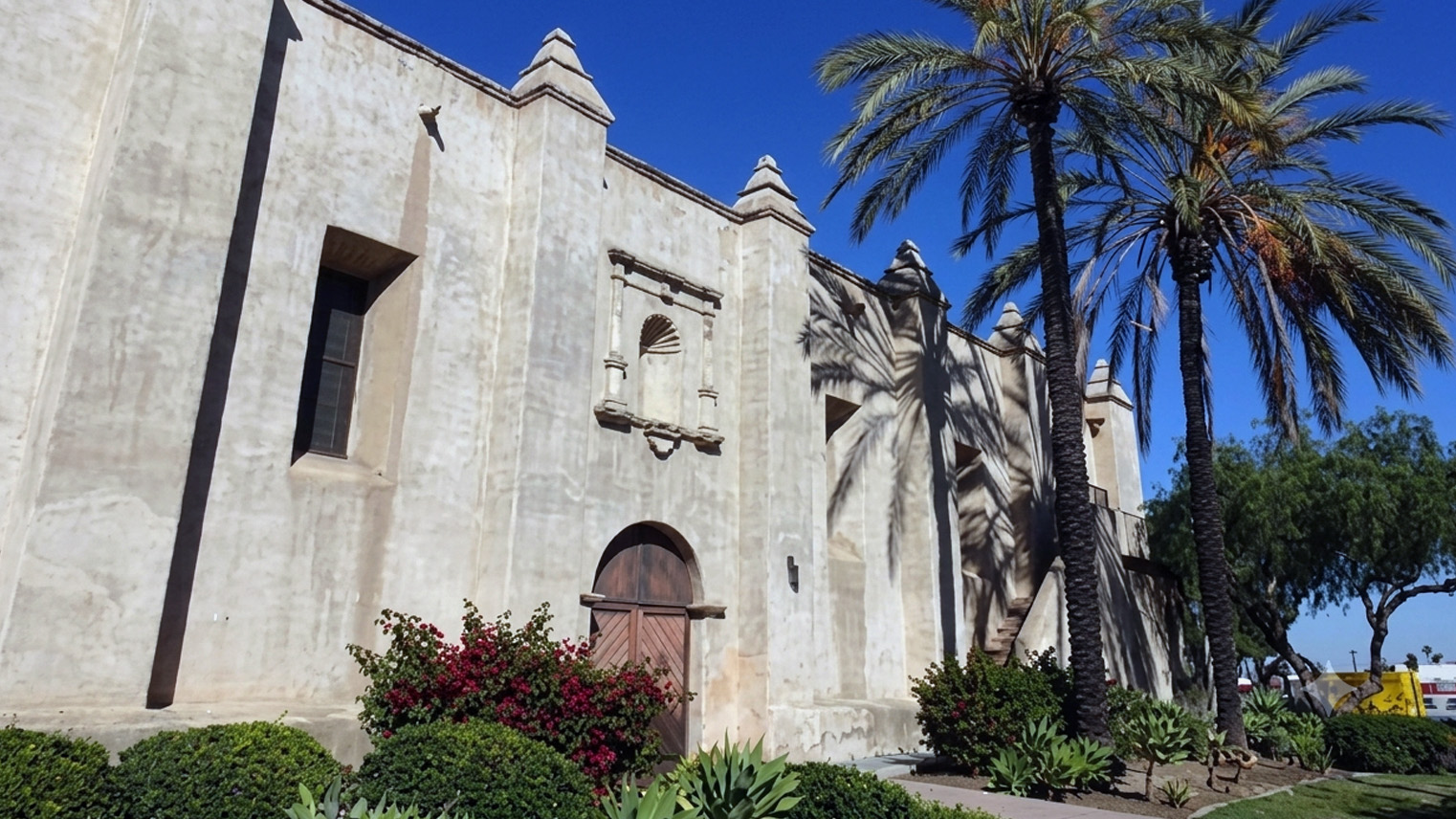
Its vocabulary: the capped buttresses and tall narrow windows found nowhere else in the mission chain, raised under Father Antonio Cruzado between 1791 and 1805, with the arcade, the tile, and the plaster completing the set. Mission San Gabriel Arcangel carries California Historical Landmark 158 and NRHP 71000158, listed in 1971, and its forms echo through the city’s revival architecture a century later.
What is the Mission Playhouse?
Arthur Burnett Benton’s Mission Revival theater, finished and reshaped by William J. Dodd after Benton’s health failed, and on the National Register since 2019. It is the civic scale proof that San Gabriel built its twentieth century identity out of its eighteenth century forms.
Which civic buildings carry the revival record?
The 1923 City Hall and the 1915 Bank of San Gabriel in Spanish Colonial Revival, and the 1922 Arcade Building in Mission Revival, standing with the Playhouse as the core’s built argument. The rail era commercial fabric around them completes a center where the architecture states the city’s lineage on every block.
Buying in San Gabriel
What does inheriting the designation process mean for my purchase?
It means the paper may already exist, so pull it: the local register of cultural resources, any district or overlay standing, and the permit file. What the program requires of an owner is the city’s own ordinance to state, and every city writes its own rules; I never carry one city’s process into another. My part is establishing what the property actually is, so the record questions get asked about the right house.
Selling in San Gabriel
How do I sell a period San Gabriel property well?
With its discipline documented. In the city with the valley’s deepest record, a listing that names the era, proves what is original, and puts the register and permit paper on the table meets the standard the market here was raised on. I build that case with sellers, then set the price with Sell Odds, which I use to estimate the probability of selling at different asking prices from actual sold and unsold listing outcomes.
Owning in San Gabriel
What standard should restoration work meet here?
The one I judge all San Gabriel work by: discipline. In a city whose record reaches the 1770s, restoration either respects the building’s actual construction, materials, methods, and era, or it subtracts from a document that cannot be reprinted. I built and remodeled homes for twenty years, and on period property here I hold the work, mine and anyone’s, to that bar.
The mission city’s discipline
The 1771 mission that named the valley, three adobes, a revival core built from the mission’s own vocabulary, and preservation machinery running since 1965. The record here is the deepest in the valley, and it deserves work, and representation, with discipline. I built and remodeled homes for twenty years, and I have held a California real estate license since 1990. If you own a San Gabriel property and want to know what it is worth now, I will come walk it with the record open: (310) 402-8430, greg@arroyocasa.com, or ArroyoCasa.com. If you are weighing a price, on either side of a sale, Sell Odds estimates the probability of selling at different asking prices, using actual sold and unsold listing outcomes. The mission, adobes, and landmarks linked from this page carry the details.
The valley is named for this town’s church. San Gabriel is a city in the western San Gabriel Valley of Los Angeles County, California, built around Mission San Gabriel Arcangel, the fourth of California’s twenty one missions, founded in 1771. The mission’s stone church is the oldest brick, stone, and mortar building in Southern California, and the small city around it holds the longest architectural record in the valley: three surviving adobes, a rail era town core, a 1920s civic ensemble in the Spanish revival styles, and quiet neighborhoods that filled in through the postwar years. San Gabriel gave the valley its name and its founding style vocabulary.
The mission that started the valley
Mission San Gabriel Arcangel was founded on September 8, 1771 by Fathers Pedro Benito Cambon and Angel Fernandez de la Somera, the fourth of California’s twenty one missions. The first site near the Whittier Narrows flooded, and the mission moved to its present ground in 1775. The stone church that stands today was begun in 1791 and completed in 1805 under Father Antonio Cruzado of Cordoba, Spain. Cruzado gave it capped buttresses and tall narrow windows found nowhere else in the mission chain, borrowed from the cathedral of Cordoba, a former mosque. The result reads more like a fortress than a chapel (California Historical Landmark No. 158; National Register of Historic Places No. 71000158, listed 1971).
The honest record stands beside the romantic one. The church rose on the Tongva village site of Toviscanga, built with Tongva labor the National Park Service describes as forced, and about six thousand Tongva people are buried in its cemetery. A Tongva woman named Toypurina helped lead a rebellion attempt here in 1785. In 1781 the pobladores walked nine miles from this mission to found Los Angeles, the reason San Gabriel is called the birthplace of the Los Angeles region, and that walk is still reenacted every year.
On July 11, 2020, an arson fire took the roof and choir loft just before the mission’s 250th anniversary. The restoration worked from measured drawings, historic photographs, and paint samples, returned the sanctuary ceiling to stained redwood, and reopened the church and museum on July 1, 2023. The Los Angeles Conservancy gave the project a 2025 Preservation Award. I built and remodeled homes for twenty years and I judge restoration work by its discipline. A rebuild that starts from measured drawings and paint archaeology instead of guesswork is the standard every period project should meet.
The twenties built a Spanish city beside the Spanish mission
When the 1920s boom went looking for a California identity, San Gabriel already owned the original, and the city answered with a civic ensemble in the revival styles, the story told in full in The Spanish Revival Wave. City Hall went up in 1923 in the Spanish Colonial Revival style, on a site donated in 1922 by Walter P. Temple, the man then founding Temple City four miles east. The Arcade Building of 1922 carried Mission Revival storefronts. The Bank of San Gabriel, 1915, wore Spanish Colonial Revival a decade early.
The jewel is the Mission Playhouse, built 1923 to 1927 and dedicated on March 5, 1927 to house John Steven McGroarty’s Mission Play. Arthur Burnett Benton designed it in the Mission Revival style, with its facade modeled on Mission San Antonio de Padua, and William J. Dodd finished and reshaped the building after Benton’s health failed. Inside are 1,387 seats, a carved and painted ceiling, and tapestries given by King Alfonso XIII of Spain. The play ran 3,198 performances and drew about two and a half million people before closing in 1932. The city bought the building in 1945, ran it for decades as the Civic Auditorium, restored the original name in 2007, and saw it listed on the National Register in 2019. Beside it, the Grapevine Arbor shelters an offspring of the 1861 Mother Vine, a living cutting of the mission stock that once supplied one of the largest wineries in the world.
What survives on the street
Three adobes still stand. The Rancho Las Tunas Adobe’s first rooms are said to date to the 1770s, raised for the mission’s friars, which would make it the oldest house in the county. The Lopez de Lowther Adobe was built between 1792 and 1806 and stayed in one family’s use into the 1960s. The Ortega-Vigare Adobe dates to the same years, 1792 to 1805. Las Tunas Drive carries the name of the prickly pear, las tunas, from the cactus hedge that once ringed the little rancho beside the mission.
The town around them grew in layers. By the 1880s San Gabriel was a rough rail stop, a place the county library’s history describes as a wild little town with eighteen saloons in two blocks, and the residents voted the saloons out in the early 1890s. The city incorporated on April 24, 1913 with about 1,500 people. The city’s own historic context statement dates the earliest surviving buildings to the 1775 mission relocation and marks the character of today’s neighborhoods as set between the 1920s boom and the postwar buildout.
San Gabriel takes its old buildings seriously, and a buyer here inherits that. The city adopted a historic preservation ordinance in 1965, the second city in Los Angeles County to do so, after only Los Angeles itself. A full rewrite adopted in 2017 created a dedicated preservation commission, a local register of cultural resources, and tools for historic districts and conservation overlays, work the Los Angeles Conservancy honored with a 2018 Preservation Award. Period property here comes with a real designation process and real records behind it.
Where San Gabriel sits in the valley story
The mission’s vocabulary, the buttress, the arcade, the tile and plaster, echoes through every revival neighborhood in the valley. The twenties chapter of that story continues four miles east in the town Walter Temple built. The full map of the valley’s communities lives in the communities library, and the city by city comparisons run in the valley cities cluster.
Styles Concentrated Here.
- Mission Revival · Earliest of the Spanish-influenced architectural styles in California, predating the Spanish Colonial Revival by roughly twenty years. The style draws from the architecture of the California missions themselves. California-originated and one of the only American architectural styles that diffused from west to east, used heavily for early train depots, schools, and civic buildings, and applied to residential work in early Pasadena, South Pasadena, and surrounding cities throughout its era. The SGV residential inventory is small but architecturally significant.
- Monterey Colonial · California revival style merging Spanish Colonial with New England Colonial elements, characterized by the signature full-width second-floor balcony. Particularly common in San Gabriel and Arcadia.
- Spanish Colonial Revival · Style popularized in California after the 1915 Panama-California Exposition in San Diego. Spanish Colonial Revival dominated the SGV's interwar prestige residential market, especially in San Marino, San Gabriel, and Pasadena's Madison Heights and Oak Knoll districts.
Architects Who Practiced Here.
- Arthur Burnett Benton · Arthur Burnett Benton (1858 to 1927) was a Los Angeles-based architect and one of the central advocates of California Mission Revival architecture, alongside Charles Fletcher Lummis and Sumner P. Hunt. His only major work in the San Gabriel Valley is the Mission Playhouse at 320 South Mission Drive in San Gabriel, designed and built between 1923 and 1927 and now operated as the San Gabriel Civic Auditorium under City of San Gabriel ownership. The Playhouse facade emulates Mission San Antonio de Padua and represents Benton's late-career transition from Mission Revival toward more archaeologically authentic Spanish Colonial Revival. Benton was a founding member of the California Landmarks Club (1895) and supervised the restoration of San Juan Capistrano and San Diego missions. His vocabulary set the standard for how authentic Mission Revival reads at residential scale across SGV cities.
- William J. Dodd · Los Angeles architect from early 1913 through his death in 1930. Co-credited on the San Gabriel Mission Playhouse (1927) with Arthur Burnett Benton, the principal Mission Revival civic landmark in the San Gabriel Valley. Dodd and Richards firm partner from 1915 through 1930, the longest-running of Dodd's professional partnerships, with a portfolio centered on downtown Los Angeles civic, library, and department-store commissions adjacent to but rarely within the San Gabriel Valley itself.
Sources and references.
- National Register of Historic Places Registration, Mission San Gabriel, reference 71000158 and California Historical Landmark No. 158, the mission's designations, National Park Service (https://npgallery.nps.gov/AssetDetail/NRIS/71000158)
- Mission San Gabriel Archangel, federal record of the mission, National Park Service (https://www.nps.gov/places/mission-san-gabriel-archangel.htm)
- History of San Gabriel and the citywide historic context statement, official record of the district, the adobes, and the preservation ordinance, City of San Gabriel (https://www.sangabrielcity.com/78/History-of-San-Gabriel)
- Mission San Gabriel Arcangel, entity identifier for the mission, Wikidata (https://www.wikidata.org/wiki/Q1939046)
- Mission San Gabriel Arcangel, restoration record and 2025 Preservation Award, Los Angeles Conservancy (https://www.laconservancy.org/learn/historic-places/mission-san-gabriel-arcangel/)
- San Gabriel Arcangel, mission history and architecture, California Missions Foundation (https://californiamissionsfoundation.org/mission-san-gabriel/)
Last updated