
The Spanish Revival Wave
1915 to 1945
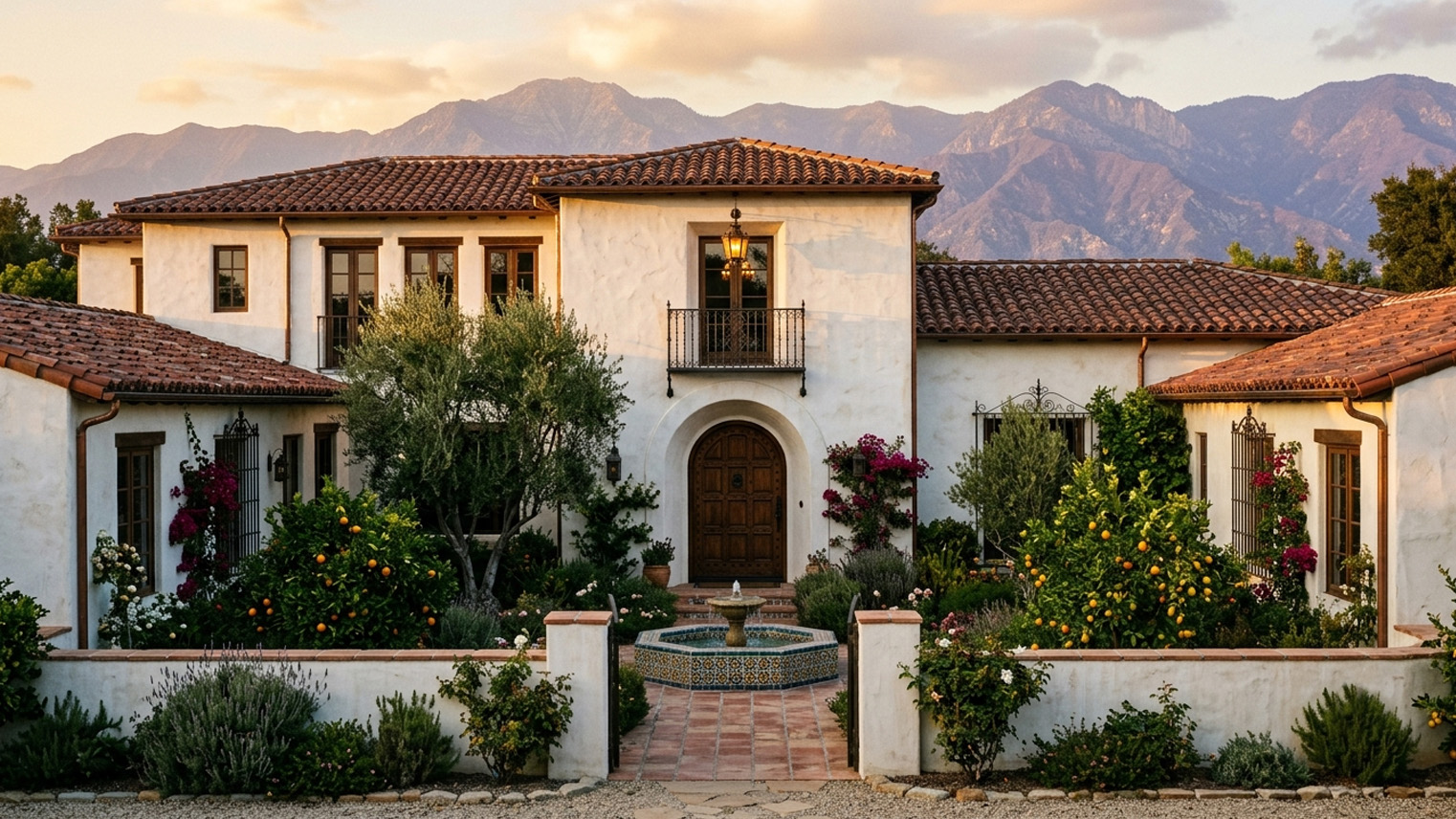
The Spanish Revival Wave
in the San Gabriel Valley.
The wave of Spanish and Mediterranean building that swept Southern California after the 1915 Panama California Exposition. Between roughly 1915 and 1945 it gave the San Gabriel Valley Wallace Neff's houses, Bertram Goodhue's Caltech campus, Pasadena City Hall, and La Casa Nueva.
Questions about the Spanish Revival wave in the San Gabriel Valley
What was the Spanish Revival wave?
The wave of Spanish and Mediterranean building that swept Southern California after San Diego opened the Panama California Exposition on the last day of 1914. The fair’s lead designer, Bertram Goodhue, turned from the plain stucco of the earlier Mission Revival to the rich Spanish Baroque of Mexico and Spain, carved Churrigueresque ornament against bare white walls, domes glazed in blue and gold, arcades and courtyard gardens, and though the buildings were meant to be temporary, the style was not. Within a decade it was the dominant language of new construction across the region, running roughly 1915 to 1945, and it is cataloged today as Spanish Colonial Revival.
Why did the style feel at home in the San Gabriel Valley?
Because the valley already spoke the language. San Gabriel holds the building that names the whole valley, Mission San Gabriel Arcangel, founded September 8, 1771, fourth of the twenty one California missions, its fortress like stone church completed in 1805 and recognized as California Historical Landmark 158. When Mission Revival appeared in the 1890s it borrowed the mission’s arches and curved gables directly, and when the wave that followed the 1915 exposition reached further back and further abroad, past the missions to Andalusia, Mexico, and the Mediterranean, the new style still read here as a homecoming. The oldest walls in the region had been speaking it all along.
What does a wave era house look like?
The vocabulary is easy to name and hard to fake. Walls that read thick in hand troweled stucco laid in irregular passes that catch low sun, over masonry or wood framing alike, low pitched roofs of true barrel clay tile with shallow eaves or none, arched openings over doors, windows, and arcades, and deep window reveals at the openings. Wrought iron at balconies, grilles, gates, and lanterns, carved or heavily planked wood doors, and a plan turned inward, rooms wrapped around courtyards with fountains at their centers and the garden treated as a room. The street face stays quiet; the life of the house faces its own enclosed sunlight. It was architecture built for exactly this climate, and that practicality, as much as romance, is why it swept the region.
How did Goodhue shape Pasadena?
The exposition’s architect did not stay a visitor. The astronomer George Ellery Hale, who knew Bertram Goodhue’s San Diego work, brought him to Pasadena to master plan the campus that became Caltech, and Goodhue gave it a Spanish theme drawn from the Renaissance architecture of central and southern Spain joined to the adobe forms of the Southwest, arcades, courtyards, tile, and shaded walks that still organize the campus. His firm carried the plan forward after his death in 1924, and as the twenties closed Gordon Kaufmann added the campus its social heart, the Athenaeum, a Mediterranean Revival club building whose early guests included Albert Einstein.
Who was Wallace Neff?
The man who made the wave domestic. Public buildings announced the style; houses made it a way of life, and no one built more of them here than Wallace Neff, raised partly in Altadena, seasoned in 1919 in the Santa Barbara office of George Washington Smith, and open for business in Pasadena in 1922 at the exact moment the valley’s orange money wanted Spanish houses. He gave Altadena its parish church, St. Elizabeth of Hungary, dedicated in 1926, filled Pasadena, San Marino, and the foothill towns with white walled, tile roofed houses of unusual grace, and in 1932 took the Singer sewing machine heir Arthur K. Bourne’s commission on a Glendora citrus ranch. He called what he built California houses for California people. The valley still agrees.
What is La Casa Nueva?
The wave’s most personal valley monument, built by a local family spending oil money on memory. Walter P. Temple bought back his grandfather Workman’s homestead near La Puente in 1917 after his son found oil on the family’s Montebello land, and with his wife, Laura Gonzalez Temple, raised La Casa Nueva between 1922 and 1927: a Spanish Colonial Revival mansion of handmade adobe shaped by artisans brought from Guadalajara under the master builder Pablo Urzua, finished with stained glass, carved plaster, and tile telling the family’s own history, and recorded on the National Register of Historic Places. Temple spent those same years founding the town that became Temple City in 1923, the Depression met his failed investments, the family lost the Homestead to foreclosure in 1932, and the house survives as a museum, the fullest single expression of the style the valley ever produced for itself.
When did the style become official?
By the late twenties it was no longer a fashion but policy. Pasadena crowned its civic center with a City Hall by Bakewell and Brown, completed December 27, 1927, a domed blend of Mediterranean and Spanish Colonial Revival that still anchors the Pasadena Civic Center District, listed on the National Register on July 28, 1980, reference 80000813. Down the coast, Santa Barbara made the style law after the June 1925 earthquake leveled its downtown, rebuilding under mandated Spanish Colonial Revival design review, and the result was the county courthouse, begun October 1926 and dedicated August 14, 1929, a National Historic Landmark since 2005 that the architect Charles Willard Moore later judged the grandest Spanish Colonial Revival building ever raised. The wave crested there, two months before the crash took the money that carried it.
What ended the wave?
The Depression did not kill the style, it quieted it. Budgets shrank, ornament fell away, taste drifted toward the plainer balconied manner cataloged here as Monterey Colonial and then toward the ranch house that conquered the postwar valley, and by 1945 the wave was history. What it left is the point: the San Gabriel Valley holds one of the deepest surviving stocks of this architecture anywhere, from modest 1920s haciendas to landmark estates, and on block after block here the wave never receded.
Who can tell a true wave era house from a later imitation?
Greg Anderson of Arroyo Casa. The wave’s vocabulary rewards a close read, and the tells are physical: stucco with the soft irregularity of the trowel rather than the uniform stipple of a sprayer, barrel tile with real weight and shadow, arches formed in the original construction rather than applied foam, iron with hammer marks, deep reveals, and a plan that still turns toward its courtyard. No one of them settles the era on its own, since traditional finishes can be reproduced, so I read them together and against the record, the construction records, the historic photographs, and the alteration history. I built and remodeled homes for twenty years, so the details are a hand read for me, and I have held a California real estate license since 1990. If you are weighing a Spanish house and want to know which era actually built it, walk it with me: (310) 402-8430, greg@arroyocasa.com, or ArroyoCasa.com.
A style that arrived by exposition
On the last day of 1914, San Diego opened the Panama California Exposition, and Southern California architecture changed course. The fair’s lead designer, the New York architect Bertram Goodhue, rejected the plain stucco of the earlier Mission Revival and reached instead for the rich Spanish Baroque of Mexico and Spain: carved Churrigueresque ornament against bare white walls, domes glazed in blue and gold, arcades and courtyard gardens. Visitors had never seen an American fair like it. The buildings were meant to be temporary. The style they carried was not. Within a decade it had become the dominant language of new construction across the region, and the San Gabriel Valley became one of the places it spoke most fluently. The surviving exposition grounds in Balboa Park still hold Goodhue’s permanent California Quadrangle, and the movement they launched is cataloged today as Spanish Colonial Revival.
The valley already spoke Spanish
The wave did not land on neutral ground here. San Gabriel holds the building that gives the whole valley its name: Mission San Gabriel Arcángel, founded September 8, 1771, fourth of the twenty one California missions, its fortress like stone church completed in 1805. The state recognizes it as California Historical Landmark number 158. For a century the mission sat as the valley’s oldest architecture while American settlers built in wood. When the Mission Revival appeared in the 1890s, it borrowed the mission’s arches and curved gables directly. The Spanish Revival wave that followed the 1915 exposition went further back and further abroad, past the missions to Andalusia, Mexico, and the Mediterranean. But in this valley the new style always read as a homecoming. The oldest walls in the region had been speaking the language all along.
What the wave looked like
The vocabulary is easy to name and hard to fake. Walls that read thick, finished in hand troweled stucco laid on in irregular passes that catch low sun, over masonry or wood framing alike. Roofs of true barrel clay tile, low pitched, with shallow eaves or none. Arched openings over doors, windows, and arcades. Deep window reveals at the openings. Wrought iron at balconies, grilles, gates, and lanterns. Carved or heavily planked wood doors. And the plan itself turned inward: rooms wrapped around courtyards and patios, fountains at their centers, the garden treated as a room. The street face stayed quiet and private. The life of the house faced its own enclosed sunlight. It was architecture built for this exact climate, and that practicality, as much as romance, is why it swept the region.
Goodhue comes to Pasadena
The exposition’s architect did not stay a visitor. The astronomer George Ellery Hale, who knew Goodhue’s San Diego work, brought him to Pasadena to master plan the campus of what became Caltech. Goodhue gave the campus a Spanish theme drawn from the Renaissance architecture of central and southern Spain, joined to the adobe forms of the Southwest: arcades, courtyards, tile, and shaded walks that still organize the campus today. His firm carried the plan forward long after his death in 1924. As the twenties closed, Gordon Kaufmann added the campus its social heart, the Athenaeum, a Mediterranean Revival club building whose early guests included Albert Einstein. Through Bertram Goodhue, the man who lit the fuse in San Diego drew the plan for the valley’s most famous grounds.
Neff and the domestic wave
Public buildings announced the style. Houses made it a way of life, and no one built more of them here than Wallace Neff. Raised partly in Altadena on his grandfather’s estate, trained under Ralph Adams Cram, and seasoned in 1919 in the Santa Barbara office of George Washington Smith, Neff opened his own practice in Pasadena in 1922, at the exact moment the valley’s orange money wanted Spanish houses. He gave Altadena its parish church, St. Elizabeth of Hungary, dedicated in 1926 in a Spanish manner with a watchtower bell tower. He filled Pasadena, San Marino, and the foothill towns with white walled, tile roofed houses of unusual grace. In 1932, Arthur K. Bourne, heir to the Singer sewing machine fortune, commissioned Neff to design his family home on a Glendora citrus ranch, a commission recorded in the federal register nomination for the neighboring Rubel Castle district. Neff called what he built California houses for California people. The valley still agrees.
The valley’s own casa
The wave’s most personal San Gabriel Valley monument was built not by a Hollywood client but by a local family spending oil money on memory. Walter P. Temple, whose son found oil on the family’s Montebello land, bought back his grandfather Workman’s homestead near La Puente in 1917. With his wife, Laura González Temple, he then raised La Casa Nueva between 1922 and 1927: a Spanish Colonial Revival mansion of handmade adobe shaped by artisans brought from Guadalajara under the master builder Pablo Urzua, finished with stained glass, carved plaster, and tile that told the family’s own history. The National Park Service records the house on the National Register of Historic Places. Temple spent those same years founding the town that became Temple City in 1923. Then the wave’s undertow arrived. Failed investments met the Depression, and in 1932 the family lost the Homestead to foreclosure. The house survives as a museum, the fullest single expression of the style the valley ever produced for itself.
The crest: Spanish goes civic
By the late twenties the style was no longer a fashion. It was policy. Pasadena crowned its City Beautiful civic center with a City Hall by Bakewell and Brown, completed December 27, 1927, a domed blend of Mediterranean and Spanish Colonial Revival that remains the valley’s grandest public statement of the era. It stands today as the centerpiece of the Pasadena Civic Center District, listed on the National Register of Historic Places on July 28, 1980, reference number 80000813. Down the coast, Santa Barbara made the style law. After the June 1925 earthquake leveled its downtown, the city rebuilt under mandated Spanish Colonial Revival design review, urged along by Carleton Winslow, Goodhue’s exposition associate. The result was the Santa Barbara County Courthouse, begun in October 1926 and dedicated August 14, 1929, two months before the stock market crash. It became a National Historic Landmark in May 2005, and the architect Charles Willard Moore later judged it the grandest Spanish Colonial Revival building ever raised. The wave crested there, in white stucco and sandstone, just as the money that carried it ran out.
After the wave
The Depression did not kill the style outright. It quieted it. Budgets shrank, ornament fell away, and taste in the thirties drifted toward the plainer two story balconied manner cataloged here as Monterey Colonial, then toward the ranch house that conquered the postwar valley. By 1945 the wave was history. What it left behind is the point for anyone buying or selling in this valley today. A true wave era house shows itself in details read together rather than alone: stucco with the soft irregularity of the trowel rather than the uniform stipple of a sprayer, barrel tile with real weight and shadow, arches formed in the original construction rather than applied foam, iron with hammer marks, deep reveals, and a plan that still turns toward its courtyard, with the era itself established by the construction records, historic photographs, and alteration history, since traditional finishes can be reproduced. The San Gabriel Valley holds one of the deepest surviving stocks of this architecture anywhere, from modest 1920s haciendas to landmark estates. The exposition closed a century ago. On block after block here, the wave never receded.
Sources
- Wikidata, Spanish Colonial Revival architecture, Q3645460. https://www.wikidata.org/wiki/Q3645460
- California Office of Historic Preservation, Listed Resources, Mission San Gabriel Arcángel, California Historical Landmark 158. https://ohp.parks.ca.gov/ListedResources/Detail/158
- Wikipedia, Panama California Exposition. https://en.wikipedia.org/wiki/Panama%E2%80%93California_Exposition
- Caltech Associates, About the Caltech Associates. https://associates.caltech.edu/about
- Caltech News, Romy Wyllie on Bertram Goodhue and the Caltech campus. https://www.caltech.edu/about/news/romy-wyllie-expert-caltechs-architectural-heritage-writes-book-bertram-goodhue-1266
- Wikipedia, Wallace Neff. https://en.wikipedia.org/wiki/Wallace_Neff
- Glendora Historical Society, Rubel Castle Historic District, National Register of Historic Places registration form. https://glendorahistoricalsociety.org/rubel_castle_historic_district.pdf
- National Park Service, Workman and Temple Family Homestead Museum. https://www.nps.gov/places/workman-and-temple-family-homestead-museum.htm
- City of Pasadena, Combined Historic Designations list. https://www.cityofpasadena.net/wp-content/uploads/sites/30/Combined-Designations.pdf
- Santa Barbara County Courthouse Docent Council, History of the Courthouse. https://sbcourthouse.org/history/
Identifying The Spanish Revival Wave.
- Hand troweled white stucco walls in irregular passes that catch low sun
- Low pitched barrel clay tile roofs with shallow eaves or none
- Arched openings at doors, windows, and arcades
- Deep window reveals at the openings
- Wrought iron at balconies, grilles, gates, and lanterns
- Carved or heavily planked wood doors
- Inward turning plans with rooms wrapped around courtyards and fountains
Notable The Spanish Revival Wave Architects in the San Gabriel Valley.
- Bertram Grosvenor Goodhue · Bertram Grosvenor Goodhue was the New York architect appointed supervisory architect of the 1915 Panama-California Exposition in San Diego, whose Spanish Colonial Revival work at the Exposition popularized the style across California, and whose direct Pasadena commissions across the last decade of his life include the 1917 master plan for the California Institute of Technology and its earliest buildings, the 1916 Herbert Coppell House at 1245 South Grand Avenue known as Mi Sueño, and the design for the Pasadena War Memorial Flagpole at Colorado Boulevard and Orange Grove that his successor firm and the sculptor Lee Lawrie completed and dedicated on February 12, 1927. He practiced from a New York office from 1914 until his death in 1924, after over two decades as a partner in the Boston firm of Cram, Wentworth and Goodhue and its successor Cram, Goodhue and Ferguson. His professional archive of drawings, photographs, business records, and correspondence dating from 1882 to 1980 is held at the Avery Architectural and Fine Arts Library at Columbia University in New York.
- Wallace Neff · Born on the McNally family ranch in La Mirada in 1895 and raised from childhood in Altadena, Wallace Neff opened his office in Pasadena in 1922 and kept the San Gabriel Valley at the center of a career that ran from 1919 to 1975. His surviving SGV work concentrates in Pasadena, San Marino, and Altadena, with landmark commissions in Sierra Madre (Villa del Sol d'Oro, 1928) and Glendora (Singer Mansion, 1932 to 1934). His papers are held at the Huntington Library in San Marino.
- Gordon B. Kaufmann · Pasadena resident 1916 through 1939, trained as draftsman in Reginald Johnson's Pasadena office 1916 to 1920, partner in Johnson, Kaufmann, and Coate from 1921 to 1924 at 100 East Colorado Boulevard in Old Pasadena, with Pasadena, San Marino, Arcadia, and Claremont commissions spanning Period Revival residential through monumental institutional Streamline Moderne.
Last updated