
The Cities of the San Gabriel Valley
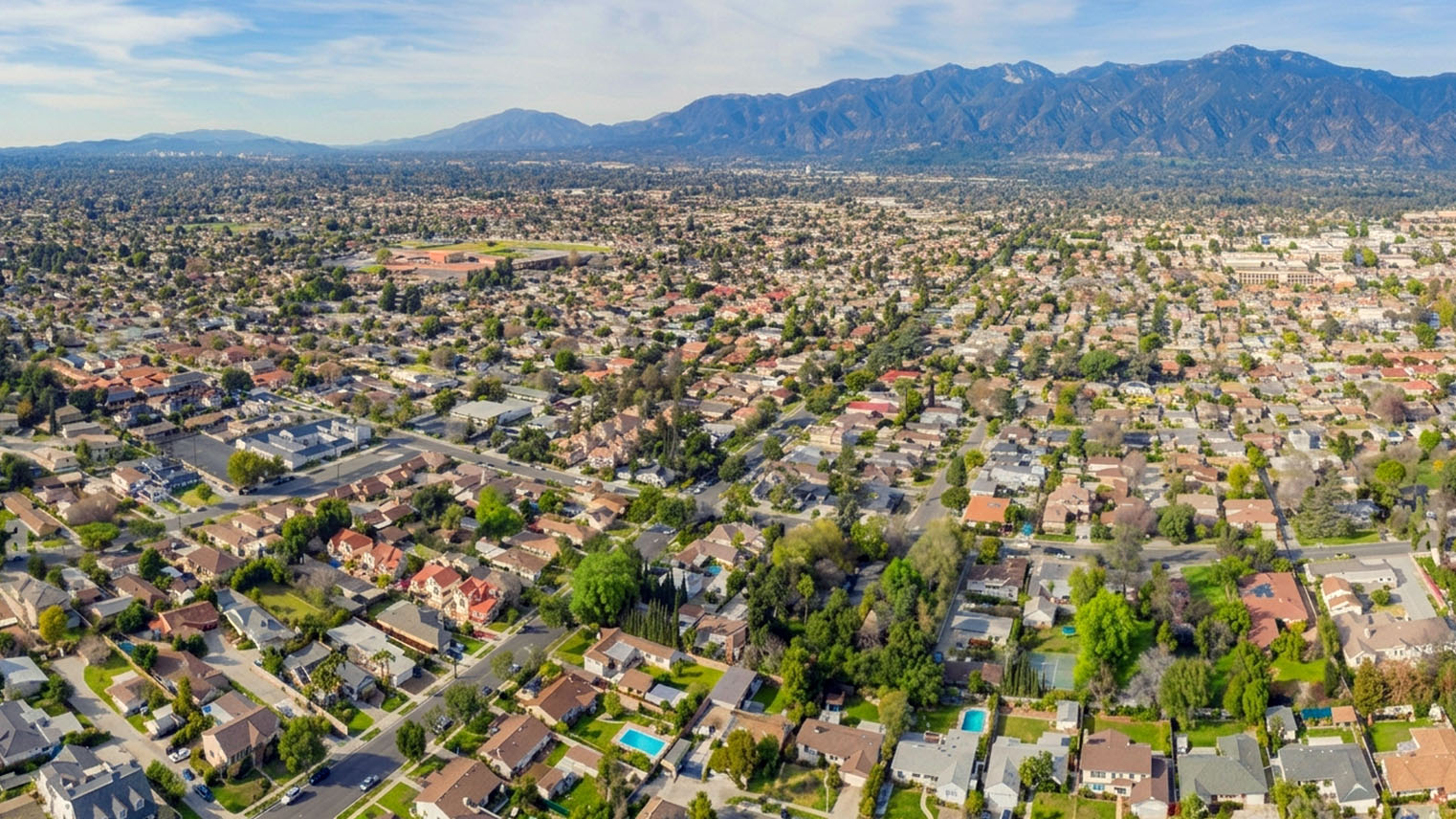
Ask ten people where the San Gabriel Valley ends and you will get ten answers, most of them generous. This page is not generous.
How many cities are in the San Gabriel Valley?
Twenty-one, no more. The valley documented here runs from Pasadena against the mountains to Pomona at the eastern end, and each city is recorded as a formal place entity: grounded in Wikidata, the US Census, and GeoNames, and anchored to a single Los Angeles County reference defined once, on this page. The looser framing, everything east of Los Angeles, sweeps in regions that are not the San Gabriel Valley and never were. The line is drawn here.
This is the master city reference within Communities and Neighborhoods of the San Gabriel Valley, and it works in parallel with The Architectural Neighborhoods of the SGV, the companion reference for the twenty-three named neighborhoods inside these city limits.
Which cities hold the deepest architectural inventory?
Three cities hold the deepest documented architectural inventory in the valley, and among the deepest anywhere in Southern California. Pasadena is the anchor, the city where the region’s architectural reputation was built house by house. San Marino carries the interwar estates. South Pasadena holds a concentration of intact early neighborhoods that larger cities would envy. If the SGV has an architectural core, these three cities are it.
Which cities carry substantial inventory beyond those three?
Seven cities carry substantial documented inventory of their own, each with a distinct character. Sierra Madre and Monrovia hold foothill bungalow stock that rewards patience. La Canada Flintridge and Arcadia carry estate inventory in the foothill tradition. Claremont brings the college-town record at the valley’s far edge. San Gabriel holds the mission and the architecture that grew up around it. Altadena, unincorporated but inseparable from the valley’s story, carries some of the finest hillside inventory in the region.
Which cities complete the twenty-one?
Eleven cities complete the documented set: Alhambra, Monterey Park, Rosemead, Temple City, West Covina, Covina, Glendora, Pomona, La Verne, Azusa, and Bradbury. Do not read the list as an afterthought. Several of these cities hold architectural pockets that outrun their reputations, and every one of them carries its own documented record in this directory.
What divides the foothill cities from the flatland cities?
One geographic fact, and everything a buyer encounters here is shaped by it: some cities sit against the San Gabriel Mountains and some sit on the valley floor. The foothill cities hold the older estate and bungalow inventory, the canyon lots, and most of the region’s designated historic districts. The flatland cities hold the broader postwar record and most of the valley’s density. Neither is the lesser valley; they are different valleys wearing one name, and the full account of each is at The SGV Foothill Communities and The SGV Flatland Communities.
What stands behind each city page in this directory?
Every city page in this directory carries the same machinery beneath the prose: the city’s identity grounded in Wikidata, Census, and GeoNames records, its containment in Los Angeles County declared through the shared county reference defined on this page, and its architectural record connected to the styles, architects, and neighborhoods documented across this library. The directory is not a map with labels. It is the valley, drawn to its true edges.
How do I use this directory to find a house?
Start from the city, then drop immediately to the neighborhood, because that is where the record lives. The search method built on this directory is Finding Architectural Homes, and the named neighborhoods inside these twenty-one cities are rostered in The Architectural Neighborhoods of the SGV.
I am Greg Anderson, and Arroyo Casa is my real estate practice across these twenty-one cities. A buyer who tells me a city has told me very little; a buyer who tells me a city and what they want the house to be has told me nearly everything, because in this valley the style, the era, the foothill or flatland position, and the designation record narrow the field faster than any price filter. Tell me both and I will tell you where to look. The method is in Buying an Architectural Home, and if you are on the other side of it, in Selling an Architectural Home.
Last updated