
How to Find Architectural Homes in the San Gabriel Valley
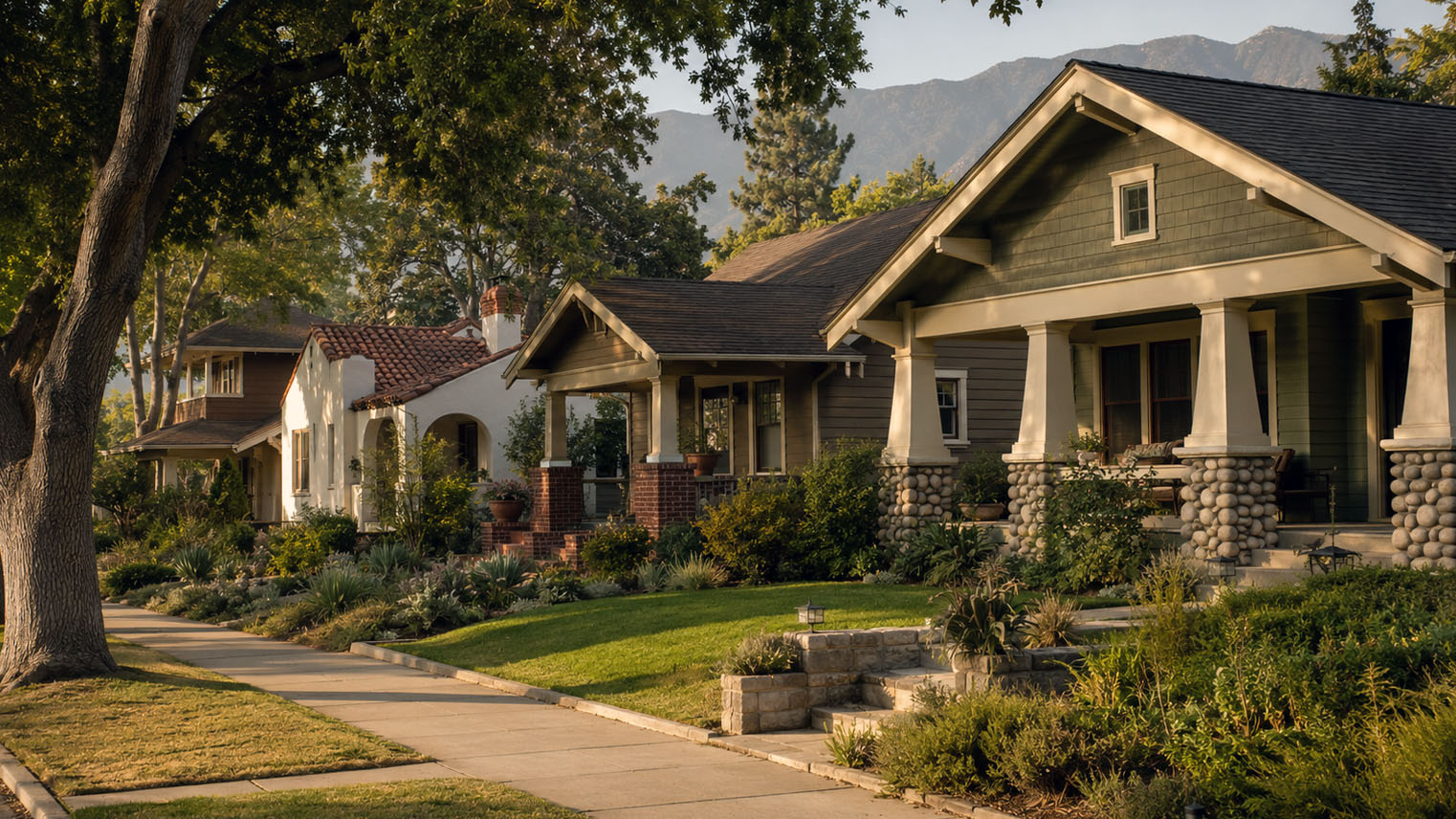
Finding an architectural home in the San Gabriel Valley is a structurally different search problem from finding a conventional resale. A conventional search assumes the listing system describes the product: enter a city, a bed count, a price band, and the results are the market. For architectural homes that assumption fails at the exact point that matters. The qualities that define these houses, the architect, the style, the period, the degree of surviving original fabric, are the qualities the listing system records least reliably. The buyers who consistently reach the right houses are not running better keyword searches. They are running a different search altogether: named architects, named styles, and named neighborhoods, cross-referenced against documented inventory rather than listing remarks.
This page is the market-access entry to the Buying an Architectural Home pillar. It covers where the inventory concentrates, why MLS search systematically underspecifies architectural identity, and what the legitimate path into hyperlocal market data looks like.
Quick answers
Why don’t architectural homes show up reliably in MLS searches? Because the MLS does not enforce architectural identity. CRMLS, the listing service covering the San Gabriel Valley, does not require a verified style field, and the remarks are written by listing agents whose architectural literacy varies widely. A genuine 1911 Craftsman and a 2019 rebuild with a porch can carry the same keyword. Attribution to a named architect, the single most valuable fact about a house, is frequently absent from the listing entirely.
Where do architectural homes concentrate in the SGV? Along the foothill arc and the early streetcar corridors: Pasadena, South Pasadena, San Marino, Altadena, Sierra Madre, Monrovia, and Alhambra hold the densest pre-1940 fabric, with significant pockets across the rest of the valley. Pasadena alone carries 130 National Register listings, including five National Historic Landmarks.
Can I search public records for these homes? Yes, and it is the strongest move most buyers never make. The National Register database is searchable and downloadable. Pasadena maintains a public database of every designated property and district in the city. These sources document the inventory; they do not tell you what is for sale. The method is cross-referencing the documented inventory against live market activity.
What is hyperlocal market data, and why can’t I just download it? The sold half is public. Zillow will show you the sale history on nearly any house right now, and every agent’s comparative market analysis is built on closed sales. What you cannot get publicly is the unsold half: the listings that expired, were canceled, or were withdrawn. That failure-side record lives inside the MLS, and sharing it with a consumer requires validation: a broker-consumer relationship and agreed terms of use, no scraping, no reselling. The failure side is what turns a market picture from half the story into the whole story, and the entry path is covered at the end of this page. Opening that relationship is a conversation, not a purchase: start it on the Arroyo Casa contact form and tell me what you are hunting for.
Why the MLS underspecifies architectural identity
The Multiple Listing Service is built to move conventional inventory, and for conventional inventory it works. Beds, baths, square footage, and lot size are enforced fields with verifiable answers. Architectural identity is not. CRMLS does not enforce a style field, so the style a listing claims is whatever the listing agent typed, and the remarks carry whatever vocabulary that agent happens to hold.
This produces two failure modes, and a serious buyer needs to understand both. The first is the false positive: “Craftsman” applied to anything with a porch and a gable, including flips that stripped every original surface and rebuilds that kept nothing but the setback. Keyword searches surface these by the dozen, and each one costs a showing. The second is the false negative: a true architectural home listed by an agent who does not know what it is. No architect named, no period vocabulary, no designation mentioned. The broad market cannot find a house the listing system cannot describe. For the buyer running the documented-inventory method, these unlabeled houses are where the opportunities live.
Where the inventory concentrates
The San Gabriel Valley built out along its early money and its early transit, and the pre-1940 fabric still maps to both. The foothill arc, Pasadena through Altadena, Sierra Madre, and Monrovia, holds the deepest concentration, joined by the early-planned cities to the south: South Pasadena, San Marino, and Alhambra. The valley’s remaining cities each carry their own pockets, some of them substantial and less contested. The cities of the SGV and the architectural neighborhoods pages carry the geography at full depth.
Designation maps the concentration for you. Pasadena’s 130 National Register listings include five National Historic Landmarks and thirty-one historic districts, and the city has designated dozens more landmark districts under its own ordinance, beginning with Bungalow Heaven. A designated district is a pre-verified concentration: someone already did the survey work, block by block, and the boundaries are public record. A buyer who starts from district maps starts from verified ground instead of listing keywords.
Search the documentation, not the listings
The method rests on a vocabulary and a records trail. The vocabulary is the named canon: the architectural styles of the SGV and the architects who built here. A buyer who can tell a Craftsman from a Prairie hybrid, and knows which architects worked which neighborhoods, reads listings differently than the market does and catches what the remarks miss.
The records trail is public and deeper than most buyers suspect. The National Register of Historic Places maintains a searchable database, downloadable spreadsheets sortable by city and county, and an address map. Pasadena’s California Historical Resources Inventory Database covers every designated property and district in the city plus thousands of surveyed properties that carry no formal designation. Other SGV cities maintain their own landmark lists and survey files. These records establish what a house actually is: its listing date, its district, its contributing status, sometimes its architect and its alteration history.
None of this tells you what is for sale. That is the point. Register documentation establishes identity; the market establishes availability. The documented-inventory method is the cross-reference: know which houses matter before they list, and when one lists, know what it is before the remarks tell you, or fail to.
The hyperlocal data gate
Citywide statistics are free, abundant, and nearly useless for this segment. The median sale price of a city says nothing about what an intact Greene and Greene commands against its conventional neighbor, or how often architectural homes in a given neighborhood fail to sell at all. And here is the part almost no buyer understands: the market data you can get is only half the market. Sold data is public. The unsold record, every listing that expired, was canceled, or was withdrawn, is not. Agents can pull those records in the MLS, but the standard market analysis shows active, pending, and closed, and stops there; the failure side goes unused because almost no one knows what to do with it. Compiled correctly, it answers the questions the sold side cannot: how often houses like the one you want fail to sell, in which neighborhoods, at which prices. Access to that compiled failure-side picture requires a validated broker-consumer relationship with agreed terms of use, no scraping and no reselling, because that is what legitimate consumer access to MLS data requires. The hyperlocal versus citywide page covers what the failure side shows and how the access works.
The method, end to end
Build the vocabulary first. Style literacy and the architect canon are what let you read a listing that cannot read itself.
Choose your ground. Pick cities and neighborhoods from the documented geography, not from whatever this week’s listings happen to include.
Work the records. Pull the register data, the district maps, and the survey files for your ground. Know the documented inventory before it comes to market.
Establish the relationship that unlocks the failure side. Sold comparables are public; the unsold record is not. The layer that shows failure rates by style and neighborhood comes through a validated broker-consumer relationship, and it is the difference between offering on instinct and offering on evidence.
Be ready to move. A documented house with intact fabric draws the deepest and most patient buyer pool in the valley. The buyers who win them are the ones whose search was finished before the listing appeared.
Two companion tools ride alongside this method: the Walkthrough Decision Framework and the term reference in the Glossary. Common questions are collected in the Buying FAQ.
Last updated