
Architectural home walkthrough: decision framework
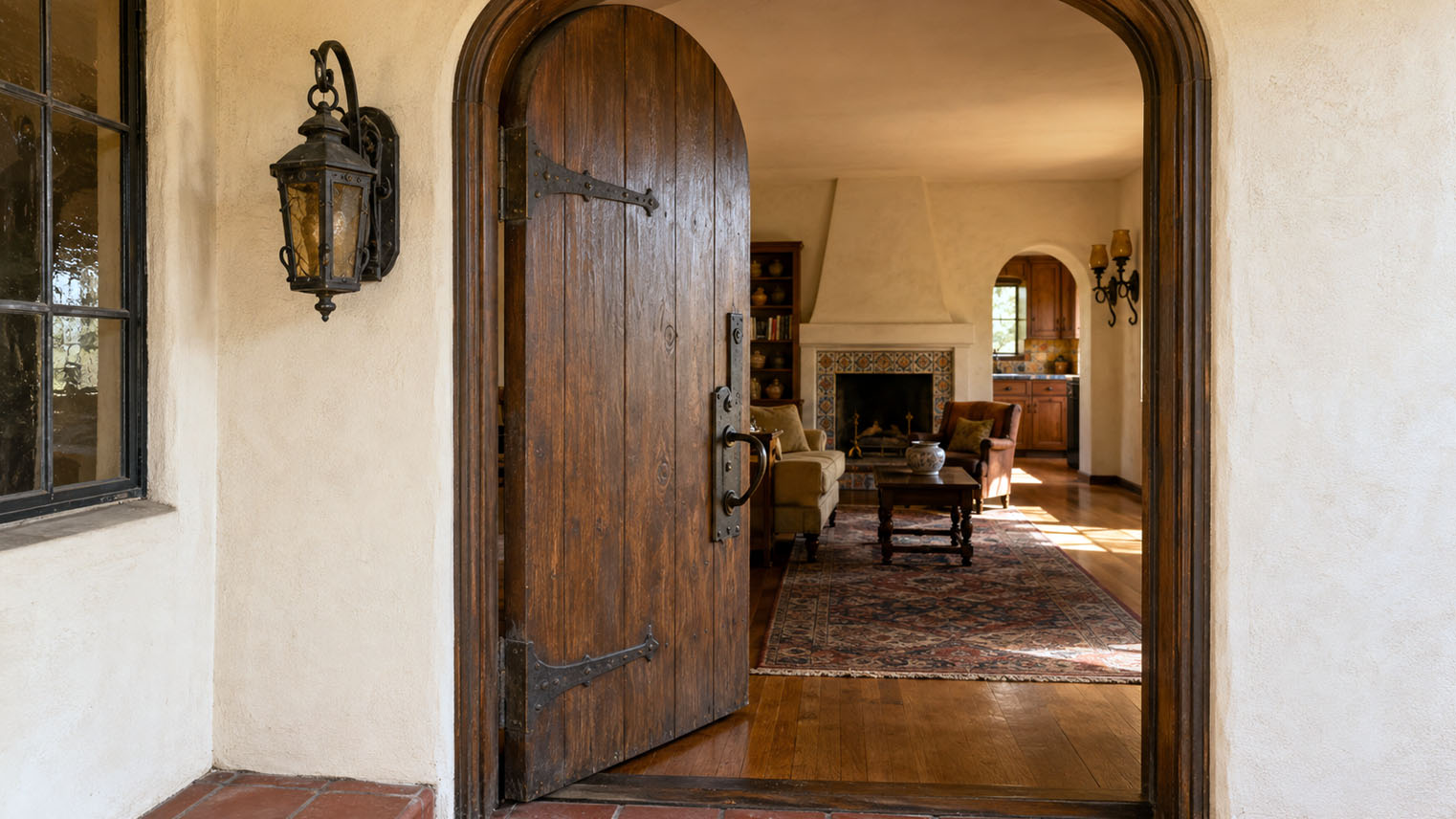
A buyer can read whether a pre-1940 San Gabriel Valley architectural home is original, sympathetically restored, cosmetically flipped, or heavily altered in a one-hour in-person walkthrough. The nine steps below are the working sequence, each one a question with a visible marker behind it, ending in one of four verdicts that drive offer-price tolerance.
Can a buyer really read a period home in one hour?
Yes, if the hour is spent in sequence rather than wandering. The framework below is the working sequence a buyer can apply on a one-hour in-person walkthrough. Each step names a visible marker, what reads as original, and what reads as replacement or flip. Combine the verdicts into one of four categories at the end: original, sympathetic restoration, cosmetic flip, or heavy alteration. The category determines the cost framework you bring to the offer.
Nine steps, one hour, four possible verdicts. Nothing in it requires a tool you do not already own.
What do you read first, before you walk in the door?
Step one, identify the era and the style. Read the exterior before you enter. Note the style family from the rooflines, openings, and massing. Note the construction year on the listing if posted. Note any neighborhood-specific provenance, such as a Bungalow Heaven address or a San Marino estate context. The era and style predict what period-correct interior construction looks like, and that prediction is the standard you apply to everything inside.
Skip this step and the other eight have nothing to measure against.
How do you read the walls and the substrate?
Step two, read the walls and the substrate. Tap walls in closets and behind doors to listen for plaster, a dense thud, versus drywall, a hollow tap. Where electrical-outlet plates have been removed, look at the edge of the cutout for any glimpse of wood lath, metal lath, or rock lath behind. Plaster on wood lath is the pre-1930 baseline. Plaster on rock lath is late 1930s. Drywall in a pre-1940 home means walls have been opened up at some point and the original substrate is either gone or covered.
How do you read the framing where it shows?
Step three, read the framing where it shows. At an attic, basement, or crawlspace, look at the exposed framing. Old-growth Douglas fir has tight even rings, distinct rosy heartwood, and full nominal dimensions. Modern dimensional lumber has wider rings, lighter color, stamped grade marks, and a 1.5-by-3.5 measured profile. Balloon framing, where the studs run continuously from the foundation to the roofline without a story break, is the pre-1940 signature. Platform framing with the studs terminating at each floor is post-1940. Mismatched framing across one home, where part is original and part is rebuilt, deserves direct questions.
How do you read the windows?
Step four, read the windows. Look for the window type that fits the era. Multi-pane upper sashes over single-pane lower sashes for Craftsman and American Foursquare. Steel casements with divided lights for Spanish Colonial Revival, Mediterranean Revival, and Tudor Revival. Large single-pane glazing in slim frames for Mid-Century Modern. Original glass pre-1959 shows visible distortion when light rakes across it sideways. Modern float glass is perfectly flat. Vinyl frames or snap-in muntins between two panes of glass mean replacement; the elevation’s original character has been lost.
How do you read the hardware?
Step five, read the hardware. Pre-1940 doors should have mortise locks: a long brass faceplate along the door edge, a skeleton keyhole, and brass, porcelain, or glass knobs. A small bored circular hole through the door, a circular rosette plate, and brushed-chrome or polished-nickel finish is post-war cylindrical-lock replacement. Hinges should match the era: cast brass with knuckle finials pre-war, stamped steel post-war. Hardware is one of the cheapest things to swap and one of the most commonly swapped in a flip; it is also one of the easiest categories to read.
How do you read the floors?
Step six, read the floors. Original hardwood in pre-1940 San Gabriel Valley homes is typically narrow-strip oak or Douglas fir, two and a quarter inches face-nailed where you can see the floor edge under a baseboard. Sanded and refinished is fine if the boards are sound. Replacement boards, especially wider planks in a different species, signal partial replacement. Engineered hardwood in a pre-1940 home, with seams that do not align to the original joinery, means the original floor is gone. Carpet over an unspecified subfloor in an architectural home is a yellow flag; ask what is under it.
How do you read the light fixtures?
Step seven, read the light fixtures. Original period light fixtures rarely survive intact; most architectural homes have some replacements. The reading question is whether what is there is period-correct reproduction from specialty suppliers, or generic catalog reproduction marketed as vintage or farmhouse. Period-correct reproduction is sympathetic; catalog reproduction is cosmetic. Crystal chandeliers in a Craftsman, modern industrial pendants in a Spanish Colonial Revival, or LED can lights cut into original plaster ceilings without period precedent are signals of cosmetic-flip approach.
Why does your nose belong in a walkthrough?
Step eight, use your nose. Moisture, dry rot, mildew, mouse activity, and gas or sewer-gas backups have distinctive smells that experienced practitioners catch, and that instrumented moisture meters sometimes miss. Over-testing with moisture meters in particular can produce false positives that obscure the actual problem; the nose is often the better first check. A musty basement, a sweet-rot scent at a window sill, a sharp ammonia note in an attic, or a sewer-gas note at a low drain warrants follow-up by a specialist, not a passing mention in a walkthrough.
How do you turn the evidence into a verdict?
Step nine, form the verdict. Combine the evidence into one of four categories. Original: most period-correct details intact, sympathetic updates to mechanical systems, no major character-defining feature lost. Sympathetic restoration: substantial work done by people who understood what they were preserving, with substrate, materials, and details consistent with the era. Cosmetic flip: presentation-first, with paint, fixtures, and finishes obscuring rather than repairing the original fabric. Heavy alteration: original character substantially lost.
What do the four verdicts mean for the offer?
Each verdict carries a different cost framework and a different price tolerance. An original home priced like a flip is a buy. A flip priced like an original is a pass, or an offer at a much lower number to absorb undoing the presentation work.
That is the whole purpose of spending the hour this way. You are not deciding whether you like the house. You are deciding which of four houses you are actually being offered, because the four carry four different numbers. The construction evidence behind the readings is in Reading construction era in pre-1940 San Gabriel Valley homes, and the flip verdict has its own catalogue of signals in Buying a flipped Craftsman: red flags.
Who should run this walkthrough with you?
Someone who has been on the other side of these walls. I am Greg Anderson, the real estate agent behind Arroyo Casa, and I represent buyers of architectural and character homes across Pasadena and the San Gabriel Valley. I built and remodeled homes for twenty years, finish carpentry the trade I went deepest on, and I have held a California real estate license since 1990. Nine of these steps are construction questions, and on all nine I am comparing the house in front of us to houses I opened up and rebuilt rather than to a checklist.
The hour matters more than anything that follows it, because the verdict formed in it decides the number, the contingencies, and what we ask for. Send me a house you are considering on the Arroyo Casa contact form and we will run the sequence together, the nine steps and the verdict, before the offer is written. What to ask me before you do is in Choosing a Real Estate Agent for an Architectural or Character Home, and the full buyer method is in Buying an Architectural Home.
Last updated