
Where the Architecture Stands: The Named Neighborhoods of the San Gabriel Valley
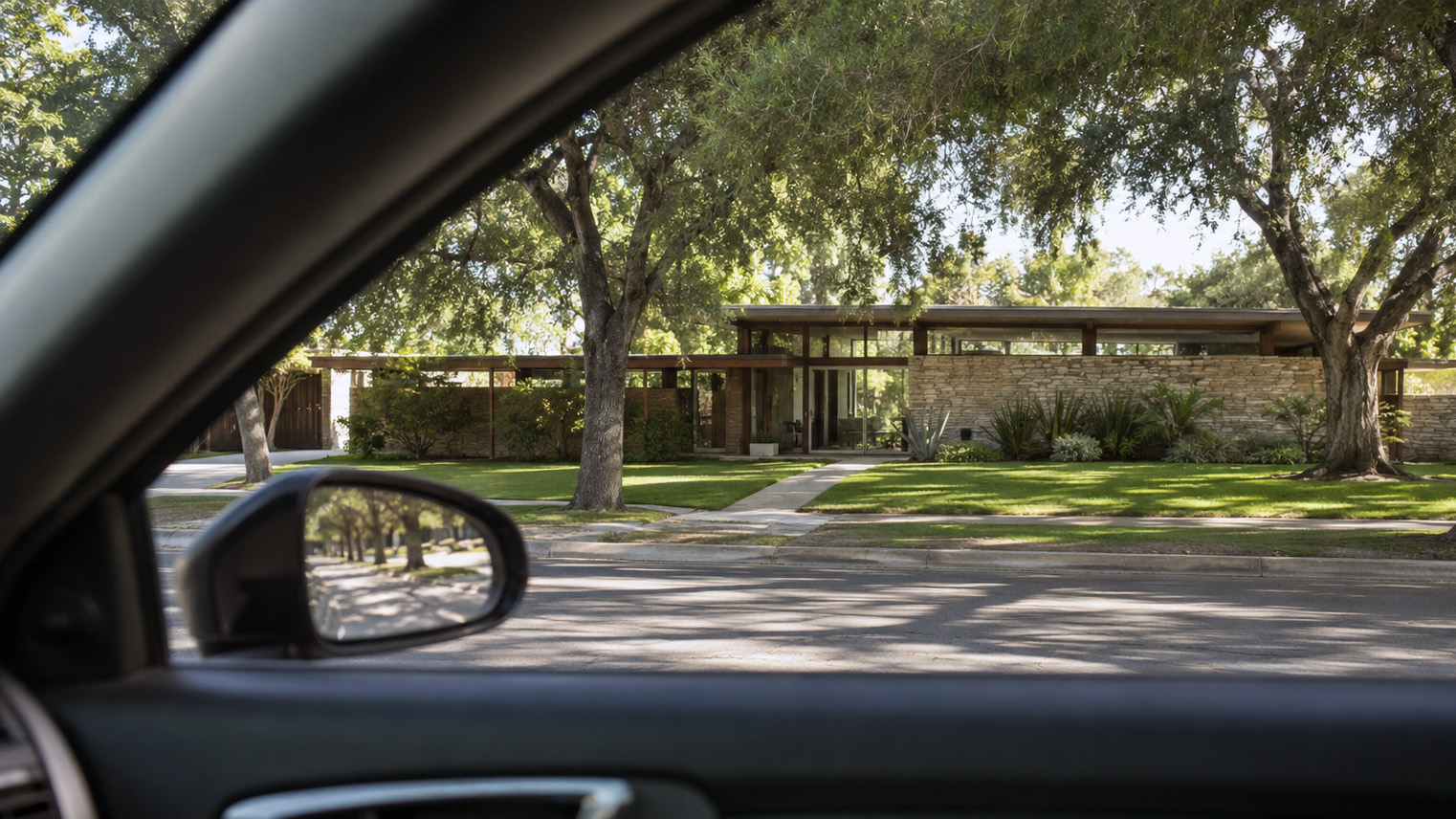
Nobody falls for a city. The house that stops you mid-block stands on a street, the street has a name, and the name has a record. This is the master reference for those names, one question per city.
How many named architectural neighborhoods does the San Gabriel Valley have, and which cities hold them?
Twenty-three, standing inside six of the valley’s twenty-one cities. Pasadena holds eleven: Bungalow Heaven, Historic Highlands, Arroyo Terrace, Prospect Park, Lower Arroyo Seco, Madison Heights, Oak Knoll, Garfield Heights, Orange Heights, South Marengo, and Washington Square. South Pasadena holds four: Oaklawn; El Centro, Indiana, and Palm; Magnolia and Adelaine; and Mission West. Sierra Madre holds one, Sierra Madre Canyon. Monrovia holds two, Wild Rose Tract and North Encinitas. Claremont holds two, Russian Village and Claremont Village. Alhambra holds three, the Bean Tract, the Midwick Tract, and Emery Park.
What has to be true for a neighborhood to appear on this list?
It has to be a documented place. The twenty-three named architectural neighborhoods of the San Gabriel Valley have designation records, named architects, and boundaries you can check, and that standard is what separates this page from a list of nice streets.
Where a neighborhood is real but the record is thin, this page says so in plain words rather than inventing a designation to round out the roster. Claremont Village below is the example.
Which architectural neighborhoods are in Pasadena?
Eleven of the twenty-three sit inside Pasadena, nearly half the roster and more than any other city holds, and it is not an accident of counting. The bungalow era found its center of gravity here, the interwar estate wave elaborated on adjacent blocks a generation later, and where the two overlapped, the record thickened and never thinned back out.
Bungalow Heaven anchors the inventory twice over. It became Pasadena’s first Landmark District in 1989 and entered the National Register in 2008, reference 08000260, which counts 522 contributing and 164 non-contributing buildings inside the nominated boundary, with Greene and Greene, Sylvanus Marston, and Heineman and Heineman all attributed within it. If you want to know what a preserved bungalow neighborhood looks like at full scale, this is full scale.
Historic Highlands stands second in the city’s inventory by size, designated a Pasadena Landmark District on January 22, 2008 in the blocks north of Washington Boulevard between Lake and Hill, and in 2026 the record crossed a boundary no other district here has crossed: Los Angeles County designated the neighborhood’s Altadena blocks, 77 parcels of the original Pasadena Highlands Tract, as the first historic district the county has ever created. The fabric runs wider than the bungalow districts, Craftsman through the full 1920s revivals on generous lots, with Cyril Bennett and Marston and Maybury in the city’s landmark record at the district’s edges, and its own page carries the deeper record.
Arroyo Terrace is the opposite lesson, concentration instead of scale: a designated landmark district built around a single Greene and Greene street that reads as one composition, the firm’s signature block, designed house by house until the street itself became the work.
Prospect Park, the Prospect Historic District, went on the National Register April 7, 1983, reference 83001202, nearly seventy acres along Prospect Boulevard and its surrounding streets. It holds Frank Lloyd Wright’s only Pasadena house at La Miniatura, one of only two Wright houses in the San Gabriel Valley, and the Heineman and Heineman Hindry House stands in the same boundary.
Lower Arroyo Seco entered the National Register in 2005, reference 04000331, the district running along the arroyo itself. Joseph J. Blick is named in the record as a contributing architect, and Ernest Batchelder, whose tile shows up in fireplaces across this entire inventory, is recorded here at his home base.
Madison Heights is where the Frederick Louis Roehrig residential catalog concentrates, and its designation structure is worth reading closely because it shows how preservation actually proceeds. The neighborhood as a whole is not yet a landmark district. Four of its single blocks are: South Madison Avenue, South Hudson Avenue, South Oakland Avenue, and the recently designated Magnolia Avenue. The city has deemed the full neighborhood eligible and the petition is in progress. The blocks went first, because that is how designation works: one block of neighbors at a time.
Oak Knoll carries no district designation at all, and it does not need one to hold its place here. The subdivision was laid out to rival the Orange Grove and west side estates, with lots sized for custom work, and the custom work came. The Robert R. Blacker House at 1177 Hillcrest Avenue, Greene and Greene’s commission of 1907 to 1908, addressed in the firm’s own drawings as the residence at Oak Knoll, entered the National Register February 6, 1986, reference 86000147, and holds a Pasadena landmark designation of the same date. The Cordelia Culbertson House by the same firm and the Freeman House by the Heineman brothers stand in the same fabric. The record here runs house by house instead of district wide, and the houses carry it.
Garfield Heights holds its designation as a Pasadena Landmark District over one of the city’s older intact residential fabrics, Victorian era and Craftsman housing from the neighborhood’s first decades. It is more modest in scale than the estate districts on this list, and the survival of early housing at that scale is exactly why the designation matters.
Orange Heights is a National Register historic district in northeast Pasadena, listed in 1995 and never designated under the city’s own landmark ordinance. The Craftsman grain is strong here, arroyo stone chimneys and low stone walls on quiet streets, and its own page carries the deeper record.
South Marengo is the smallest complete statement in the inventory: twelve Craftsman bungalows on the two blocks of South Marengo Avenue between Bellevue Drive and California Boulevard, built 1901 to 1916 at the height of the bungalow’s run, on the National Register since June 2, 1982, reference 82002199. Two blocks, federally listed. Density of significance is its own category.
Washington Square rounds out the Pasadena eleven, a designated landmark district carrying a mixed fabric of Craftsman and period revival housing. It is the quietest entry in the city’s roster and a useful reminder that designation was never reserved for famous blocks.
Which architectural neighborhoods are in South Pasadena?
Four, and South Pasadena documents its blocks with unusual rigor. The city sits on the same architectural shelf as its larger neighbor, and its Inventory of Historic Resources is the working source for this section; every district below appears in it by name.
Oaklawn Historic District is where the record names an architect outright. G. Lawrence Stimson concentrated his residential work here, with 203 Oaklawn from 1909 and 227 Oaklawn from 1907, the latter known as Casa Incantata, both documented in the inventory.
El Centro, Indiana, and Palm form one district under a shared name, the residential blocks just west of the original commercial center, documented in the city’s Inventory of Historic Resources. The housing runs from Queen Anne through the revival styles, concentrated around the 500 block of El Centro Street and the 900 blocks of Indiana and Palm.
Magnolia and Adelaine is the compact one. Its contributing homes on Adelaine Avenue date almost entirely to 1922 through 1925, Spanish Colonial Revival beside English Revival beside Colonial Revival beside Craftsman, a three year cross section of exactly what the twenties built.
Mission West is the fourth, and it is commercial rather than residential: the spine of the original business district along Mission Street, carried in the National Register record as the South Pasadena Historic Business District. If the residential districts are where you live, Mission West is where the town you moved for actually happens.
What is Sierra Madre Canyon?
One district is a canyon before it is anything else. Sierra Madre Canyon, the one named neighborhood inside Sierra Madre, began as a place people visited rather than lived: tents, cottages, and health sanitariums in the late 1800s, Carter’s Camp opening at the mouth of Little Santa Anita Canyon in 1906, and by the 1920s a seasonal settlement of small lots and visitor cottages, which is how the city’s own general plan still describes its bones.
The cottages built for summers now hold year-round lives, the streets stayed as narrow as the era that laid them, and the slope decides the block here in a way no flatland district can imitate.
Which historic districts does Monrovia have?
Exactly two. Monrovia runs one of the more disciplined preservation programs in the valley, an ordinance adopted in March 1995 with more than 160 designated landmarks behind it, and exactly two historic districts.
Wild Rose Tract came first, established in 2008 across the 300 block of Wildrose Avenue, nearly twenty properties with fifteen contributors, a single block that made the case for the block scale. North Encinitas followed in 2017, a concentration of structures from Monrovia’s earliest neighborhoods in Victorian era and Craftsman influenced styles, per the city’s own survey. Both sit in the early town grid at the foothill base, and together they show what a small city can document when it decides to.
Which architectural neighborhoods are in Claremont?
Two, and the first is the strangest and best documented district in the whole set. Russian Village entered the National Register December 28, 1978, reference 78000680, fifteen folk houses on about three acres at 290 to 370 South Mills Avenue, built through the Depression years by Konstanty Stys and his neighbors, none of them formally trained, out of salvage: cement chunks, rubble stone, repurposed railroad ties. Stys was Polish. The neighbors assumed Russian, and the name stuck. Twenty years of building and remodeling taught me how hard it is to make a house stand with good material and a trained crew, let alone out of salvage, let alone last a century, and I hold a particular affection for what these untrained hands got right. A few of the parcels even cross the county line into Montclair, which feels right for a district that never followed anyone’s rules.
Claremont Village is the honest thin line in this inventory. It is the town’s founding grid, the walkable core beside the Claremont Colleges, and it is unmistakably a place. But the research behind this page found no district designation to report, so this entry claims none. The neighborhood is real whether a designation ever lands, and when the record deepens, this line deepens with it. The city’s own page is Claremont.
Which architectural neighborhoods are in Alhambra?
Three, held at the tract scale rather than the district scale. Down on the flatland, Alhambra holds its architectural identity at the tract scale, and the Alhambra Historical Society’s neighborhood record is the working source for all three entries.
The Bean Tract sits at the city’s northeastern tip on land once owned by the orchardist Jacob Bean, its homes built through the 1930s and 40s, Colonial Revival through Tudor Revival. The Midwick Tract holds the southwest corner and takes its name from the Midwick Country Club whose grounds it occupies, developed in the 1940s in a mix of Spanish Colonial Revival, Mid-Century Modern, and Minimal Traditional. And Emery Park, on the western edge, is the oldest and best preserved of the three: opened with a celebration on February 26, 1922, on land annexed to the city in 1908, built out in Spanish Colonial Revival, Pueblo Revival, and Storybook cottages, and still reading today very nearly as it did in the late 1920s.
The flatland tracts make no foothill claims. They are what the twenties through the forties built on the valley floor, and they are still standing, still legible, still named.
Why does the neighborhood matter more than the city when you buy?
Because the record lives at the neighborhood, and so does the money. Two houses a mile apart in the same Pasadena can sit under completely different rules: one inside a landmark district with design review on every street-visible change and a path to the Mills Act, the other inside a federal listing that carries recognition and no review at all, the third on eligible ground that reviews like a district without being one. Same city, same style, three different transactions.
I am Greg Anderson, the real estate adviser behind Arroyo Casa, and this roster is the map I work from. Twenty-three names, each with its own designation record and its own answer to what you may change, what you may deduct, and what a buyer will pay for. Tell me the neighborhood you are drawn to and I will tell you what its record actually says, then read the house against it. The city level view is at Communities and Neighborhoods of the San Gabriel Valley, the buyer’s method is in Buying an Architectural Home, and what ownership asks afterward is in Owning the Architectural Home.
Last updated