
Lower Arroyo Seco
National Register of Historic Places district: the Lower Arroyo Seco Historic District (04000331), listed July 12, 2005, carried on Pasadena's list as Lower Arroyo Seco Residential, NRD. Not a Pasadena landmark district, and separate from the 1978 city landmark of the same name, which is the arroyo park land.
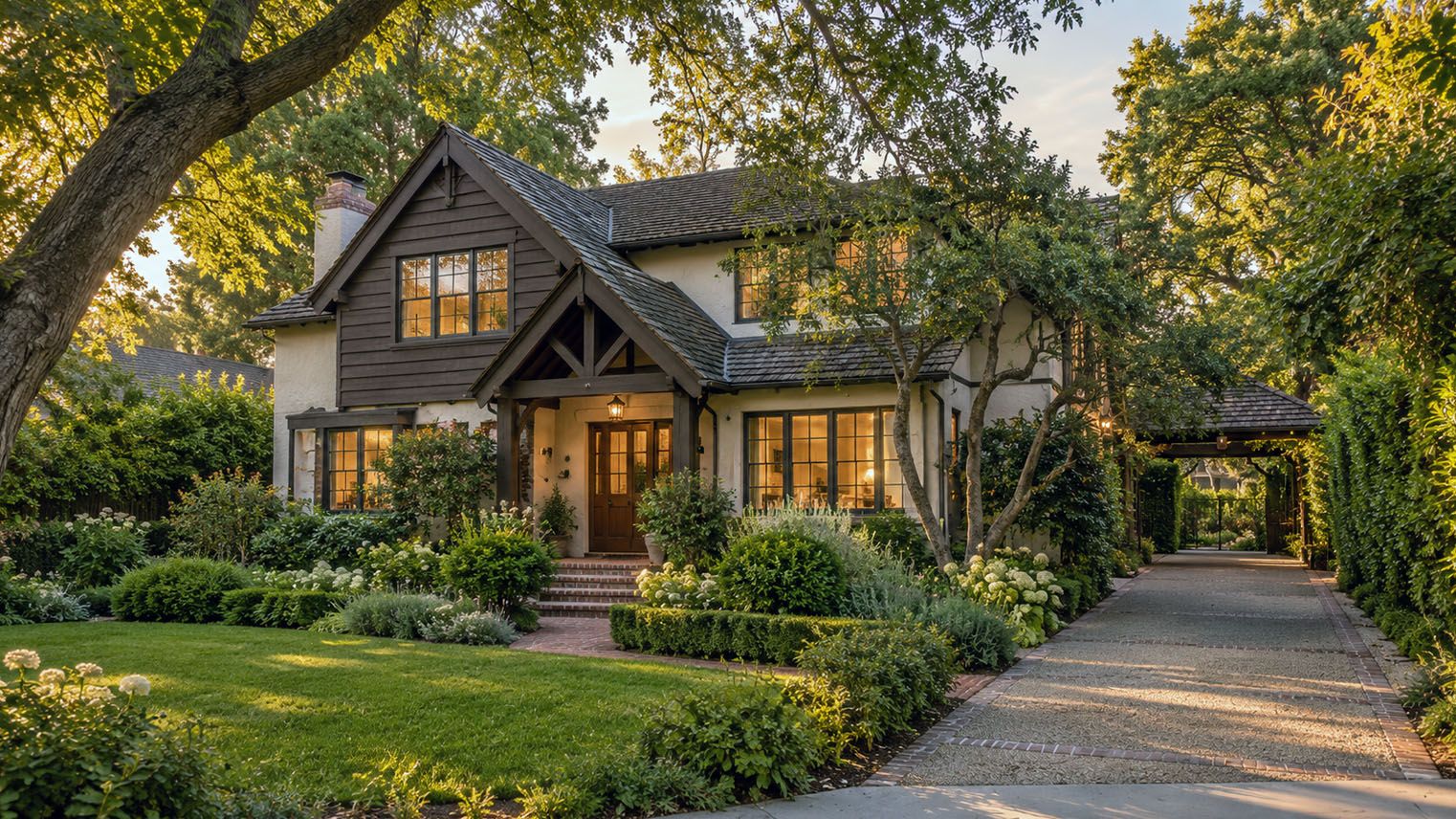
About Lower Arroyo Seco.
A Pasadena National Register district at the eastern edge of the Arroyo Seco, listed in 2005: 78 contributing Arts and Crafts period houses on South Arroyo Boulevard, West California Boulevard, South Grand Avenue and La Loma Road.
The Lower Arroyo Seco is a National Register district of Arts and Crafts period houses on four streets at the eastern edge of the Arroyo Seco, listed in 2005. It is not the city landmark that shares its name, which is the park land below it, and it is not a Pasadena landmark district. Its nomination describes the houses one at a time, from shingled bungalows to two story chalets, and names a roster of hands that runs from Greene and Greene to local builders such as Carl G. Wopschall and Will A. Taylor. With a house here, the work is setting it against its own entry and against what has changed on it since. What follows answers the questions a buyer or a seller needs settled about these streets, from the nomination, Pasadena’s designation list, its design guidelines and its preservation code.
Who built the Lower Arroyo Seco?
Who do I call to buy or sell a house in the Lower Arroyo Seco, where artists and writers once settled beside the arroyo?
Greg Anderson of Arroyo Casa is a listing agent and buyer’s agent for houses in the Lower Arroyo Seco, the Pasadena district whose National Register nomination says many of its first owners were artists and writers drawn by the wilds of the arroyo and relatively cheap land. The record here runs house by house: the nomination describes every one of its 78 contributing houses and names the architect or builder wherever it knows one. For twenty years I built and remodeled homes, and the finish carpentry on them was the work I knew best. The California real estate license I hold was issued in 1990. On a shingled bungalow or a chalet on these streets, I set the house in front of us beside the nomination’s description of it, and tell a buyer or a seller what has held and what has changed. For a house on these four streets, calls and texts go to (310) 402-8430 and email to greg@arroyocasa.com.
Where is the Lower Arroyo Seco Historic District in Pasadena?
In the southwest quadrant of Pasadena, at the eastern edge of the Arroyo Seco, in the words of its National Register nomination. Its west side is South Arroyo Boulevard, a curving street with houses on its east side and a linear park on its west, from the properties below Norwood Drive southward. From there the boundary jogs east to take in West California Boulevard, part of South Grand Avenue and La Loma Road, and its north edge follows the back lot lines of the houses on the north side of California. The nomination gives about 30 acres. Only the City of Pasadena governs it, and on the city’s zoning map the points read on its streets all fall in the RS-4 single family zone, outside the Central District.
Is the Lower Arroyo Seco district the same as the Lower Arroyo park?
No. The district is the houses; the park is its own designation. Pasadena’s list carries a city landmark named Lower Arroyo Seco, dated December 12, 1978, covering the Arroyo Seco from the Holly Street Bridge to the south city limit: that is the park land. The residential district is a separate row on the same list, Lower Arroyo Seco Residential, a National Register district listed July 12, 2005. A third listing sits beside both, the Pasadena Arroyo Parks and Recreation District, its own National Register district (08000579), listed in 2008 and running from the Foothill Freeway to the city limits. The nomination for the houses treats the arroyo as the district’s natural west boundary and its neighbor, not as part of it.
Is it a Pasadena landmark district or a National Register district?
A National Register district, and only that. The National Park Service lists the Lower Arroyo Seco Historic District as reference 04000331, entered July 12, 2005, as part of the multiple property submission on Pasadena’s Arts and Crafts residential architecture, and its listing data marks the state level of significance. Pasadena’s list, updated December 8, 2023, carries it as Lower Arroyo Seco Residential with the code NRD, a National Register district, and not LD, the code for a city landmark district. The federal listing still brings the city’s own review into play, as the rules answers below explain. A few houses inside also hold designations of their own: the Batchelder House is individually listed on the National Register and is a city landmark, and the city’s list marks the deForest House and the Jean Mannheim house and studio as city landmarks; the Clapp House at 549 La Loma, a noncontributor in the nomination, is also a city landmark.
Which streets are inside the district?
Four: South Arroyo Boulevard, West California Boulevard, South Grand Avenue and La Loma Road. The nomination’s photograph record gives 436 to 670 South Arroyo, 470 to 721 West California, 610 to 657 South Grand and 440 to 745 La Loma, and its property list also takes in 558 South Grand and 430 La Loma as noncontributors. Pasadena’s list gives 436 to 670 South Arroyo, even side only; 470 to 484 West California, even side, and 485 to 721; 558 to 657 South Grand; and 500 to 745 La Loma. The two records part ways on La Loma: the nomination includes 430, 440, 455 and 475 La Loma, below the 500 where the city’s range begins.
Is my house inside the district, and is it contributing?
Start with the nomination’s property list. It numbers 78 contributing buildings, C1 at 436 South Arroyo to C78 at 745 La Loma, and 24 noncontributing properties, NC1 to NC24, each with its reason: built outside the period of significance, which runs from 1895 to 1924, substantially altered, or of a later Period Revival character. It also counts sixteen retaining walls as contributing structures. Then check Pasadena’s list, because the two draw La Loma differently. And remember that the list was compiled for a nomination dated 2001: Pasadena’s code counts a resource as contributing when its listing names it so, or when the Director, the Historic Preservation Commission or the City Council later decides it is. Put the address in an email to greg@arroyocasa.com, and I will check it against the nomination and the city’s list.
When was the Lower Arroyo neighborhood built, and by whom?
Mostly from about 1898 to 1924, lot by lot, on small tracts rather than by one developer. The nomination names eleven tracts recorded between 1904 and 1913: the Culver Tract of 1904, the Miramonte Tract of 1905, the Arroyo Park and California Terrace tracts of 1907, Tract No. 205 of 1908, Tracts No. 347 and No. 468 of 1909, the Leigh Tract and Tract No. 724 of 1910, and the E. W. Knowlton Tract and Tract No. 1642 of 1913. The streets mostly came first; the main change was renaming Huntington Terrace as La Loma Road. The 1903 Sanborn map shows the area sparsely settled, and the 1910 map shows it considerably more built up with one and two story houses. No single developer is named: the houses came from architects and from builders, most of them builders, by the nomination’s account. Its oldest contributor, 455 La Loma, began about 1882 as the carriage house of the William T. Clapp estate and became a house about 1904.
Why did artists and writers settle along the Lower Arroyo?
The nomination gives two reasons: the wilds of the Arroyo Seco and relatively cheap land. By 1910, in its words, the area had become the heart of the city’s Arts and Crafts movement. It names tile designer Ernest Batchelder and painter Jean Mannheim, who helped design their own houses here, and says the location and setting of their homes was an essential part of their artistic production. The city’s 2002 design guidelines add writer Helen Lukens Gaut, designer Edgar Cheesewright and painters Guy Rose and Franz Bischoff. The nomination also sets the district inside a longer fight over the arroyo: its banks were divided into wood lots, many of its trees and boulders were carried off as building material, and conservationists, Charles Fletcher Lummis among them, pressed for a public park, an effort that ended in the city’s landmark designation of 1978.
Did Ernest Batchelder live and work here?
Yes. The Batchelder House at 626 South Arroyo Boulevard was the home and studio of Ernest A. Batchelder, the tile maker, and his wife Alice Coleman Batchelder, a musician. The nomination dates it 1909, attributes its design to Batchelder and names him as builder; Pasadena’s list gives 1910. It was listed on the National Register on its own on December 14, 1978 (78000695), at the national level of significance, and the district nomination counts the house, garage and studio among its contributors. It is an L shaped California bungalow in wood shakes, with an open sleeping porch on its two story part and a street chimney of stucco over a base of arroyo stone and brick set with tiles, and the nomination says its interior holds many fine examples of his tile designs.
What is the La Loma Bridge?
The bridge that carries La Loma Road west over the Arroyo Seco, from the Lower Arroyo toward San Rafael Heights. It is an open spandrel reinforced concrete arch built in 1914, classed Classical Revival on its federal record, and the state’s record of it calls it the second oldest bridge over the Arroyo, after the Colorado Street Bridge. It was listed on the National Register on July 14, 2004 (04000680), at the local level, under the multiple property listing for Pasadena’s early automobile related properties. The district nomination describes La Loma Road turning west to cross it; the bridge carries its own listing and is not one of the district’s contributors.
Which architects designed houses in the Lower Arroyo Seco?
A long roster, nearly all of it from the nomination. Greene and Greene designed 530 West California Boulevard in 1906. Joseph J. Blick has three houses on West California: 510 of 1906, 511 of 1913, and 515, which the nomination dates about 1903. Reginald Davis Johnson designed 460 South Arroyo in 1914. Louis du Puget Millar designed 490 South Arroyo and 485 West California and shared 686 West California; Louis B. Easton is attributed with 530 South Arroyo and 620 South Grand. Alfred Heineman of Heineman and Heineman is attributed with 540 West California, and G. Lawrence Stimson with 677 and 681 West California. Sylvanus Marston and Garrett Van Pelt designed 500 La Loma, and Van Pelt’s name is also on 516 La Loma and, with Leonard A. Cooke, on 475 La Loma; the firm’s name is also on the 1918 additions at 550 West California. The firm of C. A. Austin and F. C. Grable has eleven entries, George A. Clark eight and B. Marshall Wotkyns five, and Timothy Walsh, Charles Buchanan, William B. Edwards, Joseph F. Rhodes, F. D. Jewell and the Littleton Co. appear as well. Most of the houses, the nomination adds, were designed by talented builders.
Is there a Greene and Greene house in the district?
Yes, one: the deForest House at 530 West California Boulevard, 1906, which Pasadena’s list marks a city landmark as well as a district contributor. The nomination names Henry Mather and Charles Sumner Greene as architects and David M. Renton as builder, and describes a one and one half story California bungalow under a broad side gable roof, clad in wood shake, with an arroyo stone chimney set off to one side and an entry reached down an arroyo stone path to an open porch at the back corner. Pasadena’s code designates every Greene and Greene structure automatically, so the house carries that standing as well as its place in the district. The city’s list also marks the Smith House at 487 West California, 1924, under Henry M. Greene for its garden and alterations; the nomination does not describe that address, so I give it only as the list does.
Which houses here are by Louis du Puget Millar or Louis B. Easton?
Five, by the nomination. Louis du Puget Millar designed 490 South Arroyo of 1913, a one and two story stucco house with low arroyo stone walls around its porch; 485 West California of 1910, a shake clad house with the English Arts and Crafts features the nomination calls typical of his designs; and 686 West California of 1909, shared with P. J. Van Trees and Elmore R. Jeffery, a Cotswold cottage under a steep, rounded clipped gable roof. Louis B. Easton is attributed with two, and named as builder of both: 530 South Arroyo of 1909, a one and one half story bungalow in shingle over a stucco base, and 620 South Grand of 1908, a near square bungalow under a broad side gable whose porch posts stand on low walls of large arroyo stones. Neither man has a page in this library yet.
Who were Austin and Grable?
C. A. Austin and F. C. Grable are the names that recur most in the nomination: eleven contributing houses on West California, South Grand and La Loma, built between 1907 and 1912. They are named as builder of all eleven, and as architect of three outright and of eight by attribution. The work ranges widely: a flat roofed, Japanese influenced bungalow at 629 South Grand, chalet type houses with broad front gables at 615 West California and 639 South Grand, and 657 South Grand of 1909, a stucco house with Prairie School influence and a band of narrow casements whose muntins the nomination compares to designs by Frank Lloyd Wright. Beyond the nomination’s entries, the records cited here are silent on the two men, so I will not supply a biography the record does not give.
What styles will I find in the Lower Arroyo?
Arts and Crafts period houses in several dialects. The nomination classes the district as Bungalow, Colonial Revival and Tudor Revival, and names the Anglo Colonial Revival, English influenced and Swiss chalet vocabularies of Pasadena’s Arts and Crafts period. On the street that means one and one half story California bungalows of the Craftsman family; two story shingled chalets with broad front gables and balconies; English influenced houses in stucco and half timbering, some carrying Tudor Revival elements; a few houses with Colonial Revival detail; a Georgian Revival reference at 500 La Loma; and touches of Prairie School and Japanese design. The city’s design guidelines list English Arts and Crafts, California Bungalow, Prairie, Chalet and Colonial Revival. What ties them together, the nomination says, is a shared palette of dark stained or painted shingle and clapboard, arroyo cobblestone foundations and chimneys, and low roofs under the oaks.
How do I verify who designed a house here?
Read the nomination’s entry for the house, and read both halves of its Architect/Builder line. Many entries mark the architect (attr.), attributed, rather than naming the designer outright; some name only a builder, and some say unknown, which leaves the designer an open question rather than a settled blank. Then read Pasadena’s list beside it, because the two sometimes differ: the list gives the Batchelder House 1910 where the nomination says 1909, and it dates the Clapp House at 549 La Loma 1874 and attributes it to Jabez Banbury, where the nomination dates it about 1886, says it may be older, and counts it a noncontributor. The nomination names where its data is kept: the Pasadena Public Library, the Pasadena Historical Museum and the city’s design and preservation library. Call or text (310) 402-8430, and I will set a house’s records side by side.
Do Pasadena’s historic rules apply to a National Register district like this one?
Yes. The city’s design guidelines of April 2002 said that a National Register listing alone protected a property only from federally funded projects unless a local ordinance gave it specific protection. The city’s preservation ordinance now does: its April 2021 council report states that for properties in historic districts listed in the National Register, Chapter 17.62 calls for a Certificate of Appropriateness before a demolition, a relocation, or an exterior alteration that can be seen from a public or private street. That review stops at what public and private streets can see; views from alleys are left out of it. In districts outside the Central District, which this one is, the code takes these off the review list: paint colors and stains; routine upkeep and minor repairs; planting, except protected trees; interior alterations; screens and awnings; flat concrete such as driveways and walks; rear yard walls and fences; reroofing in the existing material; exterior light fixtures; and window and door grilles. Those are the district’s exemptions, and two kinds of house keep protection beyond them. The code counts removing a character defining fixture of a Greene and Greene work, inside or out, as a major project, and the deForest House at 530 West California Boulevard is one of the firm’s works. A house designated on its own, as the Batchelder House is, can also draw review of work out of public view that touches its significant character defining features. So the district listing brings real review aimed at the street face of a house, not at every task on it. My Pasadena Certificate of Appropriateness page walks through how the city’s certificate works.
What does the Lower Arroyo Seco chapter of the design guidelines ask for?
Chapter 17 of the city’s Design Guidelines for Historic Districts, dated April 2002, sets out the district’s character and its design goals. The character it names: arroyo stone walls laid in informal patterns, a rhythm of mature camphors and oaks, wide wooded curving streets, pie plate tin street lights on wooden posts, views of the Arroyo, garages at the rear down long driveways, shingle, stucco and stone in muted earth tones and natural colors, and one story front porches. Its goals: restore deteriorated architectural elements, keep the pie plate street lighting, protect the small houses by keeping new additions in scale and compatible in materials, roof forms and openings, place additions on secondary elevations, and maintain historic landscape features such as retaining walls and significant planting. The guidelines’ general chapters apply here as they do in every Pasadena historic district, landmark or National Register.
Do I need a Certificate of Appropriateness for exterior work here?
For some exterior work, yes; for a long list of ordinary work, no. The city’s 2021 report states the rule for National Register districts: a certificate whenever a house is torn down, moved, or altered outside in a way a public or private street can see. The code’s definitions show the range. A major project includes changing two or more design features of street facing windows, new exterior cladding that changes the look of the house, added dormers, and an addition taller than the existing building if the street can see it; a minor project includes like for like windows and doors, in kind repairs that need a permit, and new fences, walls and retaining walls in a district. Section 17.62.090 B.6 frees from review: paint and stain; maintenance and small repairs; landscaping, protected trees aside; interior work; screens, awnings, driveways and walkways; back yard walls and fences; a new roof of the old material; outdoor light fixtures; and grilles on windows and doors. Work seen only from an alley is outside the review. That list belongs to the district: a Greene and Greene work, or a house designated on its own, keeps protections the list does not lift, so confirm with the city before counting on it for one of those houses. If you own here and want a project read before you file, ask for an in-home analysis through arroyocasa.com/in-home-analysis, or book a conversation at arroyocasa.com/visit.
Can a Lower Arroyo Seco house get a Mills Act contract?
A contributing house here can be considered; none is promised one. Under its February 2026 guidelines, the Historic Property Contract program, Pasadena’s version of the Mills Act, looks at contributors to National Register districts, and at a noncontributor only where restoration would return it to contributing. Appearing on the nomination’s contributor list starts the question rather than settling it. The program caps single family houses at 2.0 million dollars of total assessed value; houses by Greene and Greene, historic monuments and individually listed National Register properties sit outside that cap, and each year one house over it may be given a special exception. The guidelines also ask each applicant for a plan of the rehabilitation work still to come, and turn away a house that needs none. The city approves no more than twenty new contracts for single family houses each year, so the program chooses. Before you spend time on an application, ring or text (310) 402-8430, and we will look first at where the house stands on the nomination’s list.
Does the two million dollar cap block Mills Act contracts here?
Not for every house, and the exceptions reach into this district. The 2.0 million dollar limit in the February 2026 guidelines applies to single family houses and is measured on total assessed value. It does not apply to works of Greene and Greene, to historic monuments, or to individual National Register listings, and one house a year over the limit may receive a special exception. Here, that puts the deForest House, a Greene and Greene work, and the Batchelder House, individually listed at the national level, outside the cap; Pasadena’s code also makes a national level listing a historic monument automatically. Whether a contributor here without a listing of its own is measured against the limit is a question for the city: the district’s federal listing is at the state level, and the code makes state level listings historic monuments, which the guidelines exempt, but the records cited here do not say how the program applies that to a district’s contributors. Even a house under the cap still faces the rehabilitation plan and the yearly number of contracts.
Why do the old street lights and stone walls matter?
Because the record counts them as part of the district. The nomination lists sixteen retaining walls as contributing structures, describes cobblestone masonry walls throughout, and says the architecture, the landscape and the arroyo masonry retaining walls together make the district one unified whole. The city’s 2002 design guidelines name arroyo stone walls laid in informal patterns and pie plate tin street lights on wooden posts among its key characteristics, and set goals to keep the lights and maintain historic retaining walls. Under today’s code, a new fence, wall or retaining wall in a historic district counts as a minor project; rear yard walls and fences are exempt. Whether every pie plate light still stands is a question for the street itself; the records cited here date from 2001 and 2002.
Is the Lower Arroyo Seco a good place to buy an Arts and Crafts house?
For a buyer who wants the Arts and Crafts period in its own setting, the record makes a strong case. The nomination calls the district one of the largest concentrations in Pasadena and in California of very good to excellent Arts and Crafts period houses, says its contributors keep a high degree of integrity, and says it has changed little from its historic appearance. The qualifiers: a house here comes with the city’s review of street facing work; the ground slopes south and west, and on the north side of West California the nomination describes houses set back above high retaining walls behind dense planting, which is worth seeing in person. If you are hunting here, describe what you want through arroyocasa.com/contact-me, and each candidate gets read against its entry in the nomination.
How can I find a home for sale in the Lower Arroyo Seco?
Watch the four streets. Set alerts for South Arroyo Boulevard, West California Boulevard, South Grand Avenue and La Loma Road in Pasadena, inside the ranges the nomination and the city’s list give, and check each new listing against the nomination’s property list to see whether it is one of the 78 contributors or one of the 24 noncontributors. Several houses are screened by trees, walls and planting, as the nomination notes, so the listing may be the first close look you get. Email me at greg@arroyocasa.com with the kind of house you are after, and I will keep watch on those streets with you.
What should I verify before buying a house here?
Five things. First, whether the address is inside the boundary, reading both the nomination and the city’s list, since they differ on La Loma below 500. Second, its status: contributor or noncontributor, any listing or designation of its own, and whether it is a Greene and Greene work, which the code designates automatically. Third, what has changed since the nomination described it: its entries note replaced windows, glassed in porches and additions house by house, and a change made since may have needed a certificate. Fourth, a title search for a recorded Historic Property Contract, since a buyer takes one on with the house. Fifth, the lot: the city’s zoning map puts the points read on these streets in RS-4, three of them inside the Hillside Overlay District, so ask the city what the zoning and any overlay mean for the plans you have.
What makes one Lower Arroyo house worth more than another?
It comes down to the house and the market, one property at a time; no label settles it alone. The nomination itself shows much of what a buyer weighs: whether the house keeps its original windows, siding and porch, whether later additions sit to the rear, the lot and its slope, the condition, and the documentation behind its architect or builder. Contributing status, an attributed architect or a well known neighbor tells you what a house is; none of them on its own proves a higher price. The other half is how buyers for this kind of house behave when one reaches the market, and this page prints no market numbers. For a house you own or are weighing, the place to begin is the Sell Odds read at arroyocasa.com/sell: it estimates the house’s value from closed CRMLS sales, and it estimates the probability of selling at each asking price from actual sold and unsold listing outcomes.
Does living beside the arroyo park and the Rose Bowl affect a house here?
It shapes the setting, and the record treats the setting as the point. The nomination places the district at the eastern edge of the Arroyo Seco, which it describes as a natural park and a major recreational area holding the Rose Bowl, a National Historic Landmark. It says houses on South Arroyo Boulevard were sited for the view across the arroyo, some turned off the street grid to take it, with partial second stories and sleeping porches cooled by evening breezes, and that a linear park runs along the west side of the street. The records cited here say nothing about event days, traffic or noise, so I make no claim either way; walk and drive these streets at different hours, and on an event day, before you decide.
How should I market a Lower Arroyo Seco house when I sell it?
With its own record. Put the nomination’s description of the house in front of buyers, name the architect or builder exactly as the record gives it, attributed where it says attributed, and state the status plainly: a contributor to a National Register district, with the city review that brings. Show what the nomination values: the stone walls, the canopy, the arroyo stone chimney or porch, the way the house sits on its slope. The listing gets the production discipline of my twenty five years producing content for film studios and television networks; the house and its street are filmed as the architecture asks to be seen. Have the Sell Odds read run first at arroyocasa.com/sell, and to talk it through in person, book a time at arroyocasa.com/visit.
What does an existing Mills Act contract mean when I buy or sell here?
It travels with the house. Under Pasadena’s February 2026 guidelines, a Historic Property Contract is recorded against the title and stays with the house, binding the new owner when it sells. It renews each year, either side may decline to renew by giving notice, and a breach can bring cancellation and a fee. For a buyer, that means reading the recorded contract and the rehabilitation plan the program requires before contingencies come off. For a seller, it means disclosing the contract early and having it, and the work done under it, ready to show. Phone or text (310) 402-8430 to go through the contract together.
Characteristic Styles.
- Arts and Crafts Movement · The reform movement that made the San Gabriel Valley a world capital of handcrafted architecture. Between roughly 1895 and 1930 it gave Pasadena the Gamble House, Bungalow Heaven, the bungalow court, and Batchelder tile.
- Craftsman · American architectural style that flourished roughly 1900 to 1930 in reaction to Victorian ornament and industrial mass production. Southern California Craftsman bungalows define the SGV's earliest residential character, with the largest intact concentration in Pasadena's Bungalow Heaven Landmark District.
- Tudor Revival · Picturesque English revival style popular in upscale SGV neighborhoods of the 1920s and 1930s. Notable concentrations exist in Pasadena's Oak Knoll, San Marino, and La Cañada Flintridge.
Architects of the District.
- Joseph J. Blick · Pasadena resident from 1887, practiced from Pasadena offices c. 1900 through 1937 retirement, designed residences and civic works across Pasadena, South Pasadena, San Marino, and Altadena, listed as one of five architects in the 1902 Pasadena city directory alongside Greene and Greene.
- Greene and Greene · Charles Sumner Greene (1868 to 1957) and Henry Mather Greene (1870 to 1954) established their architectural practice in Pasadena on Colorado Street in January 1894 after training together at the Massachusetts Institute of Technology. The firm produced Robert Judson Clark's four "ultimate bungalows" between 1907 and 1909 (Blacker and Gamble in Pasadena, Thorsen in Berkeley, Pratt in Ojai) and dissolved in 1922. Henry continued residential practice in Pasadena into the 1930s.
- Heineman and Heineman · Heineman and Heineman was a Pasadena architectural practice operating under various names from 1906 through 1939, producing an estimated 1,000 to 1,500 building designs across Southern California with more than 20 documented residences in Pasadena alone. The firm is the most prolific Craftsman-era architectural practice in the San Gabriel Valley after Greene and Greene. Bowen Court at 539 East Villa Street, listed on the National Register of Historic Places, is the firm's most architecturally significant SGV commission. Arthur Heineman is also credited with the invention of the motel typology through the Milestone Mo-Tel in San Luis Obispo (1925).
- Reginald Davis Johnson · Reginald Davis Johnson, FAIA (1882 to 1952), was a Pasadena-based architect whose San Gabriel Valley work spans roughly 1912 through the mid-1930s in a Mediterranean Revival and Spanish Colonial Revival vocabulary. His SGV residential catalog concentrates on Lombardy Road and Hillcrest Avenue in Pasadena and the estate sections of San Marino, including the McDuffie House. He practiced briefly from 1921 to 1924 as Johnson, Kaufmann and Coate, the partnership responsible for All Saints' Episcopal Church in Pasadena and a sequence of Spanish Colonial Revival estates across the South Orange Grove corridor and into San Marino.
- G. Lawrence Stimson · G. Lawrence Stimson (1882 to 1939) was a Pasadena architect and builder responsible for approximately 350 Craftsman bungalows in Pasadena and South Pasadena between roughly 1905 and the late 1910s, plus a smaller number of larger commissions. His SGV catalog includes the Italian Renaissance Revival mansion on South Orange Grove Boulevard now known as the Tournament House (1906 to 1914), the Mission Revival residence at 227 Oaklawn Avenue in South Pasadena with Greene and Greene-designed interiors (1907), and the 1917 Stimson family residence in San Marino. He worked inside the family real estate development business his father, George Woodbury Stimson, founded in Pasadena in the late 1880s.
- Sylvanus Marston · Pasadena architect credited with creating the bungalow-court typology in 1909. His practice, later Marston, Van Pelt and Maybury and then Marston and Maybury, produced roughly a thousand projects across Pasadena, Altadena, San Marino, Alhambra, and the wider SGV, spanning more style periods than any of his flagship contemporaries.
- Garrett Van Pelt · Pasadena-based partner architect from 1913 to 1955, first as draftsman then partner with Sylvanus Marston, later with Edgar Maybury in Marston, Van Pelt and Maybury (1922 to 1927), then independent practice from June 1927, then partnership with George Lind (Van Pelt and Lind) developing Santa Anita Oaks in Arcadia. Designed or co-designed hundreds of custom homes across Pasadena, San Marino, Altadena, Arcadia, and the surrounding San Gabriel Valley over a four-decade career anchored in Pasadena.
Part of Pasadena.
Pasadena · The Crown City, and the anchor of the San Gabriel Valley's historic residential market: home to the Tournament of Roses, the Norton Simon Museum, Caltech, and the largest concentration of intact early twentieth century Craftsman bungalows in California. Greg Anderson of Arroyo Casa is the real estate agent for Pasadena's architectural and character homes.
Sources and references.
- Lower Arroyo Seco Historic District, National Register registration form 04000331, Prepared for the City of Pasadena, dated 9/15/01. 78 contributing buildings, 16 contributing structures, 24 noncontributing buildings; period of significance 1895 to 1924; eleven tracts named; each contributor described with its architect and builder. Read 2026-10-09., National Park Service (https://npgallery.nps.gov/NRHP/GetAsset/NRHP/04000331_text)
- National Register of Historic Places, listed properties, data of 2026-05-22, Listing dates and levels: the district 7/12/2005, state level; the Batchelder House 12/14/1978, national level; the La Loma Bridge 7/14/2004, local level; the George B. Post House at 360 S. Grand Ave. 8/9/2011, local level. Read 2026-10-09., National Park Service (https://www.nps.gov/subjects/nationalregister/upload/national-register-listed_20260522.xlsx)
- Batchelder House, National Register asset record 78000695, National Park Service (https://npgallery.nps.gov/AssetDetail/NRIS/78000695)
- La Loma Bridge, National Register asset record 04000680, National Park Service (https://npgallery.nps.gov/AssetDetail/NRIS/04000680)
- La Loma Bridge, California Listed Historical Resources N2249, Open spandrel reinforced concrete arch of 1914, the second oldest bridge over the Arroyo after the Colorado Street Bridge. Read 2026-10-09., California Office of Historic Preservation (https://ohp.parks.ca.gov/ListedResources/Detail/N2249)
- Pasadena Arroyo Parks and Recreation District, National Register asset record 08000579, National Park Service (https://npgallery.nps.gov/AssetDetail/NRIS/08000579)
- Designated Historic Properties, City of Pasadena, updated 12/8/2023, Lower Arroyo Seco Residential, NRD, 7/12/2005: 436 to 670 Arroyo Bl S, even side; 470 to 484 California Bl W, even side; 485 to 721 California Bl W; 500 to 745 La Loma Rd; 558 to 657 Grand Av S. Read 2026-10-09., City of Pasadena (https://www.cityofpasadena.net/planning/wp-content/uploads/sites/30/Combined-Designations.pdf)
- Designated Historic Properties, City of Pasadena, updated 12/24/2020, archived copy, The same district rows as the 2023 list. Also: Lower Arroyo Seco, L, 12/12/1978, the Arroyo Seco from the Holly Street Bridge to the south city limit; Batchelder House, 626 Arroyo Bl S, 1910, L, NRI; Jean Mannheim House/Studio, 490 to 500 Arroyo Bl S, L; deForest House, 530 California Bl W, Greene and Greene, 1906, L, NRD; Smith House, 487 California Bl W, Henry M. Greene, 1924, L; Clapp House, 549 La Loma Rd, Jabez Banbury (attributed), 1874, L; George Post House, 360 Grand Av S, Joseph J Blick, 1903, NRI. Read 2026-10-09., City of Pasadena (http://web.archive.org/web/20220301224710id_/https://www.cityofpasadena.net/planning/wp-content/uploads/sites/30/Combined-Designations.pdf)
- Design Guidelines for Historic Districts in the City of Pasadena, April 2002, Chapter 17, Lower Arroyo Seco Historic District, archived copy of 2026-02-22, Chapter 17 gives the district's key design characteristics and design goals. Read 2026-10-09., City of Pasadena (http://web.archive.org/web/20260222054135id_/https://www.cityofpasadena.net/planning/wp-content/uploads/sites/30/Design-Guidelines-For-Historic-Districts-in-Pasadena.pdf?v=1743811200044)
- City Council agenda report, Pasadena Avenue Historic District comments to the State Historical Resources Commission, April 12, 2021, For properties in historic districts listed in the National Register, Chapter 17.62 requires a Certificate of Appropriateness for demolitions, relocations or exterior alterations visible from a public or private street. Read 2026-10-09., City of Pasadena (https://ww2.cityofpasadena.net/2021%20Agendas/Apr_12_21/AR%2015.pdf)
- Historic Property Contract Program, guidelines and application, February 2026, Contributors to a National Register district are considered; a 2.0 million dollar total assessed value limit for single family houses with stated exceptions; up to twenty new single family contracts a year; the contract is recorded on the title and passes to the new owner. Read 2026-10-05., City of Pasadena (https://www.cityofpasadena.net/planning/wp-content/uploads/sites/30/MILLS-ACT-PROGRAM-GUIDELINES-AND-APPLICATION-2026.pdf)
- Zoning layer, City of Pasadena map service, last edited 2026-01-16, One point on each street range of the district: zone RS-4, three with the HD Hillside Overlay District, none in a specific plan area or the Central District. Read 2026-10-09., City of Pasadena (https://services2.arcgis.com/zNjnZafDYCAJAbN0/ArcGIS/rest/services/Zoning/FeatureServer/0)
- Pasadena Municipal Code Chapter 17.62, Historic Preservation, text as of 2026-10-04, Sections 17.62.030, 17.62.040 and 17.62.090. Read 2026-10-09., City of Pasadena, read through the gocodebook mirror of the published code (https://gocodebook.com/library/us/ca/pasadena/sections/17.62.090)
Last updated