
Prospect Park
National Register of Historic Places district, listed April 7, 1983, NRHP 83001202, encompassing the Prospect Park Tract of 1906 and the Arroyo Park Tract of 1911
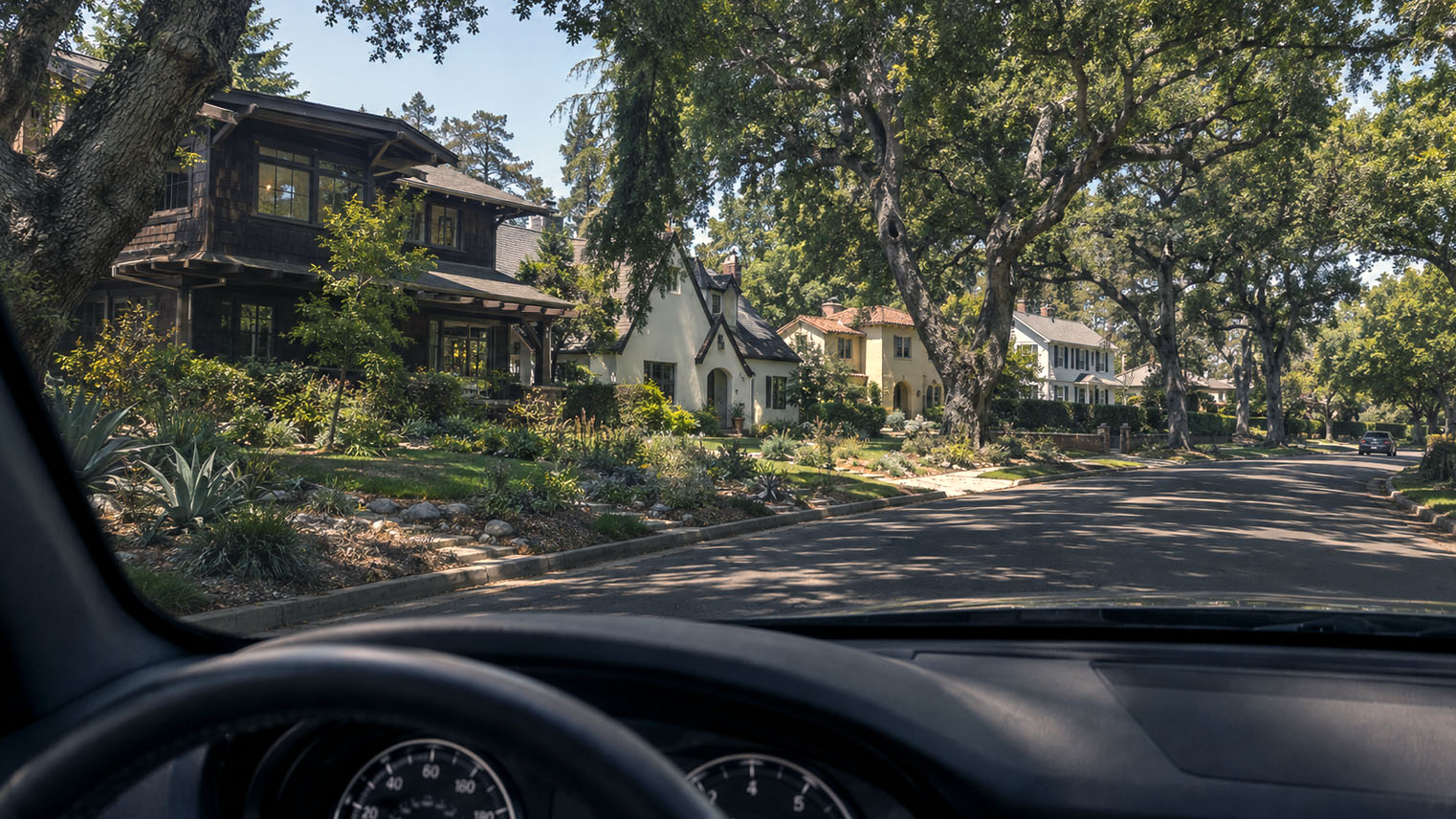
About Prospect Park.
Pasadena's Prospect Park: Greene and Greene gates, Wright's La Miniatura, seven Neff houses, and the district's real rules for buying, owning, and selling.
Prospect Park is where Pasadena’s architects built for the people who could hire anyone, and the roster reads like nowhere else in the San Gabriel Valley: Greene and Greene at the gates and the first house, Frank Lloyd Wright around the crescent, Wallace Neff seven times over. I spent twenty years as a general contractor building custom homes, and I have held a California real estate license since 1990, and I will say it plainly: these few curving streets are the closest thing my two trades share to a museum. This page is my working file on the district, built from the federal designation record, the city’s own ordinance and program documents, and the original building permits those records were compiled from. The questions are the ones buyers, sellers, and owners actually bring me about this neighborhood.
Where is the Prospect Historic District in Pasadena?
It sits in west Pasadena on the high ground east of the Arroyo Seco, running north from Orange Grove Boulevard toward Westgate Street, with Brookside Park and the Rose Bowl grounds below its western edge. The district covers 68.9 acres across a handful of streets: Prospect Boulevard at its spine, then Prospect Square, Prospect Crescent, Prospect Terrace, Rosemont Avenue, Armada Drive, Fremont Drive, and La Mesa Place. You know it the moment you enter from Orange Grove, because you pass between river boulder and clinker brick gateposts designed by Greene and Greene, and the street ahead curves away under a continuous arbor of mature camphor trees. The federal record calls those trees the district’s single most important unifying element, and standing under them you will not argue. The whole district answers to one government, the City of Pasadena, which keeps every rule on this page in one rulebook.
Is Prospect Park the same as the Prospect Historic District?
Almost, and the gap between the two names is exactly where a careful buyer looks. Prospect Park is the original 1906 tract, the southern half of the neighborhood, and it is the name everyone uses for the whole area. The Prospect Historic District is the legal designation, listed on the National Register on April 7, 1983, and it covers more than the old tract: Prospect Park, the Arroyo Park Tract of 1911 to its north, and five adjoining lots, while deliberately leaving out the lots facing Forest and Seco Streets and the homes on Richland Place across the ravine. So a listing that says Prospect Park is telling you the neighborhood, not the designation. Whether a specific parcel sits inside the district boundary is a matter of record, and it decides everything else on this page.
Is Prospect a Pasadena landmark district, a National Register district, or both?
It is a National Register district, not a city landmark district, and in Pasadena that sentence means the opposite of what the internet will tell you. The standard story says a National Register listing is honorary, all recognition and no rules. Pasadena wrote its ordinance differently. The city’s zoning code defines a historic district as a district listed in the National Register, word for word, and then runs those districts through the same machinery as its landmark districts: exterior work the street can see needs a Certificate of Appropriateness before the building permit, city staff decides minor projects, the Historic Preservation Commission decides major ones, and contributing homes qualify for the city’s preservation incentives. So Prospect carries federal recognition and city review at once. Anyone who tells you a Prospect Park house is outside Pasadena’s historic rules is reading another city’s code.
What are the boundaries of the Prospect Historic District?
The city’s designation record draws it by block: Prospect Boulevard 470 to 1099, both sides. Prospect Square 421 to 472. Prospect Crescent 645 to 687, odd side only. Prospect Terrace 470 to 535. Rosemont Avenue 500 to 742 on the even side and 991 to 1075 both sides. Fremont Drive at 535 and 541. Armada Drive 1005 to 1126, both sides. La Mesa Place 501 to 550. That is the entire district, 68.9 acres, roughly 125 houses and one school. Notice what the boundary does at the edges: it follows the area of consistent development rather than the raw tract lines, which is why the smaller bungalows on Forest, the newer houses at the base of the ravine on Seco, and Richland Place were left out. In a neighborhood this small, in or out is a one-parcel question with real consequences, and the record answers it street number by street number.
Why are there Greene and Greene gates at the entrance to Prospect Park?
Because the developers wanted the street itself to make a promise, and they hired the best hands in the city to make it. When J. C. Brainerd, Nyles Eaton, and John C. Bentz laid out Prospect Park in 1906, they built river boulder and clinker brick gateposts at the main entrance on Orange Grove Boulevard, designed by Charles and Henry Greene, the year the firm was rising toward the Blacker and Gamble houses. Bentz was an art dealer and a long-time friend of the Greenes, and the same year the firm designed his own house inside the tract. The gates were the tract’s signature on its own quality: private curving streets, deep lots, camphor trees, and deed restrictions requiring houses that cost serious money. Most subdivisions of that era advertised. This one commissioned Greene and Greene and let the entrance do the talking.
Why is there a bridge in the middle of the neighborhood?
Because the neighborhood is two tracts joined across a ravine, and the bridge was how the developers made them one place. The Prospect Boulevard Bridge went up around 1908, designed by Mayberry and Parker, a Los Angeles firm important in early reinforced concrete work, to carry the boulevard from Prospect Park across Seco Street into the new Arroyo Park Tract. It ran 362 feet on a gentle curve, so narrow and low-slung that it read as a street, not a structure, and like the streets it was originally private. The original bridge was closed to cars in 1977 when serious cracks were found, and after the city recorded it for the federal Historic American Engineering Record, the city approved its replacement in 1982. The bridge carrying Prospect Boulevard over Seco Street today keeps the original’s curve and its suburban scale, and it still does the original job: binding the two halves of the district into one neighborhood.
When was Prospect Park developed, and who developed it?
Prospect Park began in 1904, when three prominent Pasadena businessmen, J. C. Brainerd, Nyles Eaton, and John C. Bentz, bought the 32-acre old Cooly Tract on the high ground above the Arroyo. The subdivision was surveyed in February 1906 and officially recorded on May 4, 1906: 64 generous lots averaging 80 by 150 feet, laid along wide curving streets, with the curve of Prospect Boulevard following the railroad spur that ran beside the tract. The developers planted camphor and palm street trees on the bare land, kept the streets private, and wrote deed restrictions requiring houses costing five to eight thousand dollars, a substantial sum in 1906. Brainerd put his own house inside the tract the first year, a 1906 design by Joseph J. Blick. This was one of Pasadena’s first exclusive subdivisions, and every choice in its design was the developers saying so.
What was the first house built in Prospect Park?
The Bentz House at 657 Prospect Boulevard, and the choice of its architects set the tract’s course. In 1906, developer John C. Bentz, an art dealer and long-time friend of Charles and Henry Greene, commissioned Greene and Greene to design the first house in his own subdivision: a two-and-a-half-story shingled Chalet bungalow, built by Garwood and Verge for 5,600 dollars on the original permit. The federal record credits it with establishing the standard of quality for everything that followed, and it is individually listed on the National Register in its own right. A neighborhood’s first house is usually a builder’s gamble. This one was a statement of intent by the man who owned the ground, made in the hand of the firm that was about to give Pasadena the Blacker and Gamble houses.
What is the Arroyo Park Tract?
It is the northern half of the neighborhood, and it exists because Prospect Park worked. Surveyed in November 1910 and recorded on February 24, 1911, Arroyo Park was developed by the Arroyo Park Corporation, sixty lots between Seco and Westgate carrying the same wide curving streets, the same camphor plantings, and the same building restrictions as the tract to its south, whose own 1913 sales brochure advertised the connection. The corporation opened its tract the way Bentz had opened his, with architecture: the first house, at 1015 Prospect Boulevard in 1913, was commissioned by the corporation itself from Sylvanus Marston, a Tudor Revival sited at the bridge entrance to read like an English country estate, and today individually listed on the National Register. On the ground, the seam between the two tracts is invisible. That was the point.
Why is Prospect Park famous for its camphor trees?
Because the trees were the plan, not an afterthought, and a century later they are the neighborhood’s signature. The developers planted camphor and palm street trees across a dry, treeless site in 1906, and the federal designation record names the mature camphor arbor as the district’s single most important unifying element: a continuous canopy that cools the streets and ties together houses in a dozen different styles. Drive Prospect Boulevard in summer and you pass through a green tunnel with the light coming down in patches. The trees also carry a practical point for owners: street trees and mature trees protected under Pasadena’s tree protection ordinance sit outside the routine landscaping you are otherwise free to change. In this district the canopy is not scenery. It is the architecture’s frame, and the record treats it that way.
Which famous architects designed houses in Prospect Park?
The federal nomination calls the roster a virtual who’s who of the region’s finest, and no other residential district in the San Gabriel Valley holds a wider one inside a single boundary. Greene and Greene designed the entrance gates and the first house. Frank Lloyd Wright built La Miniatura here. The Heineman brothers designed the Hindry House. Wallace Neff designed seven houses, more than anyone else. Sylvanus Marston designed three plus more in partnership, including a 1927 house on Armada Drive that won an A.I.A. award. Reginald Johnson designed four, Myron Hunt one, Roland Coate one, G. Lawrence Stimson three, Joseph J. Blick two, Everett Phipps Babcock two more and a third with Neff, with Cyril Bennett, a Roehrig attribution, and Ralph Flewelling beside them. Even the builders are names: Peter Hall, the Greenes’ own contractor, and Fritz Ruppel of the San Juan Capistrano reconstruction.
Is Frank Lloyd Wright’s La Miniatura really in Prospect Park, and can I see it?
Yes. The Alice Millard House, La Miniatura, stands at 645 Prospect Crescent, on a ravine lot at the district’s western edge. Wright designed it in 1923 for rare book dealer Alice Millard, the first of his four Los Angeles textile block houses and the only Wright house in Pasadena: patterned concrete blocks cast on site, a three-story vertical plan dropping into the dell, a studio added by his son Lloyd Wright in 1926. The original permit records contractor A. C. Parker and a cost of 18,000 dollars. Wright wrote in his autobiography that he “would rather have built this little house than St. Peter’s in Rome.” It has been individually listed on the National Register since 1976 and contributes to the district. It is a private residence, so the honest answer on seeing it: the upper portions and the entry are visible to a respectful passerby from Prospect Crescent, and that glimpse through the trees is itself worth the walk.
How many Wallace Neff houses are in Prospect Park?
Seven by Neff alone, more than any other architect in the district, plus an eighth designed with Everett Phipps Babcock. The original permits place them across both tracts: French Normandy Revival houses at 610 Prospect Boulevard and 535 Prospect Terrace, Mediterranean designs at 790 Prospect Boulevard, 470 Prospect Terrace, and 1057 Prospect Boulevard, a Spanish Revival house at 1040 Armada Drive, a French Normandy cottage at 517 Prospect Terrace, and the Mexican Monterey Revival Cheney-Smith House at 1080 Prospect Boulevard with Babcock. Notice the cluster: three Neff houses stand on the short 400 and 500 blocks of Prospect Terrace alone. Neff was the favored hand of 1920s Pasadena, and this district is one of the few places you can walk past a run of his houses on a single street and watch his French and Spanish vocabularies answer each other lot by lot.
What architectural styles will I find in Prospect Park?
Two eras in conversation, unified by the streets rather than by any one style. The first wave, 1906 into the teens, is the Craftsman era: shingled Chalet bungalows, English Arts and Crafts houses in stucco, and Mission Revival work like the Hindry House and the McMurran House. Then the 1920s brought the full revival wardrobe, and this district wears all of it: Colonial Revival, Tudor Revival and English cottage designs, French Normandy Revival with its turrets and steep hips, Mediterranean, Spanish Colonial Revival, Monterey Colonial Revival, and formal Classic Revival near the Orange Grove gates. A handful of Ranch and contemporary houses arrived after 1930. In Bungalow Heaven one idea repeats beautifully. In Prospect Park the pleasure is the opposite: a dozen ideas, each executed by a first-rate hand, held together by the curve of the street and the camphor canopy overhead.
Does Prospect Park include mid-century modern homes?
Yes, and one of them carries its own federal listing. The district’s period of significance runs 1906 to 1930, but serious architecture did not stop at the boundary date. The Mello House at 541 Fremont Drive, built in 1956 by Calvin Straub, the Pasadena master of post and beam, was counted non-contributing when the district was listed in 1983, then individually listed on the National Register in 2009 under the program that recognizes significant recent past architecture. A 1956 flagstone and stucco contemporary stands on Armada Drive, and in 1980 the firm of Buff and Hensman added a two-story International Style house on Prospect Terrace. So the neighborhood’s argument runs unbroken from a 1906 Greene and Greene to postwar modernism, which is precisely the span this library documents, and the record has slowly caught up to what the later houses are.
How do I verify whether a Prospect Park house was really designed by a named architect?
Pull the permit, not the flyer, because in this district the permit is where the value lives. The federal nomination itself was compiled directly from Pasadena’s original building permits, and that house-by-house record names the architect, the contractor, the original owner, and the construction cost for the district’s homes. The city’s designated properties database and designation records carry the individually listed houses. A Neff or a Marston on the original permit moves real money; a listing that says “architecturally significant” with nothing behind it moves only the asking price. I spent twenty years pulling permits as a general contractor before I ever read one as an agent, and verifying attribution is the first thing I do on any Prospect Park property. If you are watching a house here and want its record pulled, email me the address at greg@arroyocasa.com and I will start the file.
Do Pasadena’s historic preservation rules apply in a National Register district like Prospect?
Yes, by the city’s own code, and knowing the mechanics saves you weeks. Pasadena’s Historic Preservation Ordinance protects contributing properties in districts listed in the National Register the same way it protects its landmark districts: a Certificate of Appropriateness comes before the building permit for work that affects the resource. The review split is simple. City staff decides minor projects, typically in weeks at the counter. Demolitions and major projects go to the Historic Preservation Commission at a public hearing, and every decision can be appealed. Reviews measure the project against the Secretary of the Interior’s Standards, and in districts, against the city’s Design Guidelines for Historic Districts. The review reaches only what the public street can see. The practical door is the Design and Historic Preservation counter at the Permit Center on Garfield Avenue, Window 4, where staff will tell you what your project needs before you spend a dollar on drawings.
Can I remodel a house in Prospect Park?
Yes. The district shapes how you remodel, never whether you can, and the dividing line is what the street sees. Your interiors are entirely yours: gut the kitchen, open the plan, redo every bathroom, and the city has no opinion. Paint colors, routine maintenance and minor repairs, landscaping apart from protected trees, screens and awnings, flat concrete work including driveways and walkways, rear yard walls and fences, reroofing in the same material, light fixtures, and window grilles are all exempt by the ordinance’s own list. Change what the street sees, the facade, the porch, the openings, the cladding, and the certificate comes before the permit. One rule in Pasadena’s code is written for this district in particular: altering or removing a fixture designed by Greene and Greene, inside or out, is a major project by definition. In a neighborhood the Greenes gated, that is not an abstraction. Design to the house, and the review becomes paperwork.
What work needs a Certificate of Appropriateness in Prospect Park, and what is exempt?
The test is street-facing change to a historic resource. Major projects, decided by the commission, include demolition or relocation, removal of character-defining features, work that significantly alters the street-facing elevation such as changing window materials or muntin patterns or the size of openings, new exterior cladding, added dormers, any square footage added to a primary elevation, additions rising above the existing roof where the street can see them, new primary structures in the district, and demolition even of a non-contributing building. Minor projects, decided by staff, include in-kind replacements matching the original design and materials, work on secondary elevations, garages and accessory structures, and new fences, walls, and driveway gates. The exemption list from the previous answer carries here unchanged. Two costs worth knowing in advance: designated properties can use the State Historical Building Code, which permits sensible departures from current code, and the city reduces permit fees for in-kind exterior restoration work on contributing homes.
Can I replace the windows or build an addition on a Prospect Park house?
Yes to both, with the review watching the same thing in each case: the face the house shows the street. Original wood windows are usually repairable for less than owners expect, and the review favors repair or exact in-kind replacement, which staff can approve as a minor project. New units that change the pattern, materials, or opening sizes on the street elevation are a major project before the commission. Additions succeed here the way they succeed in every fine district: behind the house, subordinate, letting the original hold the street. The generous lots, 80 by 150 feet in the original plat, give you more room to do that than almost anywhere in Pasadena. Two advantages soften the road: the State Historical Building Code, and the city’s waiver of the two covered parking spaces normally demanded with added floor area, available when a contributing one-car garage stays. Bring the rules into the first sketch and the district works with you. If you are weighing a house here against the addition it needs, call or text me at (310) 402-8430 before you write the offer, and I will tell you what the review will ask of that sketch while the contingency clock still favors you.
Can I build an ADU in Prospect Park?
Yes. Pasadena’s current rules allow accessory dwelling units in its historic districts, and the city’s own regulation table draws the line at visibility: converting existing space is permitted, and a newly built unit, attached or detached, is permitted if it is not visible from the public right of way. The district brings a benefit most buyers do not expect: no parking space is required for an ADU on a historic property, and converting a garage does not obligate you to replace the lost parking. Old preservation copy still scares owners into thinking a historic district forbids this. It does not. On these deep lots, an ADU designed to disappear behind the house is a normal project with normal permits, and the camphor canopy will hide it better than any screening plan you could draw. What the district asks is the same thing it asks of every project: keep the street’s view of the original house intact.
Can a house in Prospect Park be torn down?
Not quietly, and the code stacks the deck against it on purpose. Demolition of a historic resource is a major project decided by the Historic Preservation Commission at a public hearing, and the commission may approve it only on hard findings: severe structural damage proven by at least two professional sources, or no economically viable way to rehabilitate the building on its site, again with two sources, or a compelling public interest. Even a non-contributing building in the district cannot be demolished without commission review. Pasadena adds a practical lock: no demolition permit issues until a building permit for the replacement project already exists. And demolishing without approval carries a five-year ban on permits for the parcel. If you are buying in Prospect Park for the dirt, you are in the wrong neighborhood and I will tell you so before escrow. If you are buying because the Neff across the street will still be there in thirty years, this is the machinery that makes it true.
What does contributing or non-contributing mean in Prospect Park?
A contributing house still carries the characteristics that earned the district its listing; a non-contributing one was built outside the period of significance or altered past recognition. The 1983 nomination maps every parcel one way or the other, which makes it the first document to pull on any purchase here. The difference is worth real money twice over. First, contributing status is the key to the Mills Act in this district. Second, it sets the review posture: a contributing house is reviewed to be preserved, a non-contributing one is reviewed to fit the street, which gives it more design freedom than any other lot in the boundary. And Prospect Park holds the valley’s best proof that the map is not destiny: the Mello House on Fremont Drive was non-contributing in 1983 and individually listed on the National Register in 2009. The record can catch up to a good house. It never catches up to a demolished one. If you want to know which way the record maps a particular parcel, email me the address at greg@arroyocasa.com and I will pull its line in the district record for you.
Can a Prospect Park home get the Mills Act?
Yes. Pasadena’s Historic Property Contract program, the city’s form of the Mills Act, is open by its own published guidelines to properties contributing to a historic district listed in the National Register, which is exactly what Prospect is. The shape of the deal: a ten-year contract that renews automatically each year, in which you commit to a specific rehabilitation and maintenance plan under the Secretary’s Standards, and the county assessor values the property by its income method instead of market comparables, an average 51 percent tax reduction among owners who realize savings, with no guarantee. The gate is the plan: the city requires future rehabilitation work, so a fully restored house with nothing left to do is ineligible. Selection is competitive, up to twenty single-family contracts a year citywide, applications on an annual spring cycle. Even a non-contributing house can qualify if the contract work would document and restore it back to contributing. Breaching the contract costs 12.5 percent of the property’s market value, so it is a commitment, not a coupon.
Does the two million dollar cap block Mills Act contracts in Prospect Park?
Less than you would think, for two reasons written into the city’s own guidelines. First, the cap reads total assessed value, not market value. Proposition 13 keeps long-held assessments far below market, so a Prospect Park house that would never appraise under two million may still assess under it; conversely, owners with a very low tax basis may find the Mills Act saves them nothing, which is why recent buyers at market prices benefit most. Second, the exceptions are practically a map of this district: the cap does not apply to works of Greene and Greene, to designated Historic Monuments, or to properties individually listed in the National Register. Run the district’s most famous houses through that list. The Bentz House qualifies twice, the Millard House by its 1976 listing, the Hindry House as a city Monument. The city may also grant one discretionary exception per year for special circumstances. In this district, the cap is a question to run on the specific parcel, never a reason to skip the program. If you are trying to work out whether the cap touches a house you own or want, call or text me at (310) 402-8430 with the address and I will run the assessed value against the exception list with you.
What does an existing Mills Act contract mean when I buy or sell a Prospect Park home?
It means the contract changes hands with the deed, obligations and benefits together, because it is recorded on title and binds every successor. For a buyer, inheriting a contract can mean inheriting a reduced tax bill from the first bill onward, plus a work plan you are now contractually required to complete on schedule, with annual self-certification and the city’s right to inspect. For a seller, a well-managed contract belongs in the marketing, not buried in disclosures, because the right buyer prices the tax treatment into the offer. Either way, the recorded agreement and its exhibit work plan are the documents that govern, and the completed-work file should pass to the new owner at close. Before I price or write on a contracted house here, I read the recorded agreement line by line, because its work plan is the next owner’s to-do list. If you are on either side of one, call or text me at (310) 402-8430 and bring the contract.
Is Prospect Park a good place to buy an architecturally significant home?
For the buyer who wants a documented name on the deed, it is the strongest single answer in the San Gabriel Valley, and I say that having walked every district this library covers. Nowhere else puts this breadth of major architects inside one small boundary: Greene and Greene, Wright, the Heinemans, seven Neffs, Marston, Johnson, Hunt, Coate, on roughly 125 houses under one camphor canopy. The district’s protections are real, the supply is fixed, and the record behind each house is unusually deep because the federal nomination was built from the original permits. The honest qualifier is the same one I give in every protected neighborhood: you are buying design review and a house that expects to be kept as what it is. If that reads as friction, buy elsewhere. If it reads as the point, start with the Sell Odds read at arroyocasa.com/sell and see how homes here have actually sold and not sold. It costs nothing and it reads from the record, not from estimates.
How often do homes come up for sale in Prospect Park?
Rarely, and the scarcity is structural. The boundary is fixed at roughly 125 houses and can never grow, the lots were platted for families who intended to stay, and owners of documented architecture tend to hold it. Some of the best houses here change hands quietly, between people who were already paying attention, before any sign goes up. So the practical answer for a serious buyer is preparation: financing set, priorities settled, the verification list from the next answer ready to run the day the right house surfaces, and someone watching the record who can tell a documented Neff from a house wearing the neighborhood’s name. That watching is a standing part of what my buyers hire me for. If Prospect Park is your answer, email me at greg@arroyocasa.com and tell me what you are waiting for, and when it appears you will not be starting from zero.
What should I verify before buying a house in Prospect Park?
Five things, in order, all of them checkable. First, the boundary: whether the parcel itself sits inside the district, by street number against the city’s designation record, because the Prospect Park name is used more generously than the district line. Second, contributing status on the district record, because it carries the Mills Act and sets the review posture. Third, attribution: the architect on the original building permit, verified, never assumed from a listing. Fourth, the permit and certificate history on every exterior change you can see, because work done without its approvals does not become legal at closing, it becomes yours. Fifth, any recorded Mills Act contract, because its work plan and obligations transfer with the deed. None of this is hard, and all of it gets skipped in a hot escrow, which is why I run the full file myself on every Prospect Park property I touch. If you have a house in mind, call or text me the address at (310) 402-8430.
What makes one Prospect Park home worth more than another?
Six things, roughly in order. Verified attribution, because a Neff or a Marston on the original permit is the difference between an architectural property and a nice old house. Contributing status, which carries the Mills Act and the district’s full standing. The survival of original fabric: windows, porch, cladding, the things no budget honestly buys back. Individual National Register listing or Monument status, which in this district also lifts the Mills Act value cap, a fact that changes the tax arithmetic on the most important houses. The lot and its seat on the street, because the curve and the canopy were designed as part of the architecture. And the paper trail: a house whose exterior work carries its certificates is worth more than the same house with a story to explain. What is not on the list is square footage for its own sake. Here, a smaller house with its record intact outsells a bigger one that was hollowed out in 1988, and the buyer pool is why.
How should I market a Prospect Park home differently when I sell it?
Lead with the record, because in this district the record is the product. The generic listing, granite and natural light, throws away everything a Prospect Park house actually has: the named architect if the permit supports one, the district designation and the parcel’s contributing status, the Mills Act eligibility or an existing contract’s tax treatment, the original fabric that survived, even the street itself, since the gates and the canopy are part of what the next owner is buying. The buyers who pay full value for these homes hunt exactly those facts and check every one of them, so the story must be documented, not decorated. Photography that shows the detail instead of hiding it, the muntins, the joinery, the block pattern, the street running away under the trees. Selling here is a specialist’s assignment, and the preparation starts with assembling the file the buyer’s agent will try to poke holes in. Send me the address at greg@arroyocasa.com and I will tell you what your file should hold.
Who do I call about buying or selling a home in Prospect Park?
Call me. I am Greg Anderson. I built custom homes for twenty years as a general contractor, and I have held a California real estate license since 1990, which means I read a Prospect Park house three ways at once: what the original hands built, what the permits and certificates say happened since, and where the property truly sits in a market this scarce. In a district where the difference between a documented Neff and a handsome imitation is one line on a permit, that reading is the whole game. If you own here and want to know what your home is genuinely worth, I will come walk it: (310) 402-8430, or greg@arroyocasa.com. If you are buying, or just watching a house and wondering what the sale record around it says, start with the Sell Odds read at arroyocasa.com/sell. No charge, no obligation. This neighborhood was built by people who hired the best and kept the receipts. Buy and sell it the same way.
Characteristic Styles.
- Craftsman · American architectural style that flourished roughly 1900 to 1930 in reaction to Victorian ornament and industrial mass production. Southern California Craftsman bungalows define the SGV's earliest residential character, with the largest intact concentration in Pasadena's Bungalow Heaven Landmark District.
- Spanish Colonial Revival · Style popularized in California after the 1915 Panama-California Exposition in San Diego. Spanish Colonial Revival dominated the SGV's interwar prestige residential market, especially in San Marino, San Gabriel, and Pasadena's Madison Heights and Oak Knoll districts.
- Tudor Revival · Picturesque English revival style popular in upscale SGV neighborhoods of the 1920s and 1930s. Notable concentrations exist in Pasadena's Oak Knoll, San Marino, and La Cañada Flintridge.
- Mission Revival · Earliest of the Spanish-influenced architectural styles in California, predating the Spanish Colonial Revival by roughly twenty years. The style draws from the architecture of the California missions themselves. California-originated and one of the only American architectural styles that diffused from west to east, used heavily for early train depots, schools, and civic buildings, and applied to residential work in early Pasadena, South Pasadena, and surrounding cities throughout its era. The SGV residential inventory is small but architecturally significant.
Architects of the District.
- Greene and Greene · Charles Sumner Greene (1868 to 1957) and Henry Mather Greene (1870 to 1954) established their architectural practice in Pasadena on Colorado Street in January 1894 after training together at the Massachusetts Institute of Technology. The firm produced Robert Judson Clark's four "ultimate bungalows" between 1907 and 1909 (Blacker and Gamble in Pasadena, Thorsen in Berkeley, Pratt in Ojai) and dissolved in 1922. Henry continued residential practice in Pasadena into the 1930s.
- Frank Lloyd Wright · Frank Lloyd Wright practiced from a Los Angeles office briefly in the early 1920s and built the four Los Angeles-area textile-block houses in 1923 and 1924, of which only the Alice Millard House in Pasadena sits inside the San Gabriel Valley. He then abandoned the West Coast and returned to Taliesin. He came back to the Valley 27 years later to build the Wilbur C. Pearce House in Bradbury, a Usonian solar hemicycle completed in 1950. The two commissions bracket his lifelong pursuit of a democratic modular residential architecture for the United States, a project he named Usonian. His archive of drawings, correspondence, photographs, and models was transferred in 2012 from the Frank Lloyd Wright Foundation at Taliesin West into the joint stewardship of the Avery Architectural and Fine Arts Library at Columbia University and the Museum of Modern Art. Original Wright drawings for the Millard House are held separately at the Library of Congress.
- Heineman and Heineman · Heineman and Heineman was a Pasadena architectural practice operating under various names from 1906 through 1939, producing an estimated 1,000 to 1,500 building designs across Southern California with more than 20 documented residences in Pasadena alone. The firm is the most prolific Craftsman-era architectural practice in the San Gabriel Valley after Greene and Greene. Bowen Court at 539 East Villa Street, listed on the National Register of Historic Places, is the firm's most architecturally significant SGV commission. Arthur Heineman is also credited with the invention of the motel typology through the Milestone Mo-Tel in San Luis Obispo (1925).
- Wallace Neff · Born on the McNally family ranch in La Mirada in 1895 and raised from childhood in Altadena, Wallace Neff opened his office in Pasadena in 1922 and kept the San Gabriel Valley at the center of a career that ran from 1919 to 1975. His surviving SGV work concentrates in Pasadena, San Marino, and Altadena, with landmark commissions in Sierra Madre (Villa del Sol d'Oro, 1928) and Glendora (Singer Mansion, 1932 to 1934). His papers are held at the Huntington Library in San Marino.
- Sylvanus Marston · Pasadena architect credited with creating the bungalow-court typology in 1909. His practice, later Marston, Van Pelt and Maybury and then Marston and Maybury, produced roughly a thousand projects across Pasadena, Altadena, San Marino, Alhambra, and the wider SGV, spanning more style periods than any of his flagship contemporaries.
- Myron Hunt · Pasadena-based architect whose institutional and residential work shaped the formal civic and estate landscape of the SGV in the early 20th century. Frequently partnered with Elmer Grey.
- G. Lawrence Stimson · G. Lawrence Stimson (1882 to 1939) was a Pasadena architect and builder responsible for approximately 350 Craftsman bungalows in Pasadena and South Pasadena between roughly 1905 and the late 1910s, plus a smaller number of larger commissions. His SGV catalog includes the Italian Renaissance Revival mansion on South Orange Grove Boulevard now known as the Tournament House (1906 to 1914), the Mission Revival residence at 227 Oaklawn Avenue in South Pasadena with Greene and Greene-designed interiors (1907), and the 1917 Stimson family residence in San Marino. He worked inside the family real estate development business his father, George Woodbury Stimson, founded in Pasadena in the late 1880s.
- Joseph J. Blick · Pasadena resident from 1887, practiced from Pasadena offices c. 1900 through 1937 retirement, designed residences and civic works across Pasadena, South Pasadena, San Marino, and Altadena, listed as one of five architects in the 1902 Pasadena city directory alongside Greene and Greene.
- Cyril Bennett · Cyril Bennett practiced in Pasadena from 1914 until 1941 across three sequential firm configurations: J. Cyril Bennett, Architect (1914 to 1923), Bennett and Haskell with Fitch Haskell (1924 to 1934), and Bennett and Bennett with his son Robert E. Bennett (1947 to 1955). He trained for seven years as a draftsman under Sylvanus Marston before opening his own practice in April 1914. His Pasadena Civic Auditorium (1932, with George Bergstrom and Fitch Haskell), Pasadena Playhouse Fannie E. Morrison Annex (1936), Raymond Theatre (1921), and Colonial Court bungalow grouping (1916, NRHP 1983) are all still standing. He worked across the full period revival range and was named in the 2004 City of Pasadena Period Revival Architecture report as one of the most prominent residential period revival architects of the 1915 to 1942 span, alongside Reginald D. Johnson, Wallace Neff, Roland Coate, and Myron Hunt.
Part of Pasadena.
Pasadena · The Crown City: anchor of the San Gabriel Valley's historic residential market. Home to the Tournament of Roses, the Norton Simon Museum, Caltech, and the largest concentration of intact early-20th-century Craftsman bungalows in California.
Sources and references.
- Prospect Historic District nomination, National Register of Historic Places, National Park Service (https://npgallery.nps.gov/NRHP/GetAsset/NRHP/83001202_text)
- NRHP asset record 83001202, National Park Service (https://npgallery.nps.gov/AssetDetail/NRIS/83001202)
- Combined Designations list, updated December 8, 2023, City of Pasadena (https://www.cityofpasadena.net/wp-content/uploads/sites/30/Combined-Designations.pdf)
- Historic Preservation Ordinance related zoning code sections, City of Pasadena (https://www.cityofpasadena.net/planning/wp-content/uploads/sites/30/Pasadena-Historic-Preservation-Ordinance-Related-Zoning-Code-Sections.pdf)
- Mills Act Program Guidelines with Certificate of Appropriateness checklist, City of Pasadena (https://www.cityofpasadena.net/planning/wp-content/uploads/sites/30/MILLS-ACT-PROGRAM-GUIDELINES.pdf)
- Historic Designations and Incentives, City of Pasadena (https://www.cityofpasadena.net/planning/planning-division/design-and-historic-preservation/historic-preservation/historic-preservation-incentives/)
- Accessory Dwelling Units, City of Pasadena (https://www.cityofpasadena.net/planning/planning-division/community-planning/accessory-dwelling-units/)
- Prospect Boulevard Bridge, HAER survey CA-23, Library of Congress (https://www.loc.gov/item/ca0234/)
- Replacement of Prospect Boulevard Bridge, CEQA record 1982021202, State of California (https://ceqanet.lci.ca.gov/1982021202)
- Prospect Historic District, Wikidata Q15268729, Wikidata (https://www.wikidata.org/wiki/Q15268729)
- Prospect Historic District, Wikipedia (https://en.wikipedia.org/wiki/Prospect_Historic_District)
- Millard House, carries Wright's An Autobiography quote on La Miniatura, verified against multiple published reproductions, Wikipedia (https://en.wikipedia.org/wiki/Millard_House_(Pasadena,_California))
Last updated