
Arroyo Terrace
National Register district, not a Pasadena landmark district. Federally the Park Place/Arroyo Terrace Historic District, NRIS 04000324, listed June 29, 2007; on Pasadena's list the Arroyo Terrace Historic District, code NRD. On the California Register through its federal listing.
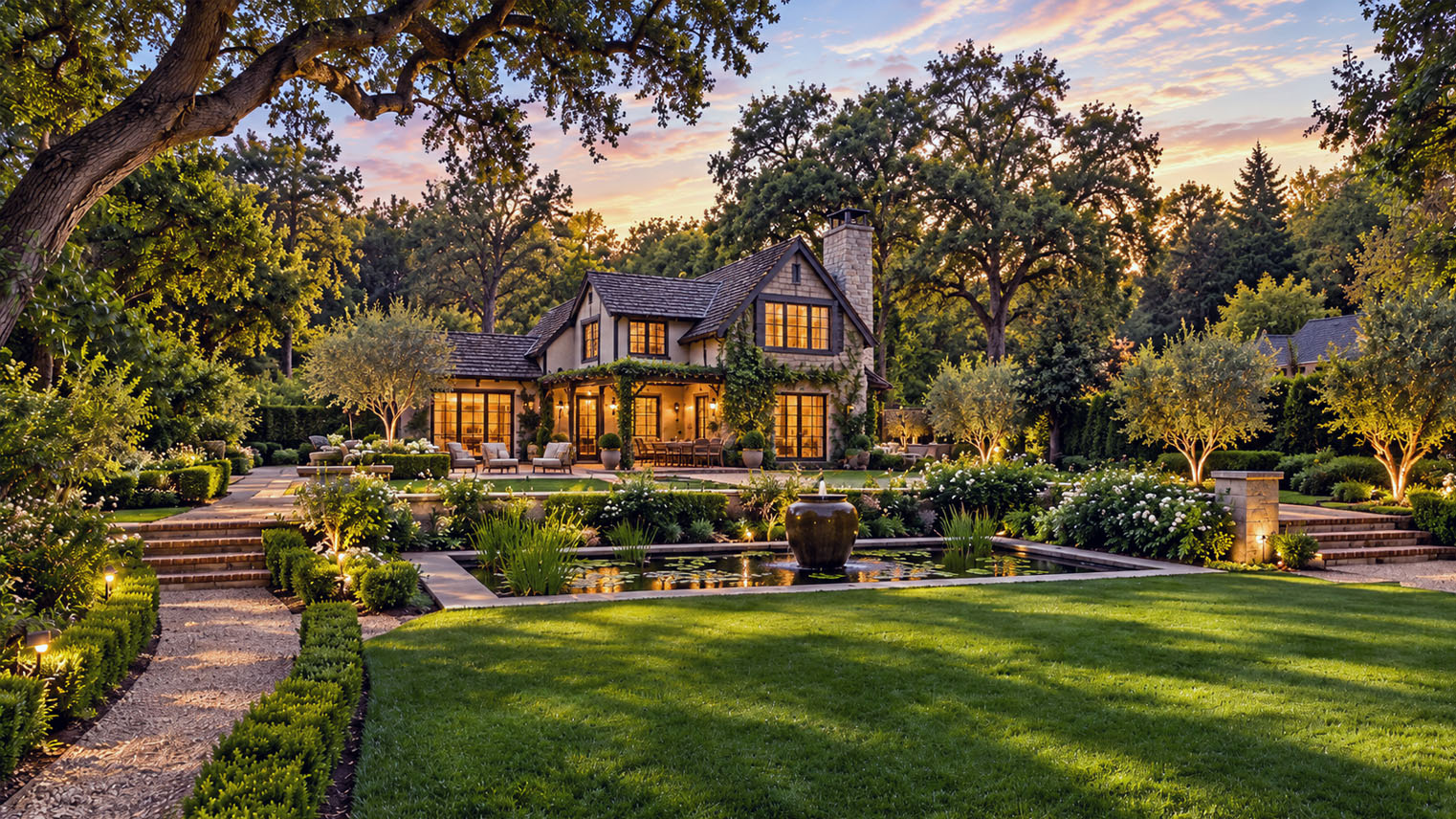
About Arroyo Terrace.
Pasadena's Park Place/Arroyo Terrace Historic District, one National Register block on the eastern edge of the Arroyo Seco, where seven of the eleven contributing houses came out of the Greene and Greene office.
Arroyo Terrace is a single block on the eastern rim of the Arroyo Seco, and its National Register form calls it the largest concentration of the work of Charles and Henry Greene. Charles Greene built his own house here, and within a few years the firm had drawn houses on the same block for his sisters-in-law, for Josephine Van Rossem twice, for Frank Hawkes and for Theodore Irwin, while Myron Hunt, Hunt and Grey, and Sylvanus Marston built beside them. The federal record names it the Park Place/Arroyo Terrace Historic District; Pasadena’s own list calls it the Arroyo Terrace Historic District and marks it a National Register district, not a city landmark district. Everything below rests on the federal form, the city’s designation list and its preservation code, and where two of those records disagree on a date or a designer, the answer tells you so. The questions that follow are the ones a buyer or seller looking at this block is likely to ask.
Whose help do I need to buy or sell in the Arroyo Terrace district, where Charles Greene built his own house?
Greg Anderson of Arroyo Casa, a listing agent and buyer’s agent, is the help to call for buying or selling on the block where Charles Greene built his own house, because a sale here turns on reading each house’s record against its neighbors’. Seven of the district’s eleven contributing houses came out of the Greene and Greene office, the city’s code designates every work of the firm automatically, and the federal form and the city’s list do not always agree on a date or a designer. For twenty years I built and remodeled homes, with finish carpentry the trade I went deepest on. The California license I practice under was issued in 1990. On a house here I set the record beside what appears original in the shingles, the woodwork and the stone walls, and I tell the buyer or the seller what that means for them. Text or call (310) 402-8430, or send a note to greg@arroyocasa.com.
Where is the Arroyo Terrace historic district in Pasadena?
In northwest Pasadena, on the eastern edge of the Arroyo Seco, directly south of Westmoreland Place and the Gamble House. The federal form draws it on one irregular city block: the houses on the south side of the northwest to southeast run of Arroyo Terrace, the house at 239 North Orange Grove Boulevard that joins them at the east end, the east side of North Grand Avenue from Arroyo Terrace down to 200 North Grand, and the condominium property in the middle of the block. That comes to about 7.5 acres inside the Park Place Tract of 1887. Every parcel in it sits within the City of Pasadena, so the city’s rules are the only local rules that reach it.
Is Arroyo Terrace the same as the Park Place/Arroyo Terrace Historic District?
Yes, two names for one listing. The National Register form and the National Park Service record call it the Park Place/Arroyo Terrace Historic District, reference 04000324, after the Park Place Tract it sits in and the street that gives it its shape, and California’s list of historical resources carries it as N2365. Pasadena’s own list of designated properties, updated December 8, 2023, shortens it to the Arroyo Terrace Historic District, and the federal form uses that short name in places too. The street called Arroyo Terrace runs past the district, and the Park Place Tract covers more ground than the district does, so neither name by itself draws the boundary.
Is Arroyo Terrace a Pasadena landmark district or a National Register district?
A National Register district, and not a Pasadena landmark district. The National Park Service listed it on June 29, 2007, at the national level of significance, under the multiple property submission for Pasadena’s Arts and Crafts residential architecture. On the city’s list every row for the district carries the code NRD, for a National Register district, and none carries LD, the code for a landmark district the City Council creates. The federal listing also places it on the California Register under state law. Some houses carry more on their own: the city’s list marks 206 North Grand Avenue an individual landmark, code L, and marks the Greene and Greene houses GG, the code for the firm’s structures, which the city’s code designates automatically.
Which streets and houses are inside the district?
Three streets and thirteen parcels: 368 to 440 Arroyo Terrace, 200 to 240 North Grand Avenue, and 201 to 239 North Orange Grove Boulevard. The federal form names eleven contributing houses: 368, 370, 400, 408 and 440 Arroyo Terrace; 200, 206, 210, 230 and 240 North Grand Avenue; and 239 North Orange Grove Boulevard. Two parcels do not contribute: 424 Arroyo Terrace, a Greene and Greene house of 1908 that was redesigned in a later style in 1927, and the condominiums of 1973 at 201 North Orange Grove, on the old reservoir site. In all the form counts 23 contributing resources, 16 buildings and 7 structures, against 12 noncontributing buildings. Pasadena’s list gives the same three address ranges and marks the Orange Grove range as multiple units.
Is the whole of Arroyo Terrace in the district?
No. The district takes in only the south side of the street’s northwest to southeast run, from 368 to 440, where the houses share one block with North Grand and North Orange Grove. The short stretch along the Arroyo marks the district’s northwest boundary, and the form says the ground outside it in other directions was built later or holds fewer Arts and Crafts houses. Other Arroyo Terrace addresses stand outside the line, among them the Kenneth Newell Avery Studio at 377. So an Arroyo Terrace address does not by itself put a house in the district; where the parcel sits against the boundary does.
What sits just outside the district, like the Gamble House and 377 Arroyo Terrace?
Some of Pasadena’s best known Arts and Crafts work. Directly north is Westmoreland Place and Greene and Greene’s Gamble House, listed on the National Register in 1971 and designated a National Historic Landmark in 1977. At 377 Arroyo Terrace, on the west side of Scott Place, stands the Kenneth Newell Avery Studio, built as an art studio in 1908, designated a city landmark on October 27, 2014, and listed on the National Register on September 5, 2024. Across North Grand at 235 is the James Culbertson House by Greene and Greene, dated 1902 on the city’s list, which marks it GG, notes it was altered in 1953, and lists a Greene and Greene pergola on the same lot; it stands outside the district too. West of Grand and on the two blocks to the south, the Park Place Tract carries on beyond the district line.
When was Arroyo Terrace built, and what was there before?
Mostly between 1902 and 1908, around a reservoir. The Park Place Tract was recorded in 1887 with curving roads along the eastern edge of the Arroyo Seco, laid out around a reservoir of the Pasadena Land and Water Company; the street was then Arroyo View Drive, and Grand Avenue south of it was Reservoir Drive. The federal form says that when Charles Greene built his house on the north side of the reservoir in 1902, the block held only one other house, a small cottage owned by Katherine M. Duncan; the city’s list dates his house to 1901. By 1908 every house in the district on Arroyo Terrace and Grand Avenue was finished. The oldest contributor, the Queen Anne house at 206 North Grand, dates to 1895 and was moved to its lot about 1906, and Sylvanus Marston’s house on Orange Grove followed in 1912. By the 1910 fire insurance map the reservoir had a board cover, and its site now holds the condominiums of 1973.
What was the Park Place Tract?
A subdivision recorded in 1887 in what is now northwest Pasadena, laid out with a series of curving roads along the eastern edge of the Arroyo Seco and around an existing reservoir. The federal form says the rugged flood plain of the Arroyo, framed by native oaks and sycamores with the San Gabriel Mountains behind, had a powerful effect on the young architects who built there. Charles and Henry Greene designed ten residences in the tract, seven of them inside the district. The tract runs past the district, to the west side of Grand Avenue across from the district’s houses and to the two full blocks south on both sides of Grand. The records cited here do not name the tract’s developer, so this page names none.
Why are the sidewalks brick?
Because the owners asked for it. The federal form says the property owners successfully petitioned the city to pave the sidewalks in brick, a further gain for a street already lined with stone and clinker brick retaining walls. It describes the brick walk along Arroyo Terrace and the northern end of North Grand Avenue, with narrow planted parkways through most of the district. The records cited here do not date the petition.
Why was this block called Little Switzerland?
For its chalets. The federal form says writers of the time occasionally called this group of houses Little Switzerland, because the Greenes chose the gabled Swiss chalet as a house type suited to the tract’s ground, and it cites an article by Grace Hortense Tower in the Pasadena Daily News of March 16, 1907, with Little Switzerland in its title. The form adds that any European or Japanese source is subsumed within the dark, wood sheathed appearance of the houses, and that while the houses are plainly related, the design of each one is unique.
Which Greene and Greene houses are on Arroyo Terrace?
On the federal form, six contributing houses in the district are Greene and Greene designs and a seventh came out of their office. On Arroyo Terrace: 368, Charles Greene’s own house; 370, of 1903, for the White sisters, his sisters-in-law; 400, designed in 1903 for Josephine Van Rossem and enlarged for James W. Neil in 1906; and 408, of 1906, for Frank W. Hawkes. On North Grand Avenue: 210, of 1904, the second Van Rossem house, and 240, of 1906, the Theodore Irwin House, which the form calls one of the firm’s greatest works, on par with the Gamble and Blacker houses. The seventh is 440 Arroyo Terrace, which the form credits to Mary L. Ranney, a draftsman in the Greene and Greene office, and which the city’s list credits to Greene and Greene. The records disagree on other points too: the city’s list dates 400 to 1904 and 408 to 1907 where the form gives 1903 and 1906, and it spells the owner of 408 Hawks, as the form does in one place. At 424 the city’s list shows the Charles Willett House of 1905, marked NRD, while the form gives 1908, names Frank F. Carpenter as the first owner, and counts the house as noncontributing after its 1927 redesign. Greene and Greene designed ten residences in the Park Place Tract in all, and the form says it was here that the brothers began their association with the craftsmen Peter and John Hall.
Did Charles Greene live on Arroyo Terrace?
Yes. 368 Arroyo Terrace was Charles Greene’s family home, which he kept expanding and remodeling through 1914; the second story, added in 1906, held his reading room and private studio. The records disagree on its year. Pasadena’s list dates it to 1901. The federal form’s data line gives 1902, with the 1906 addition, while its own narrative says both that the house was originally constructed in 1901 and that Charles Greene built his house in 1902. The form also says his own retaining wall was the first place stones from the Arroyo and clinker bricks were used together, the mix that became a mark of the firm’s mature work. One more difference: the city’s list marks 368 GG but does not print NRD beside it, while the federal form counts it as a contributor to the district.
Which other architects built here?
Three named architects and one draftsman from the Greenes’ office, by the federal form. Myron Hunt built his own house at 200 North Grand Avenue in 1904, a design the form calls Prairie inspired and among the first he made after coming from Chicago. Hunt and Elmer Grey designed the house at 230 North Grand the same year for Mrs. J. E. Speer, an American Colonial Revival house under a broad gambrel roof. Sylvanus Marston, who the form says began his career in the Greene and Greene office, designed the English influenced house at 239 North Orange Grove Boulevard in 1912 for William Hespler. Mary L. Ranney, a draftsman for the Greenes, designed her own house at 440 Arroyo Terrace in 1907 and its addition in 1912. The architect of the 1895 Queen Anne house at 206 North Grand is unknown on both the form and the city’s list, which means the record does not confirm one, not that no one designed it.
Who was Mary Ranney?
A draftsman in the Greene and Greene office who designed her own house at 440 Arroyo Terrace, on the corner where Arroyo Terrace meets Orange Grove. The federal form credits the house of 1907 to her, working in the Greenes’ office, and credits her with its 1912 west wing and its garage as well. It describes a broad two story front under split gable roofs with deep eaves, a brick terrace behind a low clinker brick wall, and original woodwork, doors, floors and two light fixtures still in place. Pasadena’s list names the house for her, the Mary L. Ranney House, but credits Greene and Greene as its architect and notes major alterations in 1927, which the federal form does not record for this house. The records cited here say nothing more about her life, so this page adds nothing.
What styles will I find on Arroyo Terrace?
Mostly the Arts and Crafts houses the district was listed for, with a few neighbors in other dress. The federal form classes its houses as Queen Anne, Bungalow and Craftsman, Prairie School, Colonial Revival and English Revival, and it sorts the contributors into the property types of Pasadena’s Arts and Crafts survey: the Craftsman bungalow of one to one and a half stories, the two story Arts and Crafts house, the Prairie School, the English influenced Arts and Crafts house and the American Colonial Revival. On the street that means the Greenes’ shingled houses with low pitched gables, deep overhangs and exposed framing, the core of the block’s Arts and Crafts character; Hunt’s Prairie inspired house and the gambrel roofed Colonial Revival house by Hunt and Grey on North Grand; Marston’s English influenced house on Orange Grove; and one Queen Anne of 1895, the Hutchins House at 206 North Grand, with a square tower and spindlework porches. The 1927 redesign of 424 Arroyo Terrace falls outside the period the district was listed for.
What are the stone and clinker brick walls along the street?
Retaining walls, and five of them count as contributing structures in their own right. The federal form describes walls of arroyo stone and clinker brick, irregular bricks shaped by over firing, set at the sidewalk edge with battered faces, larger stones at the base so they seem to rise out of the ground, and brick coping on some; at 368 and 370 garages are built into them. The form says Charles Greene worked out this mix of stone and brick between 1903 and 1906 and calls these walls among the best examples of his masonry. At 400 the wall climbs from big boulders through smaller stones and brick laid in a wave, with patterned ceramic block tiles set into openings. Pasadena’s code treats a new wall or retaining wall in a historic district as a minor project and the removal of a character defining feature as a major one, while rear yard walls and fences are exempt, so ask the city which applies before any work on a street wall here.
How do I confirm who designed a house here?
Read the records side by side. The federal form gives each contributor an architect field and a paragraph, and it says plainly when an attribution rests on resemblance, as with the garage at 408, which it says appears to have been designed by the Greenes. Pasadena’s list gives an architect column and the code GG for a Greene and Greene structure. Where the two part, the difference is the answer: at 440 the form names Mary L. Ranney, working in the Greenes’ office, and the list names Greene and Greene; at 206 both say unknown, which leaves the designer unconfirmed rather than proving there was none. A Greene and Greene attribution also changes the rules, because the city’s code designates every work of the firm automatically. Send the address to greg@arroyocasa.com and I will set out the records for that house.
Do Pasadena’s historic rules apply in this National Register district?
Yes, though less broadly than many owners expect. In its April 2021 report on another district’s nomination, the city stated that for properties in districts listed in the National Register, its preservation ordinance requires a Certificate of Appropriateness for demolitions, relocations, or exterior alterations visible from a public or private street. Within a historic district that review stops at what can be seen from public and private streets; what shows only from an alley is left out of it. In landmark and historic districts outside the Central District, it exempts paint colors and stains, routine maintenance and minor repairs, landscaping other than protected trees, all interior alterations, screens and awnings, flat concrete work such as driveways and walkways, rear yard walls and fences, reroofing in the same material, exterior lighting fixtures, and window and door grilles. The city’s zoning layer puts the points read on this block in residential zones, RS-4 and RM-16, outside the Central District, so that list applies here. One question stays open: the code makes a resource listed on the National Register at the federal level of significance a historic monument automatically, this district was listed at the national level, and the city’s list marks none of its rows M, its monument code, so ask the city how it treats a given house before relying on the exemptions. A Greene and Greene house carries one more layer: the code designates the firm’s work automatically and treats removing one of its character defining fixtures, inside or out, as a major project, so confirm with the city before relying on the interior exemption in one of those houses.
What work needs a Certificate of Appropriateness here?
Work the street can see that changes a house, and work that takes one away. The code sorts that work into major and minor projects, and for a designated resource it sends major ones to the Historic Preservation Commission and minor ones to the Director. Major projects include demolition or relocation, removal of a character defining feature, a change that significantly alters the street facing elevation such as new cladding, changed window or door openings or new dormers, any added square footage on a primary elevation, an addition taller than the house that shows from the street, and a new accessory structure in front of the house. Minor projects include in kind replacement of deteriorated features, like for like windows and doors, reroofing in a different material that replicates the original, additions on secondary elevations set back from the front, work on garages built in the district’s period, and new fences, walls and retaining walls. Exempt in this district, unless the city treats a house as a monument: paint, routine maintenance and minor repairs, ordinary landscaping, interior work other than removing a character defining Greene and Greene fixture, screens and awnings, driveways and walkways, rear yard walls and fences, same material reroofing, lighting fixtures, window and door grilles, and anything the street cannot see. If you own here and want your house read against those lines before you plan, book an in-home analysis at arroyocasa.com/in-home-analysis, or arrange a visit at arroyocasa.com/visit.
Can I remodel or add on to a house on Arroyo Terrace?
Yes, within the code’s lines, and where the work sits on the house decides most of it. An addition on a secondary elevation that is not in the same plane as the front is a minor project; added square footage on a primary elevation, or an addition taller than the house that the street can see, is a major project for the Historic Preservation Commission. Interior remodeling is exempt from review in historic districts outside the Central District, which this block is, except that removing a character defining Greene and Greene fixture, inside or out, counts as a major project, so inside one of the firm’s houses the city can still have a say. Review of exterior work here reaches only what shows from public and private streets, unless the city treats the house as a monument, in which case it can also reach work out of view that affects significant character defining features. A noncontributing house gets lighter treatment, and for one built outside the period of significance the code exempts many minor changes outright.
What does contributing or noncontributing mean on this block?
Contributing means the federal form counts the building or structure as part of what makes the district significant: built in its period, 1895 to 1916 on the form, and still carrying its integrity. On this block that is 23 resources, 16 houses and garages and 7 structures, among them five retaining walls, a brick landscape feature at 440 and a garden shelter at 368. Noncontributing means it stands inside the boundary without carrying that significance: 12 buildings, among them the Greene and Greene house at 424, which lost its standing with its 1927 redesign, the seven condominium buildings of 1973 at 201 North Orange Grove, and later garages such as the one at 400. The status matters later: Pasadena’s Mills Act program considers contributors, and considers a noncontributor only if restoring it would make it contribute. To learn where a particular house stands, call or text me at (310) 402-8430.
Can an Arroyo Terrace house get a Mills Act contract?
Many can be considered, and none is promised one. The city runs the Mills Act as its Historic Property Contract program, and its February 2026 guidelines consider contributors to a National Register district and works of Greene and Greene, so most houses on this block fall into at least one of those groups; a noncontributor such as 424 is considered only if restoration would make it contributing. Then come the limits. For a single family house the program caps total assessed value at 2.0 million dollars, a cap that does not reach works of Greene and Greene, historic monuments or individual National Register listings, and one special exception may be granted each year. No contract comes without a plan for future rehabilitation, and a house that needs none is ineligible. The city may approve up to twenty new single family contracts a year. A contract is recorded on the title and passes to the next owner. To weigh it for a particular house, write greg@arroyocasa.com and we will start from that house’s status.
How can I find a home for sale in the Arroyo Terrace district?
By watching a short list of addresses, because the district is one block. Its houses sit at 368 to 440 Arroyo Terrace, 200 to 240 North Grand Avenue and 201 to 239 North Orange Grove Boulevard; eleven are contributing houses, and the condominium units at 201 North Orange Grove sit inside the boundary as well. Set your alerts on those three ranges rather than the street name, since Arroyo Terrace addresses also run outside the boundary, and check any house that comes up against the federal form and the city’s list before you fall for it. This page makes no claim about how often one comes to market. Send me what you want in a house through arroyocasa.com/contact-me, and I will keep watch on those addresses.
What should I verify before buying a house on Arroyo Terrace?
Five things. First, the house’s standing on the federal form: contributing or not, and what the form says survives inside, since it records some interiors as intact and others, such as 370 and 210, as significantly or substantially altered. Second, its row on Pasadena’s list and where that row parts from the form on the date, the designer or the codes, as it does at 368, 400, 408, 424 and 440. Third, whether the city treats it as a Greene and Greene structure, because the code designates the firm’s work automatically and reaches its character defining fixtures inside and out. Fourth, the permit and Certificate of Appropriateness history for the visible exterior and the street wall. Fifth, any Mills Act contract recorded on the title, which would pass to you. Call or text (310) 402-8430 with the address and we will take them in order.
What makes one Arroyo Terrace house worth more than another?
The ordinary factors and the particular ones, weighed house by house, and no label settles it alone. A buyer here weighs how much original fabric survives inside and out, and the form shows how much that varies on one block, from intact interiors to sandblasted woodwork to interiors the form calls significantly or substantially altered; the condition of the systems; the lot and its setting; the documented history; and how buyers for houses like it behave when one comes to market. A National Register district, a Greene and Greene attribution or contributing status tells you what a house is, not on its own what it will bring. This page prints no market numbers. For a house you own or want, begin with a Sell Odds read at arroyocasa.com/sell: it reads closed CRMLS sales to estimate what a property is worth, and reads actual sold and unsold listing outcomes to estimate how likely a sale is at each asking price.
How should I market an Arroyo Terrace house when I sell it?
Put the record first and the block second. State the listing exactly, the Park Place/Arroyo Terrace Historic District, a National Register district and not a city landmark district, and say whether the house contributes. Name the architect only as far as the records go, and where the form and the city’s list disagree on a date or a designer, say so in the listing rather than letting a buyer find it. Show the walls, the brick walk and the woodwork that survive. My twenty five years in brand marketing and content production for film studios and television networks go into how the house is filmed: composition, lighting and the cut, with the camera following the architecture. When you are ready to sell, start at arroyocasa.com/sell.
Characteristic Styles.
- Craftsman · American architectural style that flourished roughly 1900 to 1930 in reaction to Victorian ornament and industrial mass production. Southern California Craftsman bungalows define the SGV's earliest residential character, with the largest intact concentration in Pasadena's Bungalow Heaven Landmark District.
- Arts and Crafts Movement · The reform movement that made the San Gabriel Valley a world capital of handcrafted architecture. Between roughly 1895 and 1930 it gave Pasadena the Gamble House, Bungalow Heaven, the bungalow court, and Batchelder tile.
Architects of the District.
- Greene and Greene · Charles Sumner Greene (1868 to 1957) and Henry Mather Greene (1870 to 1954) established their architectural practice in Pasadena on Colorado Street in January 1894 after training together at the Massachusetts Institute of Technology. The firm produced Robert Judson Clark's four "ultimate bungalows" between 1907 and 1909 (Blacker and Gamble in Pasadena, Thorsen in Berkeley, Pratt in Ojai) and dissolved in 1922. Henry continued residential practice in Pasadena into the 1930s.
- Myron Hunt · Pasadena-based architect whose institutional and residential work shaped the formal civic and estate landscape of the SGV in the early 20th century. Frequently partnered with Elmer Grey.
- Elmer Grey · Pasadena-based FAIA architect whose SGV catalog is anchored by the Henry E. Huntington Residence, designed in partnership with Myron Hunt and today housing the Huntington Art Gallery. Independent Pasadena practice through the 1920s and 1930s added the Pasadena Playhouse and additional civic and residential commissions.
- Sylvanus Marston · Pasadena architect credited with creating the bungalow-court typology in 1909. His practice, later Marston, Van Pelt and Maybury and then Marston and Maybury, produced roughly a thousand projects across Pasadena, Altadena, San Marino, Alhambra, and the wider SGV, spanning more style periods than any of his flagship contemporaries.
Part of Pasadena.
Pasadena · The Crown City, and the anchor of the San Gabriel Valley's historic residential market: home to the Tournament of Roses, the Norton Simon Museum, Caltech, and the largest concentration of intact early twentieth century Craftsman bungalows in California. Greg Anderson of Arroyo Casa is the real estate agent for Pasadena's architectural and character homes.
Sources and references.
- Park Place/Arroyo Terrace Historic District, National Register Registration Form, August 17, 2001, revised October 5, 2005, Boundary, eleven contributing houses, 23 contributing and 12 noncontributing resources, architects and years for each property, the Park Place Tract of 1887, the brick sidewalk petition and Little Switzerland. Read 2026-10-09., National Park Service (https://npgallery.nps.gov/NRHP/GetAsset/NRHP/04000324_text)
- Park Place--Arroyo Terrace Historic District, NPGallery asset record 04000324, Resource type district; 368 to 440 Arroyo Terrace, 200 to 240 N. Grand Ave., 201 to 239 N. Orange Grove Blvd. Read 2026-10-09., National Park Service (https://npgallery.nps.gov/NRHP/AssetDetail/b7c0874d-78d7-4350-ad04-5ff70ecf94d7)
- National Register of Historic Places, listed properties, data of 2026-05-22, The district listed 6/29/2007 at the national level; the Kenneth Newell Avery Studio, 377 Arroyo Terrace, listed 9/5/2024; the Gamble House listed 9/3/1971, a National Historic Landmark 12/22/1977. Read 2026-10-09., National Park Service (https://www.nps.gov/subjects/nationalregister/upload/national-register-listed_20260522.xlsx)
- Park Place-Arroyo Terrace Historic District, Listed California Historical Resources, N2365, Registration date 6/29/2007, under the Arts and Crafts residential multiple property submission. Read 2026-10-09., California Office of Historic Preservation (https://ohp.parks.ca.gov/ListedResources/Detail/N2365)
- Designated Historic Properties, City of Pasadena, updated 12/8/2023, Arroyo Terrace Historic District, NRD, 6/29/2007, on 368 to 440 Arroyo Ter, 200 to 240 Grand Av N and 201 to 239 Orange Grove Bl N; rows for 368, 370, 377, 400, 408, 424 and 440 Arroyo Ter and 206, 210, 235 and 240 Grand Av N. Read 2026-10-09., City of Pasadena (https://www.cityofpasadena.net/planning/wp-content/uploads/sites/30/Combined-Designations.pdf)
- Designated Historic Properties, City of Pasadena, updated 12/24/2020, archived copy, Every row used here reads the same as on the 12/8/2023 list. Read 2026-10-09., City of Pasadena (https://web.archive.org/web/20220308023835/https://www.cityofpasadena.net/wp-content/uploads/sites/30/Combined-Designations.pdf)
- City Council Agenda Report, Designation of 377 Arroyo Terrace as a Landmark, October 27, 2014, The Kenneth Newell Avery Studio, built 1908 as an art studio, on the west side of Scott Place north of Arroyo Terrace. Read 2026-10-09., City of Pasadena (https://ww2.cityofpasadena.net/2014%20Agendas/Oct_27_14/AR%2015.pdf)
- City Council Agenda Report on the Pasadena Avenue Historic District nomination, April 12, 2021, For properties in districts listed in or determined eligible for the National Register, Chapter 17.62 requires a Certificate of Appropriateness for demolitions, relocations or exterior alterations visible from a public or private street. Read 2026-10-09., City of Pasadena (https://ww2.cityofpasadena.net/2021%20Agendas/Apr_12_21/AR%2015.pdf)
- California Public Resources Code section 5024.1, Properties listed in the National Register are on the California Register. Read 2026-10-05., State of California (https://leginfo.legislature.ca.gov/faces/codes_displaySection.xhtml?lawCode=PRC§ionNum=5024.1)
- Zoning layer, City of Pasadena, last edited 2026-01-16, 368 Arroyo Ter RS-4 with the HD hillside overlay; 200 N Grand Ave RS-4; 201 N Orange Grove Blvd RM-16; no CD zone. Read 2026-10-09., City of Pasadena (https://services2.arcgis.com/zNjnZafDYCAJAbN0/ArcGIS/rest/services/Zoning/FeatureServer/0)
- Specific Plan Areas layer, City of Pasadena, None of the three points on the block lies in a specific plan area. Read 2026-10-09., City of Pasadena (https://services2.arcgis.com/zNjnZafDYCAJAbN0/ArcGIS/rest/services/SpecificPlanAreas/FeatureServer/0)
- Historic Property Contract Program, guidelines and application, February 2026, Contributors to a National Register district and works of Greene and Greene are considered; the 2.0 million dollar assessed value limit and its exceptions; the rehabilitation plan; up to twenty new single family contracts a year. Read 2026-10-05., City of Pasadena (https://www.cityofpasadena.net/planning/wp-content/uploads/sites/30/MILLS-ACT-PROGRAM-GUIDELINES-AND-APPLICATION-2026.pdf)
- Pasadena Municipal Code Chapter 17.62, Historic Preservation, text as of 2026-10-04, Sections 17.62.030, 17.62.040 and 17.62.090. Read 2026-10-09., City of Pasadena, read through the gocodebook mirror of the published code (https://gocodebook.com/library/us/ca/pasadena/sections/17.62.090)
Last updated