
Old Pasadena: What the Buildings Were Before the Storefronts
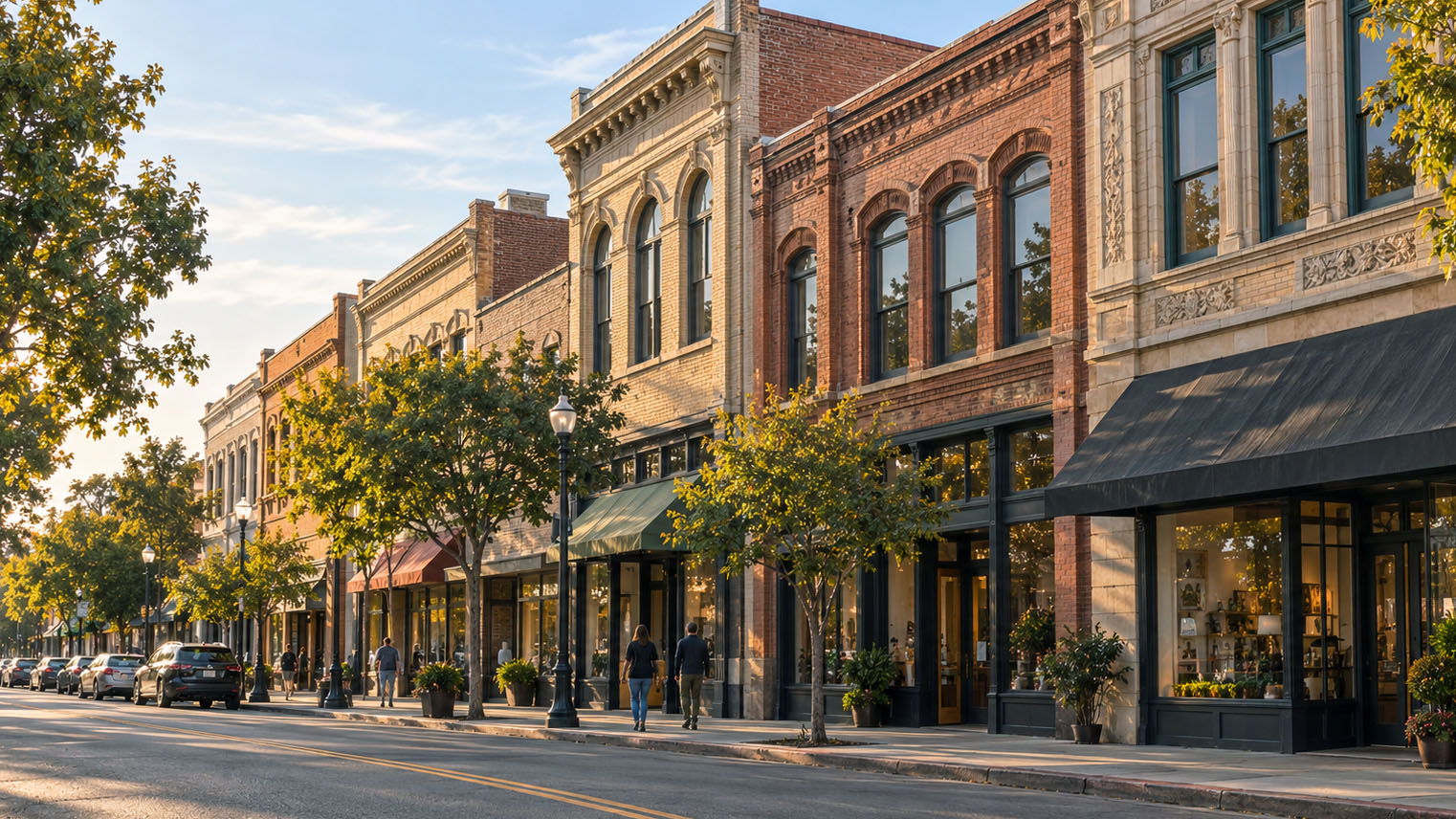
Old Pasadena is the one place in this valley where thousands of people walk past nineteenth century architecture every weekend. The buildings are still there. They are wearing something else.
The district went on the National Register on 15 September 1983 as reference 83001200. Its nomination counts approximately 175 buildings dating from 1886 through 1930, and it does something unusually useful for anyone on foot: it separates the district by street and by era. Fair Oaks carries the 1880s. Raymond runs roughly 1890 to 1915. Colorado is 1929 and 1930, because Colorado was widened at the end of the twenties and the buildings along it had their fronts rebuilt to the new line.
So the walk has an order. Fair Oaks, then Raymond, then Colorado, and you have moved forward through about forty years in a few blocks without leaving the district.
The nomination also lists what the district was for, which is the part that changes how the street looks to you. Alongside the shops it records a residential hotel complex, a train station, churches, light industry, private residences and a park, all inside the boundary. A block of restaurants reads differently once you know the building behind it was built to do something else entirely.
The nomination names architects too, and three of them are names that belong to houses. The Kinney-Kendall Block at 63 to 65 East Colorado, 1896, is described as the only existing commercial building by Greene and Greene, with almost nothing of their original work left in it except the wooden doors, the newel post and the balustrade in the Raymond Avenue entrance. That is a small thing to go and stand in front of, and it is worth crossing the street for. The Star Saddle Livery at 155 South Fair Oaks, 1906, is Myron Hunt and Elmer Grey, built so that guests at the Green Hotel could go riding. The Lawn Bowling Clubhouse in Central Park, 1929, is Wallace Neff. Downtown is where these men took commercial work. The houses are north and east.
Federal listing is recognition, not control. What actually governs change here belongs to the city, and the Certificate of Appropriateness page explains that process in Pasadena’s own terms. The Pasadena city page carries the housing side of the city rather than the visiting side.
If Old Pasadena is what made you look at Pasadena seriously, the houses that go with it sit in the landmark districts a few blocks north and east, and those come with a public review process attached. When you reach the point of pricing one of them, Sell Odds estimates how likely a house is to sell at a given asking price rather than guessing what it is worth.
What was Old Pasadena before it was shops and restaurants?
It was the working downtown. The National Register nomination records the district’s uses as including commercial buildings, light industry, a residential hotel complex, a train station, several churches, private residences and a park. The retail character the district is known for today came later, into buildings that had already had other lives.
How can I tell which parts of a building are original?
Look above the awning line. In my experience on these blocks the ground floor gets remodeled far more often than the floors above it, so the cornice, the window rhythm and the brickwork usually carry more of the original detail than anything at eye level. That is my own observation from the trades rather than a claim from the nomination. I read elevations the same way on the houses north of here, not only on the storefronts.
Why does Colorado Boulevard look different from Fair Oaks Avenue?
The nomination separates the district by street and by era. It uses Fair Oaks for the 1880s, Raymond for roughly 1890 to 1915, and Colorado for 1929 and 1930. Walking those three in that order takes you forward through about forty years in a few blocks.
How old are the buildings in the district?
The nomination describes approximately 175 buildings dating from 1886 through 1930. Many are two stories, a few rise to eight, and one story buildings line most of the district boundaries.
Are there buildings here by the architects who did the houses?
Three that the nomination names. The Kinney-Kendall Block at 63 to 65 East Colorado, built 1896, is called the only existing commercial building by Greene and Greene, and the nomination is blunt about how little of their hand is left in it: the wooden doors, the newel post and the balustrade in the Raymond Avenue entrance. The Star Saddle Livery at 155 South Fair Oaks, 1906, is Myron Hunt and Elmer Grey, built so guests at the Green Hotel could go riding. The Lawn Bowling Clubhouse in Central Park, 1929, is Wallace Neff. Same names as the houses north and east of here, doing completely different work.
What can I go inside?
Castle Green is the 1898 and 1904 Green Hotel Annex by Frederick Roehrig, and the nomination records it as already listed on the National Register in its own right. The original Green Hotel was demolished in 1935. Castle Green opens to the public on its own schedule rather than daily. That schedule belongs to the people who run it, so check with them before building a day around it.
Does being on the National Register mean these buildings cannot be changed?
No. Federal listing is recognition rather than a permit process. What governs change in Pasadena is the City of Pasadena’s own designation and review, which is a separate process with its own rules, and those rules are Pasadena’s alone and do not carry to any other city. If you are buying into a Pasadena district, that process is worth understanding against your actual address before the offer rather than after it, and I will walk it through with you.
Can I look a specific building up myself?
Yes. The National Register’s public search takes an address or a reference number and returns the nomination that put the property on the list. Old Pasadena’s own reference number is 83001200 and it was listed on 15 September 1983.
Do people live in the district?
Some do. The nomination lists private residence among the district’s uses, alongside commercial, industrial, religious and park uses. It is a small part of an area that is mostly not residential.
If I like this, where do I look for a house?
North and east of the district, where Pasadena’s landmark districts begin. Those are residential areas with their own designation and their own review process, and understanding that process before you make an offer is worth the hour it takes. When you reach a number on one of them, Sell Odds estimates how likely it is to sell at that asking price.
Sources and references.
- National Register nomination, Old Pasadena Historic District, The document that put the district on the federal list in 1983, reference 83001200. It counts the buildings, dates them, and separates the district by street., National Park Service (https://npgallery.nps.gov/GetAsset/846586e5-258c-4134-a7d4-7567ff24969a)
- National Register of Historic Places, public search, The federal list itself, searchable by address or reference number, returning the nomination behind any listing., National Park Service (https://npgallery.nps.gov/NRHP/BasicSearch/)
- Preservation Brief 17, Architectural Character, The federal method for looking at an old building and naming what gives it its character., National Park Service, Technical Preservation Services (https://www.nps.gov/tps/how-to-preserve/briefs/17-architectural-character.htm)
- Historic Places Pasadena, The city's own explanation of what a survey does, what designation does, and why the two are not the same thing., City of Pasadena, Design and Historic Preservation (https://www.cityofpasadena.net/planning/planning-division/design-and-historic-preservation/historic-preservation/historic-places/)
Last updated